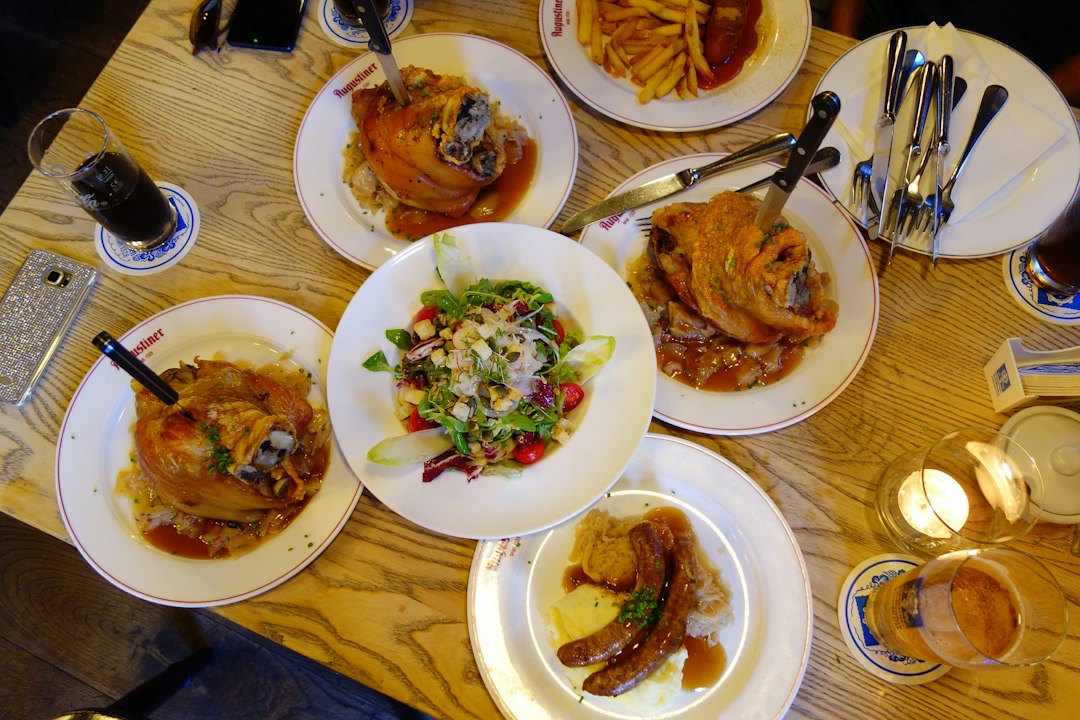
Right now, as I type this, the tents in Munich are mid-prost — Oktoberfest 2026 has a week left to run, and somewhere a brass band is butchering “Sweet Caroline” for the four thousandth time. I stopped trying to get there years ago. Instead, for three autumns running, my kitchen has thrown its own Oktoberfest at home: soft pretzels from scratch, bratwurst hissing in cast iron, a board of obatzda, and heavy steins that live in the freezer until the last Saturday of September. This is the guide I wish I’d had the first year, when I burned a sheet pan full of pretzels and learned everything the hard way.
Here’s the thing my first home Oktoberfest taught me: you cannot fake this party with a bag of frozen pretzel bites and a six-pack. Well, you can, and nobody will call the police, but the whole evening turns on the pretzel. Get the pretzel right and everything else — the brats, the spaetzle, the mustard flight, the beer — falls into place around it like it was always meant to be there. So we start where the party starts: flour, water, yeast, salt, and butter.
The Pretzel Decides Everything
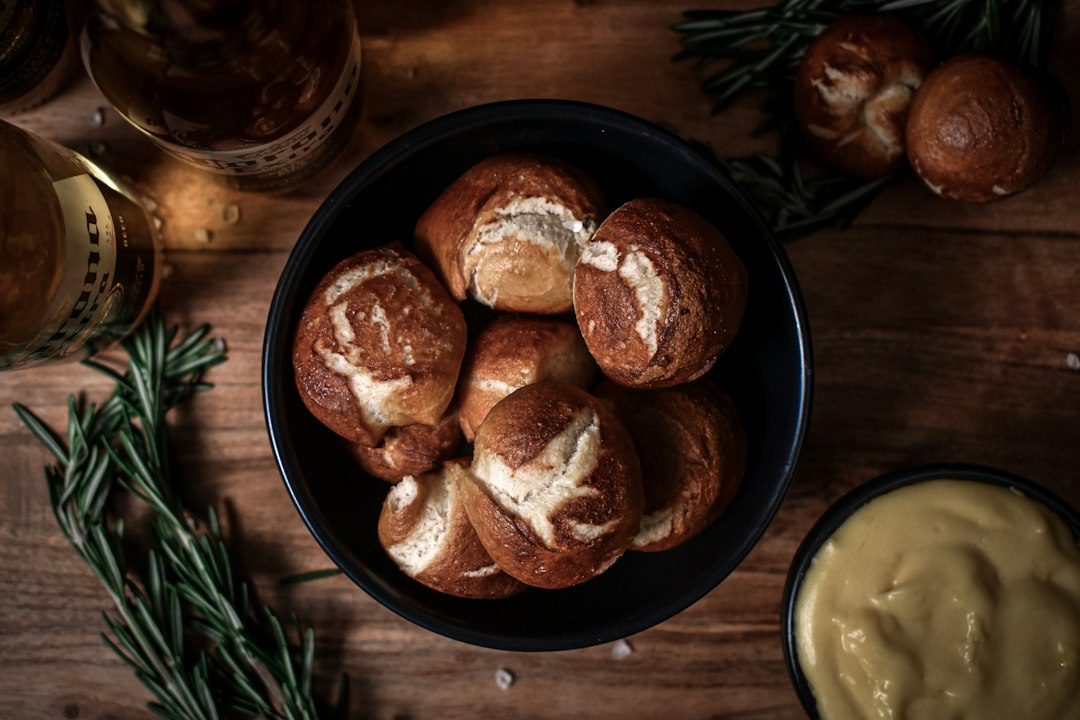
Pretzel dough is humble on paper. Four hundred twenty grams of flour, a packet of yeast, a spoonful of sugar, warm water, melted butter, salt. My grandmother would have measured it all with a teacup and been perfectly happy. But pretzel dough is stiff — noticeably stiffer than bread dough — and stiffness punishes guesswork. The year I measured by feel instead of weight, my ropes tore when I rolled them and my pretzels came out of the oven looking like they’d lost a fight. A decent digital scale costs less than two good pretzels at a beer hall, and it ends the guessing forever. Mine lives next to the flour canister nine months of the year for exactly this recipe.
Because the dough is so stiff, mixing it by spoon is a wrist workout that stops being funny around minute four. A Danish dough whisk — that flat, loopy ring on a handle — cuts through heavy dough without the dough climbing the handle or clogging a balloon whisk. It’s a fifteen-dollar tool that has quietly become one of my favorite things in the drawer. If you’d rather let a machine do the kneading, the stand mixer I wrote about at length last week handles this dough on speed two without breaking a sweat, but honestly, hand-kneading pretzel dough for eight minutes is the cheapest ticket to feeling like a German bakery grandmother I know of.
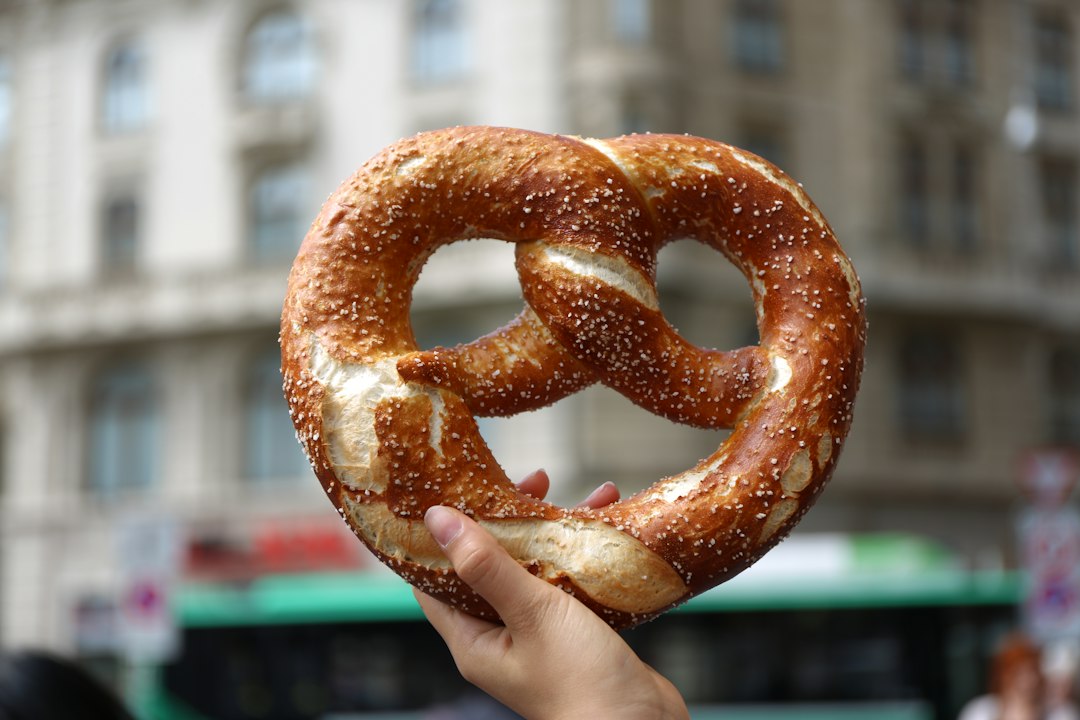
The dough rests for an hour under a towel until it’s puffy and forgiving. That hour is not dead time — it’s when you clear the counter, set out the salt, and make the beer cheese. More on that later.
Twenty Minutes at the Bench
Shaping is the part that scares people, and it shouldn’t. Divide the dough into twelve equal pieces — about three ounces each — and here is where a bench scraper earns its permanent spot beside the cutting board. The blade portions dough cleanly, scoops it off the counter without tearing, and scrapes the flour paste off your work surface afterward. I use the flat edge to flatten each piece into a rectangle, roll it up tight like a little sleeping bag, then let it rest ten minutes under a towel while I fluff the counter with flour. Rested dough rolls; un-rested dough fights you and snaps back like a rubber band.
Then it’s just rolling: rope from the middle out, palms down, even pressure, until each piece stretches to about two feet. Thicker in the middle, tapered at the ends — the shape that makes the classic pretzel swing possible. Lift the rope into a U, cross the ends twice, fold the twist down onto the loop, and press gently to seal. My first year, my twists opened up in the oven like tulips. The fix was embarrassingly simple: a drop of water under each pressed joint. Thirty pretzels later, my shaping team of nieces was producing pretzels prettier than mine, which I have made peace with.
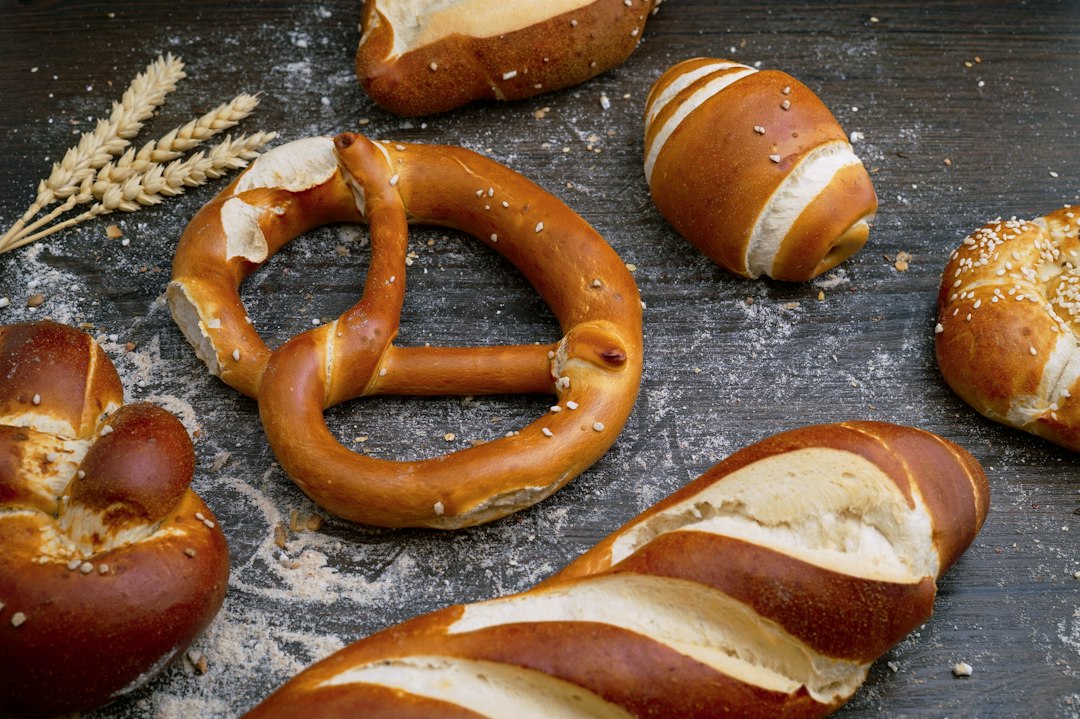
One housekeeping note before the bath: check your baking cabinet now for the pretzel salt. It hides behind the sprinkles every single year in my house, and I have a whole essay about that cabinet that will tell you I learned this the hard way. Regular kosher salt dissolves into the crust and vanishes; you want the coarse, crunchy, hold-its-shape pretzel salt for the tops.
The Bath That Turns Dough Brown
That deep mahogany crust, the one that makes a pretzel taste like a pretzel instead of a bread knot, is chemistry — an alkaline dip before baking. The home-cook version is a baking soda bath: three tablespoons of baking soda simmered in a wide pot of water, each shaped pretzel dipped for ten to fifteen seconds, then lifted out with a slotted spatula onto parchment. The baker’s upgrade — and the trick that changed my crust forever — is baking the baking soda itself on a sheet pan at 250°F for an hour before dissolving it. Heat concentrates the alkali, and the color and flavor get noticeably closer to the real thing with zero extra equipment.
The purists in my life dip in food-grade lye, gloves on, solution disposed of carefully, and their crust is a shade darker and glossier than mine. I’ve done it. It’s fine. My conscience is clear with the baked-baking-soda method, and nobody at my table has ever asked for a darker crust. What actually matters more is the surface you bake on. A heavy baking steel, preheated at 450°F, delivers bottom heat that a thin cookie sheet simply cannot — the bottom crust comes out crisp and deeply browned in ten to twelve minutes instead of pale and slow. The steel I use for pretzels in September is the same one that makes our pizza in January, and it has paid for itself twice over in compliments alone.
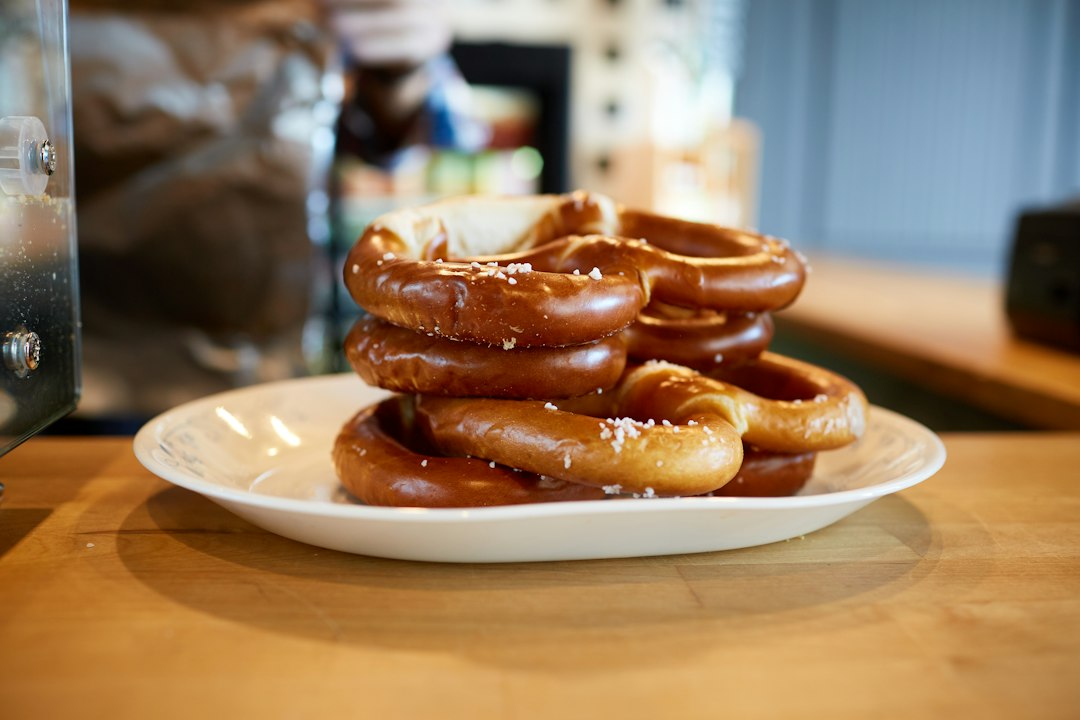
Salt goes on wet, right after the bath, before the oven. A generous, confident pinch of coarse pretzel salt across each one — the kind of salt that arrives in a two-pound tub because once you make pretzels at home, you keep making pretzels at home.
Brats Without a Beer Garden
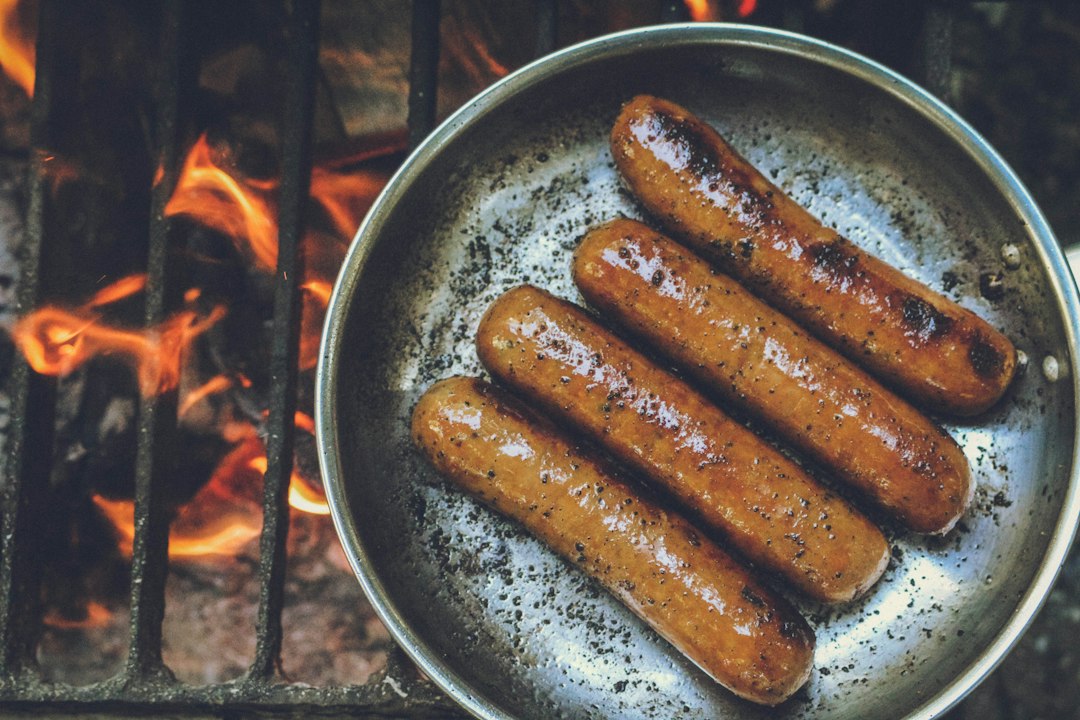
No grill? No problem — some of the best brats I’ve served indoors came out of a square cast iron grill pan, the ridges doing exactly what grill grates do, rendering fat and leaving sear marks that photograph beautifully. My method is borrowed from every Midwest tailgater I’ve ever met: pour half a bottle of beer into the pan, simmer the brats in it until they’re plump and cooked through, then pour off the liquid, crank the heat, and roll them in the dry screaming-hot pan until the casings snap and brown. Beer-simmered then seared — it’s the two-step that keeps the inside juicy while the outside gets aggressive.
If you do have a backyard and a flame, a long-handled sausage grill basket is the upgrade nobody knows they need. It holds a dozen brats at once, flips them all with one wrist, and keeps them from rolling through the grates into the fire — a fate two brats met at my first Oktoberfest while the whole party watched. We still honor their memory. For more on the outdoor end of this equation, the tailgate kit piece I wrote earlier this month covers coolers, prep bins, and the folding table that changed my hosting life.
Spaetzle Worth the Drawer Space
Every Oktoberfest table needs one dish that soaks up the beer, and in my house that dish is spaetzle — those chewy little egg noodles that my aunt made by scraping dough off a cutting board into boiling water with a butter knife, at a speed I have never managed to replicate. A proper spaetzle maker, the sliding-hopper kind that drops perfect little dumplings straight into the pot, gets you the same noodle at a speed mortals can achieve. The dough takes four minutes: flour, eggs, milk, salt, beaten until it’s a thick, gluey batter that slowly falls off the whisk.
Two minutes in salted boiling water, then — and do not skip this — into a skillet with butter and a shower of nutmeg until the edges crisp. Guests who claim they don’t like “German food” will eat the entire skillet of spaetzle standing up, and you will catch them doing it, and they will not be embarrassed. That is the power of buttered noodles.
The Board, the Mustard, the Obatzda
While the dough rises, make the obatzda — the Bavarian cheese spread that tastes like beer-hall sunshine. One round of camembert or brie, softened, mashed with soft butter, a splash of beer, sweet paprika, a whisper of caraway, chopped onion. It looks alarmingly orange and it disappears alarmingly fast. Serve it in a bowl at the center of a big wooden board, ringed with pretzel bites, radishes, cornichons, and the three mustards you absolutely need: a sharp Düsseldorf, a coarse grainy one, and a sweet Bavarian for the people who think they don’t like mustard yet.
The board matters more than you’d think. A wide acacia board is the whole centerpiece — cheese in the middle, warm pretzel bites piled at one end, mustards at the other, and suddenly your table looks intentional instead of assembled. I set mine out an hour early, which is the only organizational trick in my entire entertaining life that requires no effort whatsoever.
When the evening deepens and the board is down to crumbs, my instinct is always to follow it with something warm and communal — and a pot of raclette or fondue in October has never once been the wrong answer. The full guide to melting things over open flame with friends is here if your crowd lingers past the pretzels.
Steins That Live in the Freezer
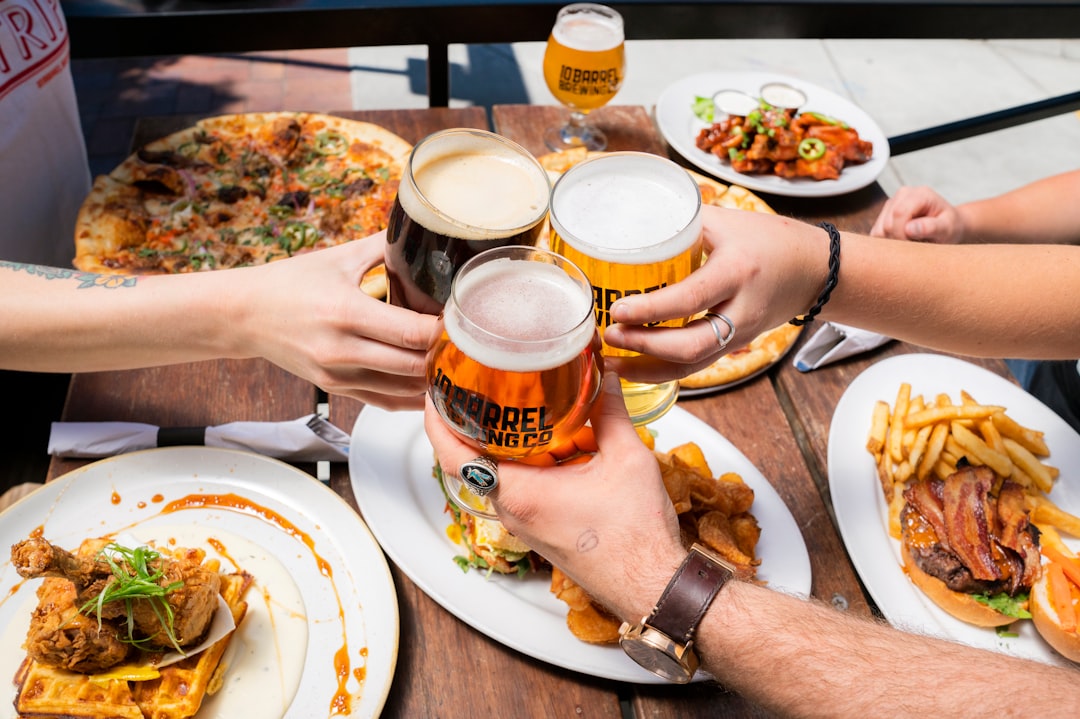
The single most Oktoberfest thing you can do to your kitchen costs almost nothing: put heavy glass beer mugs in the freezer the night before. A thick-walled 20-ounce stein, frosted to the point of fog, keeps a lager cold to the last swallow — no ice dilution, no racing the clock. I keep a set of four mugs in the freezer door from mid-September until Thanksgiving, and guests who’ve been coming for three years now walk straight to the freezer when they arrive, without asking. That, more than any decoration, is what makes the party feel like a tradition instead of a themed dinner.
Pour with some aggression down the side of the glass — a proper two fingers of foam is not a mistake in Bavaria, it’s the point. And raise them properly once, all together, eye contact and everything. “Prost” is a full-contact sport.
The Saturday Timeline (and the Truth About the Table)
Here is how the day actually goes in my kitchen, after three years of refining it. Friday night: mix the pretzel dough, refrigerate it, put the steins in the freezer, make the obatzda. Saturday noon: dough comes to room temperature, shape pretzels, set them to rest. Three o’clock: bake in two batches while the kitchen smells so good the neighbors text. Five o’clock: brats beer-simmered on the back burner, spaetzle batter resting in the bowl, board built. Six: steins out of the freezer, first pretzels back into a warm oven for ninety seconds, guests at the door. The whole machine runs on one oven, four burners, and zero heroics.
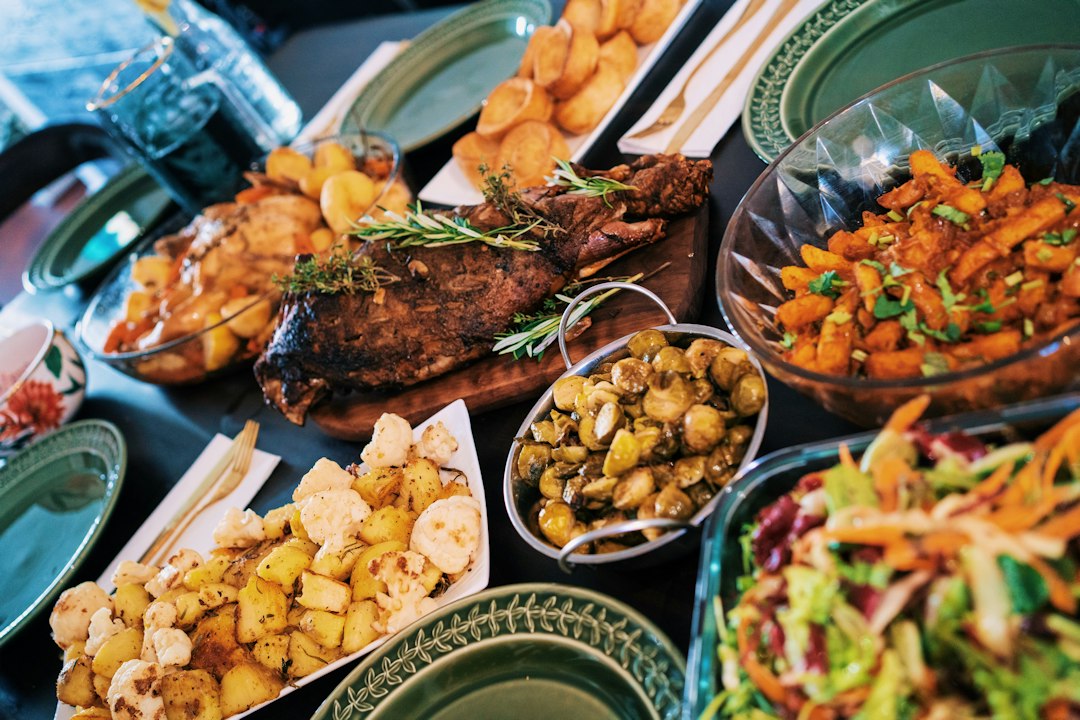
The truth, the one I’d tell you over the fence even if you weren’t reading this: the table doesn’t need to look like Munich. Mine never has. It needs warm pretzels with real crust, brats with snap, one absurdly orange cheese spread, and cold beer in a mug that has been waiting in the freezer since Friday. Put those four things in front of people you like, and I promise you — nobody misses the tent.
Lederhosen optional. Prost, always.