Last November I roasted a sixteen-pound turkey for five people. It was a beautiful bird, glossy and golden, and it fed us on Thursday, fed us again on Friday, turned into soup on Sunday, and was still sitting in my freezer in three labeled bags when the daffodils came up. Somewhere around the fourth turkey sandwich, my nephew asked, very politely, whether next year we could maybe just have the good part.
He meant the breast. And this year, with whole birds costing more and my table holding six chairs instead of sixteen, I am taking his advice. The turkey on my table on November 26 will be a single bone-in turkey breast, roasted in a cast iron skillet on a bed of onions, carved on the board in about four minutes, and gone by Saturday lunch. I have spent the last two weekends roasting test breasts with my small kitchen team, arguing about salt and timing, and I am ready to share the whole plan.
The short version, if you are reading this between errands:
- Size: a 5 to 6 pound bone-in breast feeds six with a little left over for sandwiches.
- Heat: 325°F, and pull it when the thickest part of the breast reads 165°F on a fast thermometer like the ThermoPro TP19H Instant-Read Thermometer.
- Pan: a Lodge 12-Inch Cast Iron Skillet with thick onion slices underneath beats a giant roaster for a single breast.
- Time: plan on roughly 1½ to 2¼ hours for a 4 to 6 pound breast, then a 20-minute rest.
The Math That Finally Changed My Mind
I resisted the breast for years, mostly out of loyalty to tradition and the drama of carrying a whole bird to the table. What changed my mind was a calculator and a pencil. The USDA’s October outlook puts its fourth-quarter wholesale forecast for frozen whole turkey hens at 175.0 cents a pound, up from 172.2 cents a year ago, and the agency says supplies of whole birds are tight. That is wholesale, not what you will see at the register, but the direction matters when you are planning a budget in early November.
Here is the part that surprised me. A turkey breast almost always costs more per pound than a whole bird. The USDA’s weekly retail report in October showed fresh bone-in whole breasts featured in thousands of stores at an average of about $5.45 a pound, while frozen whole birds on sale can run a fraction of that. If you only compare the price tags per pound, the whole bird wins every time.
But a whole bird is not all meat. A good share of that weight is backbone, wings, neck and the dark-meat legs that half my family politely pushes around the plate. When I priced it out for six people, the breast came in at a lower total cost than the twelve-pounder I would otherwise have bought, it took up a single shelf in the refrigerator instead of half of it, and it freed my oven for two full hours of the afternoon. Compare the total package price, not the per-pound sticker, and be honest about who in your house actually eats the drumsticks.
If your family adores dark meat, there is a simple fix that I will get to in the gravy section: buy a couple of turkey thighs or wings separately. You still skip the sixteen-pound bird, and nobody has to give up their favorite piece.
How Much Breast Do Six People Actually Need?
The old rule of one pound per person was written for whole turkeys, where bones and trimmings take up a lot of the weight. A breast is mostly meat, so you need less. After my test roasts, here is what I tell friends who call me in a panic:
- Four people: a 3 to 4 pound bone-in breast, or about 2 pounds boneless.
- Six people: a 5 to 6 pound bone-in breast, or about 3 pounds boneless.
- Eight people: a 6 to 7 pound bone-in breast, or two smaller boneless roasts.
- Want leftovers? Add about a pound to any of those numbers.
Read the label before you put it in your cart. Many supermarket breasts are “enhanced” or pre-basted with a salt solution, which means you should go easy on the salt or skip the dry brine entirely. If the label lists only turkey, you have a blank canvas, and that is my preference.
If you are buying frozen, the thaw math works like a whole bird, just shorter: about one day in the refrigerator for every four to five pounds. A 6-pound breast needs a day and a half, so it can come out of the freezer on the Monday before Thanksgiving with room to spare. My full frozen turkey thaw calendar walks through the dates and the cold-water backup plan if you forget.
Bone-In, Boneless, or Rolled Roast?
I roasted all three over two weekends, and they each have a place. The bone-in whole breast is my pick for the holiday table. The bone acts like a heat shield, so the meat cooks more gently and stays juicier, and it looks like a proper centerpiece when it comes out of the oven, skin crackling and bronzed. It also gives you a carcass for a small pot of stock, which my grandmother would never have let me throw away.
The boneless breast cooks faster and carves like a dream, but it can dry out quickly because there is nothing protecting it. If you go boneless, you must use a thermometer and pull it on time. The netted or rolled roast is the easiest of all to slice into neat rounds, and it is wonderful for a buffet, but the skin rarely gets as crisp. For six people on Thanksgiving, I go bone-in every time.
Why a Skillet Beat My Big Roaster
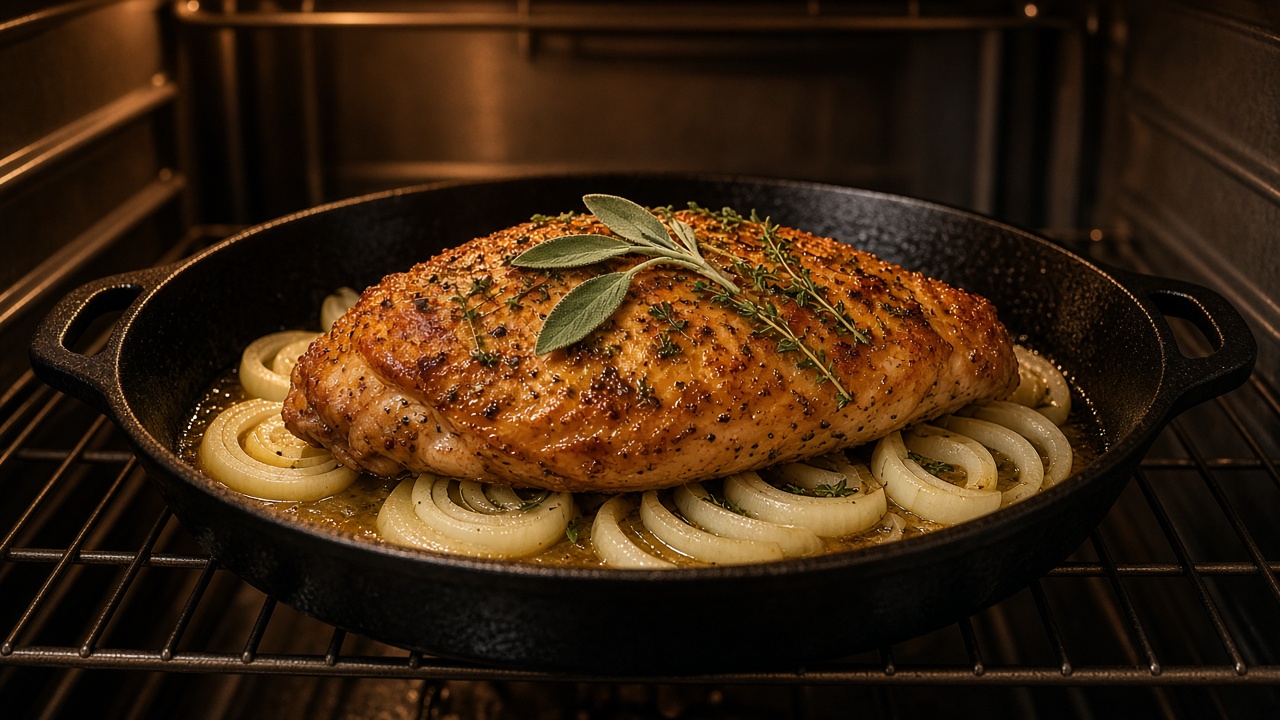
My giant roasting pan is wonderful for a whole bird, but a single breast looks lost in it, and all that empty metal means the drippings spread thin and scorch before you can make gravy. A heavy 12-inch skillet is the right size. I slice two onions into thick rounds, lay them in the bottom of the Lodge 12-Inch Cast Iron Skillet, set the breast skin-side up on top, and pour in a cup of stock. The onions lift the meat so air can circulate, the stock keeps the drippings from burning, and the cast iron holds steady heat so the bottom of the breast cooks at the same pace as the top.
If you do not own cast iron, or you are roasting two breasts for a bigger crowd, a rimmed sheet pan with a rack works beautifully too. I like the Nordic Ware Half Sheet With Oven-Safe Grid because the grid lets hot air reach the underside and the rim catches every drop. Just add a little extra stock to the pan, since the drippings spread wider on a sheet than in a skillet.
Salt Early, Butter Under the Skin
The single biggest improvement in my test roasts came from salting the breast a day ahead. Pat it dry, rub coarse salt all over and under the skin, and leave it uncovered on a plate in the refrigerator overnight. The salt pulls moisture out, dissolves into it, and then that seasoned liquid travels back into the meat. The skin dries out in the cold air, too, which means it crisps instead of steaming. I use Diamond Crystal Kosher Salt, about three-quarters of a teaspoon per pound, because the flakes are light and easy to scatter evenly. If your breast is labeled enhanced or pre-basted, skip this step and just season lightly before roasting.
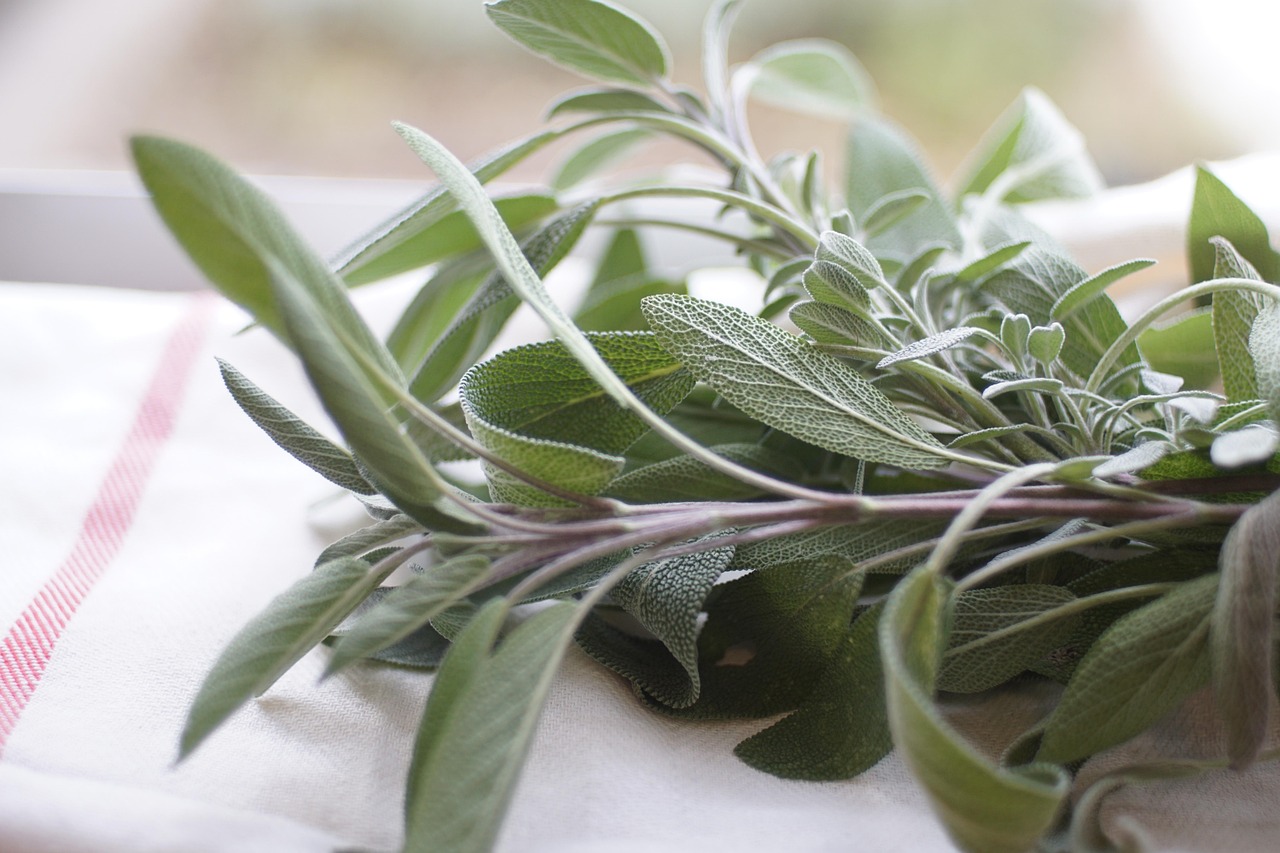
On Thursday morning, I mash a half stick of soft butter with chopped sage, thyme, a grated garlic clove and plenty of black pepper. I slide my fingers gently under the skin to loosen it, being careful not to tear it, and push the herb butter right onto the meat. Whatever is left gets rubbed over the outside. As the breast roasts, that butter melts down through the meat and drips into the onions below, which is the start of your gravy.
A Little Twine Goes a Long Way
A bone-in breast usually has a flap of skin at the neck end and loose skin along the sides that likes to shrink back while it roasts. Tying the breast with two or three loops of cotton string keeps the skin snug against the meat, which helps it brown evenly and protects the thinnest edges from drying out. Boneless breasts need tying even more, because they tend to slump into a flat, uneven shape that cooks at different speeds from end to end.
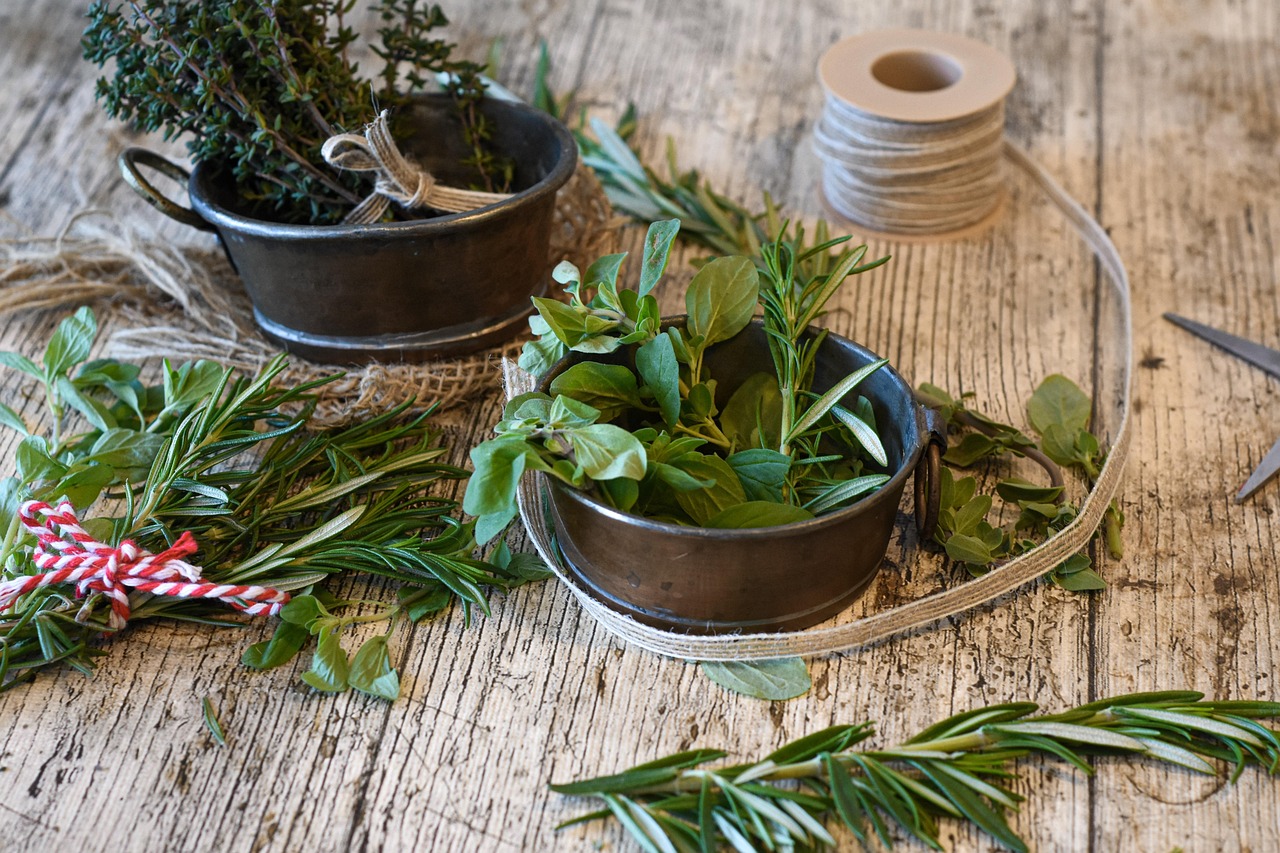
I keep a cone of Regency Natural Cotton Butcher’s Twine in my drawer year-round. Plain, unwaxed, food-safe cotton is what you want. Never use anything with dye or plastic in it, and snip the strings off before carving so nobody finds a surprise on their plate.
Cook to Temperature, Not to the Clock
I will say this as kindly as I can: the clock is a guess, and the thermometer is the answer. Set the oven to 325°F, which is the lowest temperature the USDA recommends for turkey. The USDA roasting chart gives about 1½ to 2¼ hours for a 4 to 6 pound breast and 2¼ to 3¼ hours for a 6 to 8 pound one, but the shape of the breast, how cold it was going in and your own oven’s personality can all shift that window.
The breast is done when the thickest part reads 165°F. Push the probe in from the side, toward the center of the thickest lobe, and keep the tip away from the bone, which runs hotter than the meat and will give you a false reading. If you keep going much past 165°F, the meat tightens and dries out, and that is how turkey breast earned its reputation for being dry.
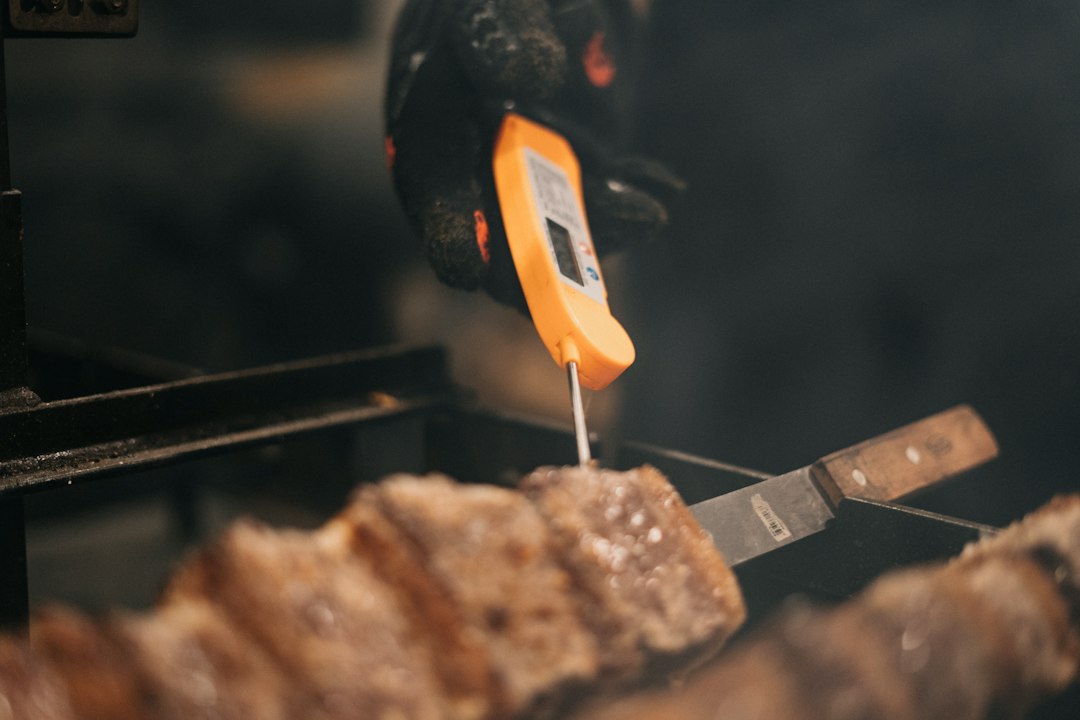
I use two thermometers on Thanksgiving, and they do different jobs. A leave-in probe like the ThermoWorks ChefAlarm Leave-In Probe Thermometer goes in at the start and sits on the counter with an alarm set to 160°F, so I can get on with the potatoes instead of opening the oven every fifteen minutes. When it chirps, I double-check two or three spots with the instant-read. My thermometer guide goes deeper on probe placement and how to calibrate yours in a glass of ice water.
One more tip from my test kitchen: if the skin is turning deep mahogany before the inside is close to done, tent the top loosely with foil and keep going. If the skin looks pale with only twenty minutes to go, turn the oven up to 400°F for the last stretch.
A 4 O’Clock Dinner, Hour by Hour
This is the schedule my team and I used for a 5½-pound bone-in breast in our final test, and it is the one going on my refrigerator door for Thanksgiving:
- Wednesday evening: salt the breast and set it uncovered on a plate in the fridge. Make the herb butter and the cranberry sauce.
- 11:30 a.m.: take the breast out of the fridge so the chill comes off. Slice the onions, soften the butter.
- 12:00 p.m.: oven to 325°F. Butter under the skin, tie, set on the onions, pour in the stock.
- 12:15 p.m.: breast goes in, probe set to alarm at 160°F.
- About 2:00 to 2:30 p.m.: it reaches 165°F. Out it comes to rest.
- 2:30 to 3:30 p.m.: the oven is yours again for stuffing, rolls and roasted vegetables at whatever temperature they want.
- 3:30 p.m.: gravy on the stove from the skillet drippings.
- 3:45 p.m.: carve. 4:00 p.m.: sit down.
Notice how much oven time that hands back to you compared with a whole bird. If you are cooking in a small kitchen, my one-oven Thanksgiving plan shows how to slot every side dish into that window without a traffic jam.
Rest It, and Take Your Oven Back
Once the breast is out, move it to a board or platter, tent it loosely with a sheet of Reynolds Wrap Heavy Duty Aluminum Foil, and leave it alone for 20 minutes. Do not wrap it tightly, or the skin you worked so hard for will steam and go soft. The temperature will creep up a few degrees as it rests, and the juices settle back into the meat instead of running all over the board when you slice.
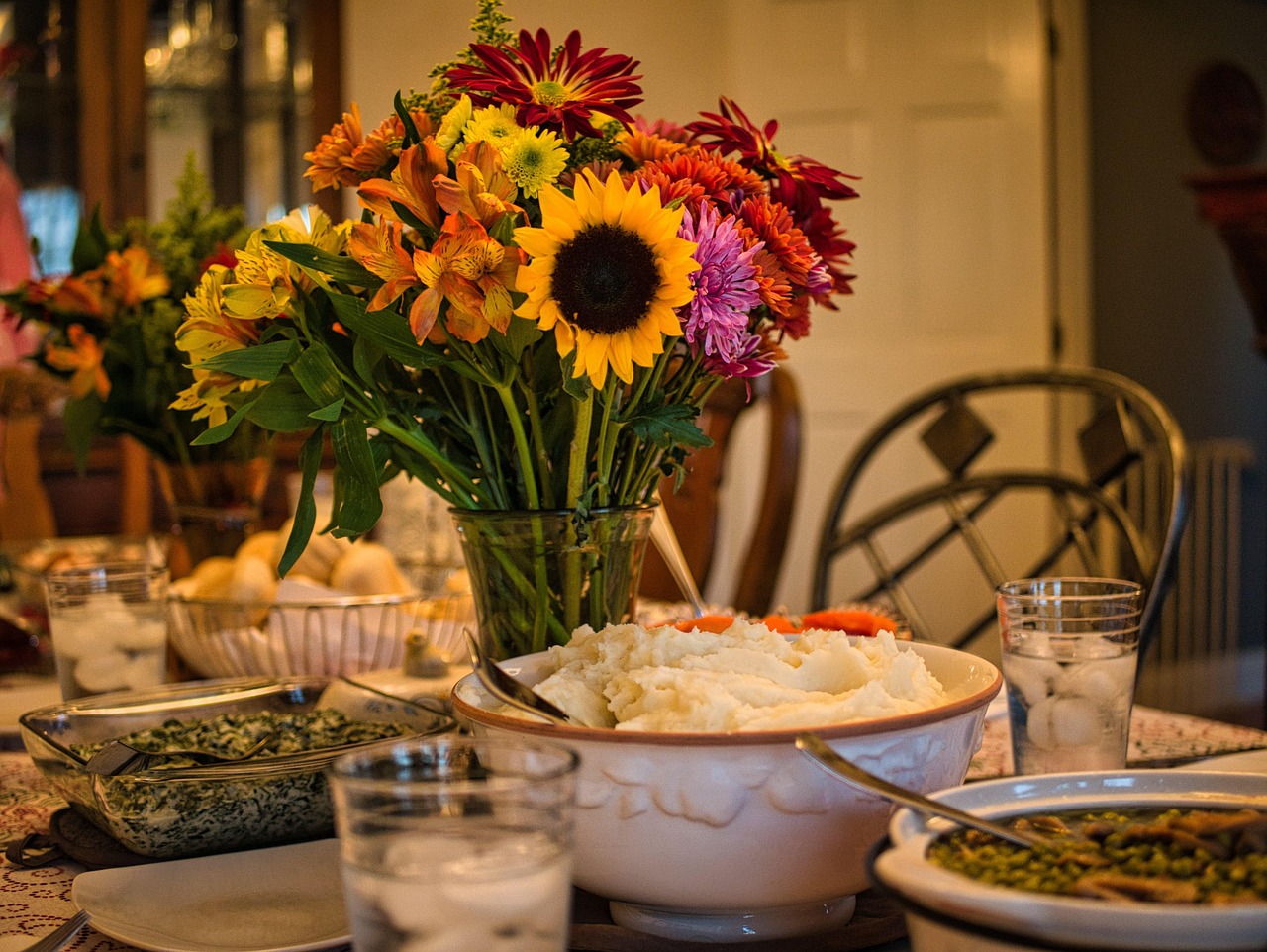
That rest is the secret gift of roasting a breast. While it sits, the oven is free, so I crank it up to 400°F for rolls and a tray of Brussels sprouts. On a whole-bird Thanksgiving, those sides used to wait in line behind the turkey all afternoon. This year, they get the oven at exactly the moment they need it, and everything arrives at the table hot.
Gravy From a Skillet, Plus a Dark-Meat Rescue
The onions, butter and stock in the bottom of your skillet are pure gold. Pour everything through a strainer into a fat separator, and press on the onions to get every drop. I reach for the OXO Good Grips 4-Cup Fat Separator because the bottom spout lets the dark, flavorful juices pour out while the fat stays floating at the top. Use a few spoonfuls of that fat to cook your flour, whisk in the juices and some stock, and you have gravy in ten minutes.
A single breast does not always give you enough drippings for six hungry people, so here is my trick. On Wednesday, I roast two turkey wings or a thigh until they are deeply browned, then simmer them with an onion, a carrot and a few herbs for an hour. That rich stock makes the gravy taste like a whole bird was involved, and the dark-meat lovers get the meat from the thigh. If you want a fully make-ahead approach, my make-ahead gravy method does exactly that and works perfectly alongside a breast.
Carving a Breast in Four Minutes
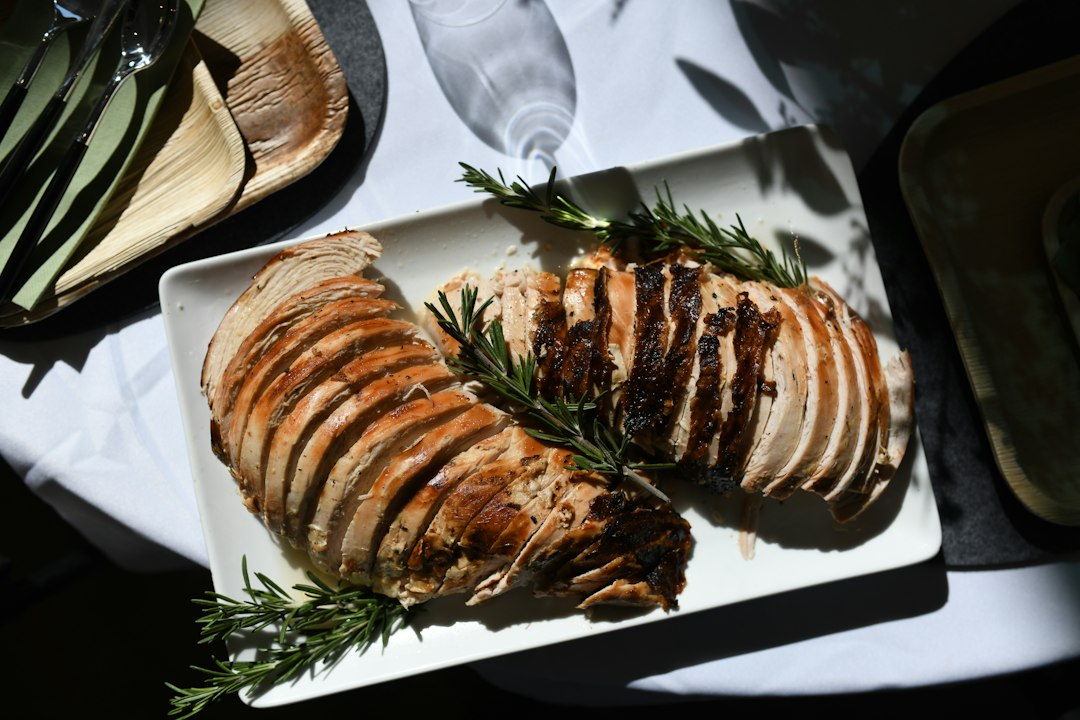
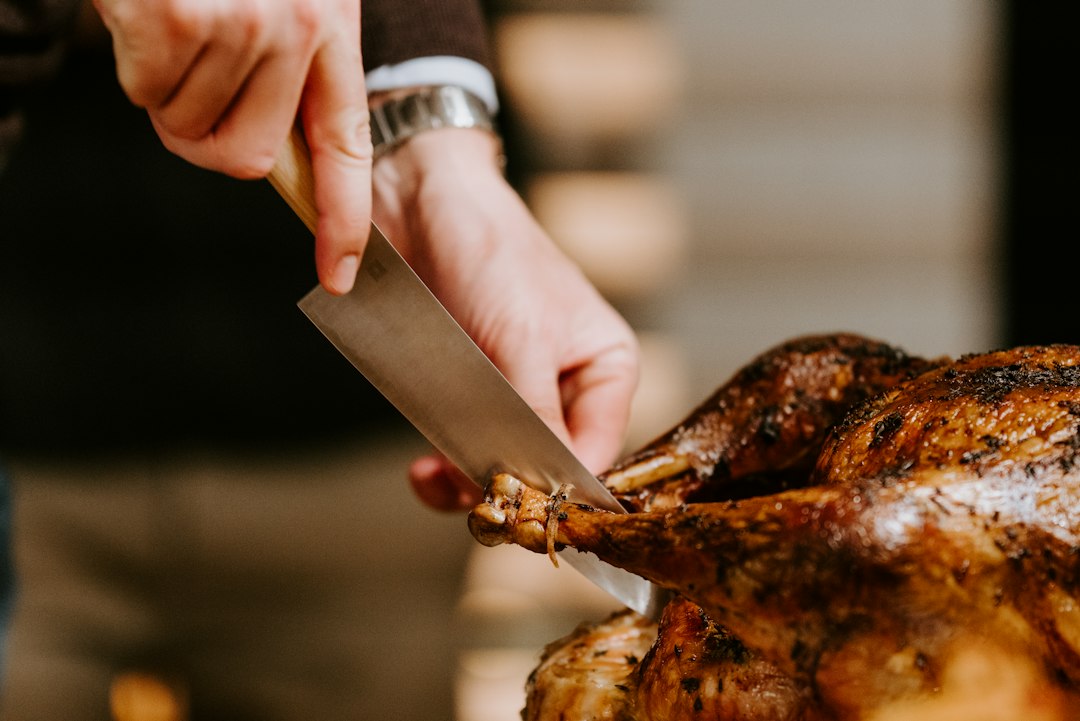
This is the part that won my nephew over completely. Carving a whole turkey at the table is a performance with an audience and plenty of chances for disaster. Carving a breast is quiet and quick. Snip off the strings, then run your knife along one side of the breastbone, following the curve of the rib cage, and lift off the entire lobe in one piece. Repeat on the other side. Now you have two boneless halves, and you can slice each one crosswise into even, half-inch slices with skin on every piece.
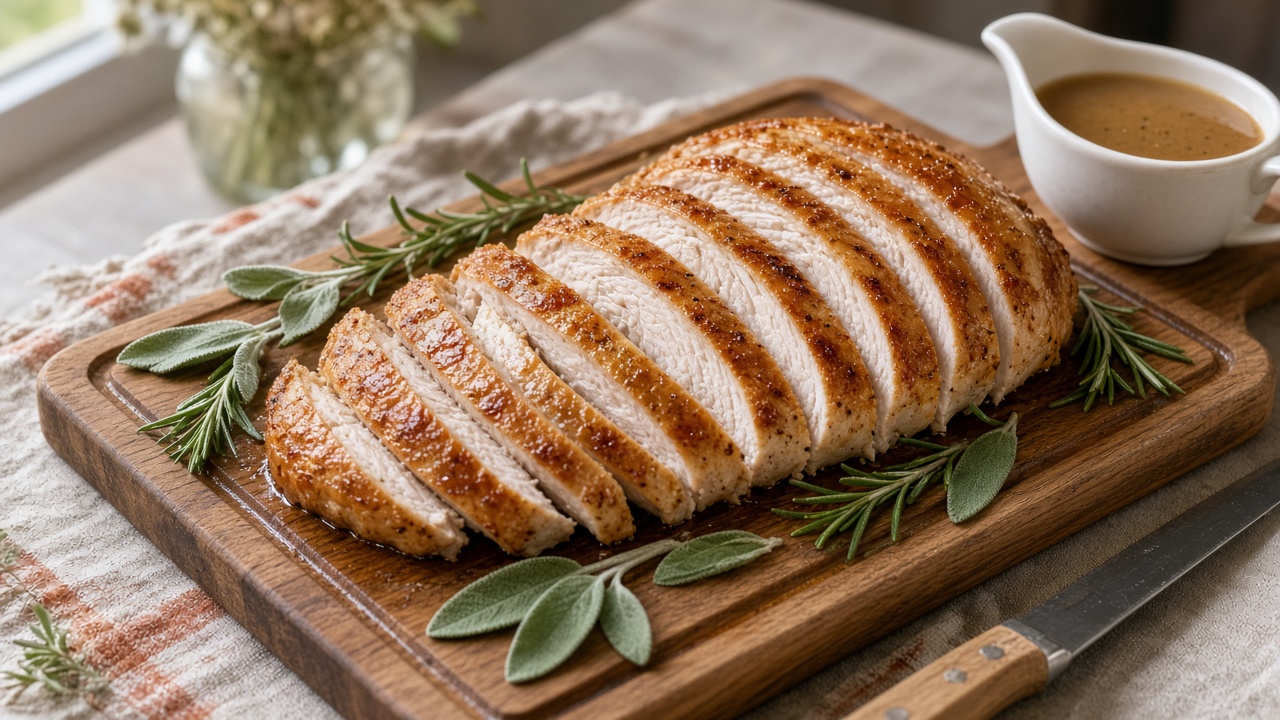
Two tools make a real difference. A board with a deep juice groove keeps the counter clean and catches the juices for the gravy boat; my John Boos Reversible Carving Board With Juice Groove has been on duty for a decade. And a long, thin slicing blade like the Victorinox Fibrox 12-Inch Granton Slicing Knife glides through the meat in one stroke instead of sawing, which keeps the slices neat and the skin attached. Save the bones for a small pot of soup on Friday.
What Six Chairs Taught Me
When I tested this plan for the last time, I set the table for six, carried the platter of sliced breast out with the skillet gravy, and waited for someone to mention the missing whole bird. Nobody did. They mentioned the crispy skin, how juicy the meat was, and how relaxed I looked. The kitchen was mostly clean by the time we sat down, and there were exactly enough leftovers for Friday sandwiches and one bowl of soup.
Thanksgiving is about the people around the table, not the size of the bird in the middle. If your guest list has gotten smaller, your budget has gotten tighter, or you simply want the good part without a freezer full of leftovers, give the breast a chance this year. Salt it the night before, keep your thermometer close, and enjoy the extra two hours of oven time. I think you will be as surprised as I was.
One thought on “The Bird Got Smaller, the Table Didn’t: Why I’m Roasting a Turkey Breast for Six This Thanksgiving”