My grandmother could tell a chicken was done by pressing her pinky against its drumstick and comparing it to the firmness of the web between her own thumb and forefinger. She never missed. I spent a decade trying to learn that trick and never came close — and here is the part that took me even longer to admit: neither had she, really. She was simply roasting the same four birds, in the same pan, in the same oven, for forty years. Her hand was calibrated to one kitchen. The moment you inherit a new oven, a new bird, a windstorm knocking your oven temperature around, or a pork loin instead of a chicken, the pinky test becomes what it always was: a lovely story.
October is when the fairy tales come home to roost, so to speak. The braisers come out, the Sunday roasts return, and somewhere around the third dry chicken breast of the season, most of us start whispering the same question: should I finally get a real thermometer? My team and I have spent the last several roast seasons testing the instant-reads, the wireless probes, and even the dial-faced antiques, and I have opinions. Loud ones. Pour your coffee.
The Fairy Tales We Cook By
“Cook until the juices run clear” is the most repeated piece of kitchen advice in America, and it fails in both directions. A chicken breast can carry salmonella while its juices still run faintly pink, and a perfectly safe, perfectly cooked thigh can leak juicy pink-tinged liquid until the end of time, because dark meat simply behaves differently. Color is a rumor. Juice is a rumor. “Twenty minutes per pound” is a rumor wearing a math costume — it ignores whether your bird came off the refrigerator shelf at 38 degrees or sat on the counter while you answered the door.
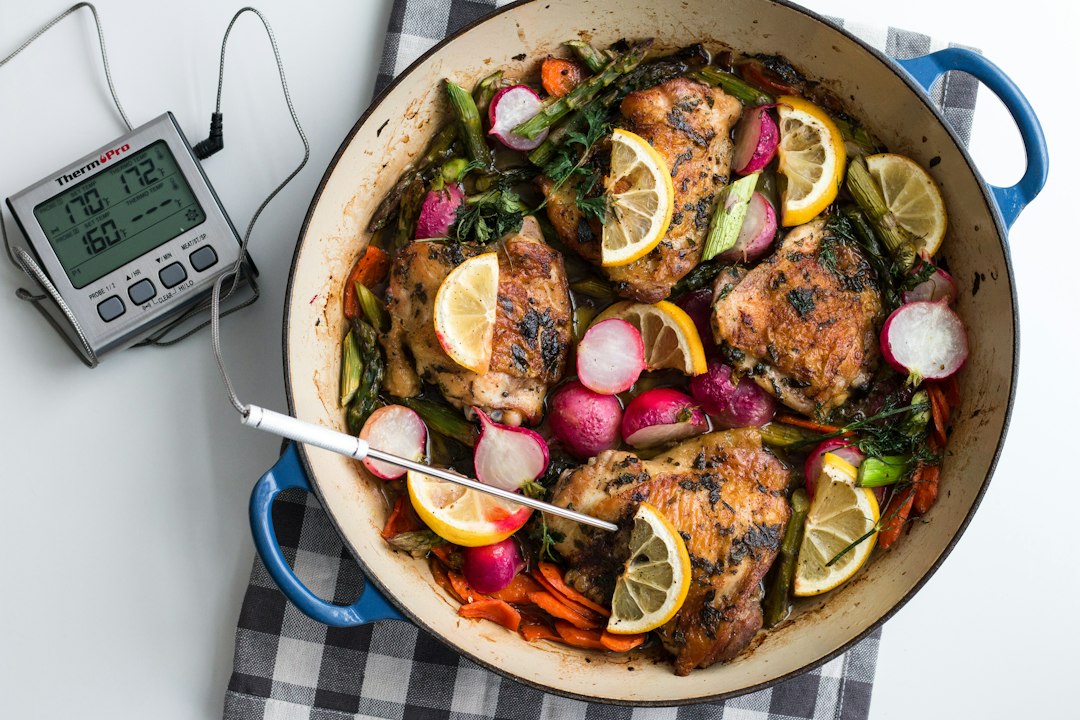
The numbers, on the other hand, do not negotiate. Chicken breast is safe at 165°F, but thighs want 175 to 185°F to turn their connective tissue into the silky stuff that makes dark meat worth eating. Pork loin is done — genuinely done, juicy and rosy — at 145°F followed by a three-minute rest, a change the USDA made official years ago that somehow still hasn’t reached half the recipe cards in this country. Medium-rare steak sits at 130 to 135°F. None of these numbers are visible from outside the meat. Every single one of them requires a probe.
Then there is carryover cooking, the quiet thief of October. A roast pulled from the oven keeps climbing five, sometimes ten degrees as its heat redistributes on the counter. Pull a chicken at 165 and serve it at 174, and you are carving cardboard. I learned this temperature-lesson the hard way with kettles and burners — boiled is not a temperature, and neither is “medium” — but meat is where the stakes actually taste like something.
The Speed Readers: Instant-Reads Worth Your Drawer Space
An instant-read thermometer is the one I reach for a dozen times a week. You slide the probe in, read the number, pull it out. Done. The question is never whether you need one — you do — it is how fast, how accurate, and how much you actually have to spend. Here is the honest tier list after a full season of side-by-side testing.
At the top sits the ThermoWorks Thermapen ONE, which reads true in about one second with accuracy within half a degree. The display rotates as your hand rotates, so you are never tilting your head like a confused puppy to read 163 sideways. It costs more than most of us want to spend on a stick — but my team’s oldest one is going on five years of near-daily use, and divided over that many roasts, it costs less per chicken than the celery you stuff inside it. If you cook meat more than once a week, this is the one.
The smart middle belongs to models like the ThermoMaven Pro, a half-second reader with the same ±0.5°F accuracy spec as thermometers costing twice as much. And ThermoWorks’ own ThermoPop 2 is the value pick I hand to every new cook — a few seconds slower, wonderfully readable, and tough enough to survive being left on a hot stovetop (ask me how I know). For the true budget seat in a camper or a college kitchen, the Alpha Grillers instant-read costs about what you’d spend on a rotisserie chicken and reads close enough to keep one from being overcooked.
Whatever you buy, look for the same short list: a reading under three seconds, a thin probe tip (fat tips leave a puncture wound that drains your juices), a backlight, and honest waterproofing. And if your oven runs as moody as mine, pair the probe with what you learned from the week I measured every burner in my kitchen — because a perfect thermometer cannot save meat that is sitting over a burner lying about its heat.
The Babysitters: Wireless Probes That Watch Dinner So You Don’t Have To
Instant-reads answer a question. Wireless probes prevent the question from needing to be asked. You slide a heat-safe probe into the roast, close the oven or grill lid, and your phone chirps from the porch when you are two degrees from done. For a four-hour Sunday chuck roast, or anything happening on a cold-weather grill, this is the difference between hosting your guests and babysitting your meat.
The ThermoMaven Sub-1G is the current darling of our test kitchen: a fully wireless probe that talks to a standalone base across serious distance, with a screen that lives on the counter instead of only in an app. If you want the probe-to-phone experience at a friendlier price, the TempPro TempSpike covers five hundred feet of backyard, which is five hundred feet more than most of us actually walk during a roast.
Cooking a big Sunday spread? Move up to a two-probe system like the ThermoMaven WiFi — one probe in the bird, one in the pork tenderloin, alerts on both — or the TempPro TempSync, whose Bluetooth range handled my entire downstairs plus the patio. My favorite trick with any of them: set the alarm five degrees under target, pull the roast, and let carryover finish the job while you make gravy. The thermometers that estimate rest-time countdowns will even do this math for you.
If apps make you grumpy, the corded classic still earns its counter space. The TempPro TempTrack runs a heat-proof cable from probe to a big magnetic display, no pairing, no passwords, no firmware updates at 5 p.m. on a Sunday. Sometimes the oldest design is simply the one that works while your Wi-Fi has opinions.
The Analog Insurance Policy
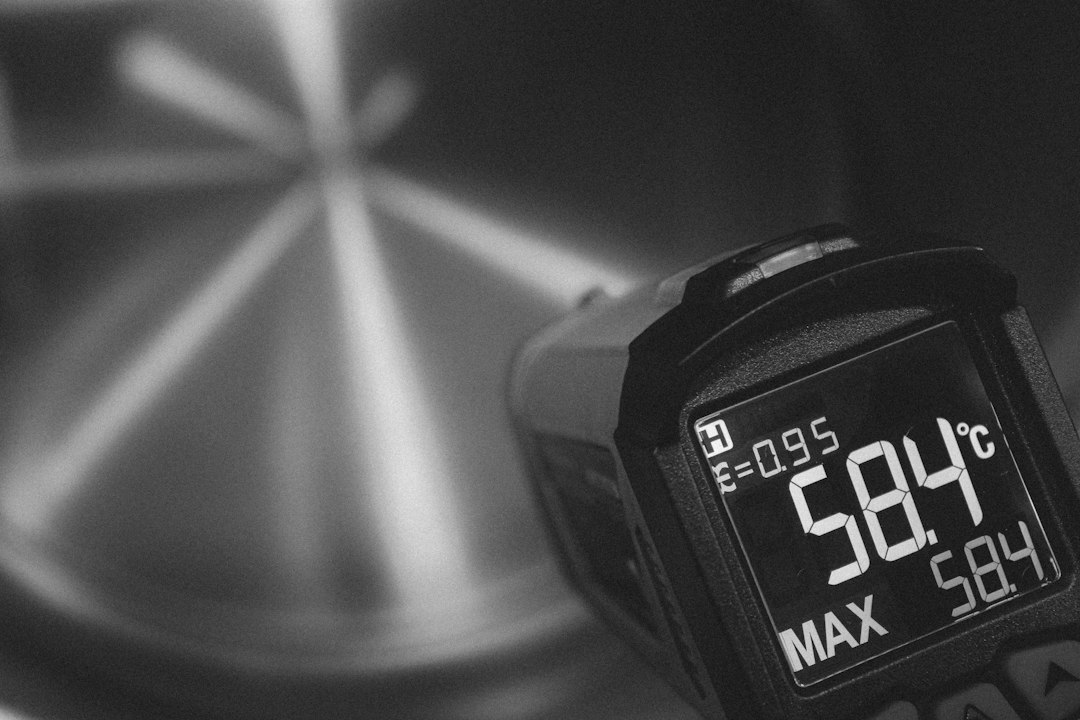
Every serious kitchen I know keeps one battery-free dial thermometer in the drawer, and mine is an Escali oven-safe dial that has outlived three refrigerators’ worth of batteries. You leave it in the bird the whole roast, glance through the oven glass, and it asks nothing of you — no charging, no syncing, no chirping. Is a dial as precise as a Thermapen? No. Does it matter when the power is out on Thanksgiving Eve and every digital device in the house is dead? Also no. It is the seatbelt in the trunk, and it costs about what a pumpkin costs in October.
Treat the dial as a rough map and the instant-read as the destination check: when the Escali says the bird is close, I confirm the final number with the fast probe. Two tools, one perfect chicken.
The Ice Bath Ritual: Keeping Your Thermometer Honest
Any thermometer, from the twenty-dollar dial to the triple-digit wand, can drift out of truth over seasons of heat and dropping. Checking one takes ninety seconds and a glass of water: pile it full of ice, top with cold water, stir, wait a minute, and probe the middle. A trustworthy thermometer reads 32°F, plus or minus a degree. Mine gets this little ice-bath ritual on the first of every October, right alongside swapping the summer tools out of the prime drawer real estate, and it has caught two liars over the years that would have served me dry turkey.
If a model reads a couple of degrees off, some (including the Thermapen family) offer a simple recalibration adjustment under the battery or a reset in the app. If a cheap one drifts and cannot be corrected, retire it without ceremony — an honest tool is the entire point.

Because the Turkey Is Closer Than You Think
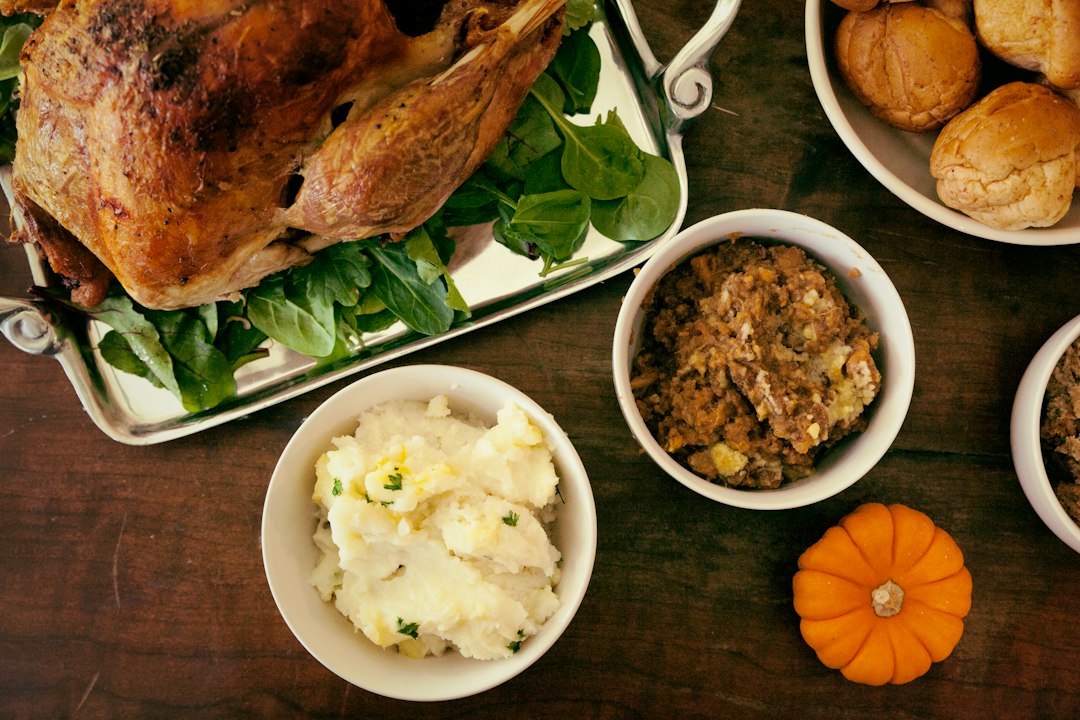
Here is the real reason I am writing about thermometers on the last day of September: the big bird is eight weeks out, and the cooks who serve a juicy one are not the ones with luck. They are the ones who arrived at Thanksgiving with a thermometer they already knew how to use, in a hand that had checked twenty roasts before the one that mattered. The rest of the roast-day kit — the pan, the braiser, the twine — I covered in my Sunday roast guide; the probe is the piece that decides whether all the rest of it was worth it.
So start now, while the stakes are one chicken and not one holiday. Learn your bird’s two magic numbers, teach your hand the poke-then-verify rhythm, and let October be the training camp. By the time the turkey comes home, you won’t be standing over the oven reciting fairy tales about juices and pinky pressure. You’ll be on the porch with your family, phone in your pocket, waiting for the quiet chirp that says dinner is exactly two degrees from perfect. My grandmother would have called that cheating. Then again, she never once carved a dry bird — so I think, secretly, she’d have approved.