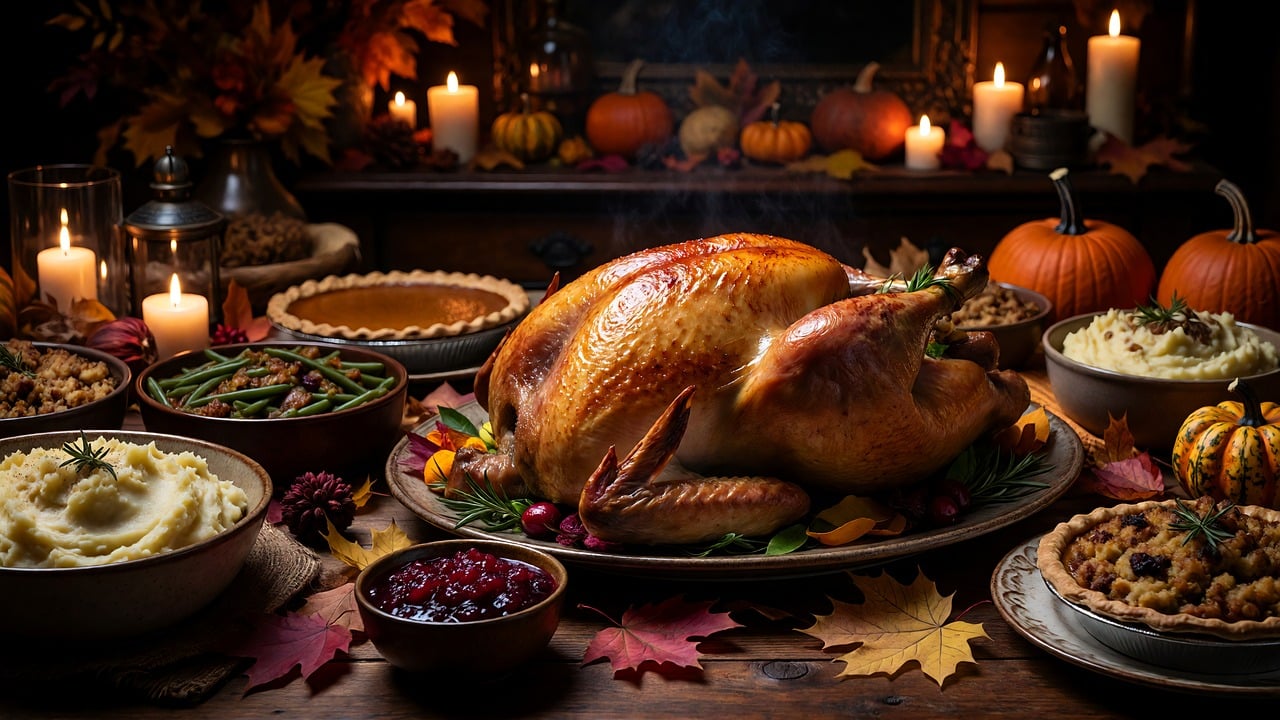
There is a quiet little tragedy at almost every Thanksgiving buffet, and it happens about twenty minutes after the blessing. The first round of plates is fine. Everybody gets steaming potatoes and gravy that pours like silk. Then the second-helping crowd gets up, and the gravy has grown a skin, the mashed potatoes have gone stiff around the edges, and somebody’s uncle is standing at the microwave with a bowl of stuffing, punching buttons and asking how long.
My mother solved this with sheer motion. She never sat down. She’d ferry dishes back to the oven, stir the gravy on the back burner, carry it out again, and eat her own dinner standing at the counter around four-thirty. My grandmother set the whole buffet on the kitchen counter beside the stove so the gravy could live on a low flame, which worked fine until thirty people were packed into a galley kitchen.
Thanksgiving is Thursday, November 26, ten days from today, and the question I keep hearing from readers right now is a fair one: do I actually need a warming mat, a buffet server, a chafing set, or a roaster, or is that all just more stuff for the top shelf? I’ve hosted a buffet-style Thanksgiving in a dining room with exactly two outlets for most of my adult life, and I’ve tried nearly every way there is to keep food hot. Here’s what each one is good at, where each one quits, and how to plan the table so your last guest eats as well as your first.
The Short Answer, If You’re Shopping Tonight
If you only read one section, read this one. These are the tools I’d reach for, matched to the kind of Thanksgiving you’re actually hosting:
- Best for most families (six to fourteen guests): a FEPPO Roll-Up Food Warming Mat. It holds your own casserole dishes hot on the sideboard, rolls up into a drawer afterward, and doesn’t need water or flame.
- Best if you love a tidy, matching buffet: the Elite Gourmet Triple Buffet Server and Warming Tray, three lidded pans on one heated base.
- Best for the gravy, full stop: a Crock-Pot 16-Ounce Little Dipper Food Warmer. Small, cheap, and it keeps a pint of gravy pourable for hours.
- Best for big crowds or a backyard table: a Stainless Steel Chafing Dish Buffet Set (4-Pack) with Sterno 6-Hour Wick Chafing Fuel Cans, because you don’t need a single outlet.
- Best if your oven is the real bottleneck: a Nesco 18-Quart Roaster Oven, which cooks first and holds second.
- The tool that keeps all of them honest: a ThermoPro Instant-Read Food Thermometer, because the number on a warming tray is a suggestion, not a promise.
Now let me tell you why, and which one I’d skip in your house.
Why Food Goes Cold So Fast on a Holiday Table
A Thanksgiving buffet fights physics three ways. Cold serving dishes straight from the cabinet pull heat out of the food the moment it lands. The dining room is cooler than the kitchen, and somebody is always opening the front door. And every time a guest lifts a lid, the steam escapes and the surface cools.
Mashed potatoes and gravy suffer most; they skin over and stiffen long before they get dangerously cool. The turkey, honestly, is the most forgiving dish on the table, because a little warm pan juice spooned over carved slices brings it right back.
There’s also a food-safety side to this, and I don’t want to skip past it. The USDA’s guidance for hot buffet food is simple: hold it at 140°F or warmer, and anything perishable that sits at room temperature longer than two hours should be tossed. On a lingering Thanksgiving afternoon, with people grazing until six, two hours goes by fast. A warmer is what lets you leave food out for the stragglers without crossing your fingers.
One rule before we talk gear: every one of these tools is for holding food that’s already hot, not for reheating cold food. If the green bean casserole went into the fridge on Wednesday, it needs to come back up to temperature in the oven or the microwave first. A warmer brings cold food up far too slowly to be safe.
The Roll-Up Warming Mat: The One I Use Most
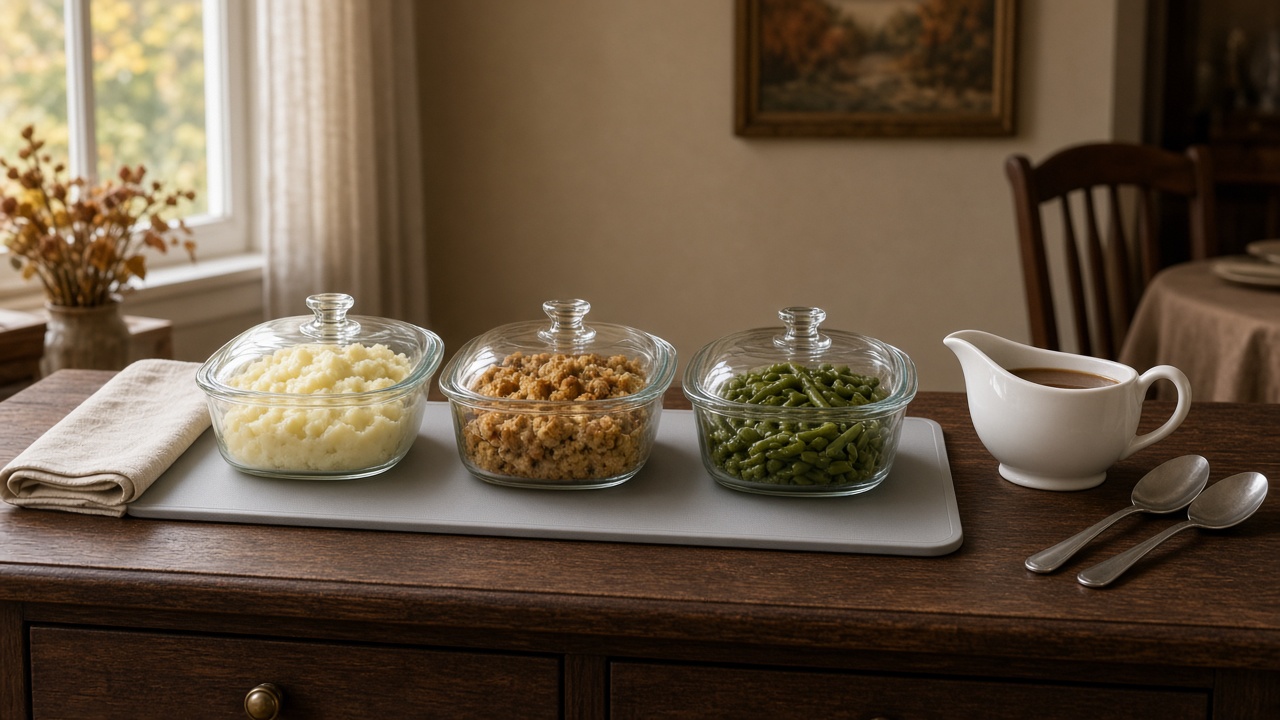
A food warming mat is a flexible silicone pad, usually about two feet long, with a heating film inside and a little control panel at one end. You unroll it on the sideboard, set the temperature, and put your own dishes right on top. When dinner’s over, you wipe it down, roll it up, and it goes in a drawer.
That’s why I love it: a mat is the only warmer that truly disappears between holidays. Most of the popular ones draw somewhere between about 300 and 500 watts, which is gentle enough to share an outlet with a slow cooker. Consumer Reports measured several of them and found they used only a fraction of a kilowatt-hour over a long serving window, so you won’t see it on your electric bill.
Here’s what nobody prints on the box, though. The temperature on the display is the temperature of the mat, or sometimes of the element inside the mat. It is not the temperature of your food. A thick stoneware casserole sitting on a mat set to 176°F might hold the potatoes at 145°F in the middle and 130°F near the top crust. Testers have found that the actual surface temperature of many mats drifts well above or below the number on the screen. So the mat goes on a medium-high setting, the lids stay on, and I check each dish with a thermometer once, about twenty minutes after I set it out. After that I trust it.
A few things make a mat work much better:
- Use flat-bottomed dishes. A glass baking dish sits flush and heats evenly. A footed serving bowl barely touches the surface and stays lukewarm. I keep a Pyrex 3-Quart Glass Baking Dish With Lid or two just for the buffet, because the lid matters as much as the heat.
- Preheat the dishes, not just the mat. Set the empty dishes on the mat while the turkey rests. Warm glass doesn’t steal heat from the food the way cold glass does.
- Mind the table underneath. Most mats sit on little feet that keep the heat off the surface, but I still lay a folded linen or a cork board under mine on my grandmother’s walnut sideboard. Old finishes don’t forgive.
- Don’t crowd it. A standard mat holds three 9-by-13 dishes, or four smaller ones. Edge spots run cooler on some models, so put the gravy and potatoes in the middle and the rolls at the end.
Where the mat falls short: it can’t keep up with a crowd of twenty-five, and it does nothing for moisture. Stuffing held two hours with the lid off turns into croutons, so keep the lid or a sheet of foil on it.
The Buffet Server: Tidy, Matching and a Little Bulky
A buffet server is a rigid heated base, often stainless, with two or three lidded stainless pans that drop into a frame on top. It’s what you picture when you think “church potluck done right.” Everything matches, the lids have little notches for the serving spoons, and the food goes straight from the stove into the warming pans.
I owned one for years. On the plus side, it’s the one option on this list that makes a sideboard look catered, and the notched lids keep the heat in even while people are serving. If you host a buffet several times a year, for Christmas Eve and a Super Bowl party and Easter brunch, it earns its spot.
The downsides are real, though. The pans are usually only two and a half quarts each, which is generous for a side dish and stingy for mashed potatoes for fourteen. You’ll be refilling. You also have to transfer every dish out of what you cooked it in, which means more washing up. And it takes about as much cabinet space as a countertop oven; mine lived in the garage.
My rule of thumb: if you already have nice casserole dishes you like serving from, buy the mat. If you don’t, and you host often, the server is worth it. Either one is a good answer for a family of six to fourteen.
The Chafing Set: Old School, No Outlet Required
Chafing dishes are what caterers use, and there’s a reason they’ve survived a hundred years. A wire frame holds a shallow pan of hot water, a can of chafing fuel burns underneath, and your food pan nests in the steam above. The water bath is the genius part. It heats gently and evenly from every side, keeps food moist, and almost never scorches the bottom.
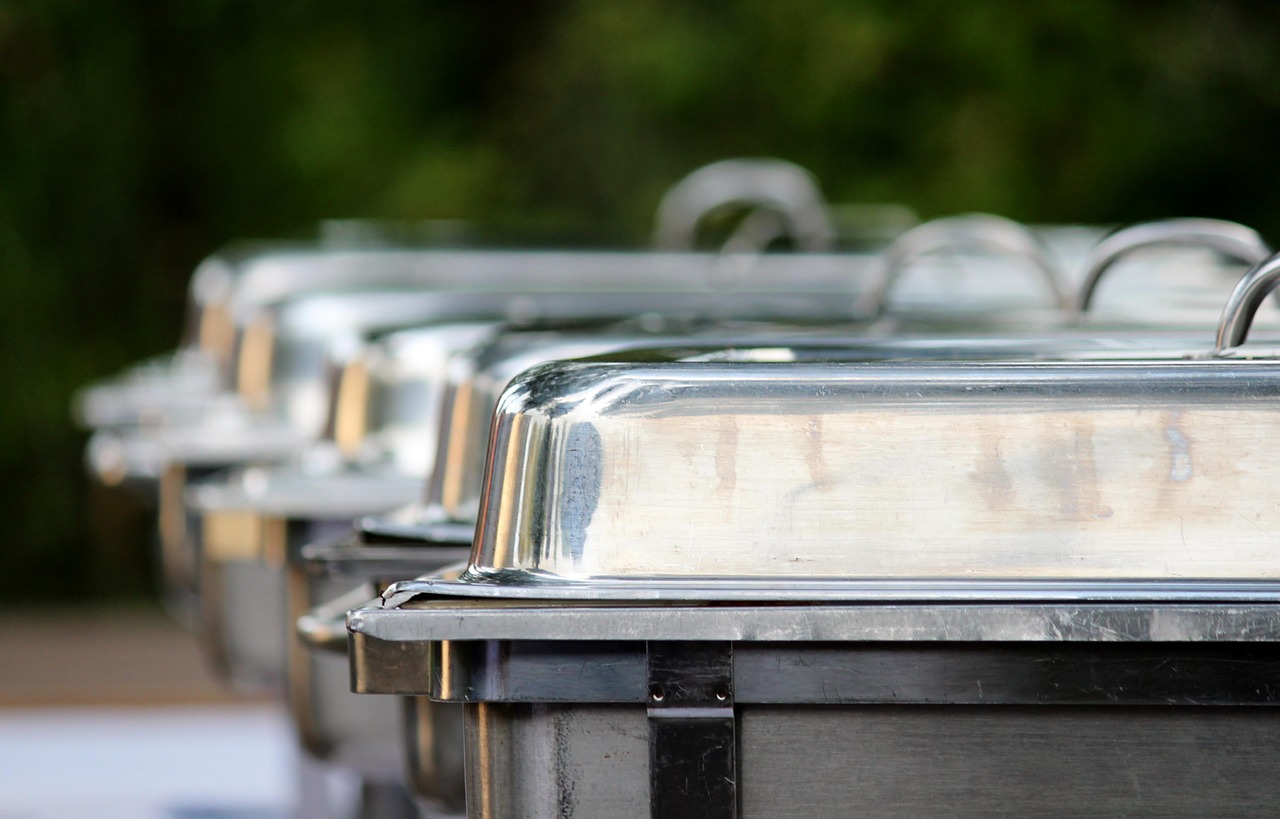
I bring out the chafing set when the guest list climbs past twenty, when we’re eating on my sister’s patio, or when the outlets are already spoken for. A reusable stainless set of four stacks flat in a closet, and for a crowd it’s the most food you can keep hot for the least money.
A few things I’ve learned the hard way:
- Fill the water pan with hot tap water, not cold. Cold water can take half an hour to make steam. Hot water gets you there in ten minutes.
- Buy the six-hour wick cans for Thanksgiving. The two-hour gel cans run out right about when the second helpings start. A wick can burns steadier and longer, and you can snuff it and relight it later for pie.
- Keep it away from little hands and long sleeves. There is an open flame under that frame.
- Check the water level once an hour. When the pan boils dry, the food scorches fast.
The Roaster Oven: A Cook First, a Warmer Second
A countertop roaster is really a small electric oven shaped like a big enamel pot with a lid. Plenty of people use one for the turkey itself, and I’ve written about freeing up the real oven in my one-oven Thanksgiving plan. What people don’t realize is how good a roaster is at holding a huge batch of something once the cooking is done. Turn it down to its warm setting with the lid on, and an entire roaster full of mashed potatoes or carved turkey in broth will stay hot and moist all afternoon.
A roaster makes sense as your warmer when the crowd is too big for one 9-by-13 of stuffing and your real oven is the bottleneck: cook in it, flip to warm, and slide it onto the buffet.
But here’s the catch, and it’s the single most important thing in this whole article: a roaster pulls serious power. Most 18- and 22-quart models are rated around 1,400 to 1,500 watts. A standard household circuit is 15 amps, which works out to 1,800 watts total, and electricians will tell you to keep a steady load at about 80 percent of that, roughly 1,440 watts. A roaster running full tilt can use up an entire dining-room circuit on its own. Plug a warming mat and a coffee urn into the same wall and you’ll be eating by candlelight.
The Power Math Nobody Does Until the Breaker Trips
The year I learned this, I had a coffee urn, a slow cooker and a roaster all plugged into the dining room. The breaker went right as the turkey was being carved.
Now I do an outlet check a week before. Flip breakers one at a time and note which outlets share a circuit, because many homes run the dining room and part of the living room on one. Then add up the wattage on the labels of what you plan to run. These are rough numbers, so check your own appliance labels:
- Slow cooker on warm or low: usually well under 200 watts.
- Small 16-ounce dip warmer: about 20 to 30 watts.
- Roll-up warming mat: about 300 to 500 watts.
- Buffet server: typically a few hundred watts.
- Coffee urn while brewing: often 1,000 watts or more.
- Roaster oven: about 1,400 to 1,500 watts.
A mat, a slow cooker and a little dip warmer can happily share a circuit. A roaster wants a circuit to itself, and so does a brewing coffee urn. If the only free circuit is across the room, a 14-Gauge Heavy-Duty Indoor Extension Cord (3-Outlet) is the safe way to get there. Skip the skinny brown 16-gauge cords from the junk drawer for anything that heats; they aren’t built for a long afternoon of steady load, and they get warm. Tape the cord flat along the baseboard so nobody carrying a pie trips over it.
Gravy Gets Its Own Plan
If you take one idea away from this article, let it be this: gravy is the dish that fails first, and it deserves its own little heater. A gravy boat on a cold table forms a skin in about fifteen minutes.
My answer for years now has been a tiny dip warmer. The Little Dipper holds about a pint, plugs in, has no settings at all, and keeps gravy pourable from the first plate to the last. I ladle it into the boat for the table and set the little warmer right beside it as the refill station. For the boat itself, a Double-Wall Insulated Stainless Gravy Boat is worth the counter space; the vacuum wall holds heat the way a good thermos does, so even the gravy that’s been sitting there twenty minutes is still steaming.
A trick from my grandmother: whisk a spoonful of hot stock into the gravy every time you refill it. It loosens anything that’s thickened and keeps it from tasting reheated.
Mashed Potatoes Belong in a Slow Cooker
Of all the dishes on the table, mashed potatoes are the ones I most want in a slow cooker rather than on a mat. They’re heavy, they’re dense, and a big batch for fourteen won’t fit in a single 9-by-13 anyway. A Crock-Pot 6-Quart Programmable Slow Cooker set to warm holds a double batch beautifully. The ceramic crock wraps the potatoes in heat from the sides as well as the bottom, the lid holds in the moisture, and the programmable kind will drop itself to warm when the timer ends instead of cooking the potatoes into glue.
Butter the crock before the potatoes go in, and stir in a splash of warm milk every hour or so.
The slow cooker does double duty on Friday, too. If you followed my leftover system, you know I like to send people home with a container of everything, and the crock is where Friday’s turkey soup simmers while I’m packing up the rest.
Check It Once, Then Relax
This is the step that turns guesswork into peace of mind. Twenty minutes after the food goes out, poke the middle of the potatoes, the stuffing and the gravy. If everything reads 140°F or warmer, you’re done worrying for the afternoon. If the stuffing in the corner of the mat reads 128°F, you move it to the middle or turn the mat up a notch.
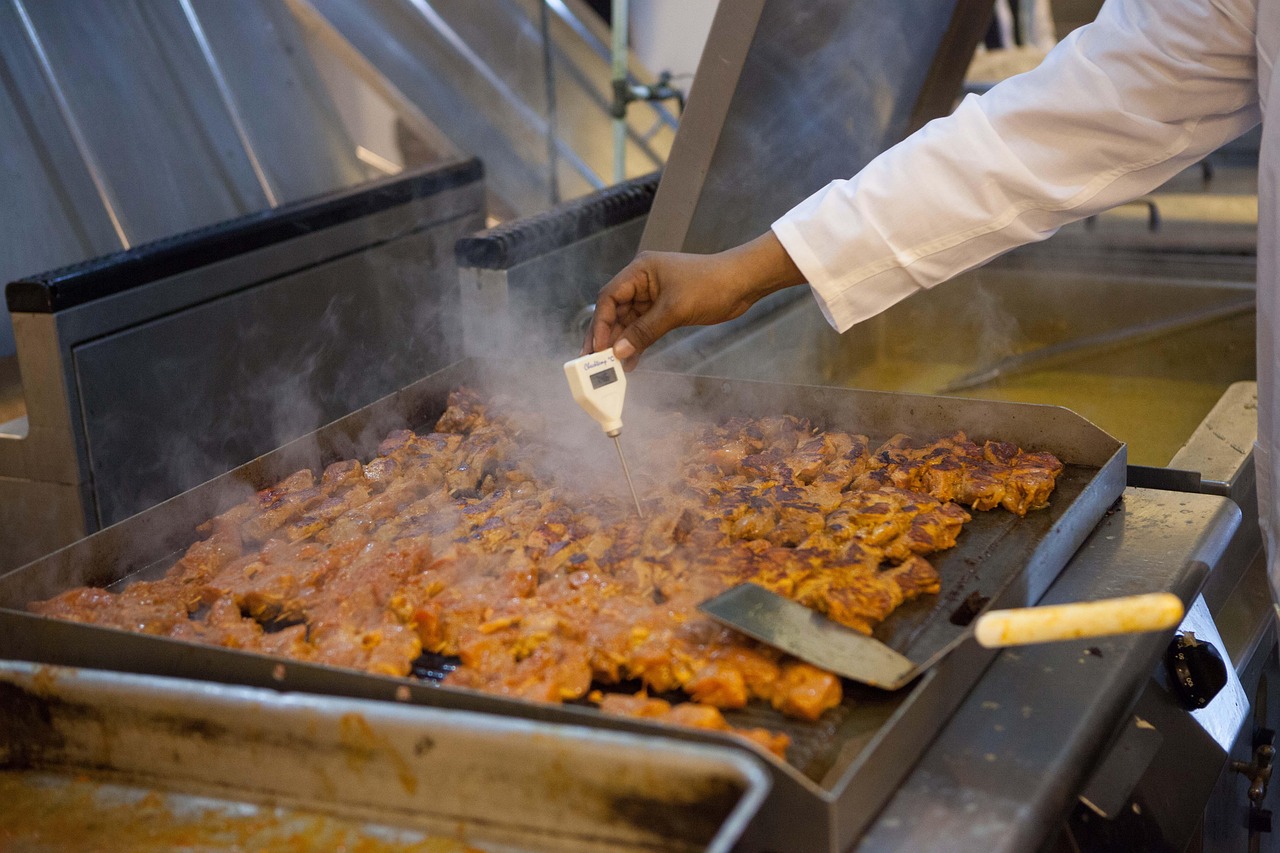
The instant-read thermometer you use for the turkey is perfect for this; wipe the probe between dishes. And while we’re talking about clean hands and clean spoons, my colleague Sophia over on our health site wrote a smart piece on why soap beats sanitizer at holiday gatherings. One serving spoon per dish, never shared, and a soap station people can find without asking: that’s the other half of a safe buffet.
Laying Out the Table So the Food Stays Hot
Where you put things matters as much as what keeps them warm. Here’s the order I use on my sideboard, and it hasn’t failed me yet:
- Plates at the start, with napkins and forks at the far end. Nobody wants to juggle silverware while they’re spooning gravy.
- Cold and room-temperature dishes first: salad, cranberry sauce, the relish tray, rolls. These don’t need heat, so they take the spots farthest from the outlet.
- The turkey in the middle, carved and covered loosely with foil, with a little warm broth spooned over.
- Hot sides on the warming mat or in the server next, closest to the outlet.
- Gravy and potatoes last, so they go on top of everything else and the gravy boat isn’t sitting there while people are deciding about the Brussels sprouts.
I plan the line backward from the plug: the hot end goes by the outlet and the cold end trails off toward the doorway.
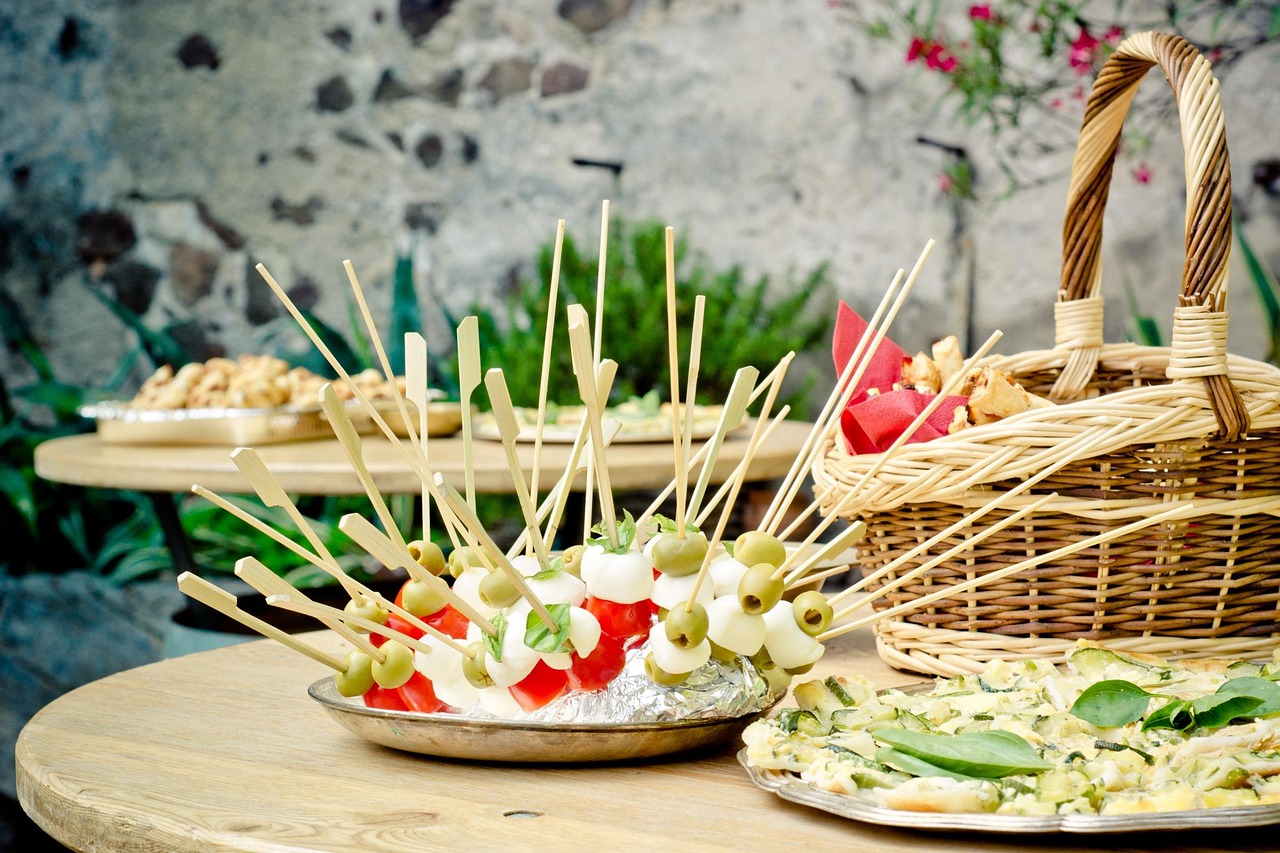
And don’t forget the dishes that need to stay cold. The USDA’s advice for cold food is the mirror of the hot side: 40°F or colder, so nest the bowl of shrimp cocktail or the deviled eggs in a larger bowl of ice, or set out half and keep the other half in the fridge for a quick swap.
What I’d Buy for Your Size of Table
Every house is different, so here’s how I’d decide if I were standing in your dining room:
Four to eight people, family style. You may not need a warmer at all. Heat your serving bowls in a low oven, keep lids on, and add one small dip warmer for gravy.
Eight to fourteen people, buffet on a sideboard. This is where the warming mat shines. Pair it with a slow cooker for the potatoes and a dip warmer for gravy, and you’re covered for about the cost of one nice roasting pan.
Fifteen to twenty-five people. Mat plus slow cooker plus a buffet server, or a mat plus two chafing dishes. You’ll be refilling pans either way, so set the backup dishes in a 200°F oven and swap them when one gets low instead of scraping the last spoonfuls into a fresh pan. Fresh pan in, old pan out is the caterer’s rule, and it’s the safe one.
More than twenty-five, or anywhere without outlets. A chafing set with wick fuel, and a roaster on its own circuit if you have one.
If you’re the guest bringing a dish, I’ve covered keeping it hot in the car in my Friendsgiving dish-carrier kit.
My Ten-Day Countdown
Here’s the calendar I’m working from this year, starting today:
- Monday, November 16: Decide on the warmer for your table size and order it. Shipping gets slower and the good mats sell out the week before Thanksgiving.
- The weekend before: Do the outlet walk. Find out which outlets share a breaker and plan where each warmer plugs in.
- Tuesday, November 24: Test-run every warmer. Unroll the mat, plug in the slow cooker, light one fuel can.
- Wednesday: Set the sideboard with empty dishes, spoons and trivets in order, with sticky notes for what goes where.
- Thursday, about thirty minutes before dinner: Turn on the mat and the dip warmer, and set the empty serving dishes on top to preheat.
- Twenty minutes after the food goes out: One thermometer check per hot dish. Then sit down and eat.
That last line is the whole point. For too many Thanksgivings I was the warming tray, eating cold potatoes at the counter the way my mother did. This year the warming tray is a warming tray, and the only thing I’m carrying to the table is my own plate.
Happy Thanksgiving from my kitchen to yours. Save me a spot at the end of the line; I’ll be the one going back for more gravy.