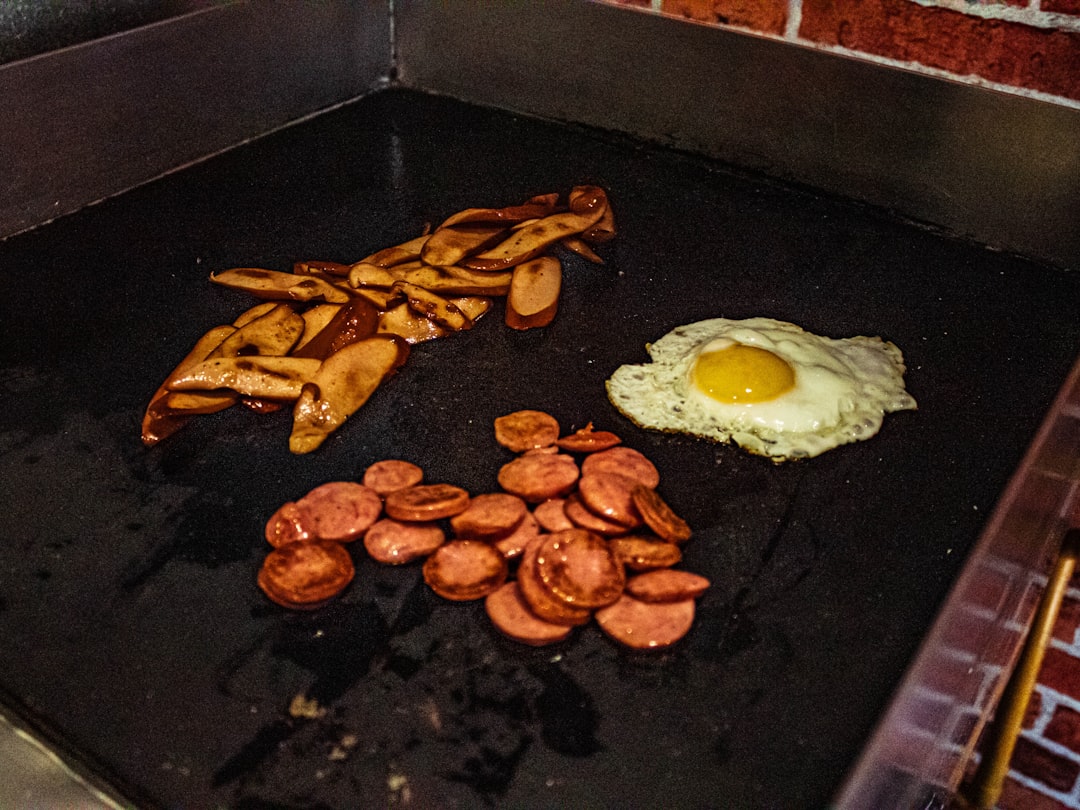
There’s a specific sound a flat-top griddle makes when batter hits the surface — that sizzling hiss that immediately smells like Saturday morning. It’s the sound I grew up hearing from the diner down the street from my grandmother’s house, and for years I assumed you needed a commercial kitchen to recreate it at home. Then last summer, my neighbor pulled a Blackstone out of his garage, and I watched him cook an entire breakfast — eggs, bacon, hashbrowns, and pancakes — simultaneously, outdoors, while the rest of us sat on the patio with coffee. I went home that afternoon and started researching.
Six weeks later, I had a flat-top griddle bolted to my own back patio, and I’m not exaggerating when I say it changed how my family eats from May through September. The grill I’d loved for a decade started collecting dust. The griddle became the cooking surface I reached for every single day.
Here’s everything I’ve learned about choosing, setting up, and actually using an outdoor flat-top griddle — whether you’re feeding two people on a Tuesday or twenty people at a neighborhood cookout.
Why a Griddle Beats a Grill for Everyday Summer Cooking
I know that’s a bold statement. I loved my grill. I still fire it up for ribeyes and beer-can chicken. But here’s what the griddle does that a grill simply can’t: it gives you a massive, flat, even-heating surface that handles everything from scrambled eggs to stir-fry to grilled cheese for a crowd. Nothing falls through the grates. Nothing chars unevenly. You can cook bacon, eggs, and toast on the same surface at the same time, and everything finishes together.
The first morning I made breakfast on my griddle, I cracked six eggs directly onto the steel, laid bacon strips beside them, and poured pancake batter in the corner. My kids stood at the patio door with their plates. It felt like running my own little breakfast joint, and everything came out perfectly. The eggs had those crispy lacy edges you only get from restaurant flat-tops. The bacon rendered in its own fat and crisped up beautifully. The pancakes developed a golden crust that my stovetop pan never quite achieves.
If you’ve been on the fence about adding a griddle to your backyard lineup, this is the summer to do it. The market has exploded with options at every price point, and the accessories have gotten genuinely impressive. Let me walk you through what I’ve tested, what I’d buy again, and what I’d skip.
Choosing the Right Griddle Size for Your Space
Flat-top griddles generally come in three sizes: compact two-burner models (around 22-24 inches), mid-size three-burner units (28-30 inches), and full-size four-burner rigs (36 inches and up). The right choice depends entirely on how you cook and who you feed.
I went with a 28-inch Blackstone 28-inch griddle with integrated hood because my patio has space constraints and I typically cook for four to six people. The integrated hood turned out to be the feature I didn’t know I needed — it traps heat for melting cheese on burgers, keeps the surface clean between uses, and protects the cooktop when I’m not cooking. It was the perfect middle ground between a portable unit and a full restaurant-style setup.
For smaller spaces or if you want something portable for camping and tailgating, the Blackstone 2-burner portable griddle gives you 22 inches of cooking surface that runs on the same propane cylinders as a camp stove. I recommended this exact model to my sister, who lives in an apartment with a tiny balcony. She’s been making hibachi-style dinners all spring on hers.
If you regularly feed a crowd or want the full backyard hibachi experience, a four-burner model gives you distinct heat zones — searing heat on one end, low and slow on the other. The Royal Gourmet 4-burner with standing cart is the best value I’ve found in the full-size category. It converts to tabletop mode, which means you can take it tailgating without the cart, then snap it back together for patio use at home.
The Mid-Range Sweet Spot: Three-Burner Griddles
Not everyone needs four burners, and not everyone wants to squeeze onto a two-burner surface. The three-burner griddle is the Goldilocks zone — enough cooking area for a family dinner plus guests, with three distinct heat zones for multitasking.
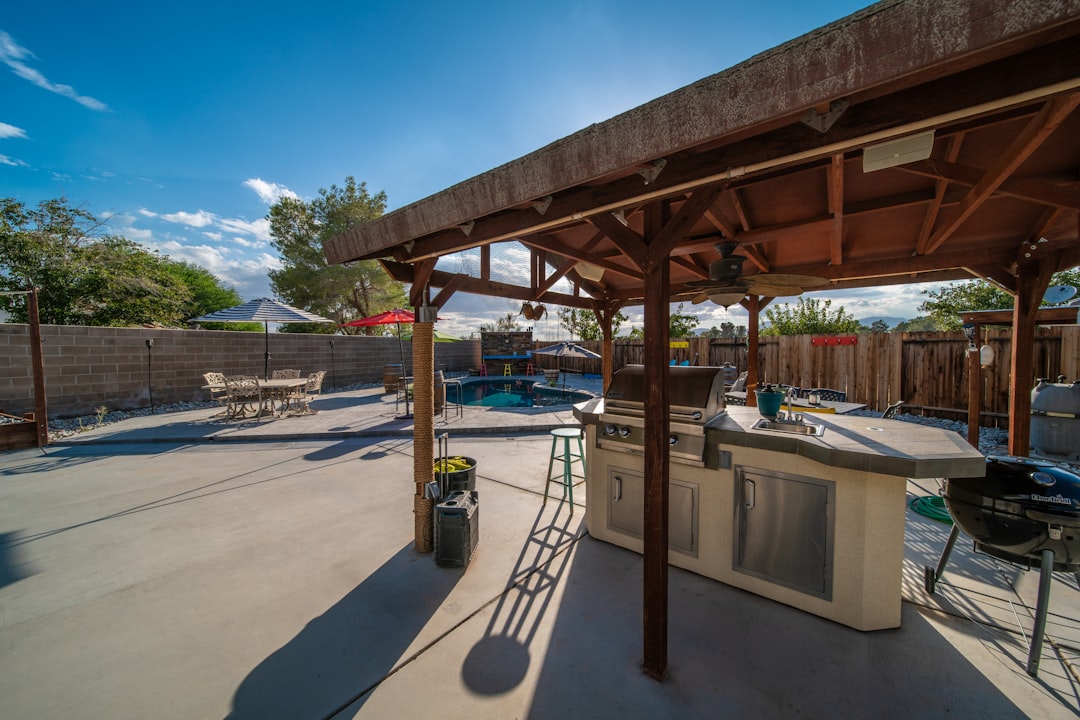
The Royal Gourmet 3-burner with collapsible stand caught my attention because it folds down for storage, which solved a real problem for me. My patio isn’t huge, and being able to tuck the whole unit against the wall when not in use matters. It delivers 314 square inches of cooking space — enough for a full breakfast spread or a dozen burgers at once. The side table flips up when you need it and down when you don’t.
What I appreciate about the three-burner configuration is the flexibility. You can keep the left burner on low for keeping food warm, crank the middle for searing, and use the right side for gentler cooking like sautéing vegetables or toasting buns. On a two-burner model, you’re limited to essentially hot and not-as-hot. On a four-burner, you’re using more propane than necessary for smaller meals. Three is the sweet spot for most families.
The Tools That Actually Matter on a Flat Top
A griddle without proper tools is like a kitchen with no spatulas — technically functional, but frustratingly impractical. The first time I cooked on my griddle, I tried using my regular kitchen turners and immediately realized they were too short, too flimsy, and the handles got uncomfortably hot. You need tools designed for open-flame cooking.
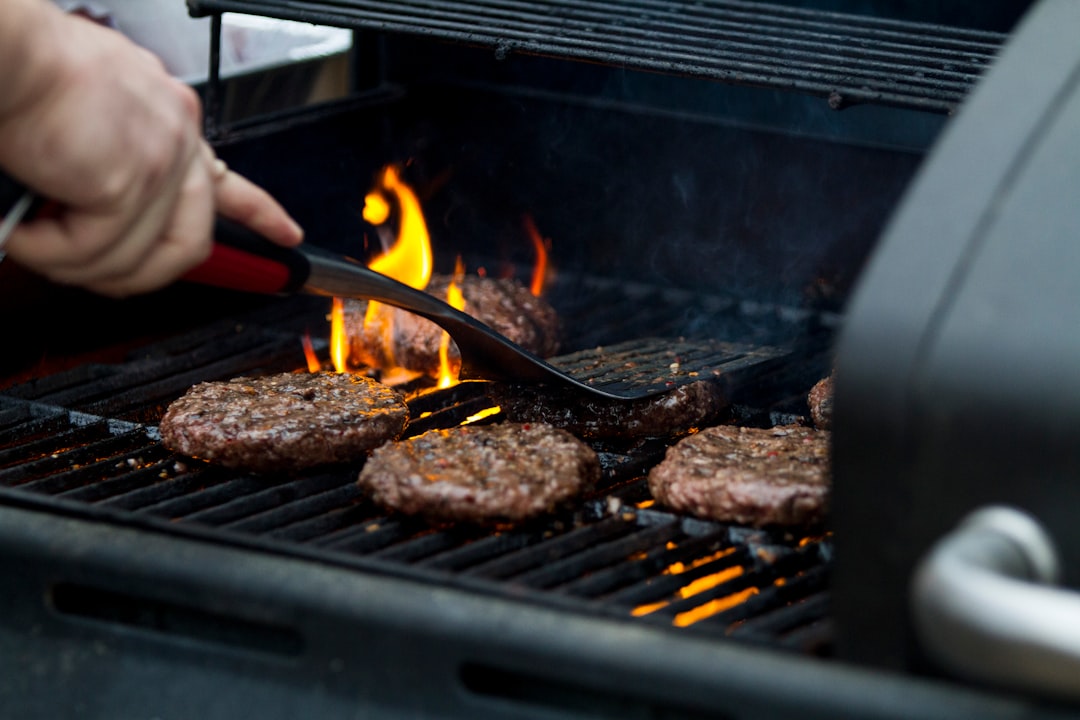
I started with the Grilliance 27-piece griddle accessory kit because it included everything I needed in one package: two oversized spatulas (the kind you see at hibachi restaurants), a basting cover for melting cheese, a burger press for smash burgers, egg rings, and squeeze bottles for oil and sauces. The quality surprised me — these aren’t flimsy extras, they’re commercial-grade stainless steel tools that have held up to daily use all season.
If you want to go with a name-brand set, the Blackstone 22-piece professional tool kit is specifically designed for their griddles but works on any flat top. The handles are slightly longer than third-party sets, which I appreciate when I’m working over a screaming-hot surface. The kit includes a sturdy scraper that doubles as a cleaning tool after cooking.
The one tool I’d add separately — regardless of which kit you buy — is a good melting dome. There’s something almost magical about throwing a handful of ice next to a cheese-topped burger, covering it with a metal dome, and letting the steam melt the cheese perfectly while the ice creates a mini convection oven. It’s the trick that makes backyard smash burgers taste like they came from a proper burger joint.
Smash Burgers: The Reason I Bought a Griddle in the First Place
Let me tell you about the burger that started my obsession. It was at a neighborhood block party, cooked on a Blackstone by a friend who’d been perfecting his technique for two summers. He rolled a small ball of ground beef, placed it on the screaming-hot griddle, and smashed it flat with a heavy press. The edges crisped up into a lacy, almost see-through crust. He flipped it, added American cheese, covered it with a dome, and served it on a toasted potato bun with special sauce.
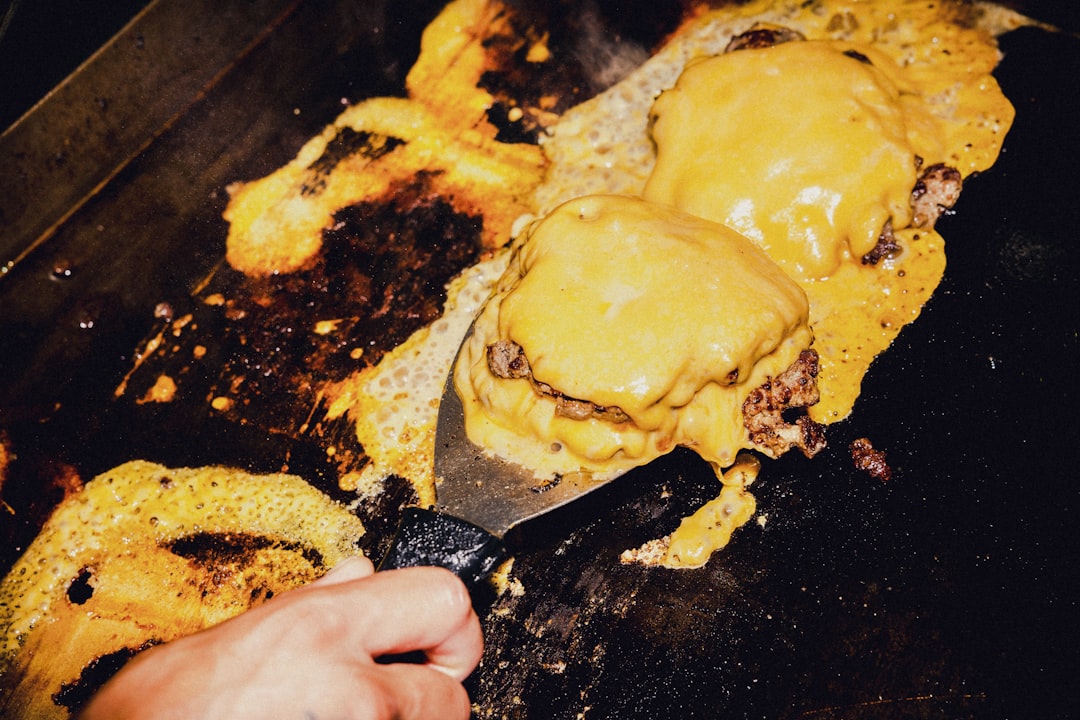
It was the best burger I’d eaten outside of a restaurant, and it took him about ninety seconds per batch. He was making twelve at a time. My grill could never.
The secret is surface contact. A traditional grill leaves grill marks — those beautiful charred lines that look great but only sear a fraction of the patty’s surface. A flat-top griddle sears the entire bottom of the patty simultaneously, creating that Maillard reaction across the whole surface. The result is exponentially more flavor per bite.
Beyond Burgers: What Else Excels on a Flat Top
If burgers were all the griddle could do, I’d still consider it worth the investment. But the real magic happens when you start exploring everything else this surface can handle. My first month with the griddle, I kept a running list on my fridge of every meal I’d cooked on it. By the end of June, the list had forty-seven entries.
Breakfast is the obvious winner — you can cook a complete breakfast for eight people without dirtying a single pan. But where the griddle really shines is the unexpected categories. Stir-fry on a flat top is genuinely better than in a wok because the wide surface lets you push ingredients to cooler zones while others finish cooking. Quesadillas for a crowd take about three minutes per batch. Grilled cheese sandwiches come out with an impossibly even golden crust. Philly cheesesteaks? The griddle was literally built for them.
My personal favorite discovery was cooking an entire taco bar outside. I sautéed peppers and onions on one side, kept warming tortillas on another, and seared steak on the hot zone. Everyone built their own tacos at the griddle, customizing toppings as they went. It turned dinner into an event, and cleanup was a single scrape and wipe-down.
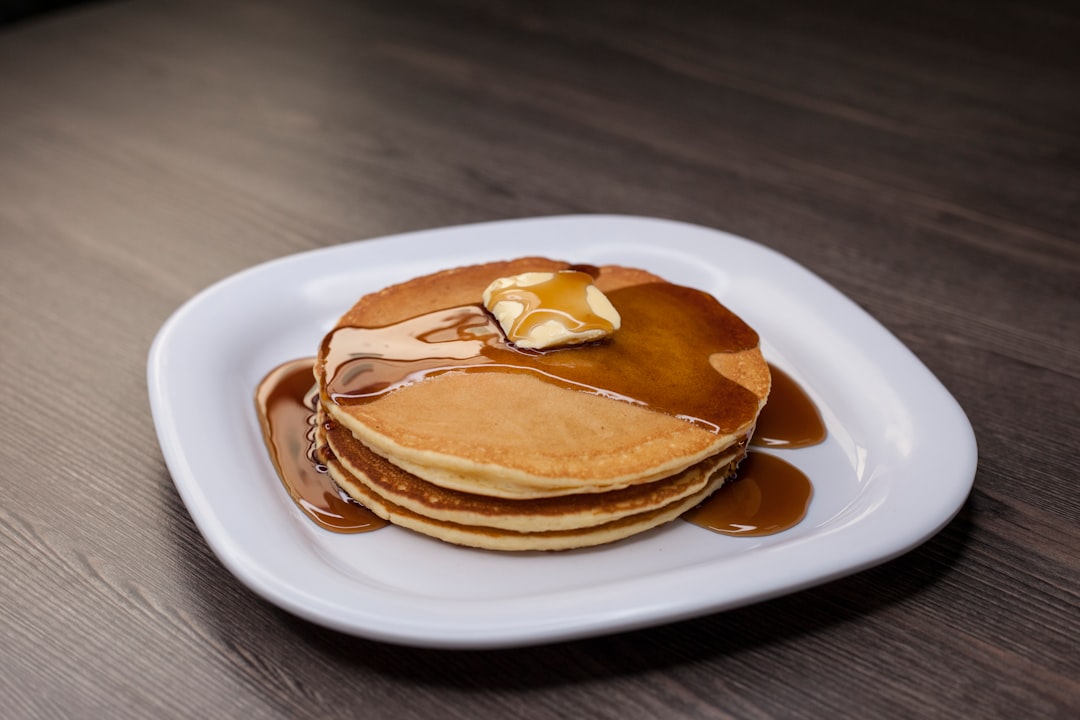
And pancakes — let me circle back to pancakes. I’ve made hundreds of pancakes in my lifetime on stovetop griddle pans and electric skillets. None of them compare to what comes off a seasoned flat top. The even heat means every pancake cooks at the same rate, the surface develops a natural nonstick seasoning over time, and you can make a dozen at once. Weekend brunch at my house has never been the same.
The Indoor Option: Don’t Overlook Cast Iron
Not everyone has outdoor space, and honestly, you don’t need a propane griddle to get the flat-top experience. Before I committed to an outdoor unit, I spent two years using a Lodge reversible cast iron griddle that spans two stove burners. It’s the same principle — a flat cooking surface that heats evenly — just on a smaller scale and without the open flame.
The reversible feature is clever: one side is flat for pancakes and eggs, the other is ridged for grill marks on sandwiches and meats. At under $35, it’s the single most cost-effective way to test whether flat-top cooking fits your lifestyle before investing in a full outdoor setup. I still use mine in the winter when the outdoor griddle is buried under a cover.
Cast iron also connects to something I care about deeply — cookware that lasts a lifetime. If you’re interested in the broader world of cast iron cooking, I wrote about how to care for cast iron skillets properly, and the same principles apply to maintaining a griddle surface.
Seasoning and Maintenance: The Ritual That Makes It Work
Here’s where a lot of new griddle owners get frustrated, and where I need to save you from the mistakes I made. A flat-top griddle requires seasoning — the process of baking oil into the metal to create a natural nonstick surface. It’s the same concept as cast iron, but on a larger scale, and it makes all the difference between food that slides around effortlessly and food that sticks and tears.
The first seasoning is the most important. Before you cook anything, you need to apply a thin layer of high-smoke-point oil and heat the surface until it smokes, then repeat three or four times. I used Blackstone’s seasoning and conditioner for my initial seasoning and have been happy with how the surface has developed over time. It’s specifically formulated for flat-top surfaces with a smoke point optimized for polymerization — which is just a fancy word for “that chemical reaction that makes oil bond to metal and create a nonstick layer.”
Daily maintenance is simpler than it sounds. After cooking, while the surface is still warm, I scrape off any food residue with my griddle scraper, give it a quick wipe with a paper towel, and apply a thin layer of oil. The whole process takes about two minutes. Every few weeks, I do a deeper clean with a griddle cleaning kit that includes grill stones and scouring pads to remove any built-up carbon spots.
Protection matters too. I keep my griddle covered when not in use with a heavy-duty weather-resistant cover. The first month I owned my griddle, I left it uncovered during a rainstorm, and it took me an hour of scrubbing and re-seasoning to restore the surface. Lesson learned the hard way. Now the cover goes on every single time, no exceptions.
What I’d Do Differently If Starting Over
After a full year of flat-top cooking, I have a few regrets and plenty of opinions. Here’s what I wish I’d known from day one:
Buy bigger than you think you need. I went with a 28-inch and love it, but there are nights when I’m cooking for company and run out of surface space. If I were buying again, I’d probably go with a 36-inch four-burner. The price difference is minimal, and you can always use less of a big griddle — you can never make a small one bigger.
Invest in good tools immediately. I cheaped out the first month, trying to use kitchen utensils, and ended up burning my knuckles more than once. The proper long-handled spatulas and scrapers aren’t a luxury — they’re a safety feature. Get a full kit on day one.
Get the cover the same day you get the griddle. Don’t wait. Rust is the enemy of a flat-top surface, and a proper cover is cheap insurance against needing to re-season after every rainstorm. This is especially important if you live somewhere humid — and if you want more kitchen storage wisdom, check out my earlier guide on solving kitchen dead zones with smart storage solutions, because your griddle accessories need a home too.
Season more than you think necessary. That initial seasoning process feels tedious, but every layer you build now means better performance for the rest of the griddle’s life. I did four rounds initially and probably should have done six. The surface just keeps getting better with use — another reason to cook on it every day.
Don’t forget about your other kitchen tools. The griddle opened up a whole new world of outdoor cooking for me, but it didn’t replace everything. I still use my countertop appliances indoors and my regular kitchen tools for prep. The griddle is a complement to your kitchen, not a replacement — and if you’re also thinking about your outdoor cooking setup more broadly, I shared my thoughts on giving a pizza oven permanent patio real estate last month.
The Bottom Line on Flat-Top Griddles
If you cook outdoors even occasionally during the summer, a flat-top griddle will change how you think about backyard meals. It’s the most versatile cooking surface I’ve ever used — more flexible than a grill, more social than a kitchen stove, and capable of producing restaurant-quality food in your own backyard. The smash burgers alone are worth the price of admission.
Start with a size that matches your typical crowd, invest in proper tools, learn the seasoning ritual, and then just start cooking. The beauty of a flat top is that it forgives mistakes, rewards experimentation, and genuinely makes you a better cook. Every time I fire mine up, I learn something new — and dinner gets a little more delicious.
My grandmother would have loved this thing. She fed thirty people from a standard four-burner stove for fifty years. I can only imagine what she would have done with four feet of flat steel and an open flame. Probably fed the whole neighborhood.
One thought on “Why a Flat-Top Griddle Stole My Summer Kitchen — And Exactly Which Ones Are Worth It”