Every kitchen has one cabinet that fights back. Mine is the deep corner one to the left of the stove, the one where a Dutch oven wedges itself under a skillet handle like they’re arm wrestling. For twelve years I have opened that door with one hand braced against the frame, because something heavy always tries to escape. My family knows the sound — the clatter of a lid rolling across the floor — and nobody comes running anymore. They just wait to hear if I laugh or swear.
So when a colleague dropped a box of modular cookware on my counter back in June — the kind with handles that click off — I’ll admit my first reaction was suspicion. I grew up watching women cook with pans that had rivets older than I was. A pot with a removable handle sounded like a gadget, and I have a garage sale bin full of gadgets I regret. But three months later, that corner cabinet opens with two fingers, and I am officially a convert. Here is everything my team and I learned while testing these systems all summer.
The Cabinet That Started It All
Let me paint the before picture. My test kitchen is generous, but my home kitchen is a normal-person kitchen: eleven feet of counter, six cabinets, and a family that treats pot lids like frisbees. When we measured the cookware footprint for this project, the numbers were almost funny. Nine pans and five lids were consuming more than five linear feet of shelf space, mostly because of handles. Handles don’t stack. Handles poke out, catch on each other, and force you to store pans in a diagonal jumble that wastes half the shelf behind them.
The space math on traditional sets is brutal once you see it. A single 10-inch skillet with its handle attached demands about twenty inches of linear shelf. Take the handle off and the same pan needs ten inches and stacks neatly on its siblings. Multiply that by a full set and you’re looking at roughly half the footprint — some brands claim up to 60 or 70 percent savings, and in our unscientific cabinet audit, that tracked.
What “Modular” Actually Means When the Box Arrives
Modular cookware — sometimes called detachable-handle or removable-handle cookware — is a system where the pots and pans themselves are handle-free, and one or two universal handles clip, slide, or latch onto any piece in the set. The pans have small welded bases or side slots where the handle locks in with a satisfying click. When the handle is off, the pans nest like plates.
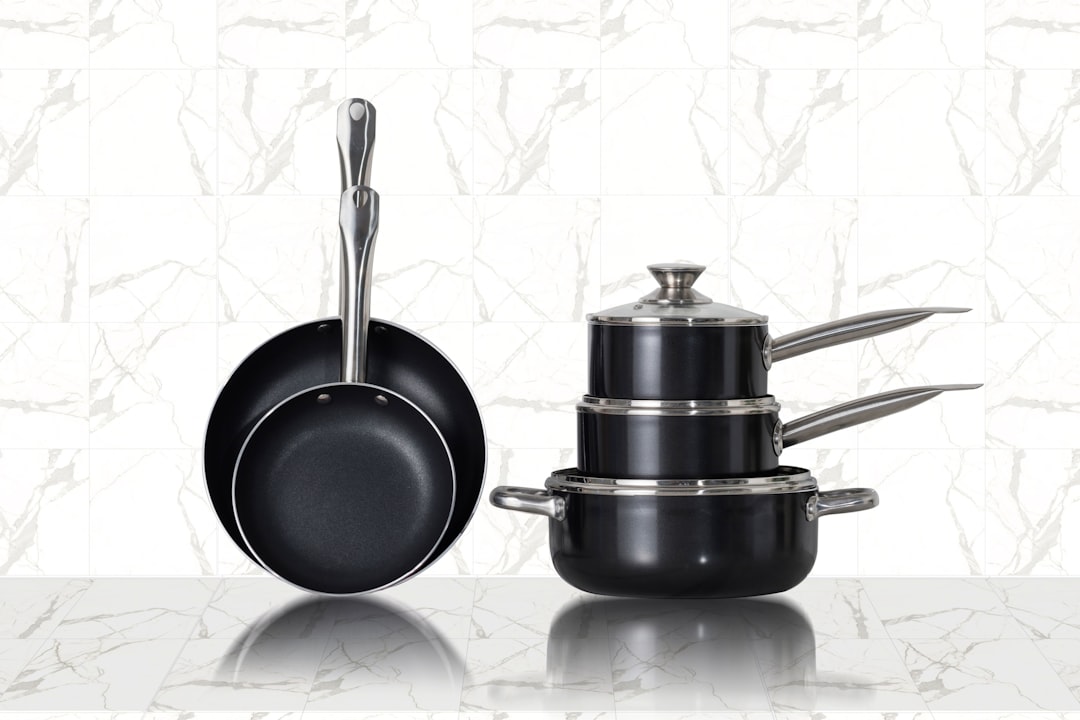
The set that started my conversion was the T-fal Ingenio Essentials 11-piece set — the granite titanium nonstick version. Eleven pieces, two handles, and the whole nest of it lives in the space my old stockpot used to hog. If you want a fuller kitchen workhorse set that’s induction-ready, the T-fal Ingenio Expertise 14-piece adds a wok and a steamer insert, and it’s the one my sister borrowed for three weeks and “forgot” to return.
The surprise was how quickly the psychology shifted. When pans are easy to reach, you cook differently — you grab the right pan instead of making do with the wrong one because it’s on top. My team laughed at me when I said the cabinets felt “honest” now, but that’s genuinely the word. Everything is visible. Nothing is hiding behind a handle jungle.
One Pan, Four Jobs
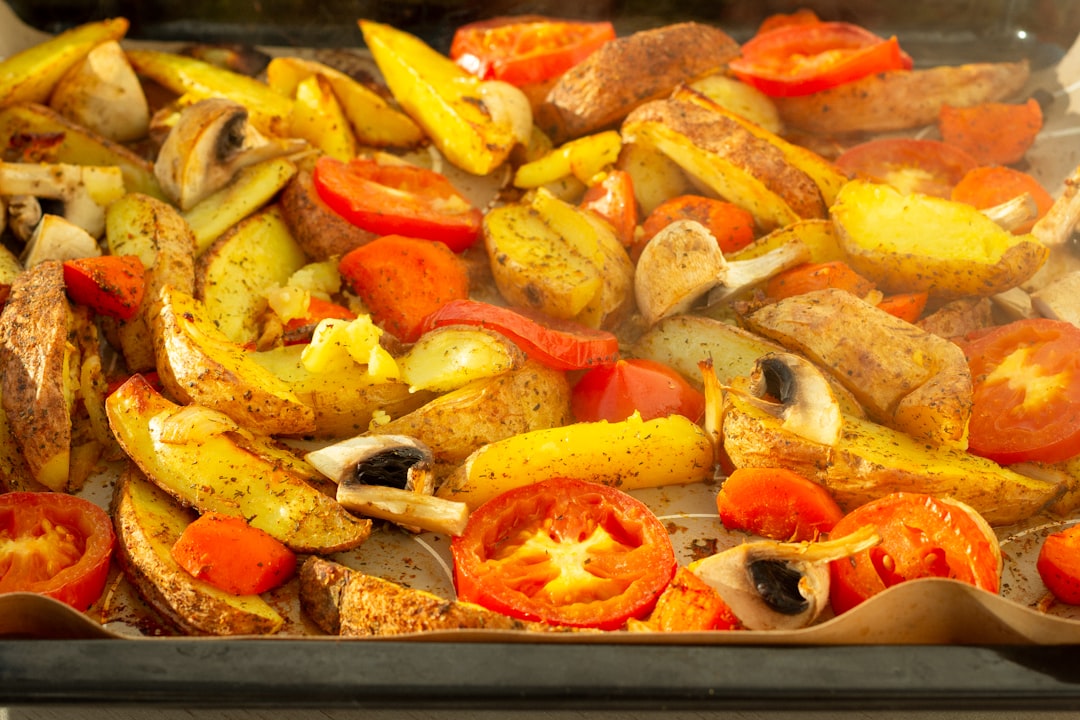
Here’s the part nobody told me: removing the handle isn’t just about storage. These pans are rated for the oven — most Ingenio pieces are safe to 500°F, handle off — which means a frittata can start on the stovetop and finish under the broiler without a single dish swap. Then, still handleless, the pan goes straight to the table on a trivet as serving ware. After dinner, leftovers and all, it goes into the fridge with a lid on. Stovetop to oven to table to refrigerator, one dish, zero transfers.
For the fridge-and-leftover leg of that journey, stretchy silicone lids are the quiet hero. A pack of universal silicone stretch lids seals round pans, square ones, bowls, even cut melon, and they’ve replaced an embarrassing amount of plastic wrap in my house. My aunt — the woman who taught me to can tomatoes at nine — was deeply skeptical until she saw a lid suction onto a skillet of Sunday gravy. She asked where to buy them before she finished her coffee.
The Handles: The Part That Actually Matters
Not all detachable handle systems are equal, and this is where I’d urge you to be picky. The mechanism is everything — it’s the one moving part doing the one safety-critical job. The good ones lock with a positive click you can feel and hear, and they don’t budge when you shake a full pan one-handed. The cheap ones flex, and a flexing handle over a pan of hot oil is not a lesson you want to learn firsthand. We tested one bargain set where the handle release button sat exactly where my thumb naturally rests, which is a design choice I can only describe as optimistic.
Washing is the other daily reality. Handle off, these pans are the easiest cookware I’ve ever cleaned — flat edges, no rivets collecting grime, no handle hole gobbing up dishwater. Most pieces are dishwasher-safe, though like any nonstick, hand-washing extends the coating’s life. If you’ve ever scrubbed around the rivets of a traditional skillet, the smooth simplicity here feels like a small apology from the universe.
On materials: you’ll find these systems in nonstick, stainless steel, and ceramic. The T-fal Ingenio Expertise stainless 13-piece is the cladded stainless workhorse version, and if your kitchen runs on induction — something I wrote about at length after my own induction conversion — check that your set’s base is rated for it, because older nonstick lines sometimes aren’t. And if coatings are your concern, I’ve covered the non-toxic landscape separately; several modular lines now come in PFAS-free ceramic.
The Road Trip Test
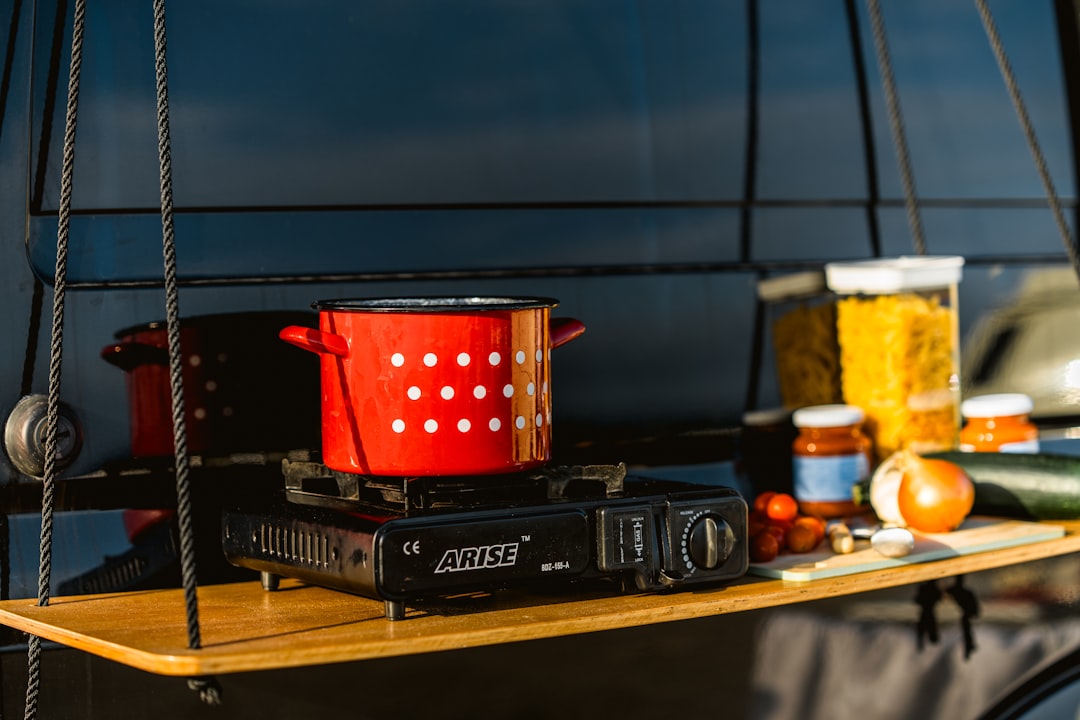
In July we took a set to my brother’s lake place, and this is where modular cookware stopped being clever and started being kind of miraculous. RVs, campers, vacation rentals, and dorm-adjacent apartments are exactly where handle-off systems shine, because every inch of storage is contested territory. The full nest of pans rode in a drawer the size of a cookie sheet. My brother, who owns a boat and therefore understands spatial Tetris, looked at the stack and said, “Why doesn’t everyone make these this way?” I told him I’m working on it.
If small-space living is your everyday reality rather than your vacation, the stainless options are worth the upgrade. The CAROTE 19-piece tri-ply set and the Michelangelo 14-piece tri-ply set both bring fully-clad stainless performance with the same stackable footprint — no coating to baby, induction compatible, and honest-to-goodness searing power. For a gentler budget, the GreenLife 10-piece detachable set gives you tri-ply and glass lids at a price that makes it an easy first experiment.
Keeping Your Old Pans? The Halfway Measures That Work
Now, maybe you love your existing cookware, and I respect that — my grandmother’s cast iron will leave this house when I do. You can steal most of the storage wins without replacing a thing. Vertical is the answer: an 8-tier adjustable pot organizer turned my sister’s avalanche cabinet into a browsable library, and an expandable lid and pan divider rack finally gave her lids a home that isn’t “leaning against everything.”
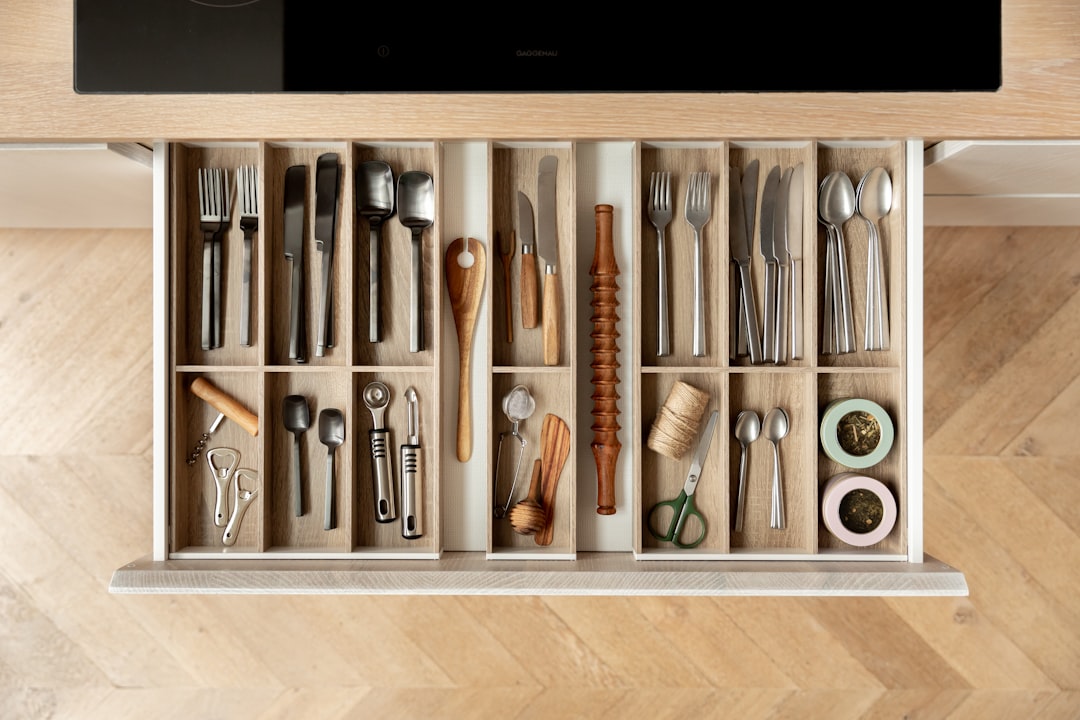
And if you must stack — sometimes you must — felt pan protector pads between pieces prevent the scratches that quietly murder nonstick coatings. They cost about as much as a sandwich and they’ve saved more pans in my family than I can count. My mother-in-law’s cabinet, once a trauma center for wounded skillets, is now a calm stack of protected pans. Small victories.
What to Look For Before You Buy
After a summer of clicking handles on and off — and one memorable incident involving a full pan of pasta water and a very confident niece — my team put together the short version of our buying checklist. Handle mechanism first: it should lock with an audible, feelable click and never require a second thought to release. Check the oven-safe rating with the handle removed, because that number is what unlocks the stovetop-to-oven magic; the good ones go to 500°F. Verify induction compatibility if you have or might ever have an induction range, which is exactly the boat I found myself in last year. Count the handles included — two is the sweet spot, since one is always in the dishwasher. And look at how the lids work: some sets use one universal lid across multiple pan sizes, which is quietly brilliant for both storage and sanity.
Warranty and coating type matter too. Nonstick versions are dreamy for eggs and cleanup but have a service life; stainless versions cost more up front and outlive several nonstick pans. Several of us on the team run a hybrid — stainless for the workhorse pots, one nonstick skillet for morning eggs — and that mix has held up beautifully across three months of near-daily testing.
Worth It? My Honest Verdict
Three months in, here’s where I’ve landed. If you’re starting from scratch, furnishing a first kitchen, or shopping for an RV or small apartment, modular cookware isn’t a compromise — it’s genuinely the better architecture, and I’d buy it again tomorrow. If your cookware is already good and your cabinets are merely annoying, the organizer route gets you 80 percent of the sanity for 15 percent of the cost. There’s no shame in either path. The goal was never new pans for their own sake; the goal was opening that cabinet without bracing for impact.
Last Sunday I made a skillet cobbler — peaches from the farmers market, cornmeal dumplings, the whole summer thing — start to finish in one Ingenio pan. Stovetop, oven, table, fridge, dishwasher, cabinet. One dish touched anything. My grandmother would have called it cheating. My mother would have called it smart. I just call it Sunday, and for the first time in twelve years, I put the pan away with two fingers and closed the door with one.
One thought on “The Cabinet That Stopped Fighting Back: My Summer with Cookware That Clicks Apart”