The text came in on a Thursday, which is how most of my October trouble starts. A neighbor wanted to know if the porch would be “doing the apple thing” again this Saturday, because her kids had already voted against another plate of cookies and her husband had already voted for anything warm he could hold in both hands. I looked at the bowl on the island. Twelve apples. Not a bushel, not a project that takes over the weekend. Twelve. That is the number that fits a small pot, a half sheet pan, and a porch that still has to function as a porch.
Cookie night already has its own ritual in this house. The sprinkles live in jars, the good plates come down, and the street knows exactly where to stand. I wrote that whole system up when we rebuilt the Halloween cookie table, and I am not retiring it. What I wanted this year was a second station that does not compete with the cookies. Caramel on a stick for the kids who arrive sticky on purpose. A pot of cider for the adults who walk them over and then linger because the light is nice and nobody has asked them to carve anything yet.
Twelve apples sounds modest until the caramel is wrong. Then it sounds like a science fair nobody signed up for. I have slid a beautiful coat straight off a Honeycrisp onto a silicone mat, watched a stick tilt like a drunk fence post, and served what can only be described as an apple wearing a scarf. The fix was never a fancier apple. It was a station. Dry fruit, a stick that does not flex, a pot with enough metal to hold a temperature, and a landing zone that is ready before the sugar even thinks about boiling.
Cold apples, dry hands, no shortcuts on the towel
If you processed a real orchard haul last month, you already know the apple is not a blank canvas. Firm ones behave. Mealy ones slump. I still send people back to the notes from orchard Saturday when they ask which bag to buy, because the same fruit that makes a sharp pie filling is the fruit that survives a dunk. Granny Smith is the classic for a reason: the tartness cuts the sugar, and the flesh stays put. Honeycrisp works if you keep them cold and do not bruise them on the way in from the car. Anything soft enough to yield under a thumb is a snack, not a stick.
Wash them. Then forget they are washed and dry them like you mean it. Wax is the enemy. A damp shoulder is the enemy. Two of the people who test gear with me spent twenty minutes on a Friday wiping apples with a clean flour-sack towel, stems up, no stacking, until the skins looked dull instead of grocery-store shiny. That dullness is what you want. Caramel grabs a dry surface. It slides off a wet one and then pretends it was your recipe.
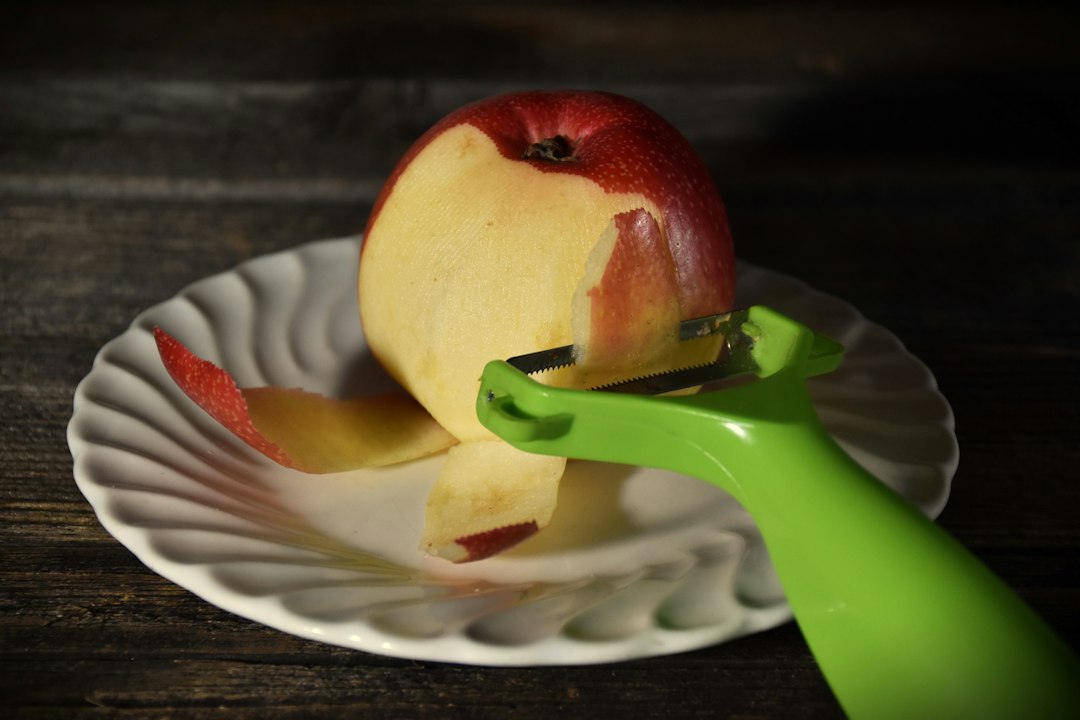
I do not peel every apple. A ribbon of peel near the top gives you something to hold visually, and kids like the contrast. What I do remove is the stem, because a stem fights the stick and leaves a soft spot that leaks juice into your caramel. A simple apple corer does that job without turning the fruit into a tunnel you could drive a pencil through. You want a small plug out of the top, not a hollow apple. If the corer in your drawer is the kind that also slices the whole fruit into wedges, leave it in the drawer. Wedges are for pie. This is a different Saturday, and the pie kit can stay on its shelf unless someone specifically asks for a crust.
A Y-shaped peeler earns a spot on the board only if you are doing a decorative stripe or rescuing a bruised shoulder. I like one with a stainless blade that stays in the hand when the apple is cold and your fingers are not. Do not peel the whole thing unless you enjoy watching caramel pool at the bottom like it is trying to escape.
The stick is a structural decision
This is the part people cheap out on, and it is the part that fails in a child’s hand on the front step. Popsicle sticks bow. Bamboo skewers from the grilling drawer are too thin and too sharp. I want a flat wooden stick, the kind sold specifically as a caramel-apple dowel, long enough to keep fingers out of the coating and thick enough that a heavy apple does not lever it sideways while the caramel is still setting.
Push the stick in through the top, where you removed the stem, and seat it at least halfway into the core. If it wobbles, that apple is not going in the pot. Set the stuck apples back in the refrigerator while you deal with sugar. Cold fruit against hot caramel is what helps the coat grab and set instead of running for the edge of the counter. A small bundle of wooden caramel apple sticks costs less than one ruined batch and lives in the baking tin until next October without complaining.
One pot, one number, and the honest shortcut
Homemade caramel is not mysterious. It is impatient. Sugar, butter, cream or sweetened condensed milk, a heavy pot, and a thermometer that can see past the boiling point of water. Soft, chewy caramel for dipping wants the soft-ball range, right around 240 to 245 degrees Fahrenheit. Under that, you get a sauce that looks glamorous for four minutes and then slides off in a sheet. Over that, you get a crack that fights back when someone bites. I have made both. The thermometer is how I stopped making them on purpose.
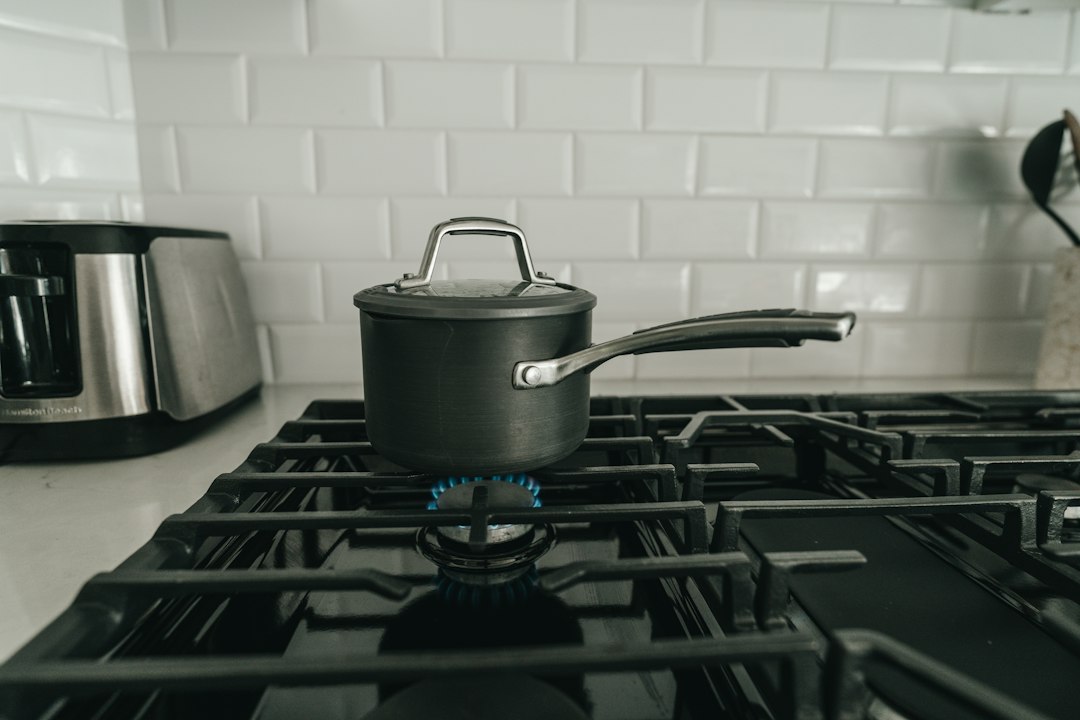
A clip-on candy thermometer is the tool. Not the instant-read you trust for chicken, and not the little dial that tops out at a simmer. Candy work lives between 240 and, if you ever chase a true candy-apple shell, something closer to 300. The clip matters because your hands are stirring. The bulb has to sit in the caramel, not in the air above it, and not touching the bottom of the pot where the metal runs hotter than the sugar. If the clip is flimsy, the whole reading is a rumor.
The pot is the other half of that sentence. A thin saucepan surges. You look away to dry one more apple and the edge scorches while the center is still climbing. I use a heavy 3-quart saucepan with a helper handle if I can get one, because twelve apples do not need a stockpot and a one-quart butter warmer cannot hold the depth a thermometer wants. Three quarts gives you room to stir without sloshing, and the extra metal forgives a medium burner better than a bargain pan ever will. Keep the heat at a steady medium. Caramel does not reward heroics.
There is also the shortcut I no longer apologize for. Caramel melting wafers exist because weeknights and porch Saturdays are real. You melt them with a spoon of cream or milk, you keep the pot warm rather than climbing toward a hard crack, and you get a coat that behaves. It will not taste like the caramel your aunt stirred for forty minutes. It will taste like a caramel apple a child is happy to carry down the sidewalk, which is the assignment. I keep both paths open: wafers when the doorbell is already in the forecast, a from-scratch pot when the afternoon is actually mine.
Either way, have a bowl of ice water nearby. Not for the apples. For you. Sugar burns are not a personality trait. If a drip hits your wrist, the water is the plan, not a paper towel.
The landing zone is not optional
I used to dip first and then go hunting for a place to put the apple. That is how you get caramel on the faucet, the mail, and one unlucky oven mitt. Now the landing zone is built before the pot goes on.
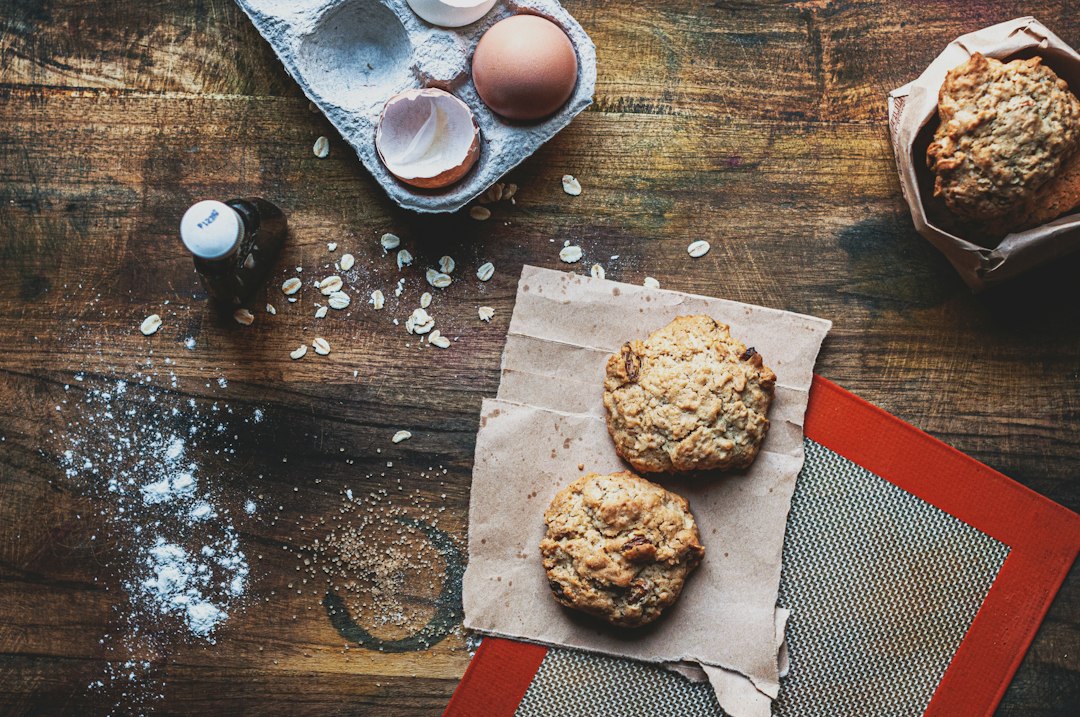
A half sheet pan, a silicone baking mat, and a stack of precut parchment sheets. The mat grips the pan so the whole stage does not skate when you set down a heavy apple. The parchment is what you actually sacrifice. Caramel welds itself to a bare mat if you let it cool there all afternoon, and I would rather throw away a sheet of paper than spend Sunday chiseling sugar off silicone. Line the pan, leave space between apples, and do not crowd them into a bouquet. They need air. They also need to not marry their neighbors.
If your only cooling rack is busy with something savory, the parchment pan is enough. A rack is nicer when you want the underside to stop pooling, but twelve apples do not require a bakery setup. What they require is a clear counter and a rule: nobody sets a drink down on the landing zone. I learned that rule the expensive way.
Toppings, then a bag, then the door
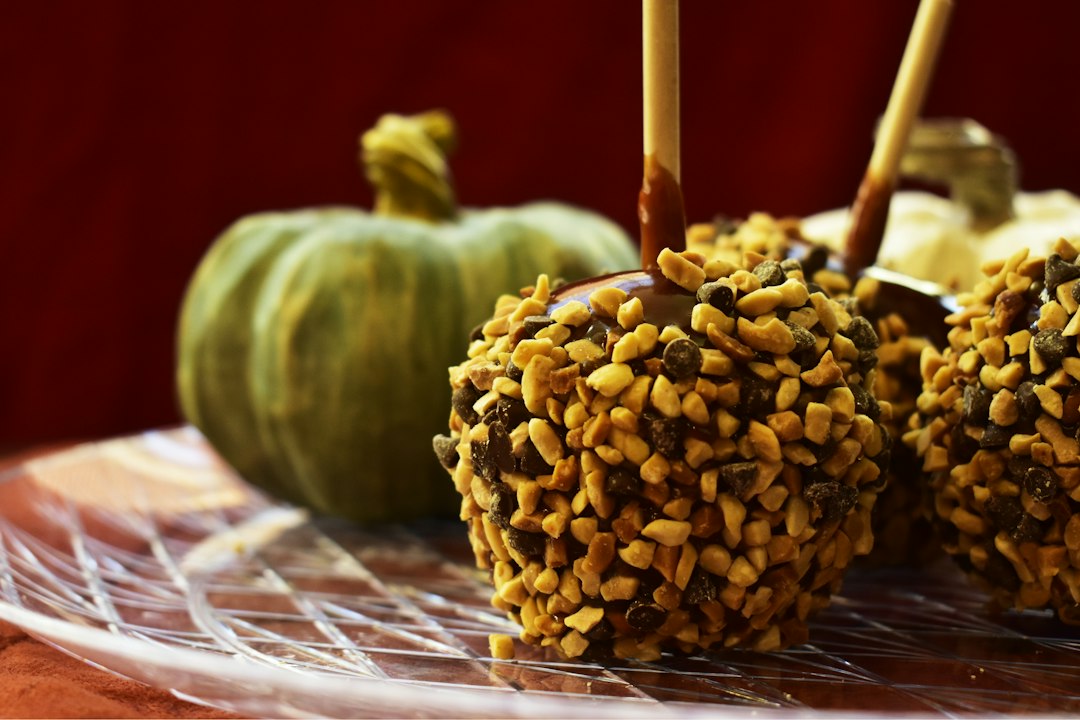
The roll happens while the coat is still tacky, which is a shorter window than people think. Chopped peanuts are the classic. Toffee bits are the one my porch crowd actually finishes. Mini chocolate, crushed cookies, a little flaky salt if the adults are hovering. Set each topping in a wide shallow bowl, not a deep one, so you can roll an apple without baptizing the stick.
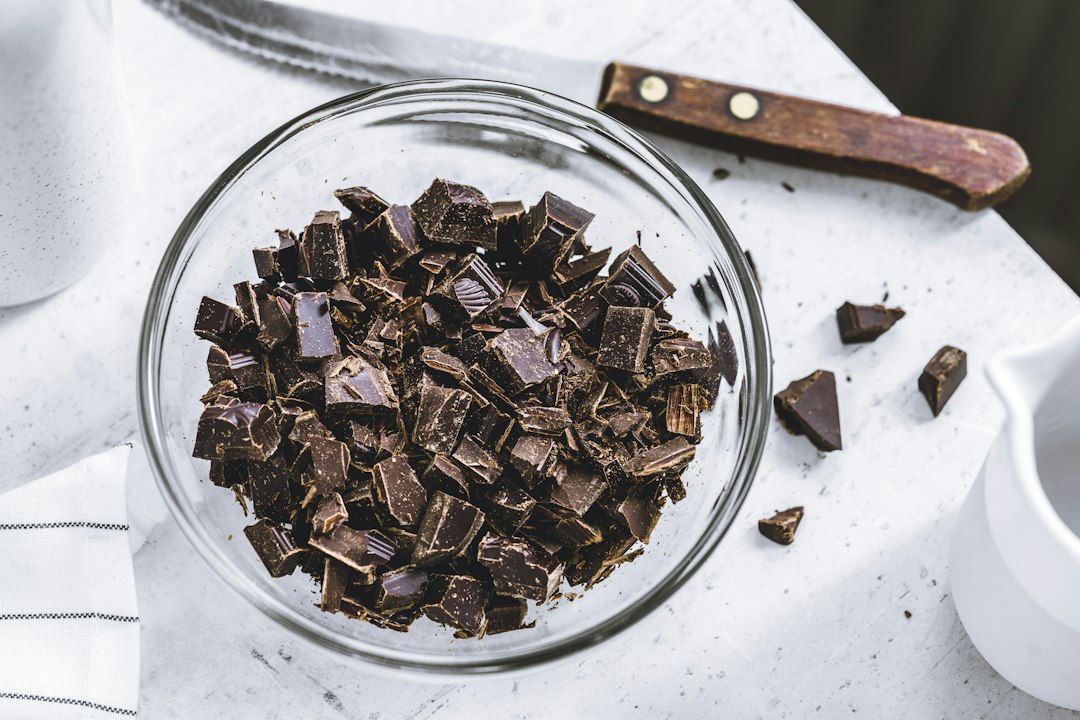
Chocolate wants to be in pieces small enough to stick, not in a bar you are still breaking while the caramel sets. I keep a bowl of chopped chocolate on the counter for the apples that are going to people who think nuts are a suggestion. A bag of toffee bits disappears faster than I expect, so I buy it the same day as the apples instead of trusting the baking cabinet. Last year’s bag is always, somehow, both open and stale.
Once the coat has stopped shining wet, the apple can be wrapped. This is not fussiness. It is how a caramel apple survives a walk, a car seat, and a child who needs both hands for a flashlight. Clear cellophane treat bags with twist ties do the job without hiding the work. Bag them after they are set, not while they are still warm, or you steam the coat right back into a slide. I write names on the ties with a grease pencil when more than one family is coming. It prevents the quiet tragedy of the pecan apple going home with the person who asked for plain.
The pot that keeps the adults from leaving
Caramel is the show. Cider is why people stay long enough to talk. I do not need a second appliance for this. I need a pot I am willing to leave on low, whole spices, and mugs that do not burn a palm when someone accepts a refill they did not plan on.
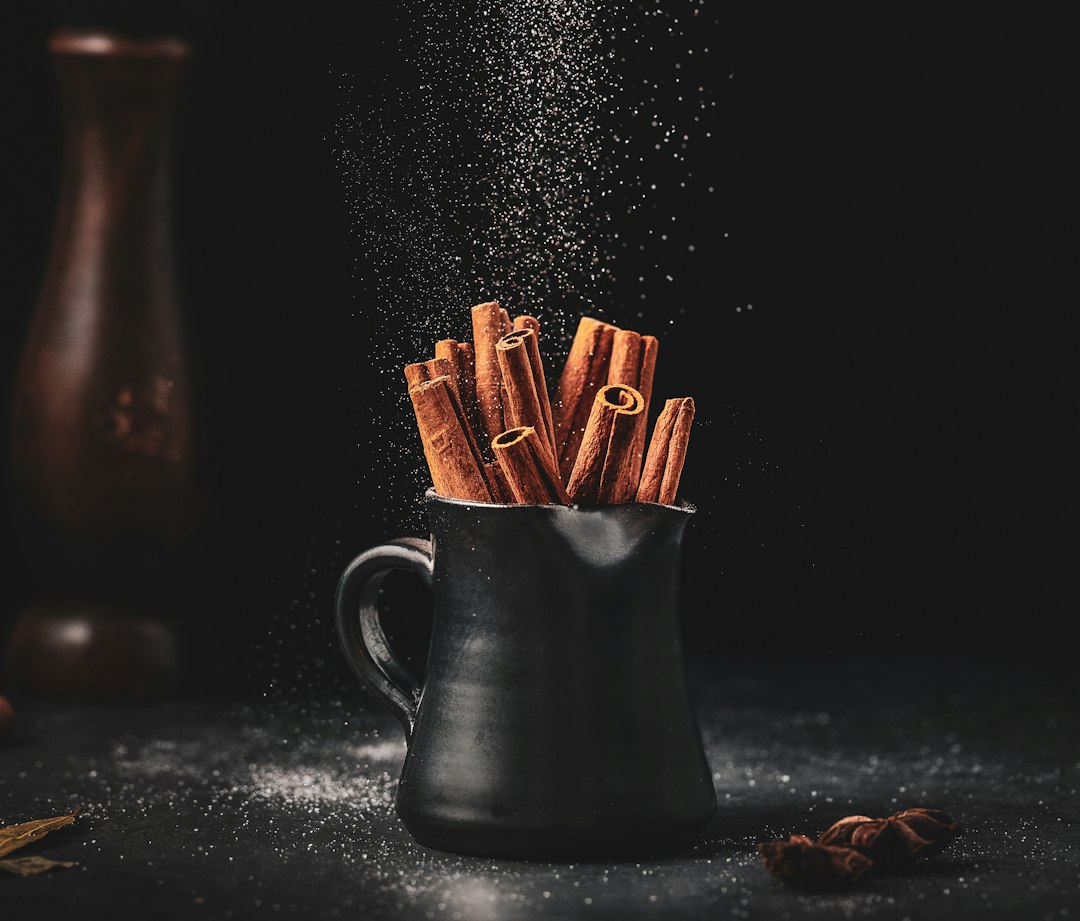
A jar of mulling spices is the weeknight version. Cinnamon, clove, allspice, a strip of orange peel if you have one. If you would rather build it yourself, the same spices in whole form are better than the dusty ground jars, because you can fish them out instead of drinking them. Simmer, do not boil hard. Boiling cooks off the thing you wanted and leaves the pot smelling like a candle that tried too hard. If your kettle already holds a temperature instead of just screaming at a rolling boil, this is a good week to use that skill on the cider too. I keep coming back to the kettle lesson for exactly this reason: hot is a range, and cider likes the low end of it.
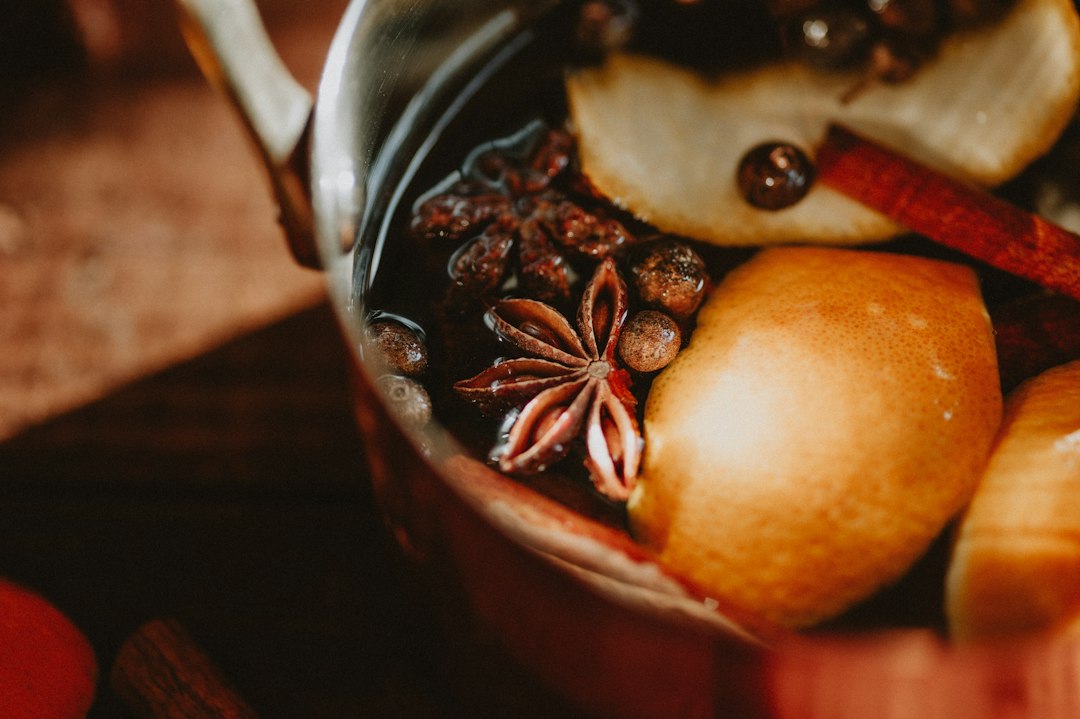
Orange slices and a star anise look like you planned the afternoon. They also taste like October without requiring a special syrup. Keep the pot at a bare shudder. Ladle, do not pour from a full pot across a crowded counter. And put the mugs out before the first knock. A set of clear glass mugs lets people see the spices, which is half the invitation. Thick glass matters more than a cute shape. Thin glass goes from pleasant to “why is my hand doing that” in one refill.
I do not spike the porch pot. Anyone who wants something stronger can handle that in their own cup, away from the ladle the kids are watching. One pot, one recipe, no surprises. That is the whole hospitality policy until November.
What I would actually buy this week
If your drawer already has a heavy saucepan and a decent peeler, do not rebuild the kitchen for twelve apples. Buy the things that fail in public.
- Sticks that do not flex, bought as apple sticks and not borrowed from the grill.
- A candy thermometer with a clip and a scale that can see 300 degrees, even if you only need 245.
- Either caramel wafers for the shortcut or the ingredients for a from-scratch pot, not a vague plan to “use what is around.”
- Parchment and a mat, so the landing zone is a stage and not your bare counter.
- Cellophane bags, because an unwrapped caramel apple is a commitment the sidewalk did not make.
- Mulling spices and mugs, so the adults have a reason to stay while the apples set.
Skip the gadget that cores, slices, and peels in one violent motion. Skip the tiny decorative saucepan that cannot hold a thermometer bulb. Skip the ground cinnamon you already own as a substitute for a whole-spice simmer. It will taste flat, and you will know it, and you will still hand people mugs because you are polite.
If the afternoon collapses, melt the wafers, roll half the apples in toffee, wrap them, and put the cider on. That is a complete porch. The from-scratch caramel can wait for a Sunday when nobody is standing on the step in a costume that cannot sit down. October does not require perfection. It requires a stick that holds, a coat that stays, and a mug that is still warm when the flashlight batteries give up.
Twelve apples. One pot. The porch light on a little earlier than usual. That is the whole celebration, and it is enough.