A steamer basket and twelve quiet minutes above a boil will do more for weeknight vegetables, fish, and dumplings than another pot of olive-drab broccoli ever did. I spent years drowning green things in rolling water, the way a busy Sunday kitchen teaches you to do when the pot is huge and the table is already set. It works for green beans that are going to sit in butter for an hour. It does not work for a Tuesday, when the broccoli is the vegetable and you still want it to taste like itself.
Steam is not a consolation prize for people who cannot sear. It is a different tool, with a different job. The food sits above the water. The heat arrives as vapor. Nothing dilutes into a pot you will pour down the sink. Once I stopped treating that as a compromise, weeknights got calmer, and the color in the bowl stopped looking apologetic.
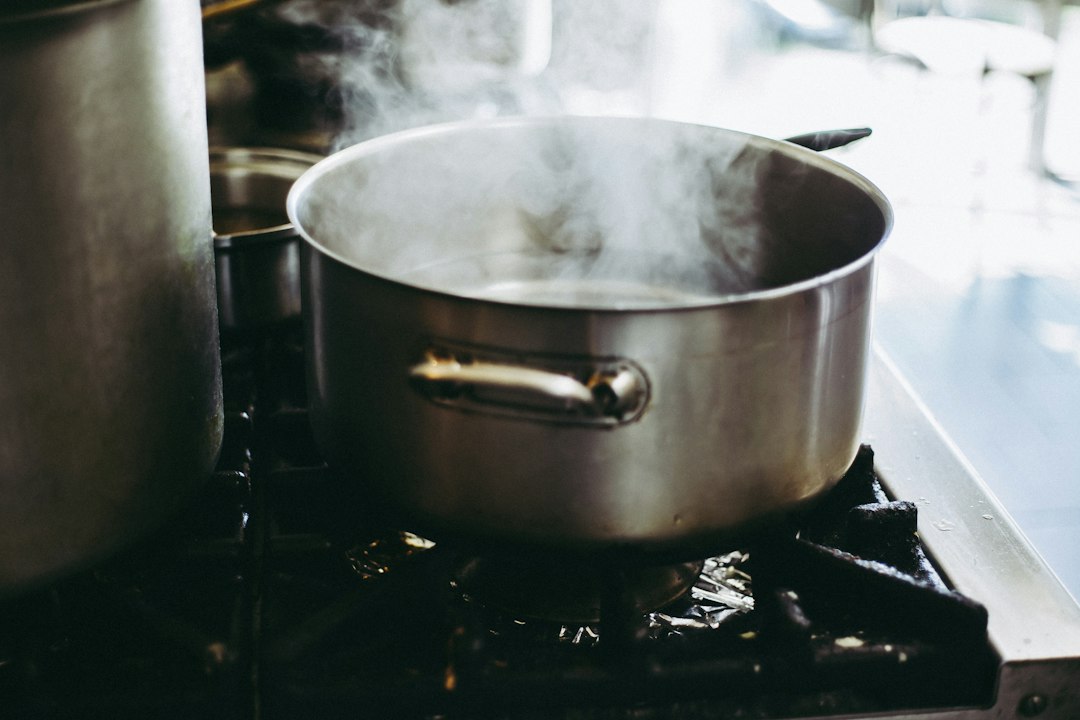
This is the whole engine: a pot of lively water, and the food never allowed to sit in it.
What the vapor is doing while you are not stirring
Boiling is a bath. Steam is a cloud. Boiled broccoli drinks the pot and gives its sweetness back. Steamed broccoli loses the raw squeak and keeps the flavor in the floret, which is where you paid for it.
Water at a simmer throws off vapor right around 212°F. That vapor condenses on the cooler food and gives its heat away. You are not simmering the vegetable. You are warming it from the outside. Dense pieces need longer than tender ones, a crowded basket needs longer than a loose one, and a lid you lift every thirty seconds needs longer than a lid you leave alone, because every lift dumps the cloud onto the stove and you have to rebuild it.
Salt barely rides along. I used to salt the steaming water the way I salt pasta water, then wonder why the broccoli still tasted like a polite vegetable at a meeting. Steam does not carry salt the way boiling water does. Season the food, or season it after. I do both, lightly. The after is where these dinners are won or lost.
Two of us stood over the stove with a timer last week, because I will not hand you a minute-mark I have not watched go from squeaky to slack. The card inside the cabinet is a starting place. Your florets are a different size, and your burner has opinions.
Three baskets, three different jobs
You do not need a new appliance to start. You need a pot you already trust and something that holds food above an inch of water.
The tool I reach for on an ordinary Tuesday is an expandable stainless steamer basket. Petals open to fit the pot, feet keep the food clear of the water, and it lives in the drawer under the burners. If a tool requires a step stool, it will not run a weeknight.
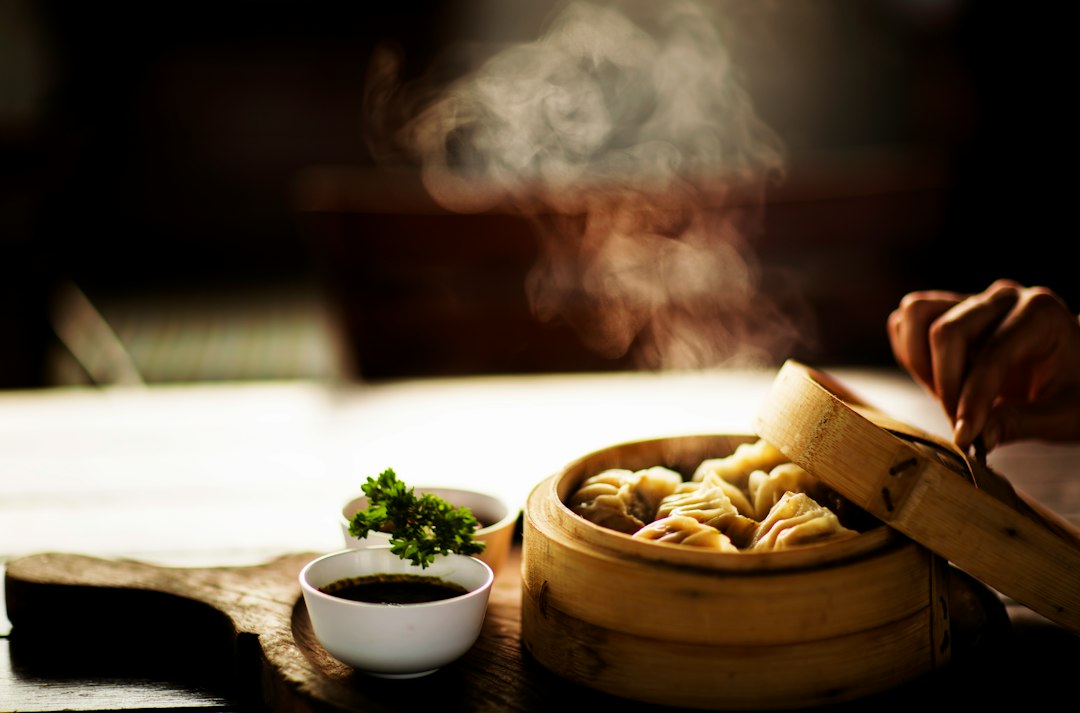
Bamboo is a different animal. A two-tier bamboo steamer absorbs the condensation that would otherwise rain back onto dumplings and buns and spot them with soggy little moons. Metal reflects that drip. Bamboo drinks it. Set it over a wok or a wide skillet so the basket sits in the rim, not down in the water.
The collapsible silicone basket looked like a gadget, and then it fit the saucepan that is slightly too narrow for the stainless petals. A silicone steamer basket will not win a beauty contest. It will win the night the good basket is already full of carrots and the beans still need a home. I still lift it with tongs. Those little silicone handles lie about how hot they are.
If you are buying one thing, buy the stainless basket and a pot with a lid that actually fits. The lid is not an accessory. A gap at the rim is a leak in the method. I like a saucepan with a glass lid for vegetables, because I can see the color shift from chalky to jewel without lifting. For dumplings I still use bamboo and trust the clock, because the lid of a bamboo steamer is doing a job a glass lid cannot do.
The clock I actually cook by
Cut things so they agree with each other. A huge floret and a tiny floret in the same basket is how you get one piece that is still raw at the stem and one piece that has given up. I break broccoli so the stalk is not a log. I cut carrots on a bias, about a half-inch thick. Beans get shortened so the center is not a three-inch walk from the steam.
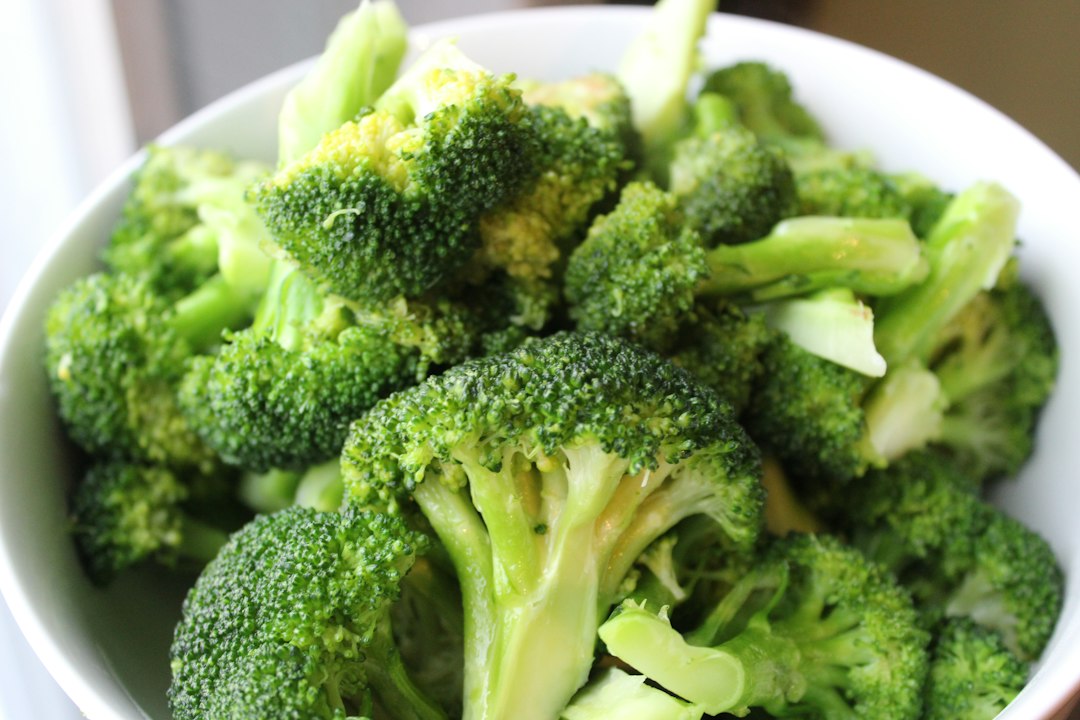
Cut the crowns so the stems and the trees finish in the same five minutes. This is the before, and it should still look this bossy.
Water goes in first, an inch, sometimes an inch and a half if the basket sits high. Bring it to a lively simmer before the food goes in. Starting food in cold water and waiting for steam is how you get a long, sad warm-up and vegetables that taste steamed-from-cold, which is a real flavor and not a compliment. Basket in. Lid on. Timer on. Then I leave the kitchen for the length of a sink full of the lunch dishes, not for a phone spiral.
These are the marks from our card, for a basket that is not packed solid:
- Broccoli florets: 4 to 6 minutes, until a stem still pushes back a little.
- Cut beans: 5 to 7 minutes. Whole beans cook unevenly, so shorten them.
- Bias-cut carrots: 7 to 9 minutes. Taste one before you trust the clock.
- Cauliflower: 5 to 7 minutes. Pull it while it still smells sweet.
- Snow peas and sugar snaps: 2 to 3 minutes. Stay in the room.
- Small potatoes, halved: 12 to 15 minutes, or boil them in the water under the basket.
- White fish fillet, about an inch thick: 8 to 10 minutes, until it flakes and the center is opaque. If you want a number, 145°F is the one I trust, and the thermometer habits that run my roast season apply to a fillet too.
- Frozen dumplings: 8 to 12 minutes once the steam is roaring again. The wrapper goes from chalky to glossy.
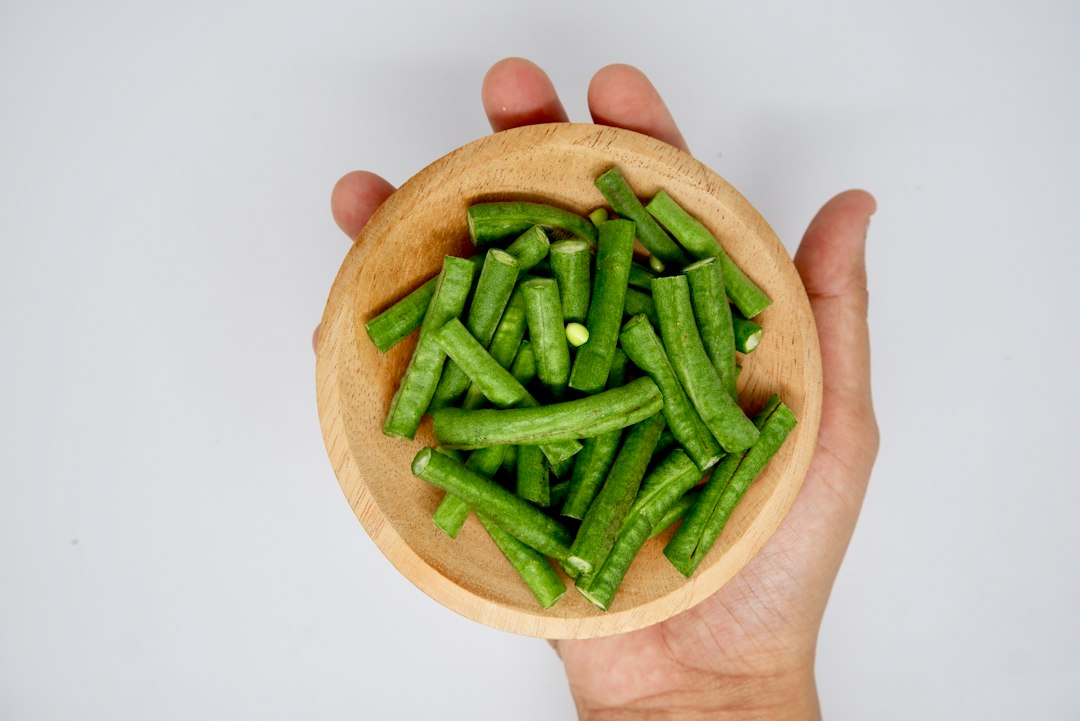
Short lengths, not vanity batons. Steam reaches the center of a bean this size before the outside turns army green.
Pull vegetables a minute early if the people at your table think they hate steam. Mushy is what gave the method its bad name. Bright, with a little spine left, is a different food.
The foods that only behave above the water
Some things can be boiled, seared, or steamed and still be dinner. Dumplings are not in that group. A raw pleated dumpling dropped into a rolling boil becomes a torn purse and a cloudy pot. The same dumpling, set on a lined basket with room between neighbors, becomes dinner that looks like you meant it.
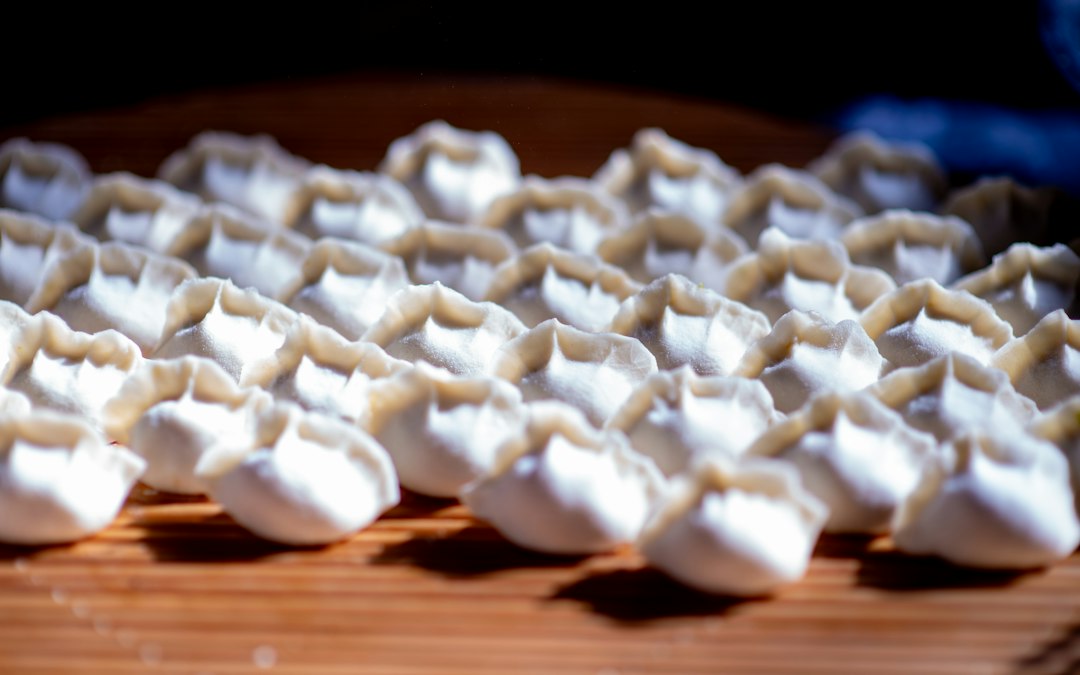
Still raw, still separate, still worth lining the basket for. A boil would open every one of these seams.
Line bamboo with perforated parchment rounds, cabbage leaves, or the paper liners that come with a lot of frozen dumplings. Bare bamboo slats and raw dough are a marriage that ends in ripping. Leave a little space. They swell. If they touch, they fuse, and you will spend the serving time performing surgery with a spoon.
Buns are even less negotiable. A pleated bun wants humidity and patience, not a simmer and not a hard dry oven. When the pleats look soft instead of tight, you are there. Do not poke. Poking deflates the one good thing that happened all afternoon.
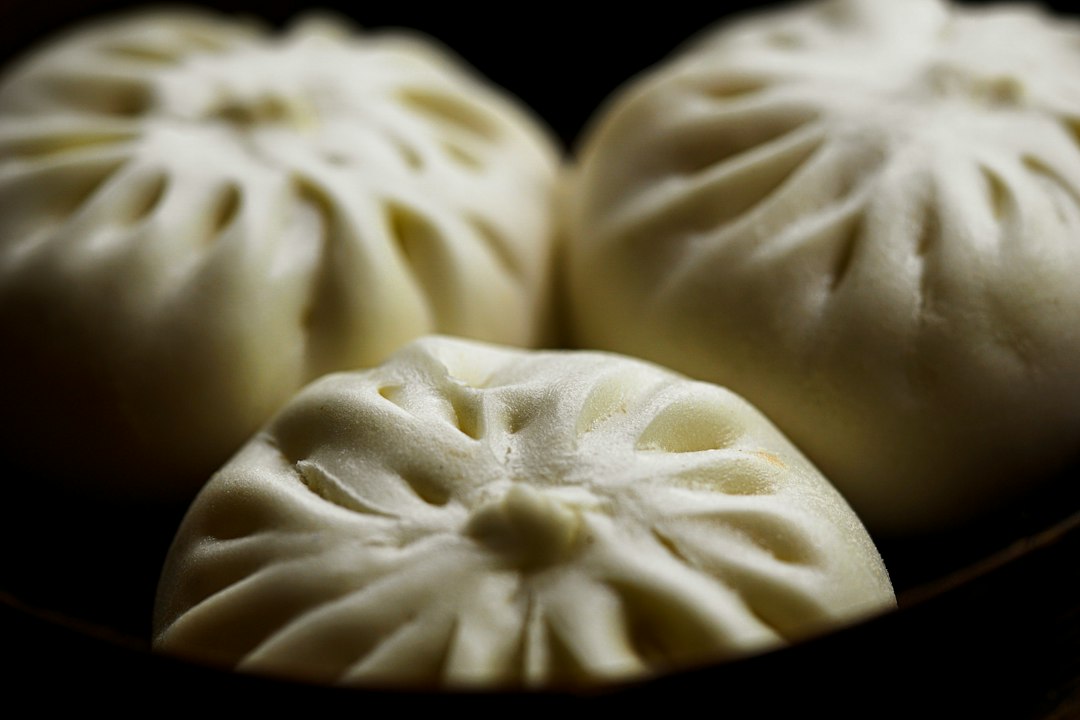
This softness is a steam achievement. A hard boil would have turned the dough into a sad sponge.
Fish is the other food I stopped arguing with. A fillet on a heatproof plate, ginger and scallion on top, plate set in the steamer so the juices stay with the fish: that is the method I relearned the year I got tired of fish sticking to stainless. A thin fish spatula slides under the fillet when the plate comes out. A wide turner will break it in half, which is fine if you are saucing it and annoying if you were proud of it.
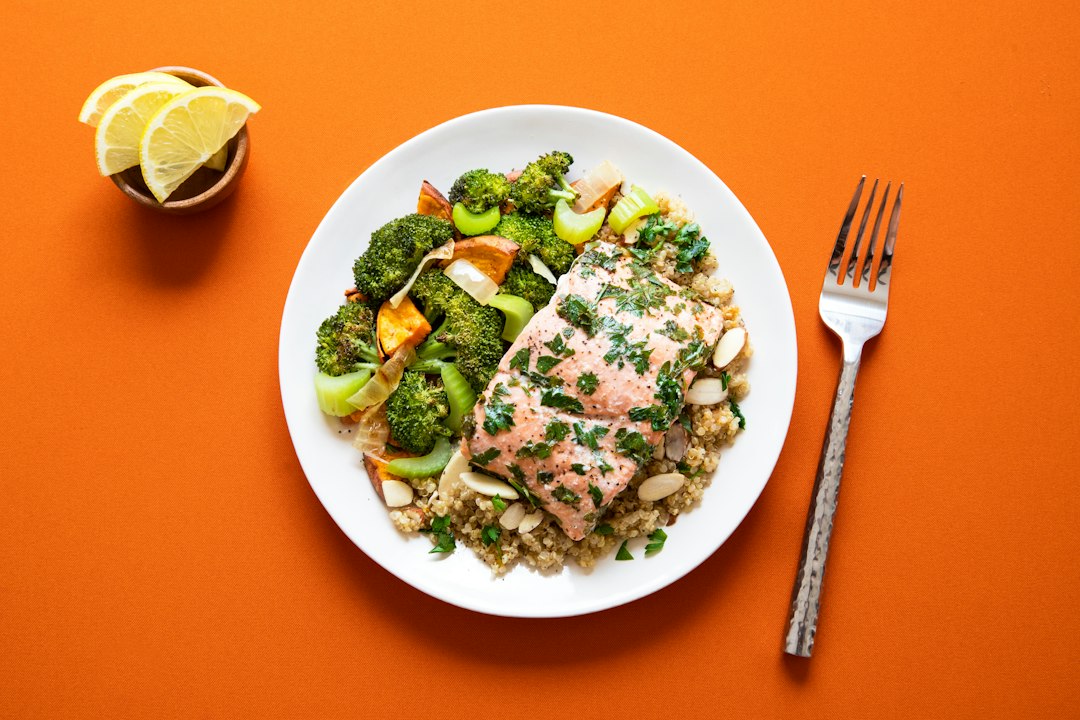
The plate steam is aiming for: a fillet that still holds together, vegetables with some snap, herbs and lemon doing the loud work.
Measure the plate first. It has to fit with a little air around it, and the lid has to close. A too-big plate turns the steamer into a lid that does not seal. I learned that with a pretty salad plate and a sulking fillet. The pretty one lives on the table now.
Eggs are a cousin of this gentleness, though I poach them in a shallow pan rather than a basket. If water cookery still feels like a magic trick, the five egg lessons in the piece I wrote for new cooks sit right next to this one. Same family of heat. Different furniture.
Steam does not season itself
This is the part people skip, and then they announce that steamed food is bland. Of course it is bland if you stop at the timer. You have cooked the texture. You have not cooked the appetite.
Salt while the food is still hot and a little wet, so the crystals grab. Then add one loud thing. Lemon is the loud thing I trust most often, because it wakes up broccoli, fish, and carrots without requiring a second pan. A halved lemon on the board is not a garnish. It is the missing ingredient.
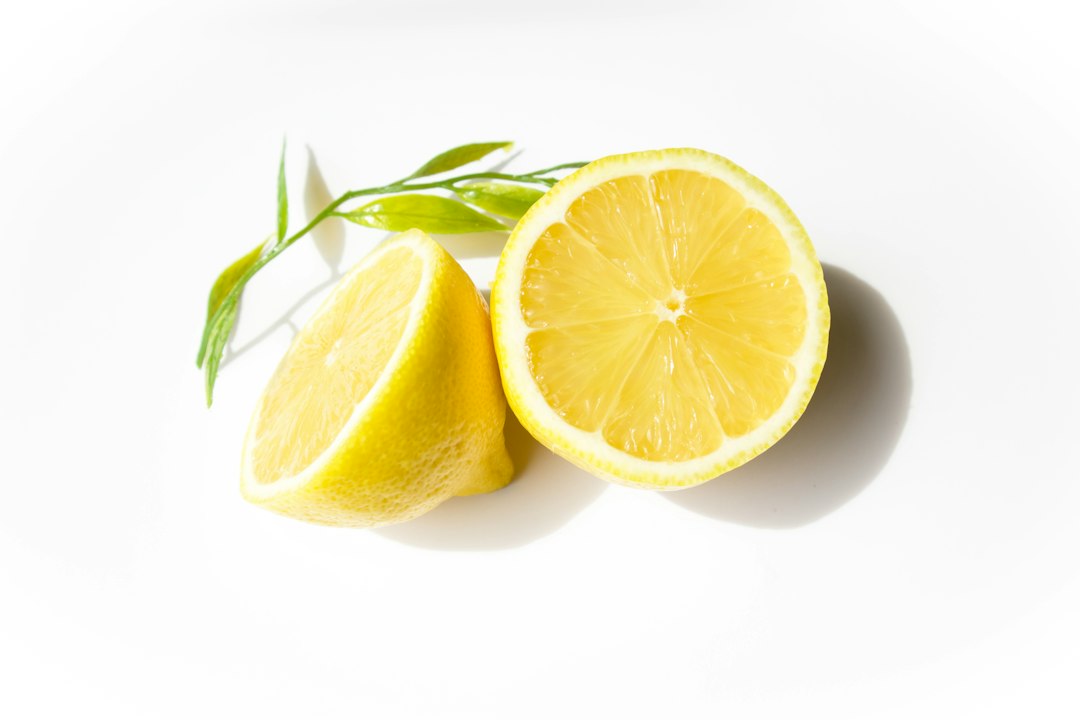
Lemon goes on after the lid comes off. Steam will not carry acid, salt, or good sense up into the basket for you.
On nights when lemon feels too bright, a few drops of toasted sesame oil and a scatter of scallion do the job. Toasted, not plain. A teaspoon is plenty for a basket of vegetables. More than that and the kitchen smells like a restaurant vent.
When I want heat, chili crisp goes on at the table, not in the steamer. The crunch in that jar is fried. Steam would soften it into a chili jam, which is a different condiment and not the one I opened the jar for. Same rule I use for anything crispy: add it after the cloud has done its work.
Butter is allowed. A pat on hot carrots, a grind of pepper, a pinch of salt. I am not running a spa. I am running a kitchen that has to make Tuesday feel like someone cooked. If you want the longer sermon on why the last thirty seconds matter more than the appliance, I already wrote it, and it still sits at the center of how I finish almost everything: salt, lemon, and one drizzle.
One burner, two dinners, no heroics
The efficiency trick is stacking, and it is less clever than the internet makes it sound. Dense food goes in the lower basket or in the water. Delicate food goes above. Potatoes can boil underneath while broccoli steams on the insert. Carrots can take the bottom tier of bamboo while dumplings take the top, added a few minutes later so they do not overcook while the carrots catch up. You are not a line cook. You are a person with one good burner and a clock.
Lift baskets with locking tongs, not with a wet center post and a prayer. I have dropped a tier of carrots onto the stovetop while someone asked where the napkins were. The carrots survived. My opinion of myself did not.
A plug-in steamer earns a spot when the stove is already a traffic jam, not when you are collecting cords. A digital food steamer will hold vegetables while you are at the table with homework or a roast that has its own agenda. If the counter is already a parking lot, skip it. The food will not know. You will, the first time you trip on the cord.
The mistakes that make people swear off the method
The lid comes off too often. I know, because I do it when I am nervous, and the broccoli pays for my nerves. If you need to see, use a glass lid or trust the timer you set when the steam was already rolling. Peeking at minute two tells you nothing except that it is not done.
The water touches the food, and then you are boiling badly in a shallow puddle. If the simmer splashes up through the basket, turn it down. Vegetables want a steady cloud. Dumplings can take a stronger boil underneath, but the waterline still stays below the food. That rule does not bend.
A basket packed like a suitcase steams at the edges and sulks in the middle. Cook in two rounds. The first round can wait, covered, on a warm plate. It will not die.
The finish never happens. Naked steamed broccoli is a dare. Broccoli with salt, pepper, and lemon is a side dish. If you only change one habit, change that one.
The last mistake is treating steam as the virtuous option and searing as the real cooking. I do not. Saturday still gets the hard pan and the fond, the whole practice I wrote up in the golden bits at the bottom of the pan. Tuesday gets the cloud. Both are cooking. Only one of them sets off the smoke alarm while someone is trying to tell you about their day.
What stays within arm’s reach
From an empty drawer I would buy the stainless basket, a lid that fits, tongs that lock, and a lemon before I bought another machine. Bamboo comes the week dumplings become a Tuesday food, and parchment comes with it. Sesame oil and chili crisp can wait. They are not what makes the steam work. They are what makes you want to do it again on Wednesday.
Twelve quiet minutes. Water below, food above, lid mostly left alone. Salt at the end, something fragrant, and a plate that still has color on it. That is the practice. The rest is which basket you like the feel of, and whether Tuesday has room for a bun.