My niece called me from the cookware aisle of a big-box store two Saturdays ago, whispering like she was in a library. “Aunt Elena, everything here says titanium. The forty-dollar pans say titanium. The two-hundred-dollar pans say titanium. Which titanium do I want?” I laughed, because I had asked myself the exact same question back in August, standing in front of a wall of gray and silver boxes with a cart that already held too much.
Titanium cookware is having a moment. Searches have climbed more than fivefold over last year, and with the Black Friday cookware sales about a month away, the word is showing up on more stickers than ever. Here is the problem nobody prints on the box: most pans labeled “titanium” are not titanium pans. They are nonstick pans with a little titanium mixed into the coating, stainless pans with a hair-thin titanium finish, or, more rarely, pans with a genuine titanium cooking surface. Those three things cook very differently, last very differently, and deserve very different amounts of your money.
So my team and I spent the last several weeks doing what we always do when a trend comes knocking: we cooked. Eggs every morning, pancakes on Sundays, seared chicken thighs, pan sauces and one ill-advised cheesy frittata. Here is which pans I would actually spend holiday-sale money on.
The Short Answer, If Your Cart Is Already Open
- Best real titanium pan for home kitchens: Our Place Titanium Always Pan Pro, an uncoated titanium cooking surface that releases eggs with a little fat and laughs at metal spatulas.
- Best titanium-toughened stainless: Hestan NanoBond Titanium Skillet, for cooks who love stainless searing but hate scratches and stains.
- Best budget “titanium” nonstick: T-fal Titanium Advanced Nonstick Fry Pan Set, honest everyday nonstick at a price that makes replacing it in a few years painless.
- Best non-titanium alternative for the same money: Matfer Bourgeat Carbon Steel Fry Pan, if what you really want is a pan that lasts forever and gets slicker with age.
Now let me show you why.
Three Kinds of “Titanium,” One Very Confusing Word
Before you can compare titanium cookware against anything, you have to know which titanium you are holding. I sort every pan with titanium on the box into one of three families.
Family one: titanium-reinforced nonstick
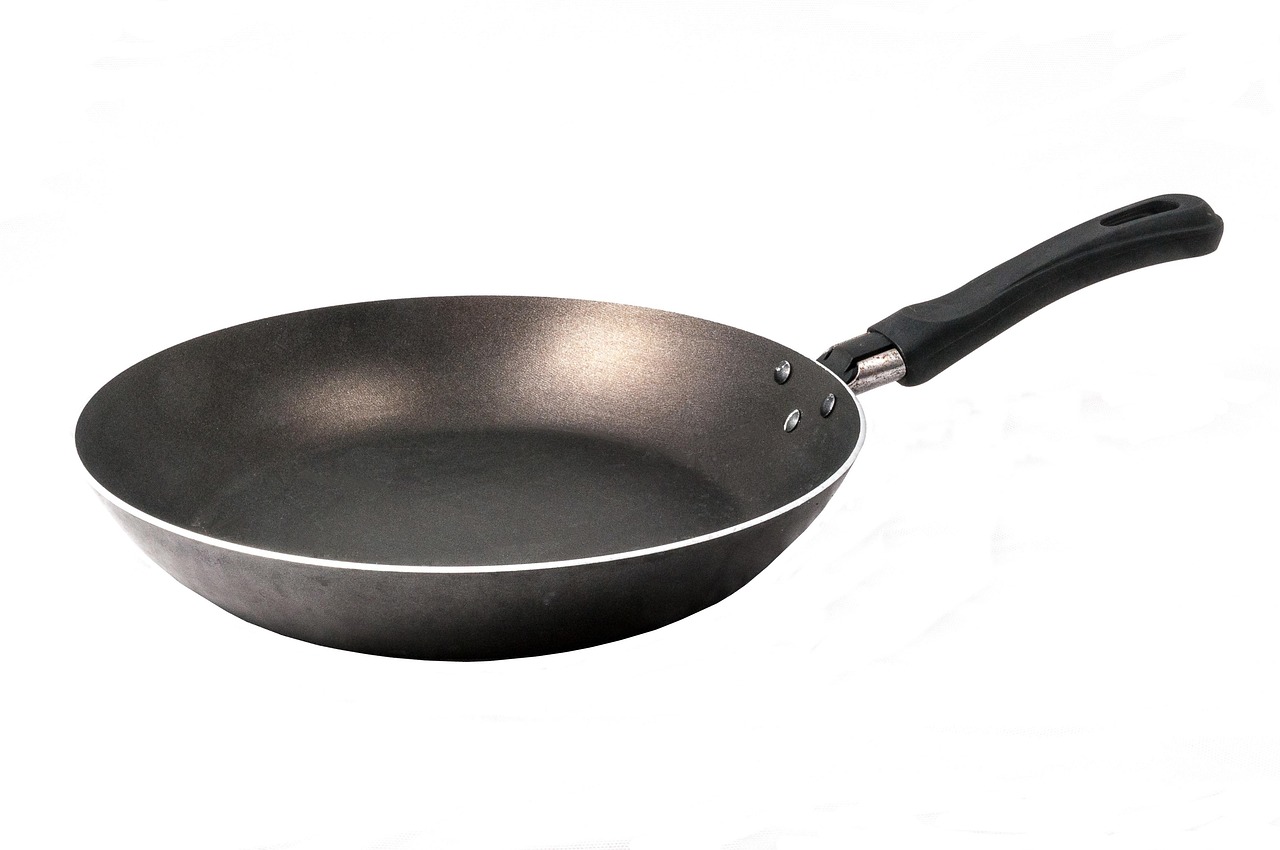
This is by far the biggest group, and it is where the forty-dollar pans live. The cooking surface is a conventional nonstick coating, almost always PTFE, with titanium particles blended in to make it tougher. The coating is still doing the nonstick work; the titanium just helps it shrug off a little more abuse. These pans are slick right out of the box, easy for beginners, and genuinely good at eggs. They also wear out eventually, the way every coated pan does, and they still want low-to-medium heat and soft utensils if you want them to last.
Family two: titanium-bonded or titanium-alloy stainless
The second group is stainless steel that has been toughened with titanium. Some brands vaporize titanium and bond it to the surface in a layer thinner than a human hair, which makes the steel noticeably harder and more resistant to scratching and discoloration. Others use 316Ti, a stainless alloy with a pinch of titanium that resists the pitting salty water can cause. These pans are fantastic, but please hear me: they are not nonstick. They cook like very good stainless steel, which means you preheat properly, use fat, and let food release on its own schedule.
Family three: an actual titanium cooking surface
The smallest and newest group puts real, uncoated titanium where your food touches the pan, usually bonded over an aluminum core with a stainless exterior so it heats evenly and works on induction. Many use a textured pattern pressed into the titanium to reduce contact between food and metal. These pans behave somewhere between nonstick and stainless. They release beautifully once preheated and greased, they can take high heat and metal tools, and there is no coating to wear off. The catch is price, and a short learning curve.
The Egg Test That Settled It at My Stove
Every pan that comes into my kitchen has to pass the same audition: one fried egg, one teaspoon of oil, medium-low heat, a two-minute preheat, and a spatula slid underneath at the moment the whites set. It is the same one I walk new cooks through in my five-lesson guide to cooking eggs, because an egg tells you everything about heat control and surface.
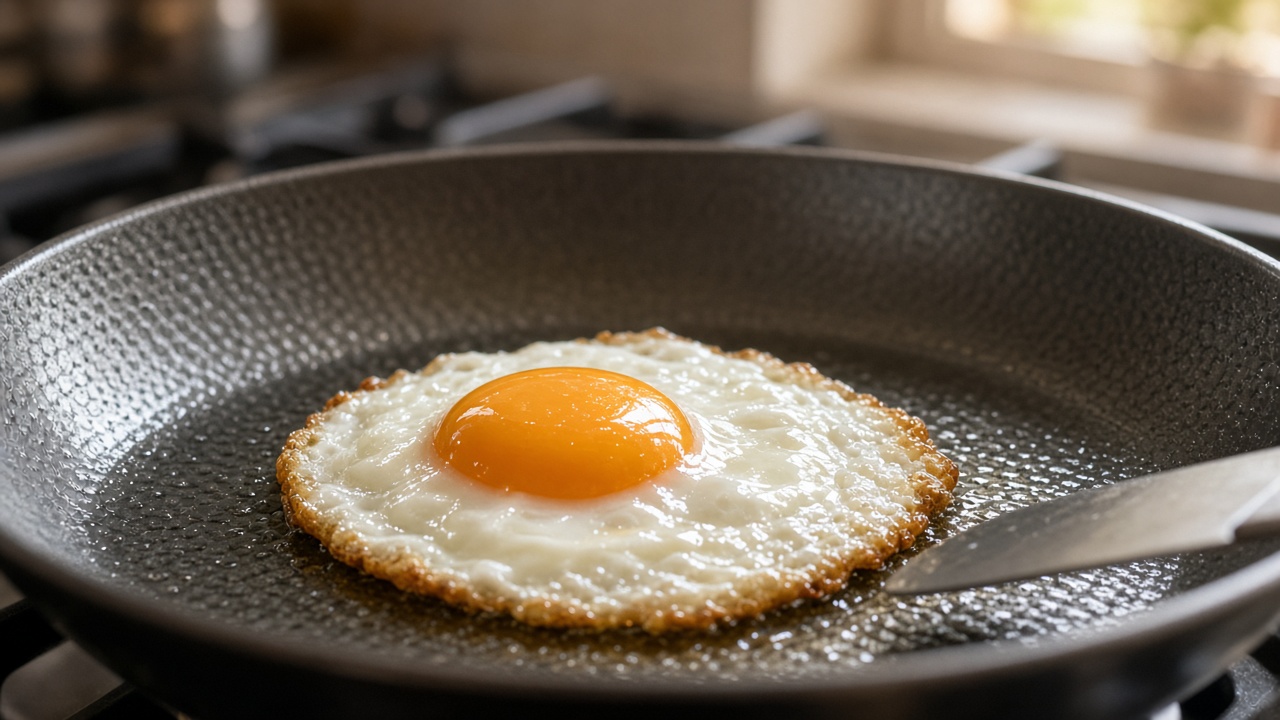
The titanium-reinforced nonstick pans passed instantly, as nonstick always does when it is new. The titanium-bonded stainless behaved like a well-handled stainless pan: with a proper preheat and enough fat, the egg released after about ninety seconds, but rush it and you are scraping. The real titanium surface was the surprise. The Our Place Titanium Always Pan Pro needed its preheat and its teaspoon of oil, exactly as the instructions say, but once it had both, the egg slid like it was on ice. Skip the fat and it sticks, though even then it cleaned up with a soak and a sponge.
Pancakes told a similar story, with one quirk: on the textured titanium surface, the first pancake picked up a faint dimpled pattern from the pan. It tasted exactly the same. The frittata was the one real failure, sticking at the edges on both the stainless and the titanium surface. If you live on cheesy egg bakes, a coated pan or a well-seasoned skillet is still your friend.
Where Real Titanium and Toughened Steel Pull Ahead: Searing
This is the part that made me a believer. Coated nonstick pans, titanium-reinforced or not, are not built for high heat. Most manufacturers recommend keeping them at medium, and if you have ever wondered why your steak comes out of a nonstick pan gray instead of crusted, that is why. Uncoated titanium and stainless have no such limit. The Our Place pan is rated oven-safe to 1,000°F, which is far more than any home oven will ask of it.
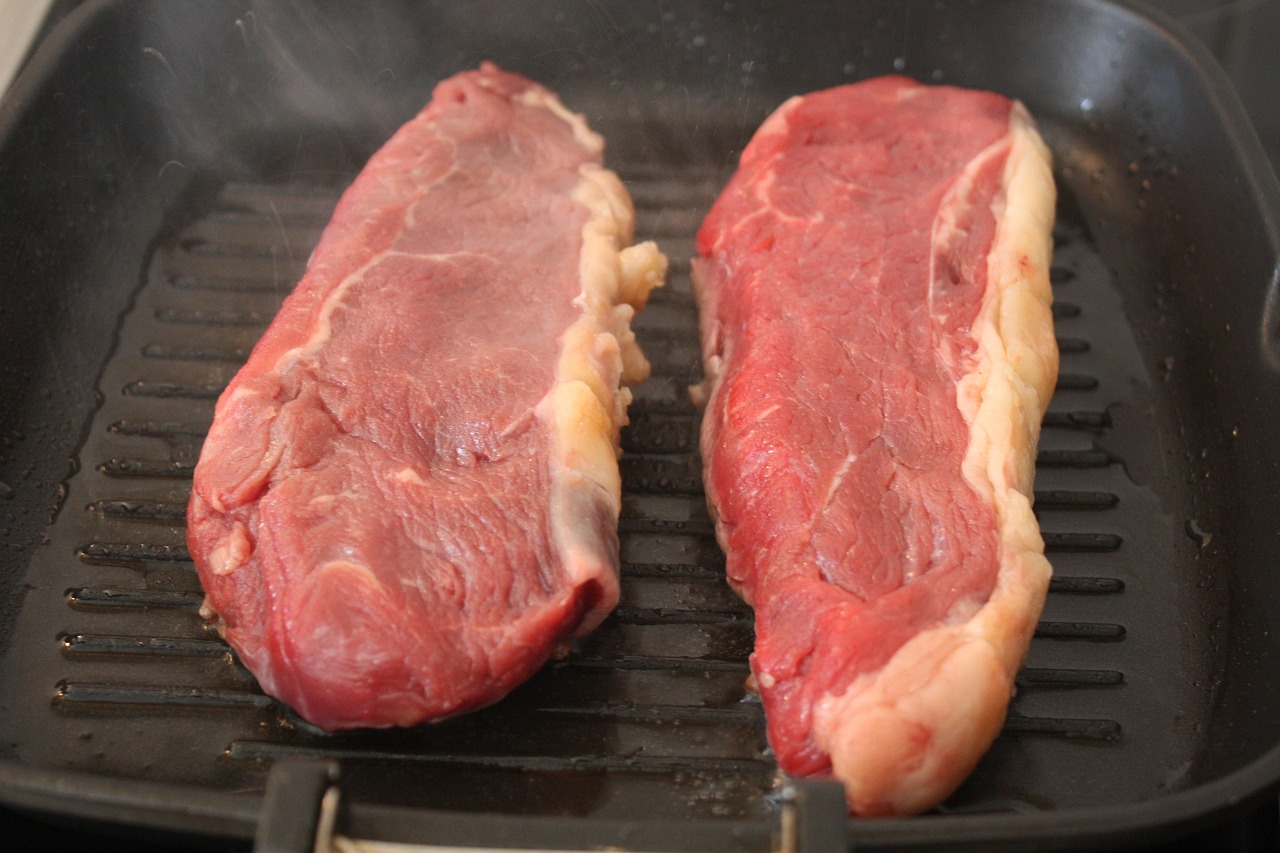
I seared chicken thighs skin-side down in all three families. The real titanium and the titanium-bonded stainless both gave me shatteringly crisp skin and a pan full of brown fond for a quick sauce. The nonstick gave me pale skin and almost no fond, because the coating is designed to keep anything from sticking, including the browned bits that make a pan sauce worth making.
If you have never cooked on high-end stainless and want the classic version of that experience, the All-Clad D3 Stainless 10-Inch Fry Pan is still my benchmark. It does not have titanium anywhere in it, and it sears just as well. What the titanium-bonded versions add is toughness: fewer rainbow heat stains, fewer scratches, and a surface that looks new longer. For a deeper dive on a pan that sears well, you might also enjoy my carbon steel story, since that pan does a lot of the same work for a fraction of the price.
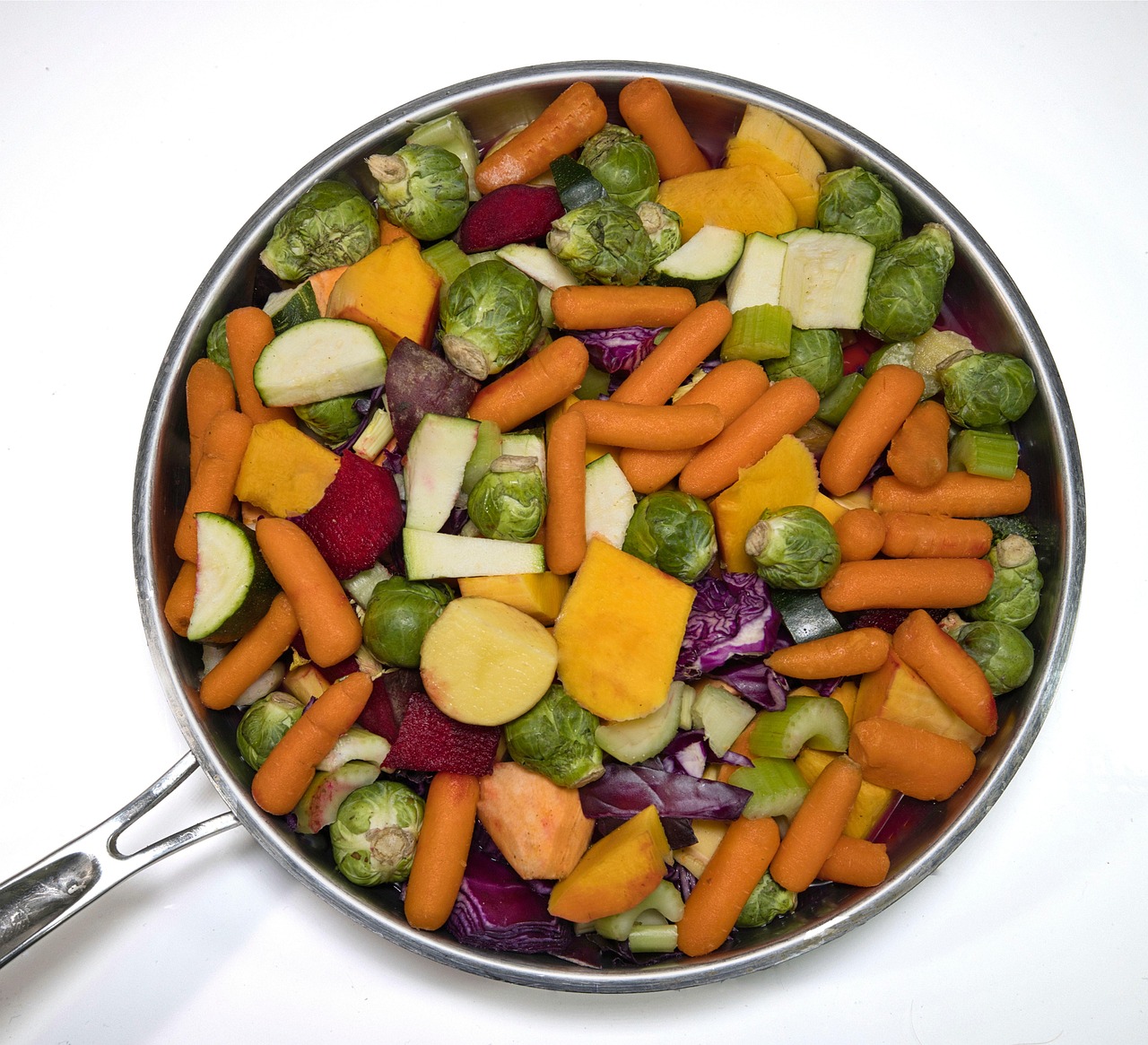
The 316Ti Pan for Cooks Who Salt Their Water Early
One pan deserves its own little spotlight because it solves a problem most people do not know they have. If you have ever noticed tiny pits or white spots in the bottom of a stainless pot, that is usually salt corrosion from adding salt to cold water and letting it sit. The Heritage Steel Titanium Series Fry Pan uses 316Ti stainless for its cooking surface, an alloy with a little titanium added specifically to resist that kind of pitting. It does not claim to be nonstick, and it is not. It is simply a beautifully made stainless pan that should still look good after decades of pasta nights. For a cook who wants one heirloom pan rather than a trend, it is a quiet, sensible pick.
What About the Titanium Nonstick Pans? An Honest Defense
I do not want anyone walking away thinking the forty-dollar titanium pans are a scam. They are not. They are just nonstick pans with a tougher coat, and for a lot of households, that is exactly what is needed. If you are feeding kids scrambled eggs at 7 a.m., or you are cooking for someone who is nervous at the stove, a slick coated pan removes a lot of stress.
The trick is buying them with clear eyes. Expect three to five good years with careful use, not a lifetime. Keep the heat at medium or below, never preheat an empty coated pan on high, let it cool before washing, and use wood, silicone or nylon tools. If you prefer a coated pan from a company with a strong warranty, the Scanpan Classic Fry Pan uses a titanium-reinforced nonstick surface on a heavy pressed-aluminum body and has held up well in my test kitchen for years. It is still a coating at heart, and I treat it like one.
One more note, because readers ask me every week: if your main reason for shopping titanium is to get away from PTFE coatings, read the fine print carefully. Titanium-reinforced nonstick is still PTFE-based nonstick. If a coating-free surface matters to you, you want family two or family three.
Seeing All Four Side by Side
I lined up one pan from each family on my butcher block for a final look, along with a carbon steel skillet as a wild card.
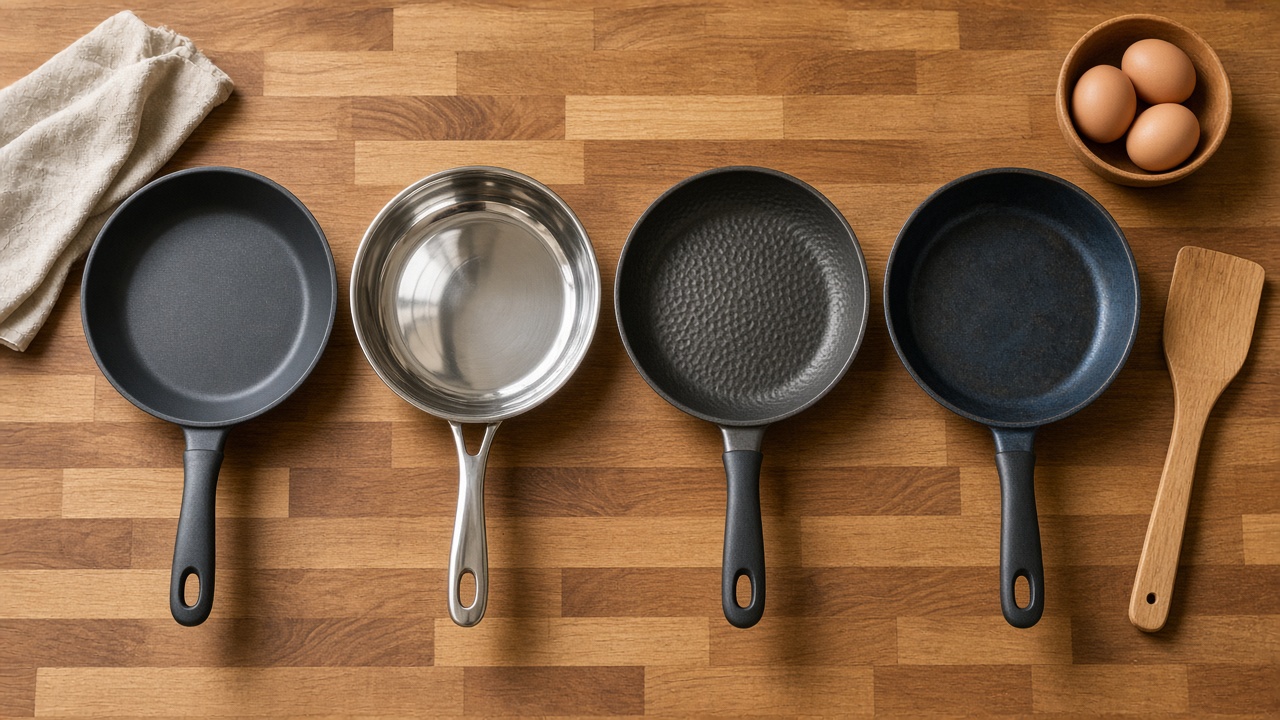
In a sentence or two each:
- Titanium-reinforced nonstick: easiest to use, least durable, lowest price. Great for eggs and delicate fish; skip it for searing.
- Titanium-bonded or 316Ti stainless: outstanding searing, tough surface, decades of life. Requires real stainless technique.
- Real titanium surface: the closest thing to “nonstick that sears” I have used. Needs preheat and fat; costs serious money.
- Carbon steel: not titanium at all, but it lasts forever, gets slicker every month and costs a fraction of the others if you are willing to season it.
The Cast Iron and Carbon Steel Question
Whenever a new pan material arrives with a big price tag, I ask the same question: could a pan my grandmother would recognize do the same job? Often, the answer is yes. A well-seasoned cast iron or carbon steel pan sears beautifully, releases eggs once the seasoning is established, goes in the oven, works on induction, and outlives all of us.
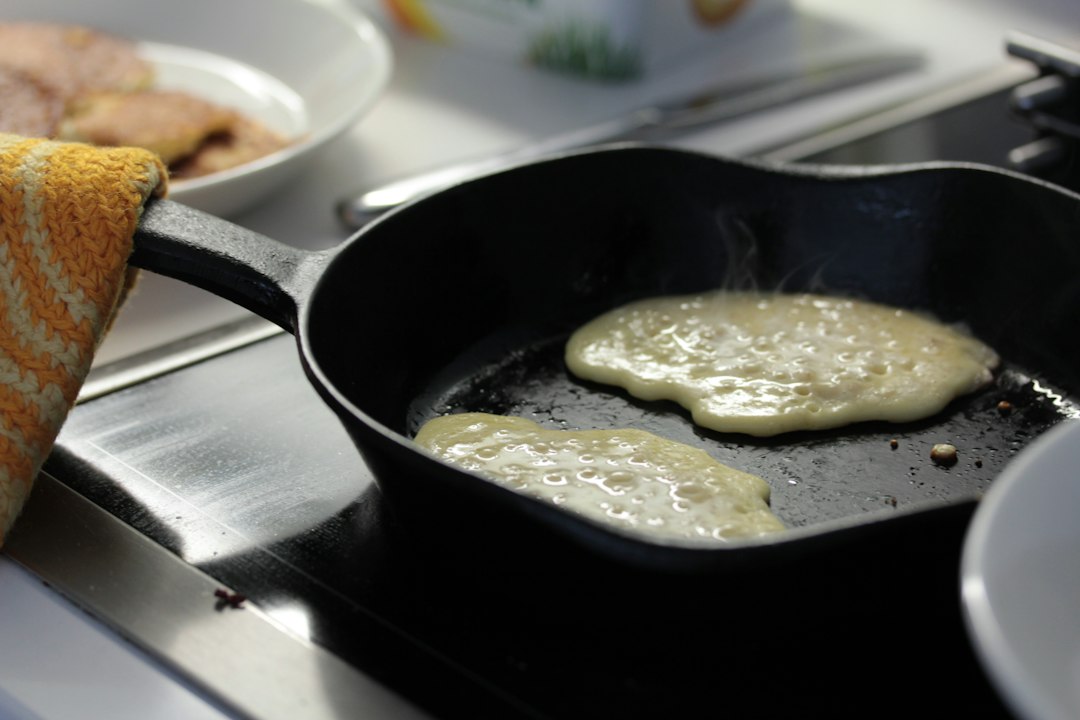
What carbon steel and cast iron ask for in return is maintenance: drying immediately, a wipe of oil, and patience while the seasoning builds. The titanium-surface pans skip all that. They go in the dishwasher and shrug off tomato sauce and metal spatulas. Whether that convenience is worth four or five times the price is your call. If you cook on induction, as I do most days now, every option here except a few aluminum-only coated pans will work, and I explain why in my piece on switching to induction.
Pure Titanium Belongs in Your Backpack, Not Your Kitchen
You will occasionally see solid titanium pots and pans for sale, and they are fascinating objects: so light you can barely feel them, nearly indestructible and completely unbothered by acidic foods. They are also thin, and titanium alone conducts heat poorly. On a home burner, they develop scorching hot spots right over the flame while the edges stay cool.
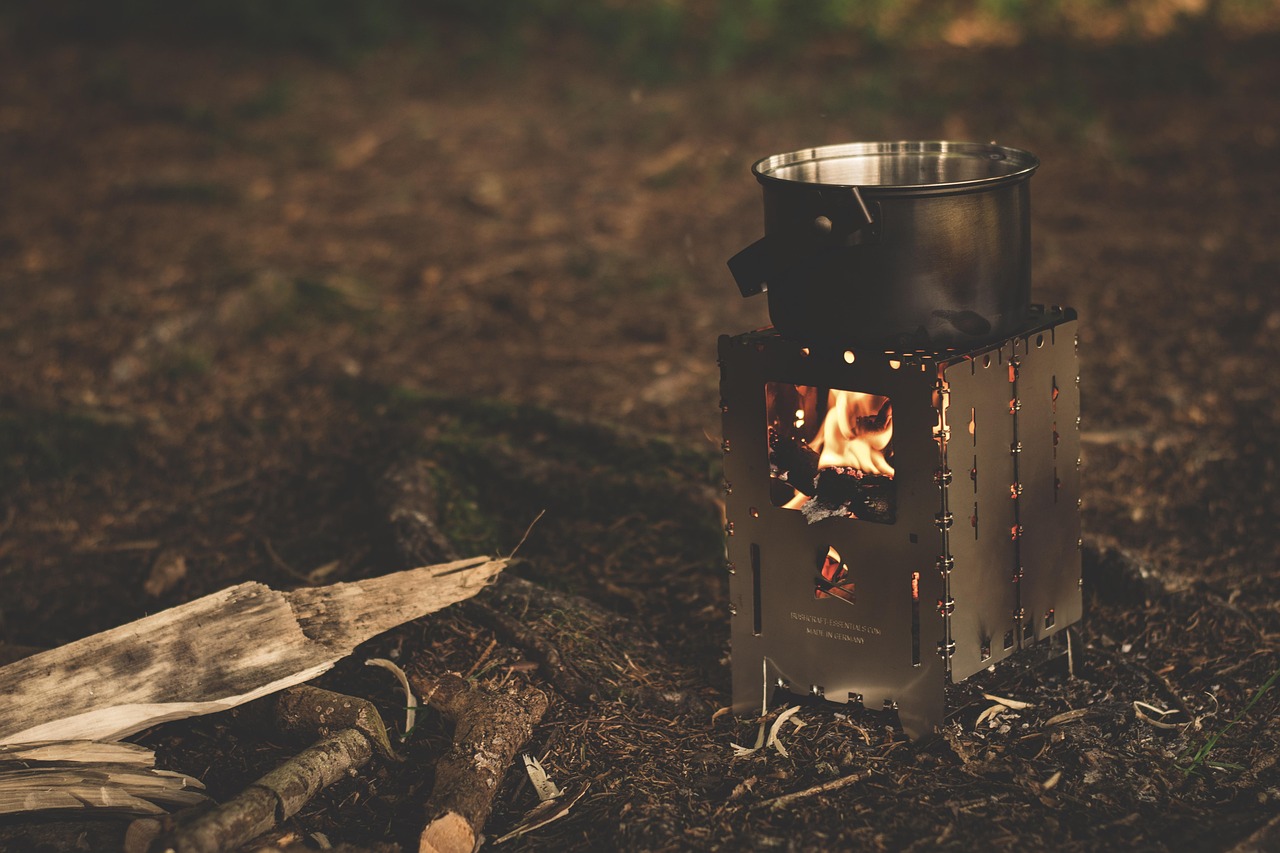
That is perfect for boiling water on a trail and terrible for searing a pork chop. If you have a camper, hiker or hunter on your gift list, the Snow Peak Titanium Trek Cookset is a classic for a reason. Just do not buy one expecting it to replace your everyday skillet.
Caring for Each Kind So It Lasts
The most expensive pan in the world is the one you ruin in a year, so here is how my team and I keep each family happy.
- Titanium-reinforced nonstick: hand wash with a soft sponge, avoid aerosol cooking sprays that leave a gummy film, and store with a cloth or felt protector between pans.
- Titanium-bonded and 316Ti stainless: deglaze while the pan is warm, then scrub. For heat tint or stubborn spots, a little Bar Keepers Friend Cookware Cleanser brings the shine back in a minute.
- Real titanium surface: always preheat gently and add fat before the food goes in. A dark patina will develop over time; that is normal oxidation, not damage. Dishwasher safe, though I hand wash mine out of habit.
- All of them: a thin, flexible metal turner makes a world of difference on uncoated surfaces. The OXO Good Grips Stainless Steel Turner slides under eggs and fish without tearing them. Save it for the stainless, titanium and carbon steel; keep it far away from coated pans.
How to Shop the Black Friday Cookware Sales Without Getting Fooled
Titanium pans are going to be everywhere in November, and the discounts will look enormous. Before you click, I run through three quick questions, the same way I worked through the October sales in my field guide to the fall sale days.
First, what is the cooking surface made of? If the product page mentions PTFE, “nonstick coating,” or “titanium-reinforced,” it is a coated pan. If it says “uncoated,” “titanium interior” or “titanium-bonded stainless,” you are in the other families.
Second, what is the maximum temperature? Coated pans usually top out somewhere around 400 to 500°F in the oven. Uncoated stainless and titanium surfaces go much higher, and that number is one of the fastest ways to tell what you are really buying.
Third, do you need a whole set? In my experience, most home cooks reach for two pans ninety percent of the time. One great skillet and one versatile saucepan beat a twelve-piece set that crowds your cabinet. Start with a single pan in whichever family fits how you cook, live with it through the holidays, and add more only if you love it.
My Verdict After a Month of Eggs
Titanium cookware is not hype, and it is not magic. It is three very different products wearing the same word. The titanium-reinforced nonstick pans are good nonstick pans and nothing more. The titanium-toughened stainless is excellent stainless that stays pretty longer. And the newer pans with a real titanium surface are genuinely something new: a coating-free pan that sears like steel and releases nearly like nonstick, as long as you meet it halfway with a little heat and a little fat.
If I could only buy one this Black Friday, I would put my money on the real titanium surface and pair it with a cheap coated pan for the occasional frittata. If my budget were tight, I would buy a carbon steel skillet and season it with Saturday morning bacon. And whichever you choose, call someone you love from the cookware aisle and laugh about the labels together. That part never goes out of style.