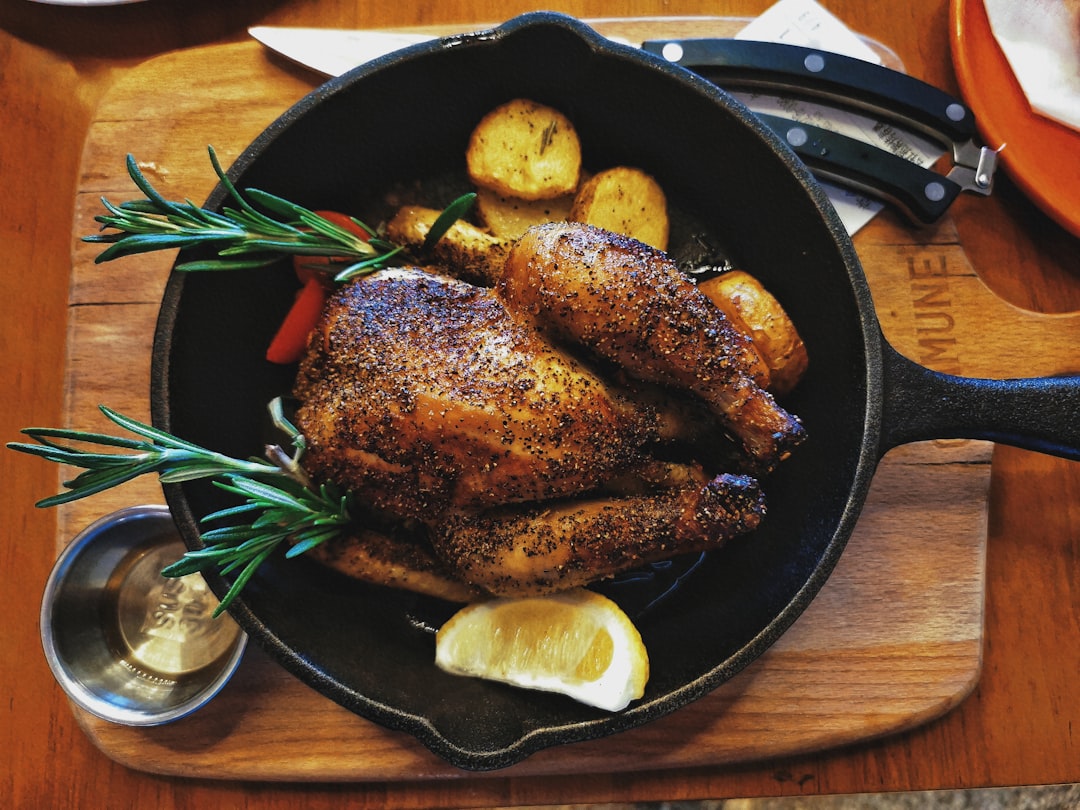
Every December for the last eleven years, a dozen women and a few brave men have walked up my front steps carrying cookies. They come in Santa tins and shoeboxes lined with wax paper, in mixing bowls under dish towels and once, memorably, in a laundry basket. By the end of the afternoon my dining table holds somewhere north of two hundred cookies, everyone goes home with a box of everybody else’s baking, and I am usually standing at the sink at nine o’clock at night wondering why I did it all in the same week.
This year the answer changed. My small team and I sat down in late October with a calendar and a stack of last year’s notes, and we moved almost all of the work into November. The swap is still on the second Saturday of December. The baking, the freezing, the packaging and even the guest list now start this week. If you’ve ever hosted or joined a cookie exchange and felt like the whole thing landed on top of you at once, this is the plan I wish I’d had a decade ago.
It turns out I’m not early, either. Holiday cookie videos have been racking up views since mid-October, and recipe searches climbed sharply at the end of the month. Cookie exchanges and small get-togethers are having a real moment, especially with younger friends who’d rather swap than host a full dinner. People are planning now. The bakers who start now are the ones who’ll actually enjoy December.
Why the Cookie Exchange Starts in November
The honest truth about a cookie exchange is that the party itself is the easy part. Two hours, some coffee, a table full of cookies and a lot of laughing. What wears people down is the four days before it, when one person is trying to bake six dozen cookies on a weeknight after work, with the oven also needed for dinner and the kids also needing help with homework.
Most cookie doughs freeze beautifully. Drop cookies, shortbread, slice-and-bake logs, sugar cookie dough and gingerbread all hold for two to three months in a good freezer bag. Many baked cookies freeze well too, as long as they’re cooled completely and packed airtight. That single fact changes the whole calendar. Instead of one exhausting week, you get four relaxed weekends, and the oven on swap day only has to handle a final bake of whatever you want warm.
Here’s the rhythm I’m using this year:
- First week of November: send invitations, settle the cookie count and start a sign-up list so nobody brings the same cookie.
- Second and third weeks: mix, scoop and freeze dough in batches, one or two recipes per weekend.
- Thanksgiving week: take a break. The oven belongs to the bird.
- First week of December: bake from frozen, cool, decorate and pack.
- Swap day: set the table, brew the coffee and let everyone else do the work.
Do the Math Before the Mixer
The first thing every guest asks is “how many do I bring?” After eleven years I can tell you there’s no magic number. There’s only a number you state clearly before anyone starts baking. The fairest version is simple: everybody brings the same amount and everybody takes home roughly what they brought.
For a group of six to ten bakers, I ask for four dozen exchange cookies each, plus about a dozen extra for a tasting plate that stays at my house. With ten bakers that puts 480 cookies on the table, and each person goes home with four dozen of a dozen different kinds. If four dozen sounds like a lot to your crowd, cut it to two dozen. A smaller promise that people actually keep beats a big number that makes friends quietly decline the invitation.
Some groups prefer pre-packed bundles, where each baker brings one small bag for every other guest. That’s tidier and faster, especially if you’re short on table space. The catch is that a last-minute cancellation leaves everyone holding a spare bundle. If that happens, the extras go on the tasting plate, and nobody minds.
A good baking cabinet reset helps here too. Before you multiply a recipe by four, check that the baking powder isn’t from three houses ago and that you have enough butter, flour and sugar for the whole run. I weigh everything for big batches on an OXO Good Grips 11-Pound Food Scale, because scooping four times the flour by the cup is how a cookie goes from tender to dry without anyone noticing until the swap.
The Scoop Is the Whole Secret
If I could hand every new cookie-exchange baker one tool, it wouldn’t be a fancy mixer. It would be a spring-loaded cookie scoop. When you’re making forty-eight of something, every cookie needs to be the same size, because same size means same bake time, and same bake time means no tray of half-raw centers next to a tray of burnt edges.
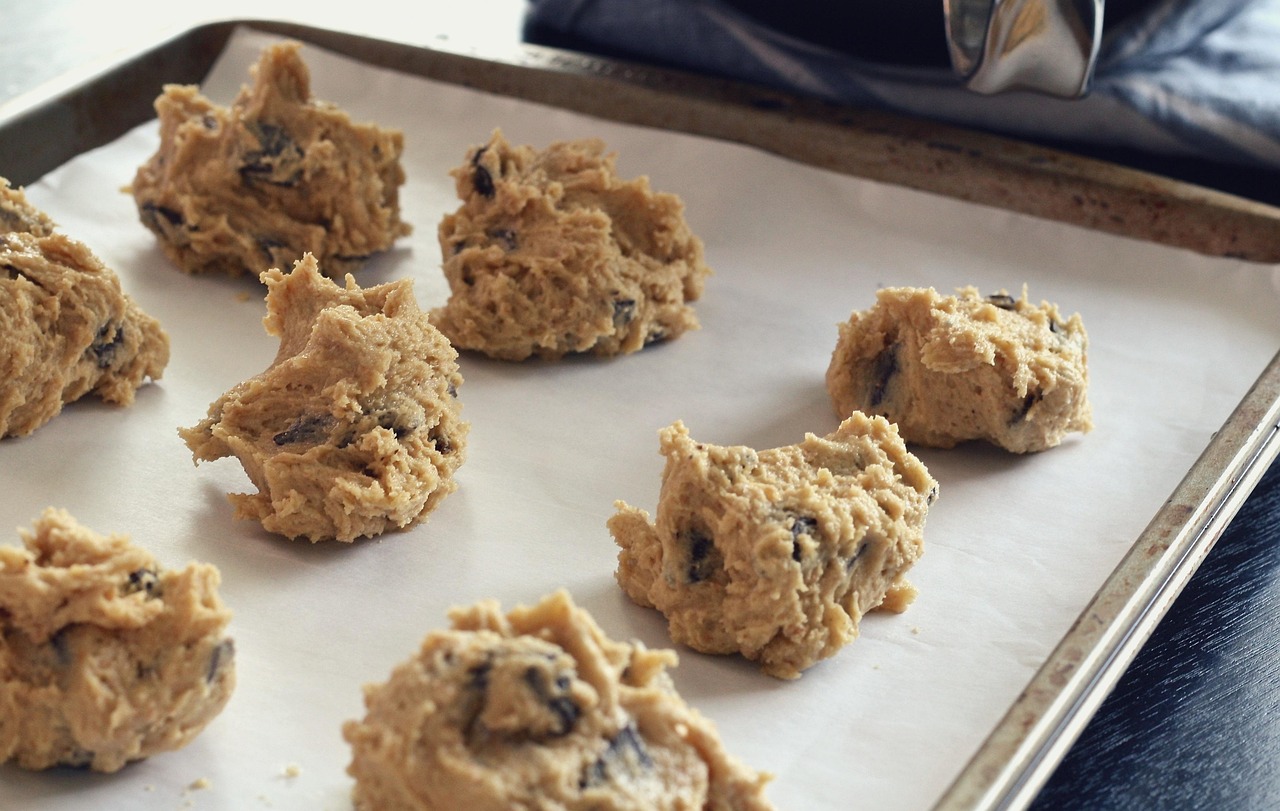
I keep two sizes in my drawer. A medium scoop of about one and a half tablespoons is my workhorse for drop cookies like chocolate chip, oatmeal and molasses crinkles. A smaller one handles truffles, thumbprints and anything rich enough that two bites is plenty. The OXO Good Grips Medium Cookie Scoop has lasted me through more Decembers than I can count, and the soft handle matters when your hand has been squeezing it for an hour.
The mixing is the other half. A stand mixer is wonderful, but for most exchange doughs a strong hand mixer does the job and leaves a lot less to wash. We put four of them through three pounds of butter in October, and the full results are in my hand mixer bake-off. The short version: the KitchenAid 7-Speed Hand Mixer handled stiff cookie dough without straining, and it’s the one I still reach for on batch days.
Sheet Pans, Mats and the Oven Rotation
Here’s where most volume bakers lose time without realizing it. You have one or two sheet pans, so you bake a tray, wait for it to cool enough to handle, scrape it off, and start again. Multiply that by eight trays and you’ve lost an hour to waiting. The fix is simple: have at least three pans going in rotation. One in the oven, one cooling, one being loaded.
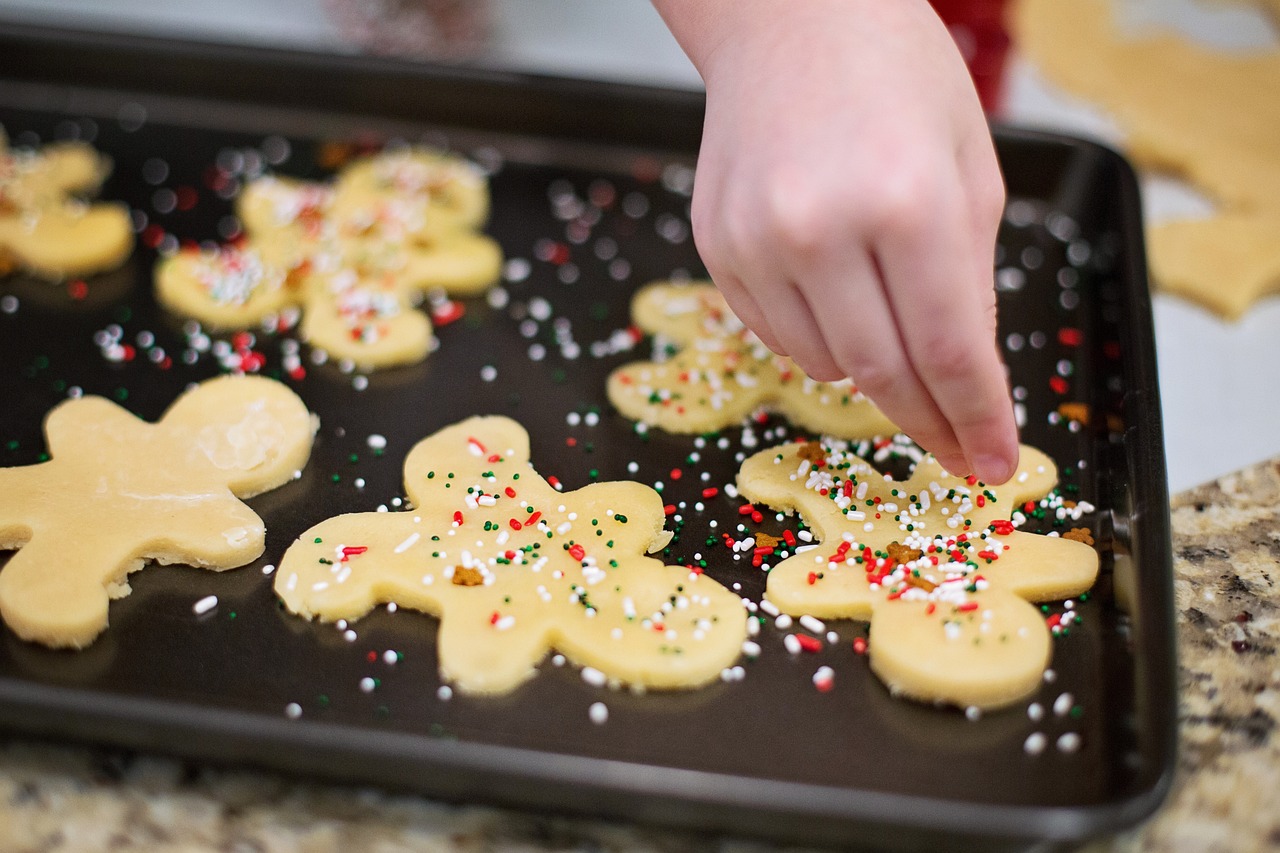
I use plain aluminum half sheets, the kind restaurant kitchens buy by the stack. The Nordic Ware Naturals Half Sheet Pan is the one I trust. It’s light-colored so cookie bottoms don’t scorch, it doesn’t warp at 375°F, and it’s inexpensive enough that owning three or four isn’t a splurge. Dark nonstick pans brown bottoms faster, so if that’s what you have, drop the oven temperature by about 25 degrees and watch the first tray closely.
Line every pan. Parchment is my everyday choice because it goes straight from pan to cooling rack, cookies and all, so the next tray can be loaded while the first batch cools. Pre-cut sheets like Precut Half-Sheet Parchment Paper lie flat instead of curling up while you scoop. For shortbread, tuiles and lacy florentines, I switch to a Silpat Half-Sheet Silicone Baking Mat, which keeps delicate cookies from spreading too thin and peels away cleanly every time.
Cooling-Rack Math Nobody Mentions
The first year I hosted, I had one cooling rack. One. By the third tray of snickerdoodles, cookies were cooling on dinner plates, on the stovetop and, at one low point, on top of the closed toaster. Warm cookies stacked on top of each other steam and go soft, and frosting slides right off a cookie that isn’t fully cool.
A full half sheet holds about a dozen to fifteen cookies, and most cookies need ten to twenty minutes on a rack before they can be stacked or frozen. If you’re baking four dozen in one session, you need space for at least three trays’ worth cooling at once. On a small counter, the answer is to go up instead of out. A set of Stackable Three-Tier Cooling Racks turns about eighteen inches of counter into room for forty cookies, and it folds flat into a drawer the other eleven months of the year.
Look for racks with a tight grid rather than wide parallel bars. Small cookies, thumbprints and crinkles slip through wide bars or sag in the gaps while they’re still soft. The tight grid also doubles as an icing rack later, with a sheet pan underneath to catch the drips.
Freezer Staging: Bake in December, Do the Work in November
This is the heart of the whole plan, and it’s the part my team and I tested hardest this fall. Most drop-cookie doughs are best frozen as scooped balls. Scoop them onto a parchment-lined sheet pan, crowding them close together since they won’t spread in the freezer, and freeze the pan for about an hour until the balls are firm. Then tip them into freezer bags, press out the air and label the bag with the cookie name, oven temperature and bake time.

On baking day, you don’t even need to thaw them. Put the frozen balls straight on a lined pan and add one or two minutes to the bake time. The cookies come out thicker and chewier than fresh dough, which most people like better anyway. Sugar cookie and gingerbread dough freeze best as flat disks wrapped in plastic, ready to thaw overnight in the fridge and roll out. If you need a refresher on rolling pins for those, I wrote about the rolling pin your cookie dough deserves last month.
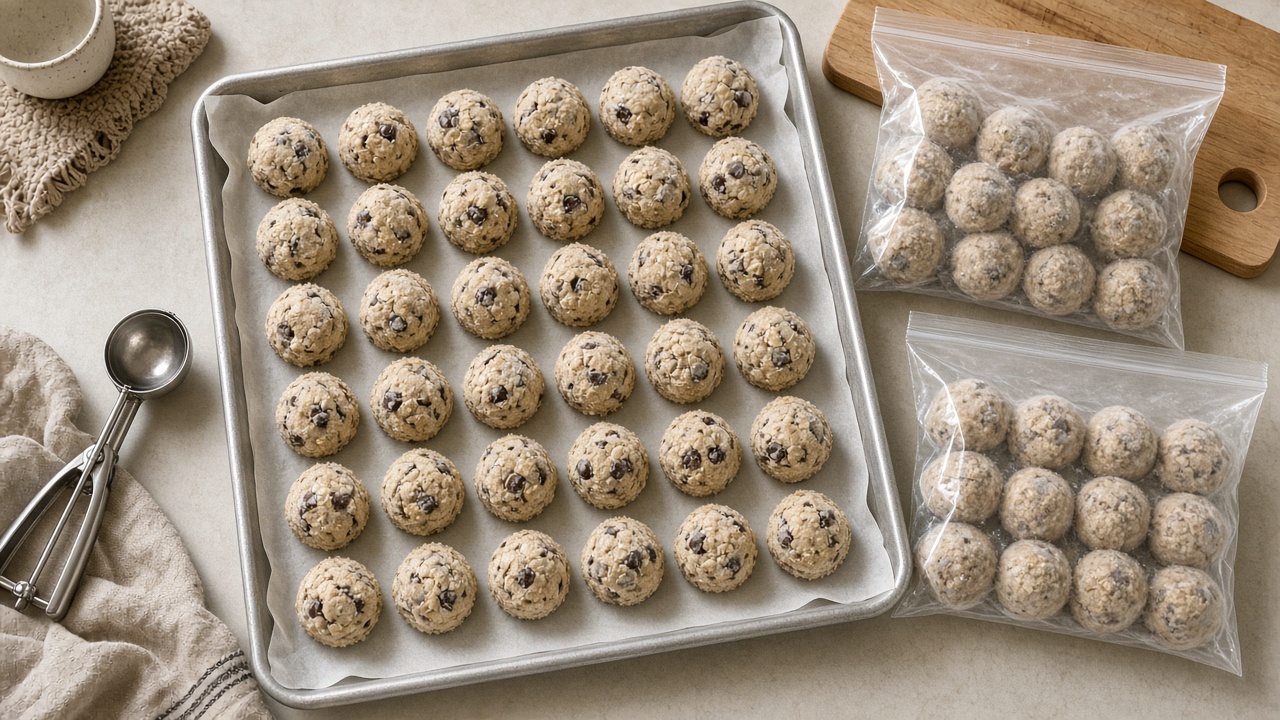
Good bags matter here. Thin sandwich bags let in freezer burn within a couple of weeks. I use Ziploc Gallon Freezer Bags for dough balls and lay them flat so they stack like files. If you own a vacuum sealer, this is its finest hour. A sealed bag of dough will hold its flavor until well into January. I covered which sealers are worth it in my vacuum sealer field guide, and every one of them handled cookie dough without crushing it if you freeze the balls first.
Baked cookies freeze well too, especially sturdy ones like shortbread, biscotti and undecorated gingerbread. Cool them completely, layer them in an airtight container with parchment between the layers, and thaw them at room temperature with the lid still on so condensation forms on the container instead of the cookies. The one category I don’t freeze is anything with a crisp meringue or a delicate glaze, which I make in the last few days before the swap.
Decorating Without Losing a Whole Weekend
Iced cookies are what everyone hopes to take home, and they’re also what most often wrecks a baker’s December. The trick is to decorate simply and to give the icing time. Royal icing needs at least six to eight hours to set hard enough to stack, and overnight is safer. If you plan to pack decorated cookies on Friday night for a Saturday swap, decorate them on Thursday.

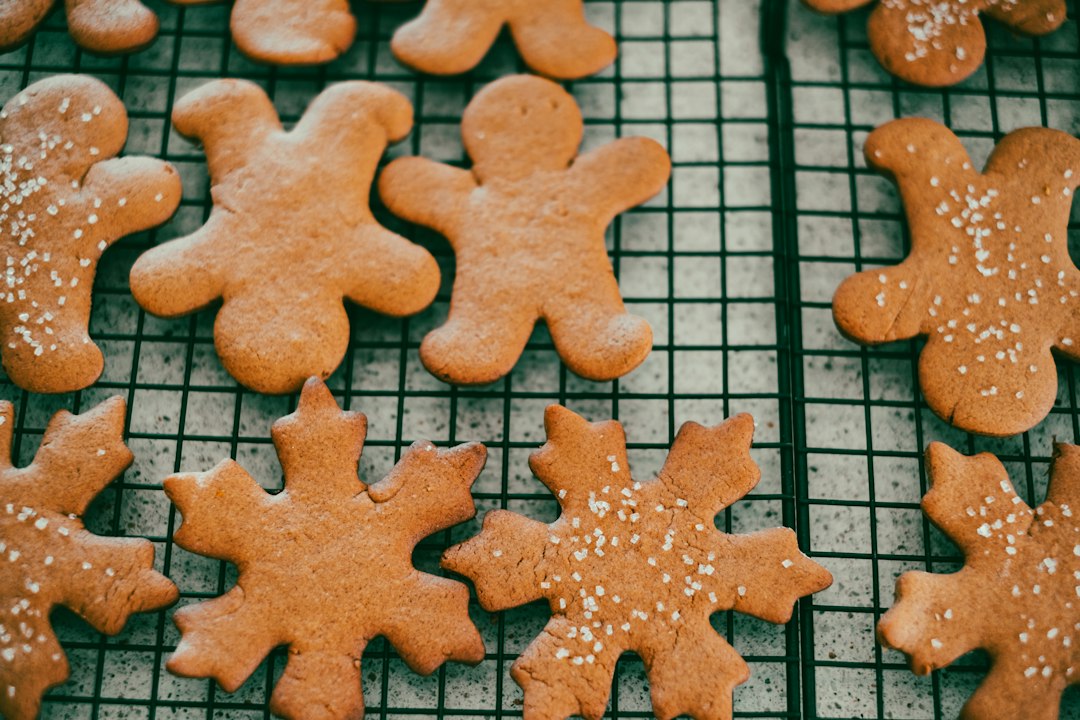
Simple designs look better on a swap table anyway. White lines and dots on gingerbread, a single color flooded on a sugar cookie with a few sprinkles while it’s still wet, or a drizzle of melted chocolate over shortbread. None of it takes skill, just a steady hand and a bag with a small tip. A box of Wilton 12-Inch Disposable Decorating Bags saves you from washing greasy piping bags at midnight, and you can snip a tiny opening instead of fussing with metal tips.
Get the kids involved here too. Sprinkles are a perfect job for small hands, and the slightly lopsided cookies always seem to disappear first at the swap.
Tins, Boxes and Bags That Survive the Car
The packaging is where a cookie exchange either looks generous or looks like a bake sale clean-out. It doesn’t have to cost much. It just has to keep cookies from breaking, sticking together or going stale in the car.
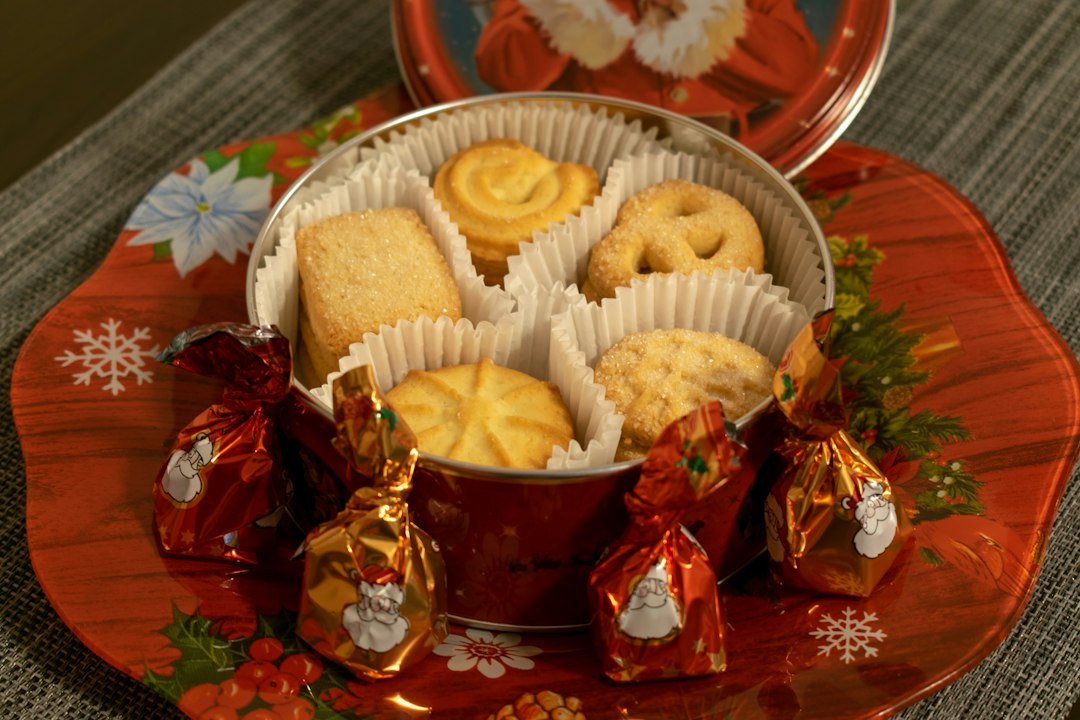
Tins are still my favorite for gifting and for cookies headed to someone who isn’t at the party. Metal holds its shape and keeps crisp cookies crisp. A set of Round Holiday Cookie Tins With Lids doubles as the take-home container for each guest, and most of mine come back to me the following year for refilling. Line each tin with a paper muffin cup per cookie, or a sheet of parchment between layers, so frosted cookies don’t fuse together.
For the swap table itself, I hand everyone one of my Windowed Bakery Cookie Boxes to fill. The window shows off the assortment, and the flat bottom keeps cookies in a single layer. Small treats like truffles and fudge go into Clear Cellophane Treat Bags so they don’t get sticky fingerprints on everything else.
If you’re mailing cookies to someone who can’t come, choose sturdy kinds like shortbread, biscotti, brownies and bar cookies, and skip anything soft-frosted or fragile. Pack them snugly so nothing slides, cushion the tin inside a bigger box with crumpled paper, and ship early in the week so cookies don’t sit in a warehouse over the weekend.
Hosting the Swap Itself
By the time the second Saturday arrives, the hard work is done, and the host’s job is just to make the room work. I clear the dining table completely, cover it with a plain tablecloth and give each baker a spot with a small card listing the cookie’s name and any common allergens, like nuts, dairy or gluten. That one card has saved more than one guest with a nut allergy from a very bad afternoon.
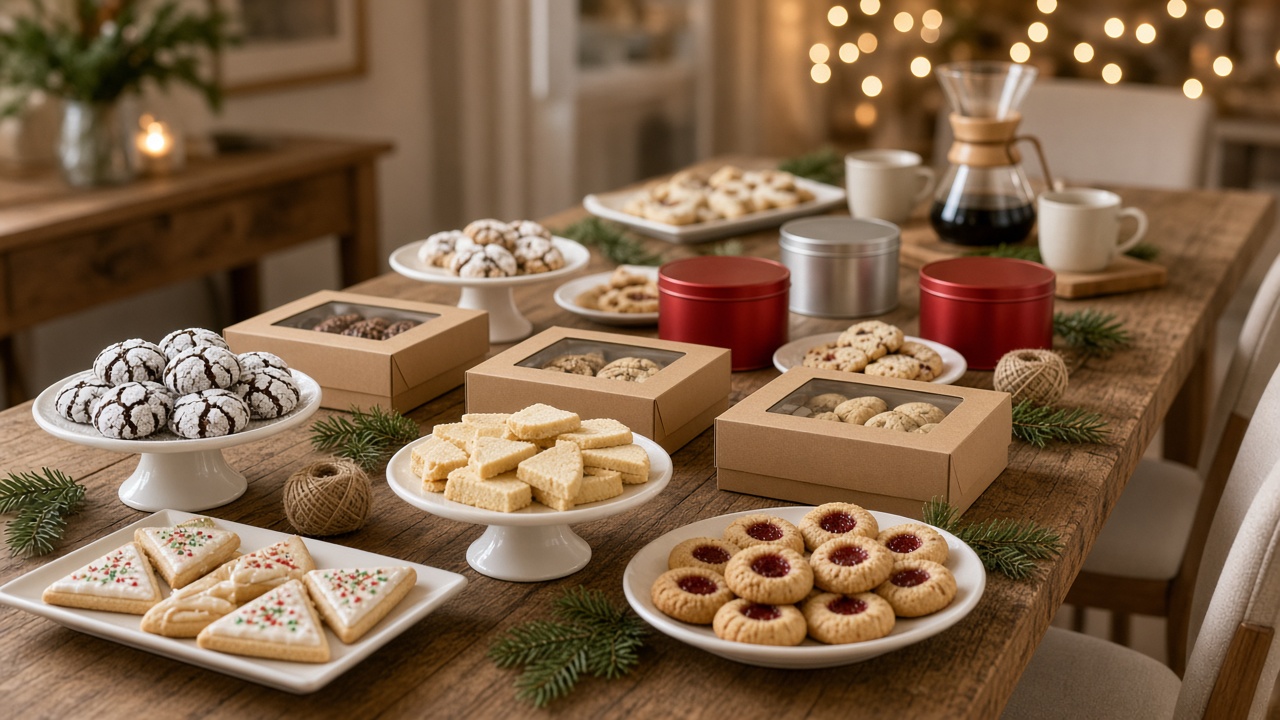
Coffee, tea and something warm to drink go on a separate side table so nobody spills cider across the sugar cookies. The tasting plate sits there too, because half the fun is trying everything before you decide what goes in your own box. We go around the table and let each baker say a word about their cookie and where the recipe came from. Last year a friend brought her late grandmother’s anise pizzelles, and we all got a little teary over a cookie.
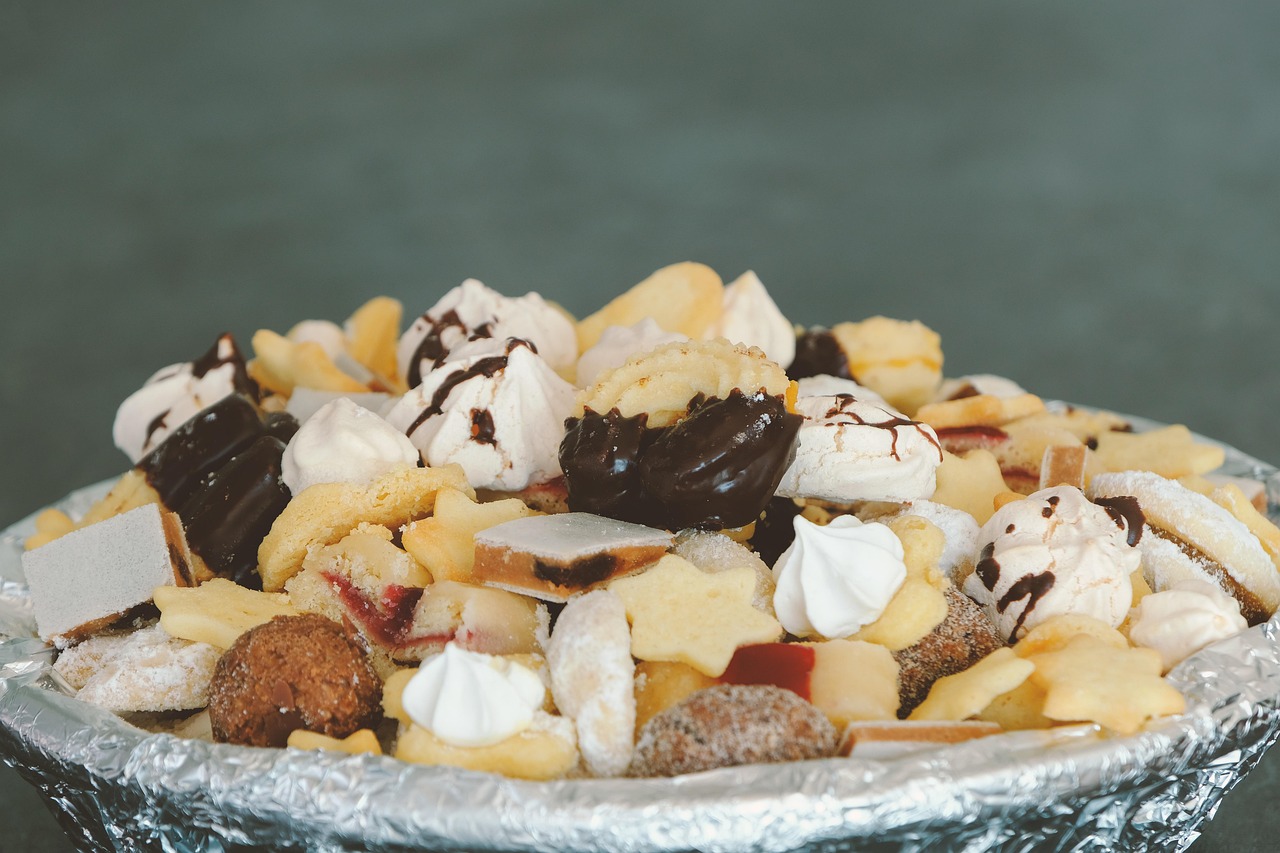
Then everyone fills a box, going around in turns so the first person doesn’t take all the peanut butter blossoms. The leftover tasting cookies get packed up for anyone who couldn’t make it. If you’re watching the sweets yourself between now and New Year’s, my friend over at our health site has a sensible Halloween-to-New-Year sweet-tooth plan that doesn’t ask you to skip the cookie exchange.
My Short List for a Two-Hundred-Cookie Season
If you’re starting from scratch this week, this is everything I’d buy, in the order I’d buy it:
- For matching cookies: the OXO Good Grips Medium Cookie Scoop, which keeps every cookie the same size and bake time.
- For accurate big batches: the OXO Good Grips 11-Pound Food Scale, so quadrupled recipes come out right.
- For mixing: the KitchenAid 7-Speed Hand Mixer, strong enough for stiff dough.
- For the oven rotation: three Nordic Ware Naturals Half Sheet Pans, lined with Precut Half-Sheet Parchment Paper or a Silpat Half-Sheet Silicone Baking Mat.
- For cooling: Stackable Three-Tier Cooling Racks, the small-counter lifesaver.
- For the freezer: Ziploc Gallon Freezer Bags, laid flat and labeled.
- For decorating: Wilton 12-Inch Disposable Decorating Bags, with no washing up.
- For packing: Round Holiday Cookie Tins With Lids, Windowed Bakery Cookie Boxes and Clear Cellophane Treat Bags.
The Best Part Happens in a Quiet Kitchen
When I think back over eleven Decembers of cookie exchanges, the moments I remember aren’t the frantic Thursday nights. They’re the quiet November Saturdays when the kitchen smelled like brown butter and molasses, the radio was on, and a tray of scooped dough balls slid into the freezer one after another like money in the bank. Starting early doesn’t make the swap any less special. It means that when the doorbell rings on the second Saturday of December, the host gets to enjoy the party too.
So send the invitations this week. Pick your cookie, buy the butter while it’s on sale before Thanksgiving, and give yourself a few slow weekends of scooping. Your December self will thank you, and so will everyone who walks up your front steps with a tin in their hands.