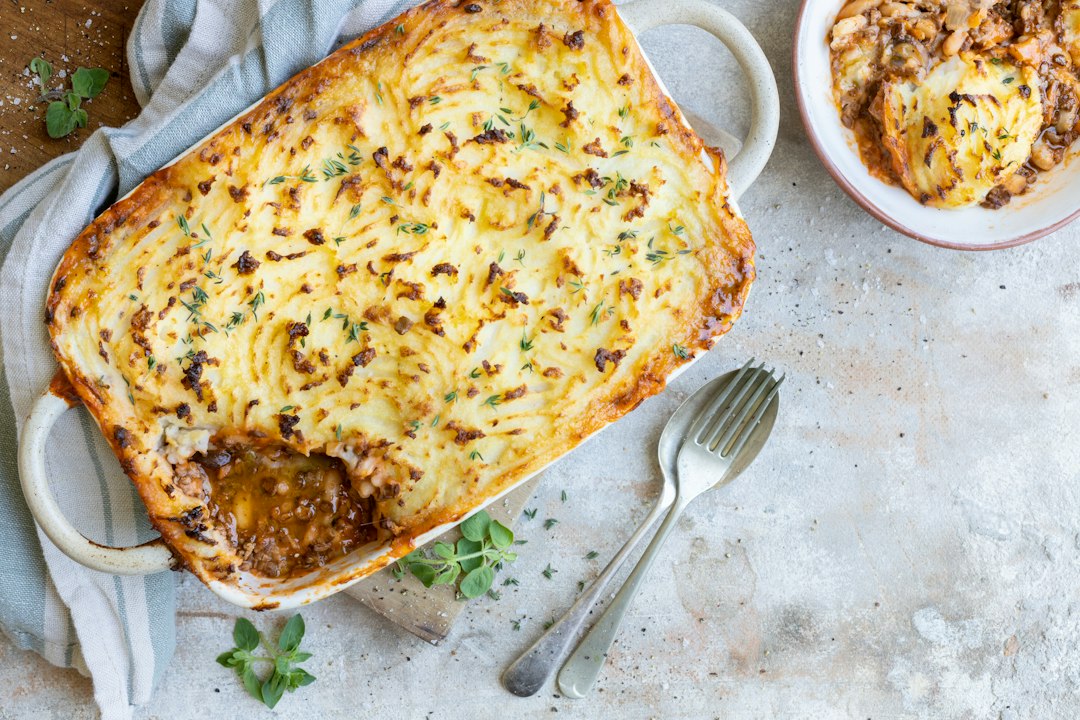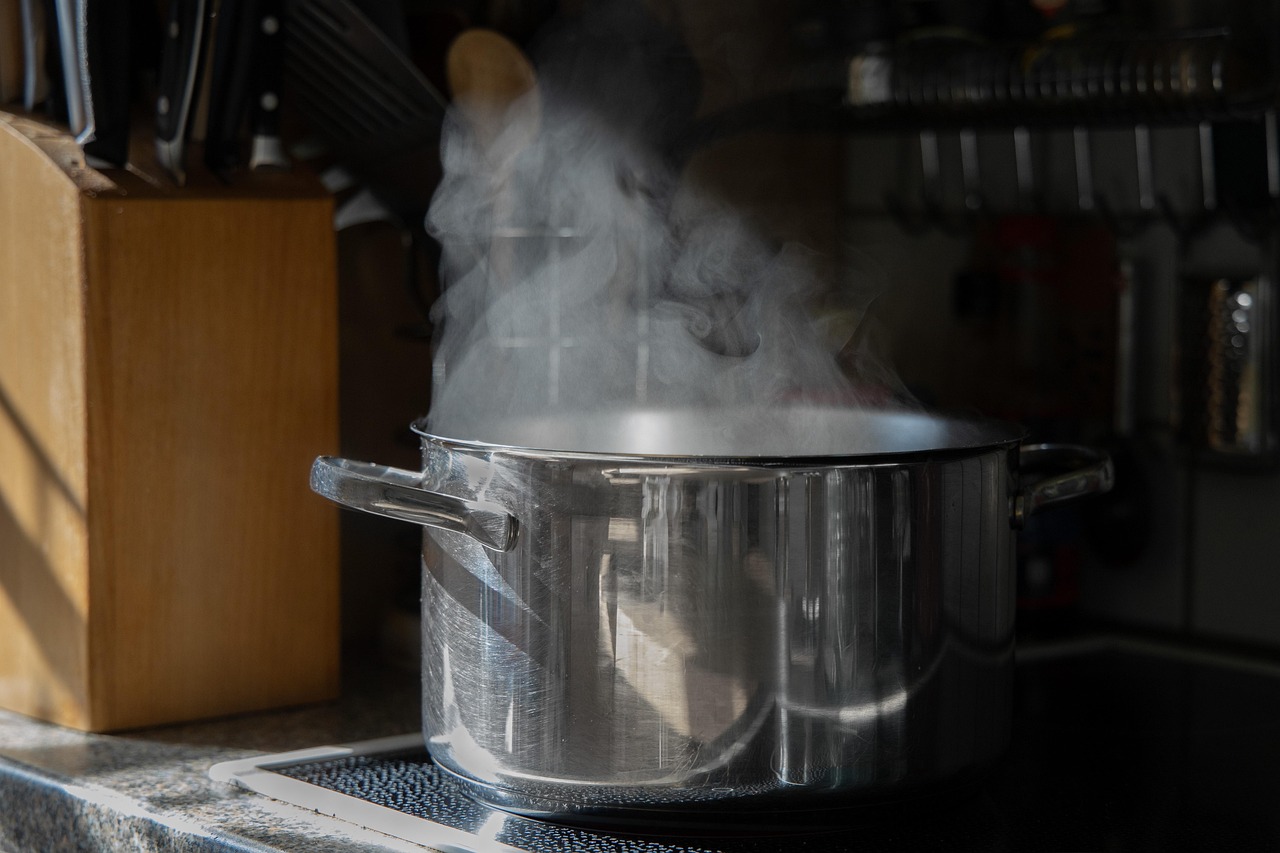
While half the country is pulling on coats at five in the morning on the Friday after Thanksgiving, I’m pulling a turkey carcass out of the refrigerator. That’s my Black Friday. The parking lots can have everybody else. I get a quiet kitchen, a pot the size of a small drum on the back burner, and a house that smells like my grandmother’s by nine o’clock.
She never threw a bone away in her life. After every holiday bird, the frame went into her big enamel pot with an onion, a couple of carrots and whatever celery was going soft in the drawer, and it stayed there, barely trembling, until lunch. By evening there were jars lined up on the counter, and for the rest of the winter that stock showed up in everything: noodle soup when somebody had a cold, the rice on Sunday, the gravy at Christmas. I stood on a step stool and watched her skim it with a spoon, and I didn’t understand until much later that I was watching her turn one meal into twenty.
Thanksgiving is Thursday, November 26, twelve days from today, which makes Black Friday November 27. That’s why I’m writing this now instead of the week after. If you want to make stock on Friday morning, the time to sort out your pot, your strainer and your freezer containers is before the turkey ever goes in the oven. Here is exactly how I do it, the timeline I keep, and the short list of tools that make the job easy instead of messy.
Why the Carcass Is the Best Part of the Bird
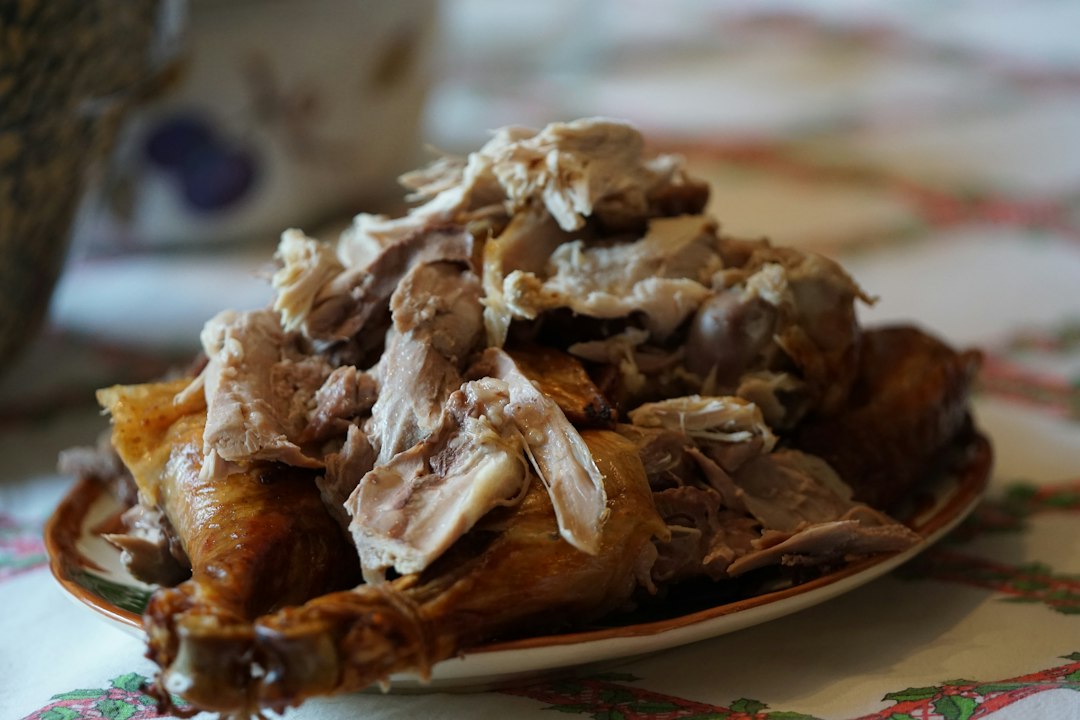
I know that sounds like a strange thing to say about the part everybody leaves on the platter. But the frame of a roasted turkey holds an enormous amount of flavor that never made it to the table: the browned skin, the bits of meat tucked against the backbone, the wing tips, the neck, and above all the connective tissue and cartilage that melt into gelatin when you simmer them slowly. That gelatin is what gives good stock its body, the silky way it coats a spoon and sets up like a loose jelly when it’s cold.
A carton from the store can’t do that. Boxed broth is fine in a pinch, and I keep a few on the shelf for emergencies, but it’s thin by comparison. Homemade turkey stock tastes deeper and rounder because the bones were roasted first, and it costs you almost nothing because you already paid for the bird. A frame from a twelve- to fourteen-pound turkey gives me three to four quarts of stock, which is enough for a big pot of soup in December, a batch of gravy for Christmas and a dozen smaller jobs in between.
There’s one more reason I love it, and it’s the one my grandmother would have given you. Making stock is the last chore of Thanksgiving, and it’s the gentlest one. It doesn’t need you. It just needs time and a low flame, and while it does its work you can drink coffee in your robe and eat leftover pie for breakfast like a reasonable person.
Thursday Night: Setting Up the Morning
The secret to an easy Friday is about ten minutes of work on Thursday night, after the dishes and before you collapse. When the turkey is carved, I pull the remaining meat off the frame while it’s still warm, because it comes away from the bone far more easily than it will once it’s cold. The good meat goes into containers for sandwiches. Everything else stays with the bones: the skin, the scraps, the wings if nobody claimed them, and the neck if I saved it from the giblet bag.
Then I break the frame down. A whole turkey carcass won’t fit flat in most pots, and if it doesn’t fit, you end up adding too much water to cover it, which gives you weak stock. I use a sturdy pair of OXO Good Grips Spring-Loaded Poultry Shears to snip through the ribs and split the backbone into three or four pieces. It takes two minutes. The pieces go into a gallon zip-top bag or a covered bowl and straight into the refrigerator.
Timing matters here, and it’s the part people skip. Leftovers, the carcass included, should be in the refrigerator within two hours of coming out of the oven. Once it’s chilled, the frame is good for three to four days, so if Friday gets away from you, Saturday or Sunday works just as well. If you know you won’t get to it that weekend, freeze the pieces in a bag and make stock in January. I’ve done that more than once, and the stock is every bit as good.
If you want the whole picture of what happens to the rest of the leftovers, I wrote out the leftover system that saves my week after Thanksgiving, including how I portion sides and send everybody home with something. The carcass is just the last piece of that plan.
The Pot That Earns Its Shelf Space
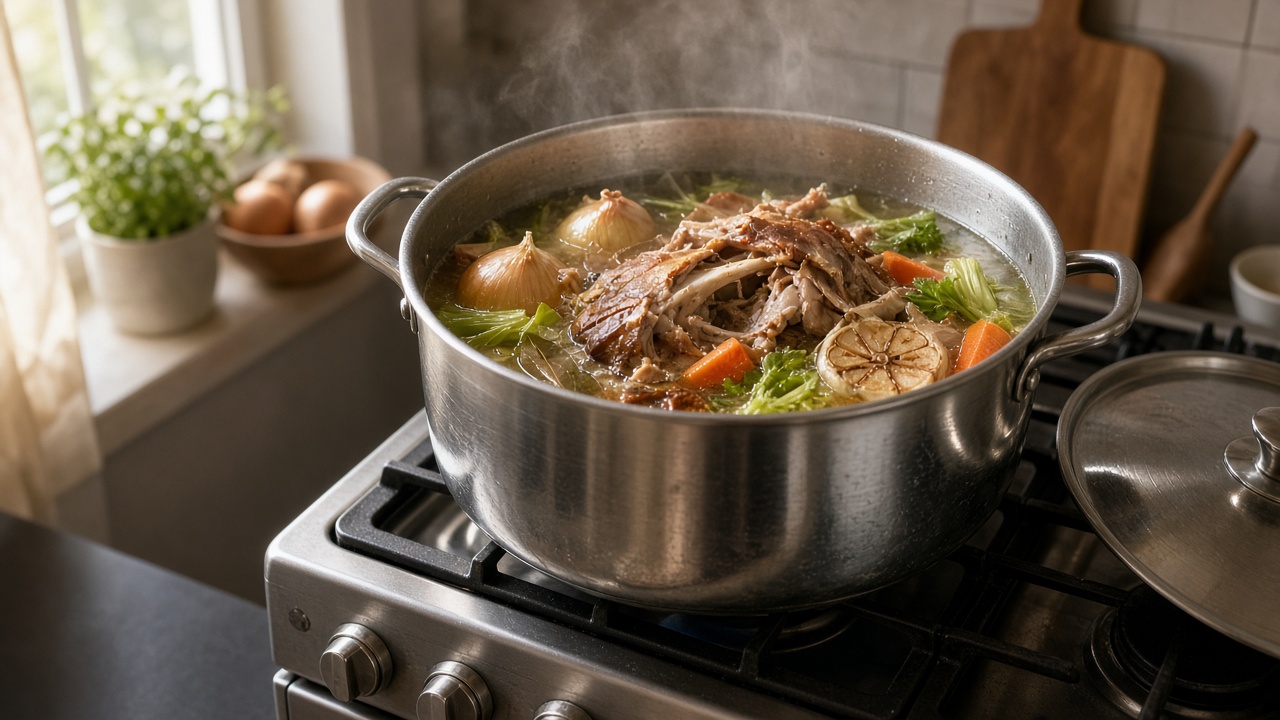
For a full turkey frame, you need a big pot. Twelve quarts is the size I recommend for most families, and it’s the size I use every year. It holds a broken-down carcass from a fourteen-pound bird plus vegetables and enough water to cover, with room at the top so it doesn’t boil over. Smaller than eight quarts and you’ll be cramming the bones in or making two batches.
The one I’ve used for years is the Cuisinart Chef’s Classic 12-Quart Stockpot. It’s stainless steel with an aluminum-encapsulated base, so the bottom heats evenly and nothing scorches during a long simmer, and the lid fits snugly enough that I can keep it cracked just a little to control evaporation. It’s also the pot I use for boiling pasta for a crowd, blanching green beans by the pound and, in summer, corn on the cob. A stockpot like this isn’t a once-a-year tool. It just happens to do its most important job once a year.
If you have a smaller kitchen or simply don’t want to babysit a burner, a pressure cooker is a genuinely good alternative. My sister makes her turkey stock in an Instant Pot Duo 8-Quart Pressure Cooker, and I’ll admit the results are excellent. The eight-quart size fits half a broken-down carcass at a time, ninety minutes at high pressure pulls out the gelatin beautifully, and the stock comes out clearer than many stovetop versions because it never boils hard. The trade-off is capacity: a whole frame usually means two batches. If you already own one, though, use it. It frees up the stove for reheating leftovers.
What Goes in the Pot With the Bones
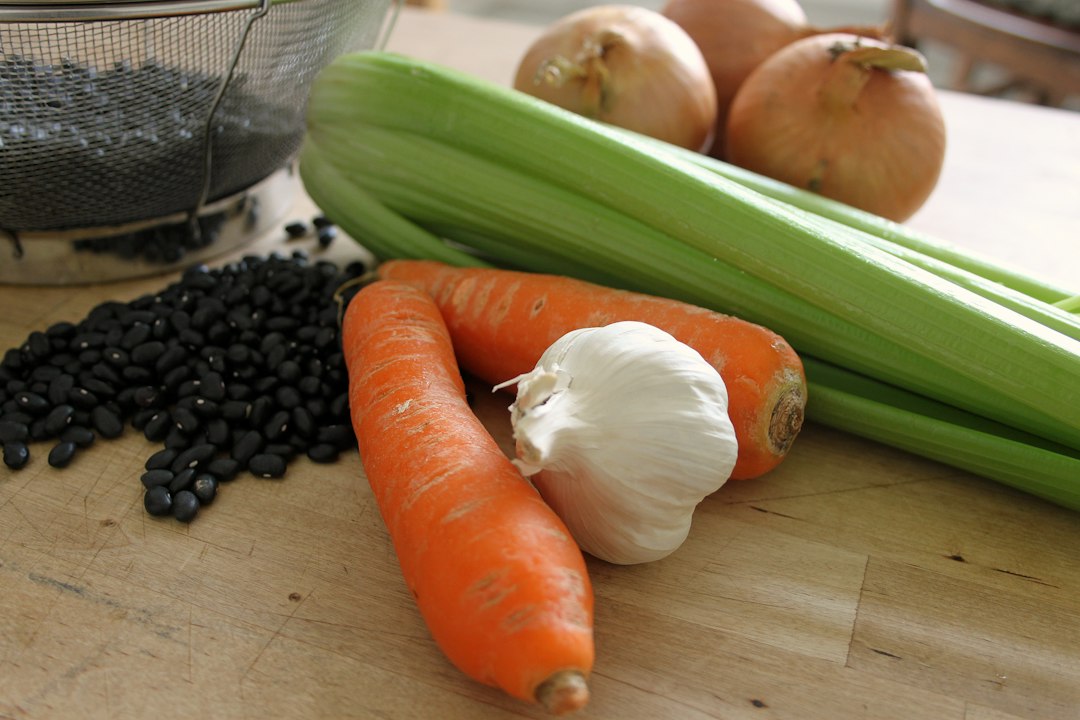
Stock is forgiving, and you don’t need a recipe so much as a rough shape. Here’s what goes into my twelve-quart pot on Friday morning:
- The broken-down turkey carcass, plus any wings, neck, skin and scraps
- Two onions, halved, skins left on for color
- Two or three carrots, cut into big chunks
- Three celery ribs, leaves included
- A head of garlic, cut in half across the middle
- A small handful of parsley stems
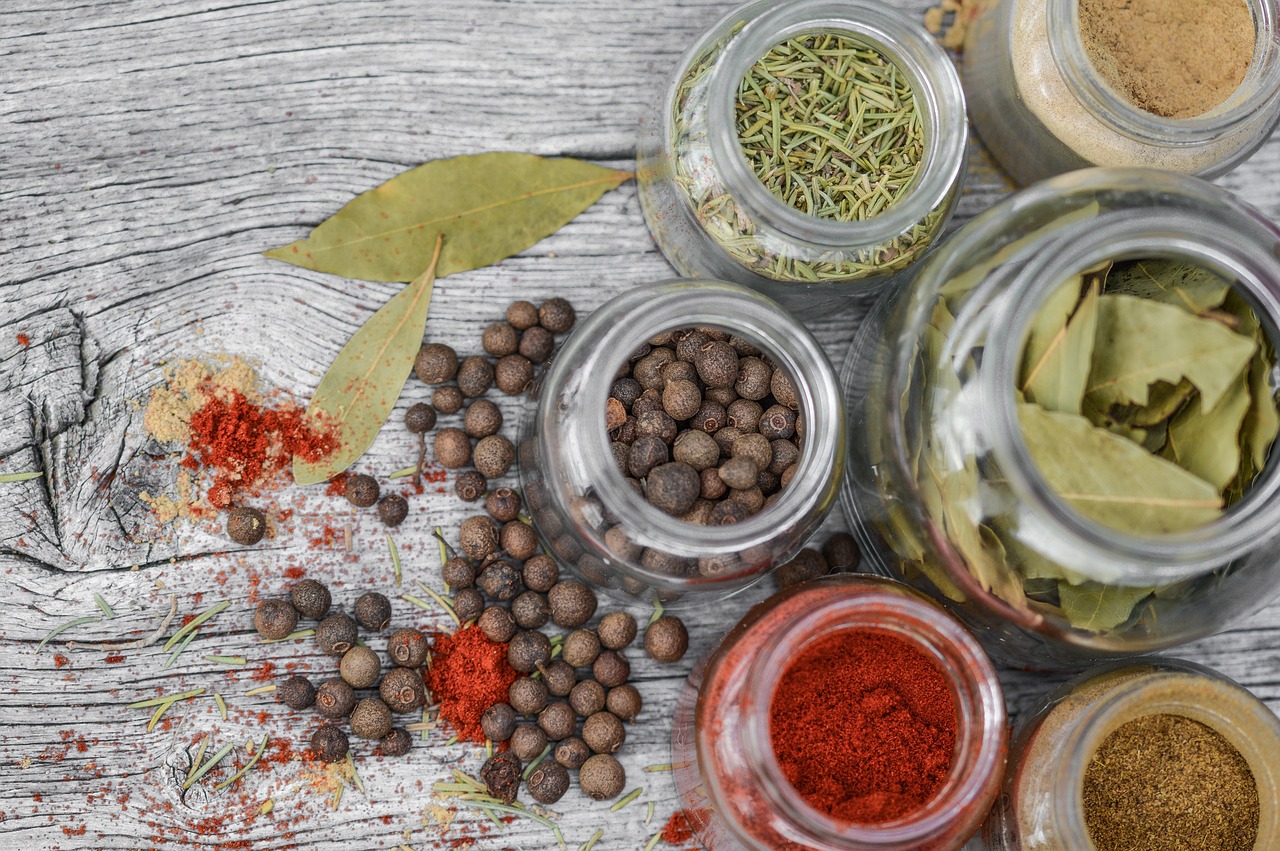
- Two bay leaves and a teaspoon of whole black peppercorns
- A few sprigs of thyme if any survived Thursday
- Cold water to cover the bones by about an inch, usually four to five quarts
A few things I leave out on purpose. I don’t add salt. Stock is an ingredient, not a finished dish, and if you salt it now and then reduce it later for gravy, you’ll end up with something too salty to use. I salt the soup or the sauce when I make it. I also skip strong vegetables like broccoli, cabbage and Brussels sprouts, which turn the whole pot bitter and sulfurous. Potatoes cloud the stock, and the leftover stuffing, as tempting as it is to toss in, turns it into porridge.
Start with cold water, always. My grandmother insisted on this and she was right: as cold water heats slowly, proteins from the bones rise to the top as foam, where you can skim them off. Drop bones into boiling water and those proteins seize up and scatter through the liquid, and you’ll never get a clear stock.
The Simmer: Low, Slow and Barely Moving
Here’s the single most important rule of good stock: never let it boil. Bring the pot up slowly over medium heat, and the moment you see the first lazy bubbles break the surface, turn the flame down as low as it will go. What you want is what French cooks call a frémissement, a shiver. A bubble here, a bubble there, the surface just barely moving. A rolling boil emulsifies the fat into the liquid and makes the stock cloudy and greasy, and no amount of straining will fix it later.
For the first half hour, I stand by with a ladle and skim off the gray foam as it rises. A wide OXO Good Grips Stainless Steel Ladle makes quick work of it; I sweep it across the surface and tip the foam into a bowl. After that first round of skimming, the pot mostly takes care of itself. I check it every hour or so, top it up with a splash of hot water if the bones start poking out, and otherwise leave it alone.
On the stove, turkey stock needs four to six hours. Four gives you a light, clean stock that’s perfect for soup. Six gives you something richer and more gelatinous that’s ideal for gravy and braising. I usually aim for five, starting around seven in the morning and straining by noon. Somewhere around hour three, the kitchen starts to smell like every good winter memory I have, and somebody always wanders in asking what’s for lunch.
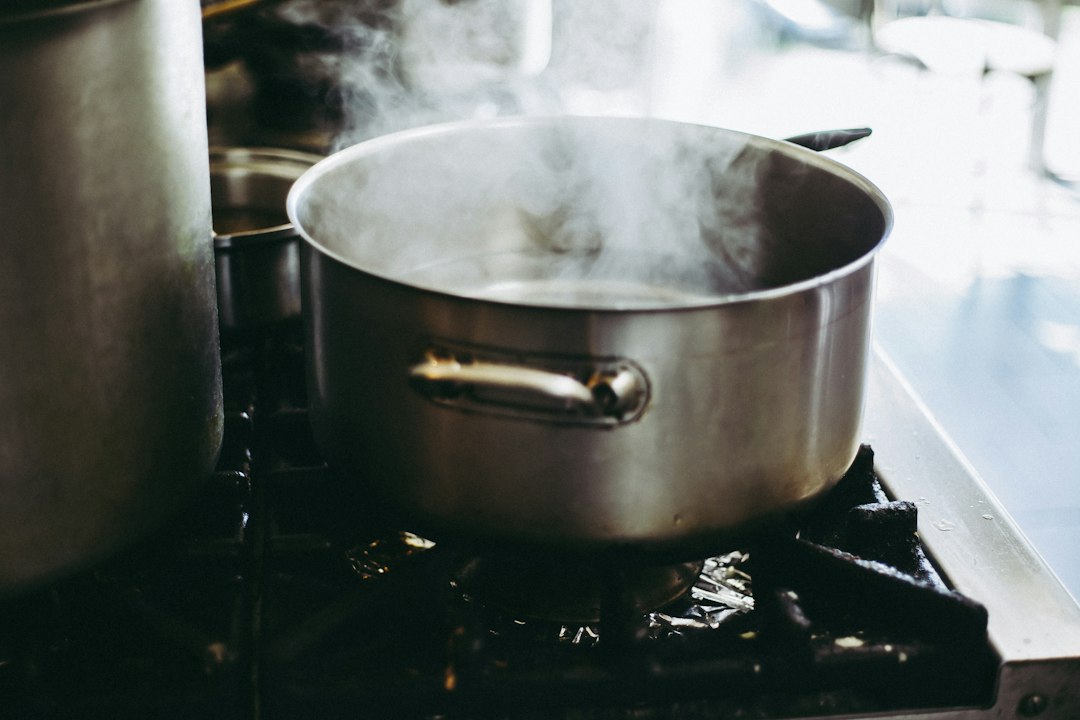
One small thing I’ve learned over the years: keep the lid slightly ajar. Covered completely, the pot traps heat and creeps toward a boil. Uncovered, you lose too much liquid over five hours. A lid set on at an angle, with a gap of about an inch, keeps the temperature steady and the evaporation modest.
Straining Without Losing Half the Pot
Straining is where most stock-making goes sideways, usually because someone tries to tip a twelve-quart pot full of bones and boiling liquid over a colander in the sink. Please don’t. It’s heavy, it splashes, and you risk losing the stock down the drain if the colander slips.
My method is slower and much safer. First, I use tongs and a spider or slotted spoon to lift the big bones and vegetables out of the pot and into a bowl. Once the solids are mostly out, the pot is lighter and much easier to handle. Then I ladle or carefully pour the stock through a fine-mesh strainer into a second large pot or a big bowl. A set of Cuisinart Set of 3 Fine Mesh Stainless Steel Strainers covers every job in my kitchen, and the largest one sits right across the rim of my second pot so I don’t have to hold it.
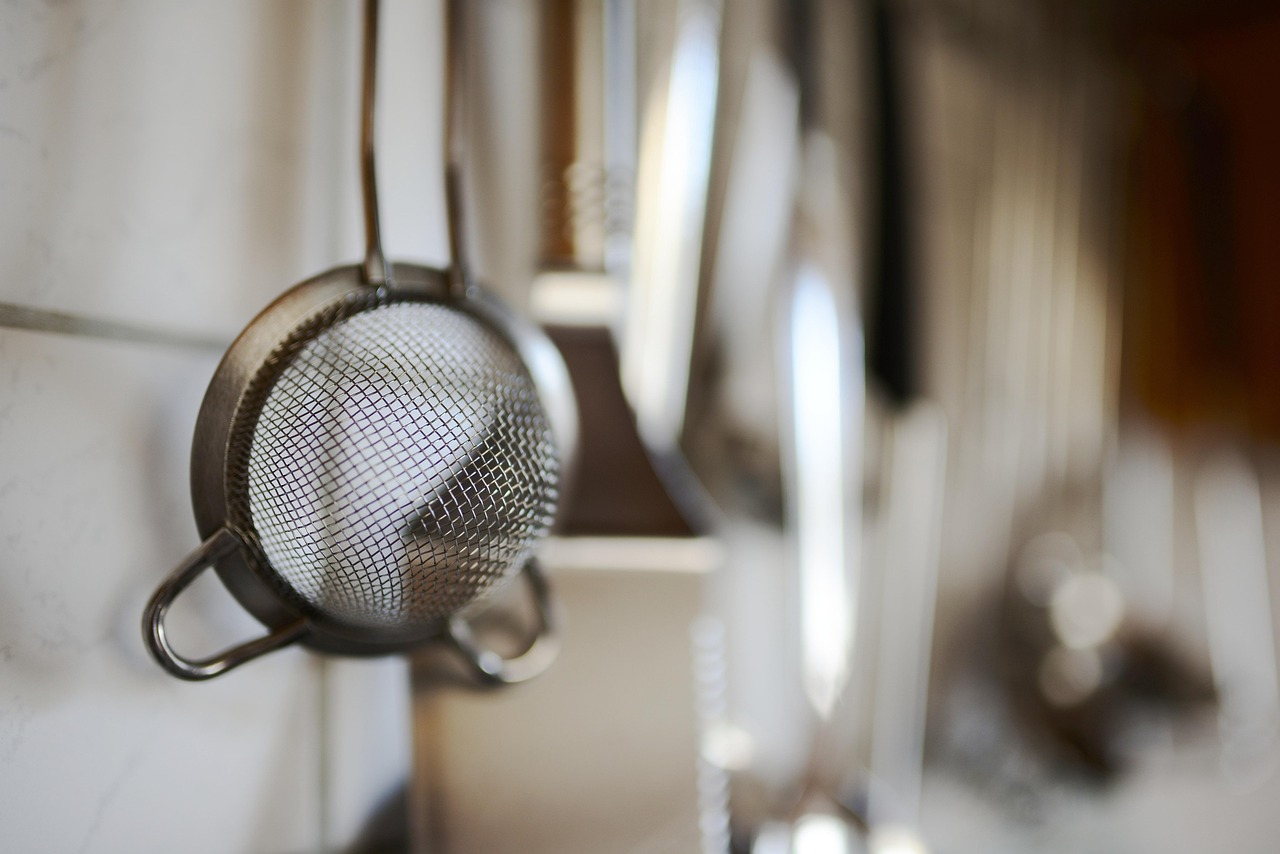
If you want a truly clear stock, for a consommé or a soup where the broth is the star, line the strainer with a double layer of Regency Wraps Natural Cheesecloth. It catches the fine particles a mesh strainer lets through. For everyday soup and gravy, I usually skip it. A little sediment never hurt anybody, and my grandmother’s stock was never perfectly clear.
Cooling It Down Fast and Safely
This is the step I want you to take seriously, because it’s the one with real food-safety consequences. A big pot of hot stock is dense and holds heat for hours. If you put a whole pot in the refrigerator, the center stays warm for a very long time, right in the range where bacteria multiply, and it warms up everything else in the fridge besides.
The guideline restaurants follow comes from the FDA Food Code: cool cooked food from 135 degrees to 70 degrees within two hours, and then down to 41 degrees within the next four. At home, the easiest way to hit that is to divide and chill. I split the strained stock into two or three smaller containers and set them in a sink filled with ice water, stirring now and then. For years I used bags of ice, but now I keep a Rubbermaid Commercial Rapid-Cool Ice Paddle in the freezer for exactly this job. You fill it with water, freeze it, and stir it through the hot stock. It drops the temperature dramatically in about twenty minutes, and it’s just as useful for big batches of chili and soup all winter.
Once the stock is cool to the touch, it goes into the refrigerator uncovered or loosely covered until it’s completely cold, then sealed. In the fridge, it keeps for three to four days. Anything I won’t use by Tuesday goes into the freezer.
Dealing With the Fat
Turkey stock has a fair amount of fat, and you’ll want to remove most of it. The easiest method is patience: once the stock is fully chilled overnight, the fat rises and hardens into a pale layer on top that lifts off in pieces with a spoon. Don’t throw it all away. A few tablespoons of that turkey fat, saved in a little jar, makes extraordinary roast potatoes.
If you need the stock the same day, say for a pot of soup on Friday night, a fat separator is the answer. I use the OXO Good Grips 4-Cup Fat Separator, the same one I reach for on Thanksgiving to separate the pan drippings for gravy. Pour in the warm stock, let it sit for a couple of minutes while the fat floats up, then pour the clear stock out from the bottom spout and stop before the fat reaches it. If you make gravy ahead of the holiday, this is the tool I talk about in the gravy I make while the turkey is still a rumor, and it earns its place twice in one week.
The Freezer Cubes That Carry It to March
Here’s where the real magic happens, and it’s the part that changed how I cook all winter. For years I froze my stock in quart containers, and every time I needed half a cup for a pan sauce, I was stuck chiseling at a frozen block or thawing a full quart I didn’t need. Now I freeze stock in measured portions, and I use every drop.
The tool that made the difference is the Souper Cubes 1-Cup Silicone Freezer Tray. It’s a sturdy silicone tray with four one-cup wells and a fitted lid, and it has a steel rim so it doesn’t buckle when you carry it full to the freezer. I fill the wells, freeze them overnight, pop out the frozen blocks and store them in a freezer bag. Every block is exactly one cup, so when a recipe calls for two cups of stock, I grab two. No measuring, no guessing, no waste.
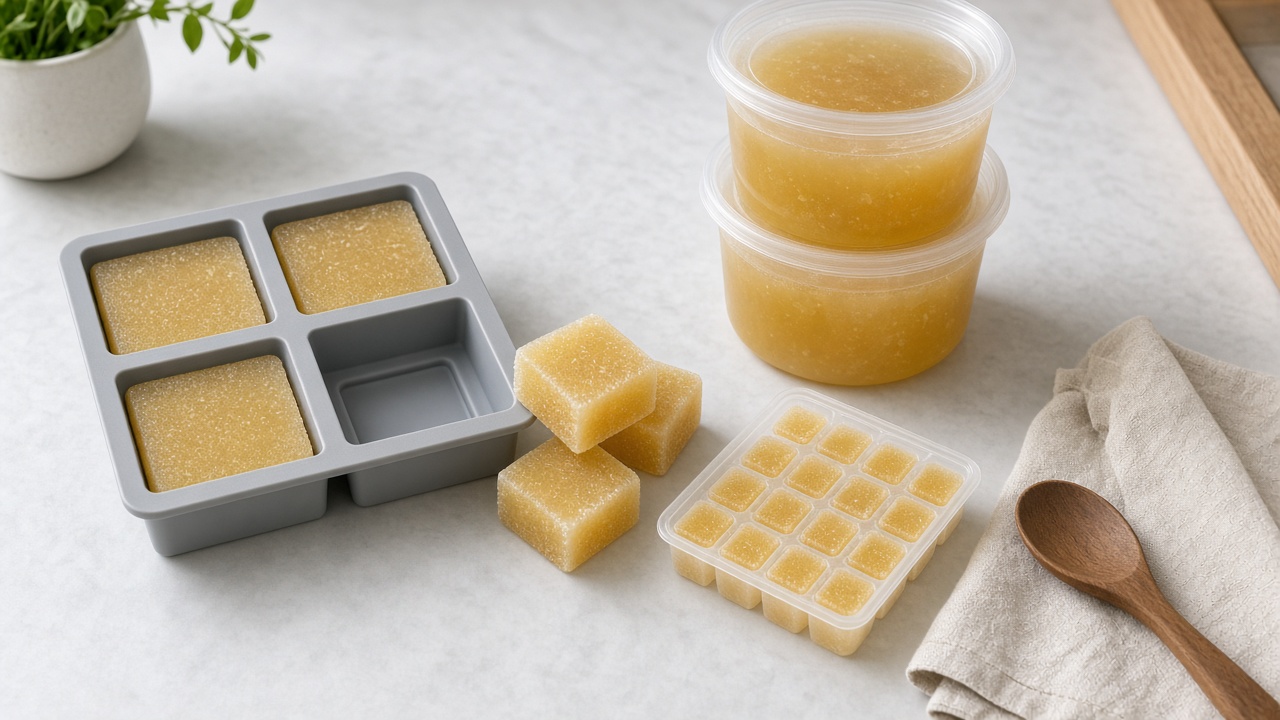
For smaller amounts, I fill a standard ice cube tray too. Each cube is about two tablespoons, which is perfect for deglazing a skillet after searing pork chops or loosening up leftover rice when I reheat it. A bag of those little cubes is one of the most useful things in my freezer.
For larger portions, the quarts I’ll use for soup, I rely on plain 32-Ounce Freezer-Safe Deli Containers with Lids. They stack neatly, they’re cheap enough that I don’t mind sending one home with a guest, and every lid fits every container, which matters more than you’d think. Leave about an inch of headspace at the top, because liquid expands as it freezes and will pop the lid if the container is too full.
Label everything. I keep a pack of Sharpie Fine Point Permanent Markers in the kitchen drawer and write the contents and date on a strip of masking tape on every container and bag. Frozen turkey stock is best within four to six months, and everything looks the same once it’s frozen solid. If you’re serious about freezer space, a vacuum sealer works beautifully for flattening frozen stock cubes into thin packs, and they slide into the freezer door like file folders.
What My Black Friday Stock Becomes All Winter
Here’s the payoff. That one quiet morning of simmering turns into weeks of better meals, and it happens without any extra effort, because the stock is already there, measured and waiting.
The first thing I make is turkey noodle soup, usually on Saturday or Sunday, when everyone’s tired of reheated plates and wants something light and warm. Leftover turkey, a couple of quarts of stock, egg noodles, carrots, celery and a handful of parsley at the end. It’s on the table in forty minutes.
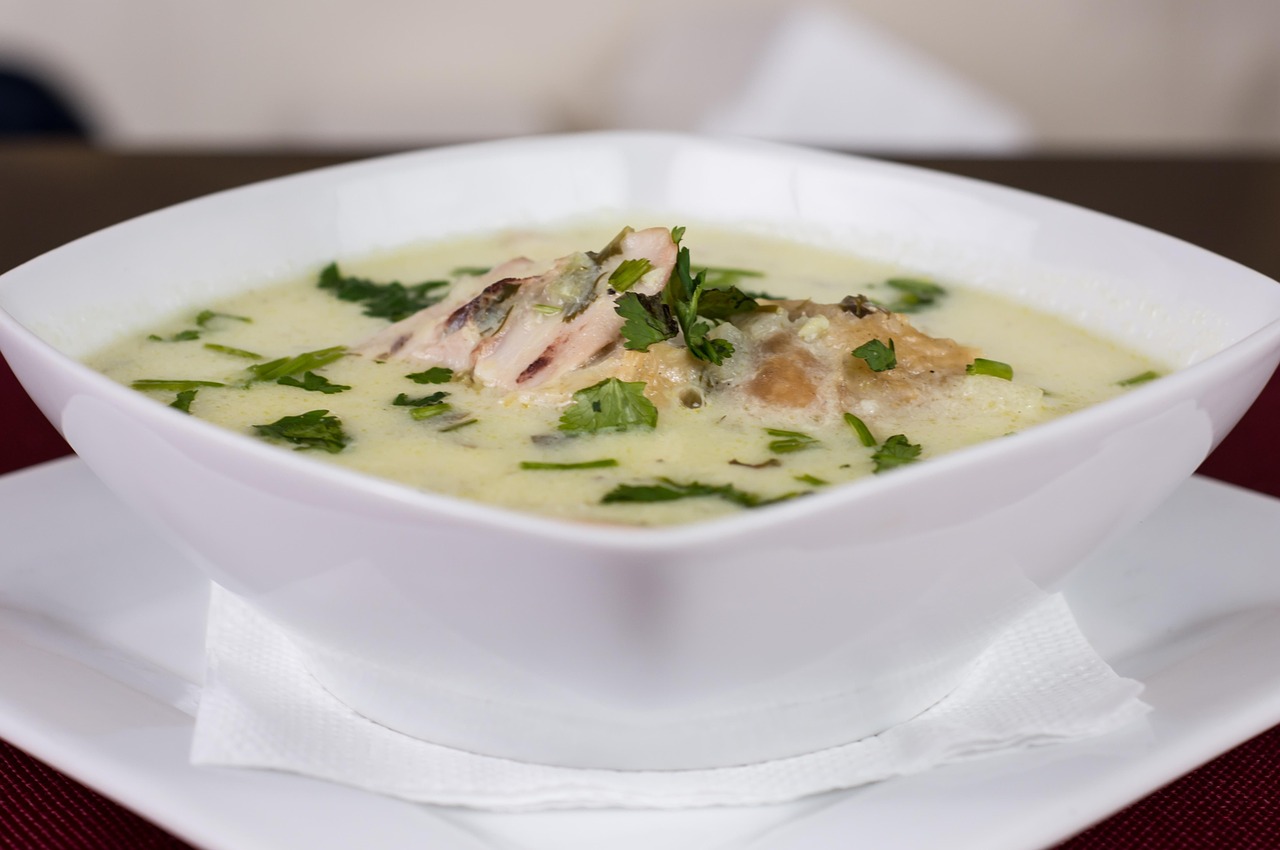
After that, the cubes show up everywhere. A cup goes into risotto. Two cups go into a pot of white beans with rosemary. A few small cubes deglaze a skillet. In December, I pull out a quart for the base of my Christmas gravy, which means one less thing to worry about on the busiest cooking day of the year. And in January, when someone in the house inevitably catches a cold, there’s real soup within reach, the way there always was in my grandmother’s kitchen.
If you’re watching what you eat after the holidays, homemade stock is a quiet ally. It adds deep, savory flavor to grain bowls, beans and vegetables without much fat once you’ve skimmed it, and it’s a natural fit with the lighter leftover ideas in these Mediterranean swaps for Thanksgiving leftover week over on our health site.
My Friday Morning Timeline
Here’s how the day usually goes in my kitchen, start to finish:
- Thursday night, 9:00 p.m.: Pull the remaining meat off the frame, break the carcass into pieces with shears and refrigerate it.
- Friday, 7:00 a.m.: Bones and vegetables into the pot, cover with cold water, set over medium heat.
- 7:45 a.m.: First bubbles. Turn the heat to the lowest setting, skim the foam for the next half hour.
- 8:30 a.m. to noon: Let it shiver. Check hourly, top up with hot water if needed. Drink coffee. Eat pie.
- Noon: Lift out the solids, strain the stock into a second pot.
- 12:15 p.m.: Divide into smaller containers, chill in an ice-water bath with the ice paddle.
- 1:00 p.m.: Into the refrigerator once cool to the touch.
- Saturday morning: Lift off the fat, fill freezer trays and containers, label everything.
- Saturday night: Turkey noodle soup for dinner.
If you buy a frozen turkey this year and need to work backward from Thursday, my frozen turkey thaw calendar for Thanksgiving 2026 lays out exactly when to move the bird to the refrigerator, so the whole week, from thawing to stock, runs on schedule.
The Short List: What I Use for Black Friday Stock
If you’re gathering your gear before Thanksgiving, here’s everything I mentioned, in the order you’ll reach for it:
- To break down the carcass: OXO Good Grips Spring-Loaded Poultry Shears
- The stovetop pot: Cuisinart Chef’s Classic 12-Quart Stockpot
- The hands-off alternative: Instant Pot Duo 8-Quart Pressure Cooker
- For skimming and portioning: OXO Good Grips Stainless Steel Ladle
- For straining: Cuisinart Set of 3 Fine Mesh Stainless Steel Strainers
- For extra-clear stock: Regency Wraps Natural Cheesecloth
- For cooling fast: Rubbermaid Commercial Rapid-Cool Ice Paddle
- For removing fat the same day: OXO Good Grips 4-Cup Fat Separator
- For measured freezer portions: Souper Cubes 1-Cup Silicone Freezer Tray
- For quart-size soup portions: 32-Ounce Freezer-Safe Deli Containers with Lids
- For labeling everything: Sharpie Fine Point Permanent Markers
One Pot, Twenty Meals
Every year, someone asks me if I’m going shopping on Black Friday, and every year I tell them the same thing: I already got the best deal of the weekend. It was sitting on the platter Thursday night, picked over and forgotten, and by Saturday it had become a freezer full of golden stock that will make my cooking better until spring.
My grandmother didn’t think of it as a deal. She thought of it as respect: for the bird, for the money, for the people she’d be feeding all winter. I think about her every time I lift the lid on that pot and see the surface barely shivering. So this year, before you put the turkey in the oven, clear a shelf in the freezer and pull your biggest pot down from the top of the cabinet. On Friday morning, let everyone else go fight for parking. You’ll be home, in your robe, making something that lasts.