It was 7:14 on a Tuesday morning when the cabinet finally fought back. My daughter needed her bottle for soccer practice, I opened the door next to the fridge, and an insulated tumbler the size of a fire extinguisher launched itself straight at my collarbone. Behind it came a plastic avalanche: four mismatched lids, two straws with no homes, a sippy cup my youngest outgrew three years ago, and a travel mug I forgot I owned. I stood there in the wreckage, holding a lid that matched nothing, and made the decision every home cook eventually makes. The bottle cabinet was getting rebuilt before September.
I want to be clear that this was not a quick Saturday-morning project. My team and I spent three weeks testing racks, lid holders, drawer dividers, and cleaning routines in four very different kitchens, because I refuse to recommend anything that only works in a showroom. What follows is everything we learned, including the two products we sent back.
The Census Nobody Wanted to Take
Every reorganization project starts with the uncomfortable part: counting what you actually own. We pulled every bottle from every cabinet in my house and laid them across the kitchen table. Fourteen bottles. Nine lids. Six straws. Exactly three of those bottles had all their original parts.
The math was worse than it looked. Two of us live here full-time, and the kids are in and out. By any reasonable measure, a household like mine needs maybe six bottles in rotation — one per person, plus a spare for the dishwasher cycle and a guest. The other eight were artifacts: race giveaways, gift-with-purchase tumblers, the bottle I bought at an airport because I forgot mine at home. They were taking up an entire shelf and contributing nothing but guilt and falling hazards.
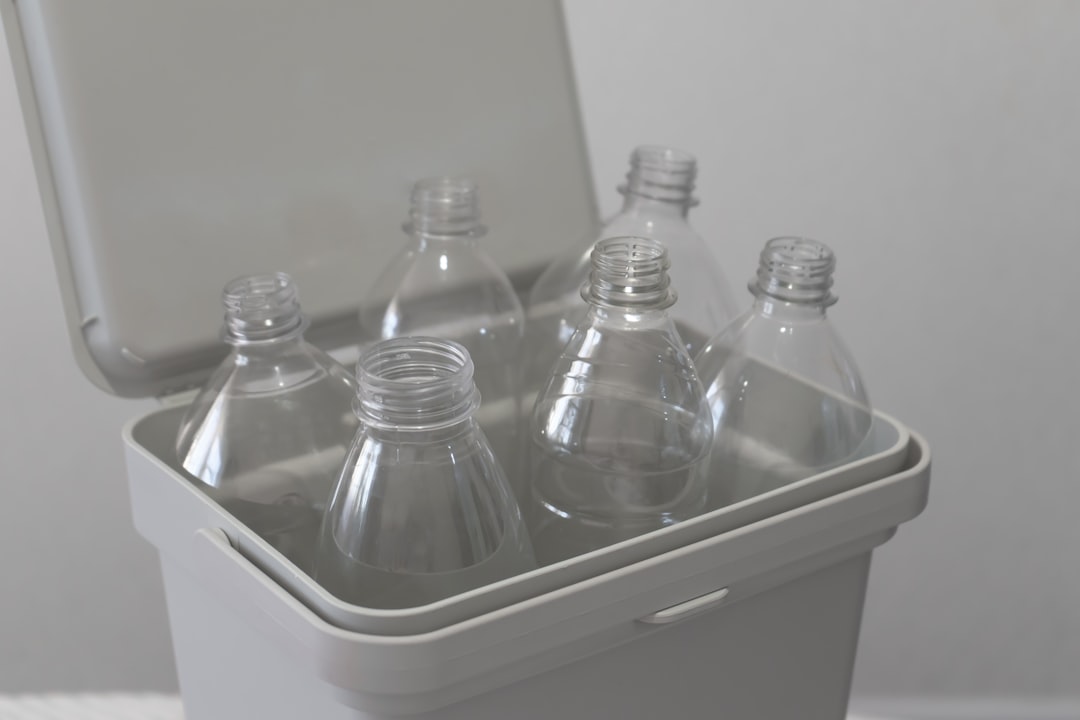
The rule we settled on, after much debate, is three bottles per person maximum: one in use, one clean and waiting, one in the dishwasher. Everything else gets donated if it is genuinely usable, or recycled if it has been sitting with a cracked lid since 2023. My lunch drawer autopsy last month used the same ruthless logic, and it has held up beautifully through the first weeks of school.
One surprising note from the test kitchens: the counting step matters more than the buying step. My sister-in-law insisted she needed a bigger cabinet. She actually owned eleven nearly identical blue bottles and could not find a single complete one. Once we pared her collection to five, her existing shelf held everything comfortably and she spent exactly zero dollars. Start with the census, always. The shopping list only exists for what survives it.
Why September Breaks the Bottle Cabinet
Water bottle chaos is not a year-round problem in the same intensity. In July, one bottle per kid might circulate. Then September arrives and everything escalates at once: soccer practice needs a bottle, cross-country needs a bottle, the high school forbids fountain refills, your partner starts a new hydration goal, and suddenly five vessels are cycling through your kitchen every single day. Each one comes home warm, half-full, and covered in grass clippings.
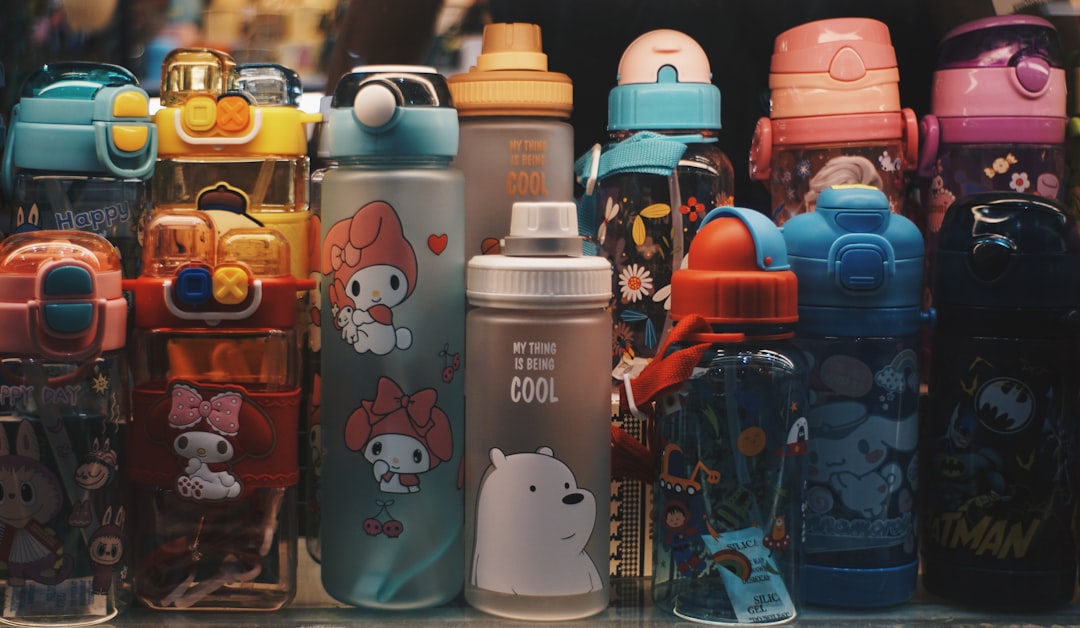
There is a reason hydration gear has become the new water-cooler accessory. Walk through any school pickup line or office lobby and you will see insulated tumblers riding in cup holders like passengers, stickered, sleeved, and personalized to the point of portraiture. People are attached to these bottles. The attachment is lovely; the storage consequence is fourteen of them leaning against each other in a dark cabinet like dominoes waiting for a reason.
That daily rotation is exactly why this cabinet fails. Bottles are tall, top-heavy, and impossible to stack, so every grab-and-go moment becomes a Jenga pull. When I mapped out the dead zones nobody reaches in my kitchen last month, the bottle cabinet ranked near the top — not because the space was wasted, but because nothing in it was findable.

Racks, Not Piles: What Actually Holds the Line
Here is the single change that fixed eighty percent of the problem: stop storing bottles lying down. Every bottle in a pile is a bottle you have to dig for. We tested four rack systems across our test kitchens, and two earned permanent spots.
The winner in my house was a stackable clear organizer that files bottles upright like books on a shelf. Each compartment holds one bottle, and because the walls are clear acrylic, my kids can see what is available without opening the door all the way. It took my nine-year-old exactly one demonstration to adopt it, which is the real test of any organization product in a family kitchen.
The second rack earned its place for the giants. If you own a 40-ounce tumbler, you know they do not fit standard organizers — they are wider, heavier, and prone to rolling off shelves. The four-tier version with oversized compartments sized for the big insulated cups lives on our top shelf now, and the morning clang of a Stanley hitting the floor is officially a thing of the past. For lighter overflow, we lined up wire storage baskets along the bottom shelf, one per person, which doubles as a natural limit: when your basket is full, something has to leave.
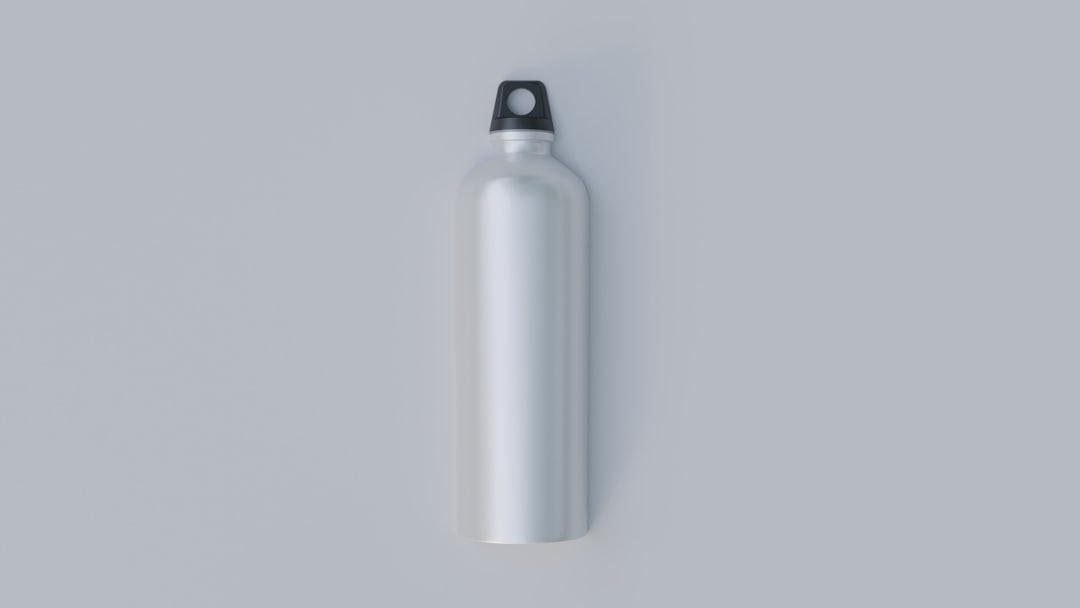
If your cabinet real estate is already spoken for, do not give up — the vertical space on and behind the door is the most underused square footage in the kitchen. We hung an over-the-door organizer with pockets sized for bottles inside the pantry for the guest and backup bottles, and it swallowed six of them without costing a single shelf. My earlier conquest of the cabinet nobody talks about followed the same principle: the fix is usually geometry, not square footage.
The Lid Problem, Solved at Last
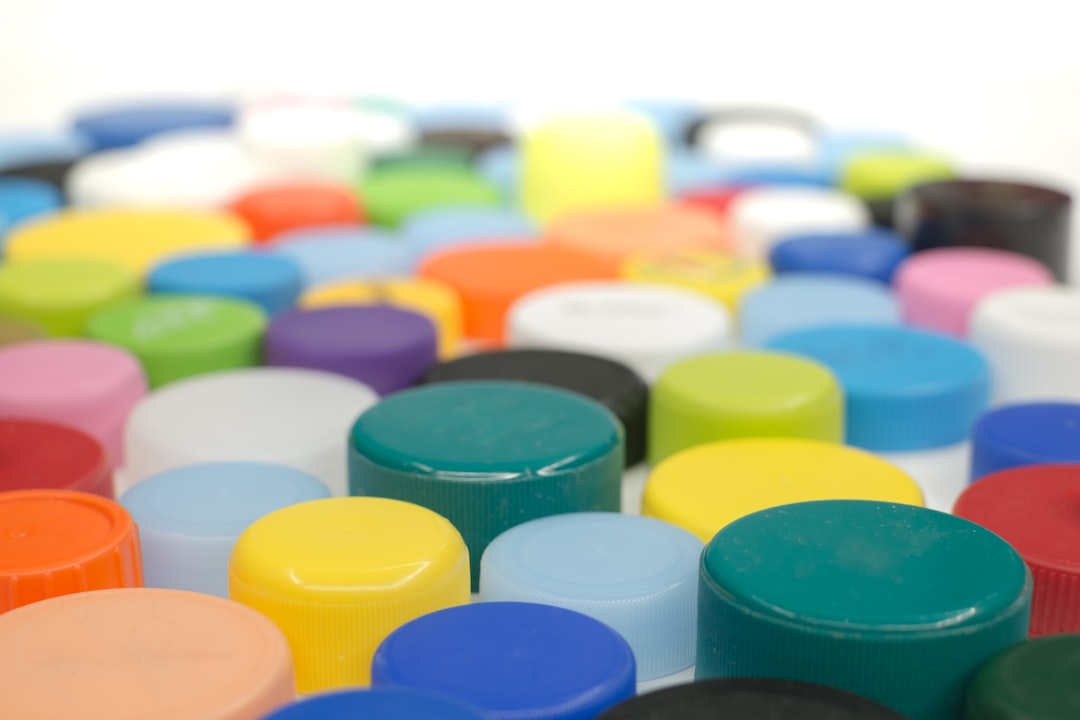
Bottles are only half the cabinet. The true villains are lids and straws — the loose parts that multiply quietly and vanish loudly. We tried a cookie tin (lids became a card catalog of confusion), a zip-top bag (everything scratched), and a single deep drawer (a black hole with a handle).
What worked was treating lids like files instead of puzzle pieces. A vertical lid organizer that holds up to ten lids on their edges sits in the corner of the cabinet now, and every lid is visible in one glance — no more pulling five wrong lids to find the one right one. For the cabinet wall itself, we mounted a set of under-shelf lid hooks that keep straws and small caps off the shelf surface entirely.
Straws got their own small solution, and it lives in a drawer, not the cabinet. A set of adjustable bamboo drawer dividers carved one wide drawer into a straw-and-parts station: long straws on the left, replacement gaskets and cleaning brushes on the right, all of it invisible until you need it. If you took the full tour of the pantry rebuild we did in July, you will recognize the philosophy — every loose part deserves a labeled lane.
The Sink Rule: Clean, Dry, and Ready
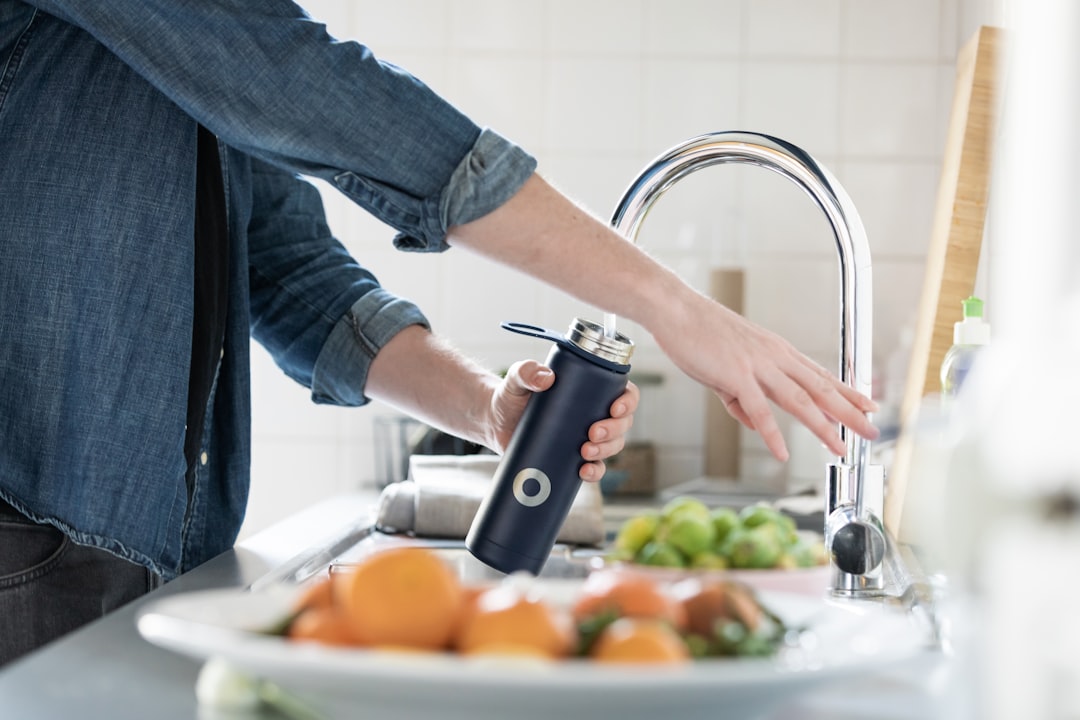
None of the racks matter if the bottles coming back from practice sit in the sink for three days. The habit that changed our rotation was what my grandmother would have called the kitchen rules: a bottle gets rinsed the moment it walks in the door, washed that evening, and returned to its slot dry. No exceptions, no “later.”
The right tools make that rule almost effortless. A long-handled bottle brush set with heads for every neck width hangs by our sink, and it turned the worst chore in the house — scrubbing a narrow smoothie residue out of a tall tumbler — into a thirty-second job. For straws, which no sponge can reach, we keep a pack of extra-long straw cleaning brushes in the drawer station. My husband, who once left a smoothie straw uncleaned for a scientifically alarming length of time, now cleans his own. Miracles happen.
Label It Once, Thank Yourself All Season
The final layer sounds fussy, and I resisted it for years, but labeling the cabinet was what made the whole system survive past week two. When every person knows which basket is theirs and every slot has a name, nobody has an excuse for dropping a muddy bottle on the counter and walking away.
You do not need anything elaborate. A compact Bluetooth label maker that prints waterproof labels did all four of our test kitchens in one evening — baskets, lid organizer rows, the straw drawer, even the “return to school” bin where lost-and-found bottles wait for their owners to claim them. The labels have survived dishpan hands, August humidity, and a direct honey incident.
The Rules That Keep It Working
A rebuilt cabinet is only as good as its maintenance, so here is the exact routine we landed on after three weeks of daily September-level traffic:
- One in, one out. A new bottle cannot enter the cabinet until an old one leaves. This is the rule that prevents the whole problem from returning, and it is the one I enforce hardest.
- Three per person, tops. In use, clean, or in the dishwasher. No fourth bottle has a home in my kitchen anymore.
- Sunday night reset. Ten minutes: lids matched, straws accounted for, strays returned to owners, empty slots wiped down.
- The donation basket. One small bin in the pantry collects bottles we fall out of love with. When it fills, it leaves the house.
It has been nineteen days since the Tuesday avalanche, and the cabinet has not once returned to chaos. My daughter grabs her soccer bottle without waking the neighbors. My collarbone has forgiven me. And every morning when I open that door and see seven bottles standing at attention — each one clean, matched, and exactly where it belongs — I am reminded of the same lesson my grandmother taught me at her flour-sugar-and-faith kitchen counter: a home runs on small systems, not big overhauls. Build the little shelf, label the little drawer, rinse the little bottle. The celebration is in the quiet mornings where nothing falls on your head.