Every kitchen has one. That cabinet you open with your foot on the door, rummage blindly with one hand, and hope you come out with the right bottle instead of the furniture polish when you are trying to grab the dish soap. It is the space underneath the sink — the most neglected, chaotic, and frankly embarrassing zone in the entire house. And for six years, mine was a disaster.
I can organize a pantry with my eyes closed. My spice drawer is alphabetized. I once spent an entire Sunday reorganizing the worst cabinet in my kitchen with seventy-three jars of preserved goods. But the under-sink cabinet? That was my blind spot. I just kept cramming things in and shutting the door fast before anything fell out.
What finally pushed me to deal with it was embarrassingly simple. I dropped a bottle of window cleaner, it hit the garbage disposal pipe, and the cap cracked open — spraying ammonia-scented liquid across six years of accumulated chaos. When I finally pulled everything out to clean it up, I found five — count them, five — half-empty bottles of dish soap. A flashlight with dead batteries. Three sponges that had fossilized. And a box of garbage bags I had been convinced I was out of for two months, so I kept buying more.
Standing there in the middle of that mess, I made a promise to myself: never again. The under-sink cabinet was going to become a space that actually functioned. And over the following week, that is exactly what happened.
Facing the Monster: Why the Under-Sink Cabinet Is So Hard
Here is the thing nobody tells you about organizing under the sink. It is not a normal cabinet. There is a giant hole in the middle of the floor where the plumbing comes through. There are pipes snaking across the back wall, a garbage disposal taking up a third of the vertical space, and if you are lucky enough to have a water filter or a soap dispenser, there goes even more room. You are essentially trying to organize inside a piece of Swiss cheese.
When my team and I were mapping out the approach, we measured everything first. And I mean everything — the height from the floor to the disposal, the width between the pipes on each side, the depth from the cabinet lip to the back wall. Because the biggest mistake people make with under-sink organization is buying containers that are almost right but not quite, and then forcing them in around the obstacles. That just creates new chaos in a smaller footprint.
So before you spend a single dollar on organizers, get out a tape measure. Write down the clear vertical space on the left side of the pipes and the right side. Note whether your cabinet doors are frameless or have a lip on the inside, because that determines what kind of pull-out hardware will actually fit. Trust me — I learned this the hard way after ordering a beautiful two-tier organizer that turned out to be a quarter inch too tall.
The Pull-Out Revelation That Changed Everything
If there is one single upgrade I would recommend for the under-sink cabinet, it is a pull-out organizer. This is the thing that transforms the space from a dark hole you are afraid to reach into to something that functions like a drawer. You pull it forward and everything is right there, visible and accessible.
After testing a handful of options, the one that actually fit around my plumbing was an L-shaped pull-out organizer from REALINN. The L-shape is the secret — it wraps around the garbage disposal instead of fighting it. I found this specific L-shaped model on Amazon and it has been a workhorse. The rails slide smoothly even when loaded with heavy bottles, and the mesh bottom keeps things from tipping.
On the other side of the pipes, where I had more vertical clearance, I added a two-tier slide-out unit for shorter items — sponges, scrub brushes, dishwasher pods, the little things that used to get lost in the back. I went with a Kitstorack two-tier organizer that comes in a pack of two, and honestly, the second one went into my bathroom vanity within the week. Same problem, same solution.
The key is adjustability. Look for organizers where the shelves can be raised or lowered, because every under-sink cabinet is different. I also tested an adjustable two-tier unit from Sevenblue that lets you set the height of each shelf independently, which is brilliant if your plumbing angles diagonally across the space.
The Cabinet Door Is Free Real Estate
This is the part that genuinely surprised me. I had been so focused on the interior of the cabinet that I completely ignored the back of the doors. Those doors are prime storage space, and they are sitting there empty while you are cramming things into the darkness.
I added an over-the-door organizer that hooks right over the top of the cabinet door without any tools or drilling. The one I use has towel bars and slots for cutting boards, foil, and plastic wrap on one door, which freed up a surprising amount of space in my adjacent cabinets. On the other door, I used Command large utility hooks — the damage-free adhesive kind — to hang spray bottles by their trigger handles. Dish soap, all-purpose cleaner, glass cleaner, all hanging vertically where I can see them at a glance.
The beauty of using hooks instead of a rack for spray bottles is that you can customize the spacing. One bottle of all-purpose cleaner is wider than a bottle of glass cleaner, and with hooks, you can adjust for that. With a fixed rack, you are stuck with whatever spacing the manufacturer decided on.
Tension Rods: The Five-Dollar Fix Nobody Expects
If I had to pick the most underrated organizing tool in existence, it would be the humble spring tension rod. I am not exaggerating when I say these changed my kitchen life. You can pick up a pack of cupboard tension rods for the price of a coffee, and they solve the single most annoying problem under the sink: spray bottles falling over and domino-ing into each other.
The trick is to install one tension rod horizontally across the front of the cabinet, about three inches from the edge of the shelf. Then you hang your spray bottles on it by their triggers — the rod holds them in place, and the bottles hang vertically without touching each other. It is such a simple solution that when one of my colleagues tried it, she texted me a photo captioned “why did nobody tell me about this?”
Tension rods also work vertically to create dividers between stacks of items. I used two short rods to separate my stack of dish towels from my boxes of garbage bags, so neither side slides into the other every time I open the cabinet. Small change, enormous difference in daily sanity.
The Portable Caddy Trick That Saved My Back
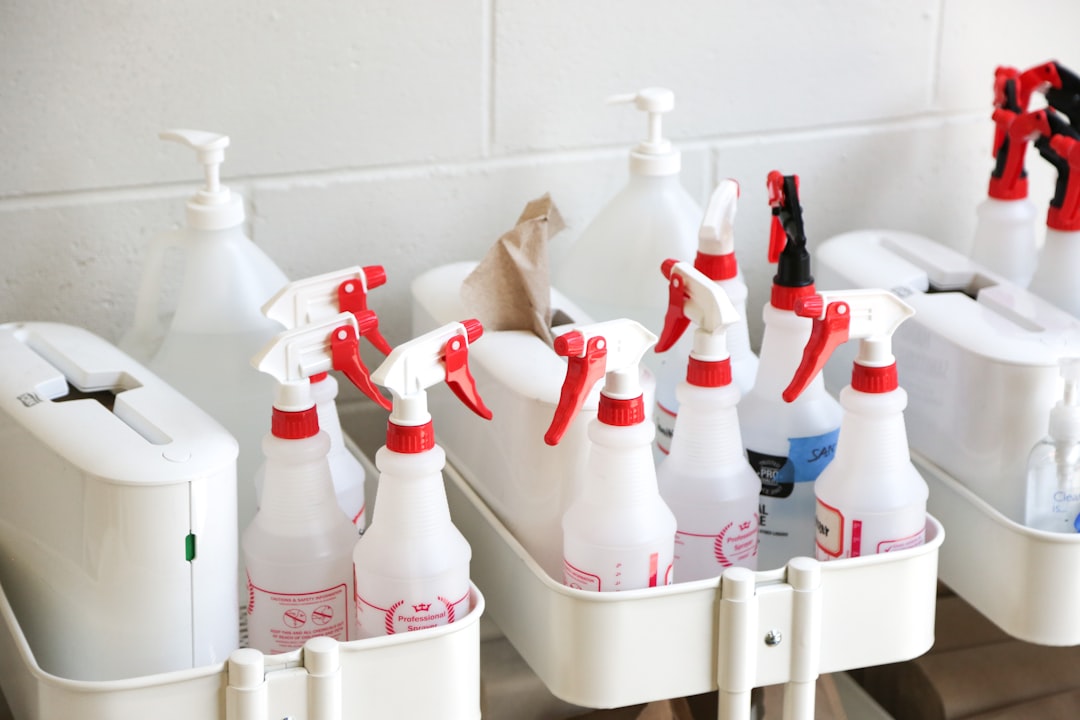
Here is a confession. For years, I carried cleaning supplies from room to room in my arms, dropping things in the hallway, leaving a trail of sponges and bottles like some kind of cleaning-product Hansel and Gretel. It was ridiculous. The fix? A portable cleaning caddy that lives under the sink and comes out when I need it.
I went with a large gray cleaning caddy from JiatuA that holds six full-size bottles plus a section for sponges and brushes. It sits on the left side of my pull-out organizer, and when it is time to clean, I just grab the handle and go. No more juggling. No more dropped bottles. And when I am done, everything goes back in the caddy, back on the shelf, and the cabinet stays organized with almost zero effort.
The reason this works is that it changes the behavior, not just the storage. Before the caddy, I would grab one bottle, use it, set it down somewhere random, and eventually shove it back under the sink without putting it in the right spot. With the caddy, everything has a home together, and it all moves as a unit. It is one of those storage epiphanies that seems obvious in hindsight but took me years to figure out.
Stackable Bins for the Small Stuff
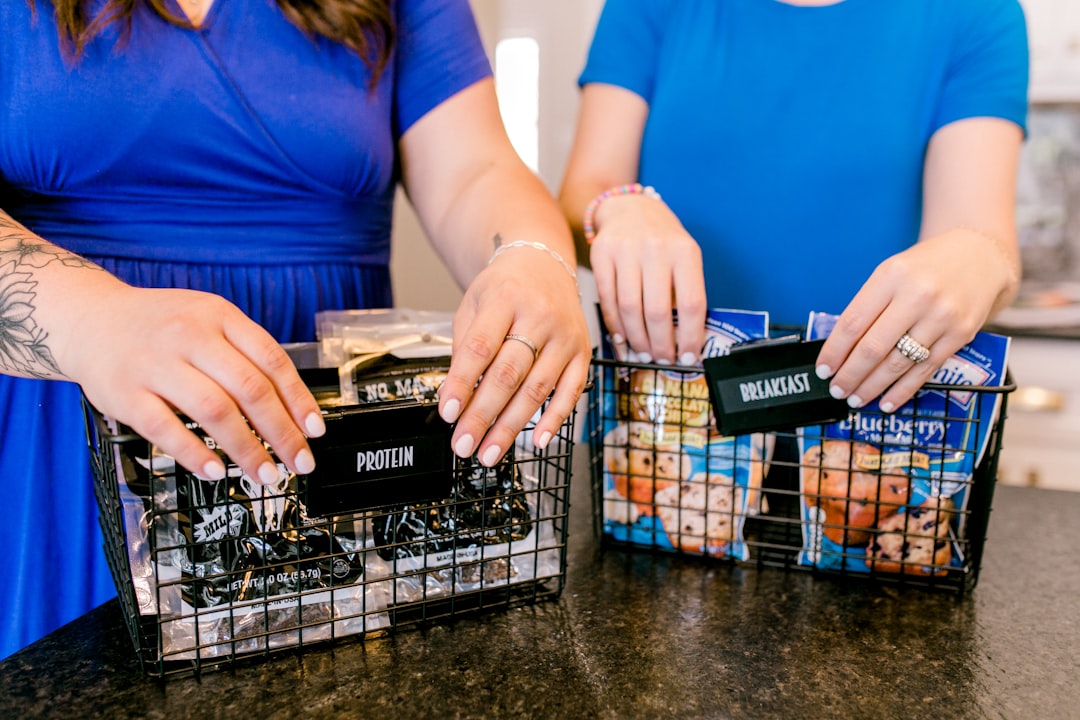
Once the big bottles and spray containers were hanging or in pull-out drawers, the remaining challenge was the small items — dishwasher pods, scrub brushes, microfiber cloths, extra sponges, and the random supplies that tend to multiply when you are not looking. These are the things that cause clutter because they do not stand up on their own and they end up scattered across every surface.
I solved this with stackable woven plastic bins from Tiawudi. They are open-front, so you can see what is inside without pulling them out, and they stack two high in the back of the cabinet where vertical space was going to waste. One bin holds dishwasher pods, another holds sponges and scrubbers, and a third is dedicated to extra dish towels and microfiber cloths.
What I love about these particular bins is that they are sturdy enough to hold heavier items without sagging, but lightweight enough that I can grab one with one hand. And because they stack, they use the same approach I applied when I rebuilt my pantry shelves — go vertical whenever you can. Counter space is not the only thing that gets wasted. Cabinet air space does too.
The Foundation: A Good Shelf Liner
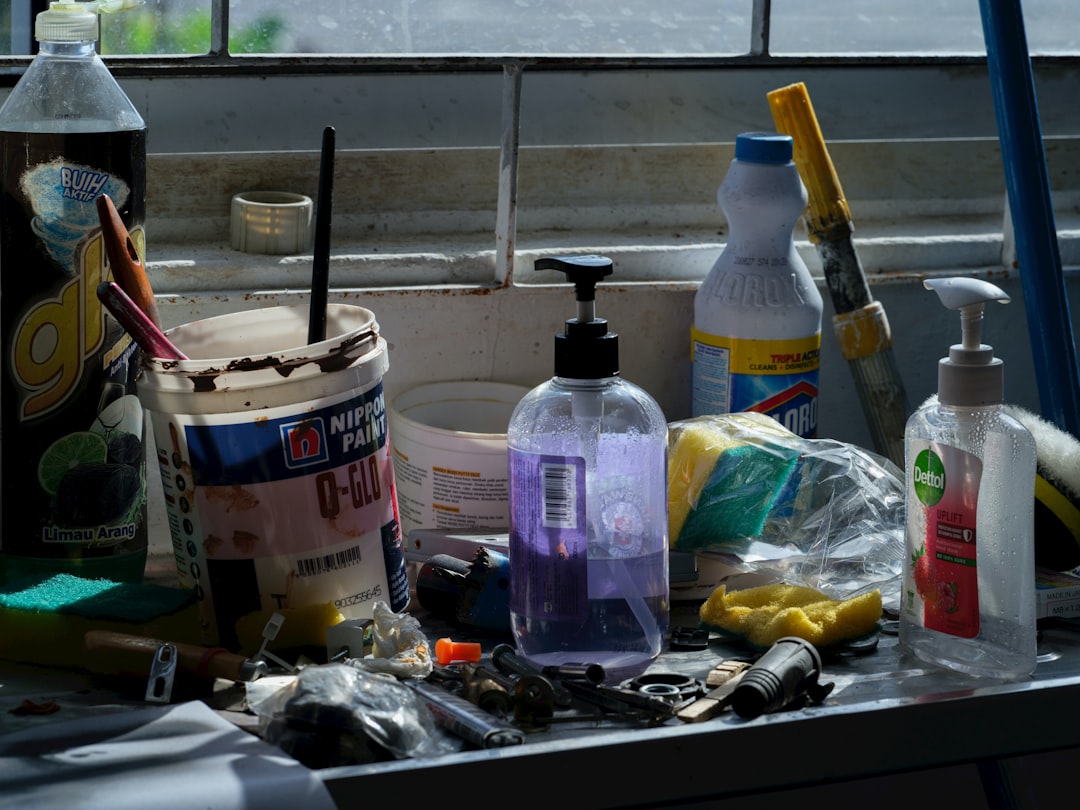
I almost skipped this step, and I am so glad I did not. The bottom of an under-sink cabinet takes more abuse than any other surface in your kitchen. Water drips. Bottles leak. Cleaning products leave residue. And if you have ever tried to clean a bare cabinet bottom that has been absorbing mystery spills for years, you know why a liner is non-negotiable.
I lined the entire cabinet with a non-adhesive, non-slip shelf liner — this washable gray liner from Mcrbeay that I cut to fit around the plumbing pipes. The non-adhesive part matters because you want to be able to pull it out and hose it off in the sink every few months. Adhesive liners look great for about six weeks and then start peeling at the edges, which drives me absolutely up a wall.
The non-slip surface also keeps bottles and bins from sliding when you pull the organizer forward. That sounds minor until your dish soap bottle slides off the back of a pull-out shelf and wedges itself behind the plumbing. Once that happens, you will understand why liner matters.
What I Learned (And What I Would Do Differently)
The whole project took me about four hours from start to finish, including measuring, shopping, installing, and the deeply satisfying final step of putting everything back in its new home. Total cost was under $120 for all the organizers, hooks, rods, bins, and liner combined. That is less than what I had spent on duplicate cleaning products over the past year because I could never find what I already had.
If I were doing it again, I would measure the interior width of my cabinet doors more carefully before ordering the over-door organizer. Mine fits, but just barely, and I lost a few millimeters of clearance that could have been avoided. I also would have bought the pull-out organizers in black instead of white — white looks great on day one, but under a sink, everything gets a little dingy over time, and black hides that better.
The biggest surprise was how much this one small cabinet was affecting my daily kitchen rhythm. I was avoiding cleaning tasks because getting to my supplies was annoying. I was buying duplicates because I could not see what I had. I was wasting time hunting for things that should have been easy to find. Fixing this one space gave me back about ten minutes a day and eliminated a low-level stress that I did not even realize I was carrying.
If you have been avoiding your under-sink cabinet the way I avoided mine, consider this your sign. Measure the space, pick up a pull-out organizer and a handful of hooks, and give that cabinet the attention it deserves. It is the most-used and least-loved space in the kitchen, and it deserves better than five bottles of dish soap and a dead flashlight.