The first Thanksgiving I ever hosted on my own was in an apartment with a 24-inch oven, a fridge that hummed like a tired bee, and roughly the counter space of a cutting board. I had twelve dishes on my menu and a head full of my grandmother’s kitchen, where three women and two ovens ran like a railroad. By two in the afternoon I was standing in front of my one little oven holding a sweet potato casserole with nowhere to put it, while the turkey sulked inside and the rolls rose higher and higher on top of the refrigerator. Dinner was served at 6:40. We’d planned on four.
Nothing was wrong with the food. What went wrong was the traffic. Every dish wanted the same box at the same hour, and I’d never sat down and decided who got to go first. These days my team and I plan Thanksgiving the way an air traffic controller plans a runway: one slot at a time, with everything else circling somewhere safe. If you’re cooking for a crowd this year with a single oven and a small kitchen, this is the plan we use. It’s written out hour by hour, and it lists the off-oven helpers that do the heavy lifting.
The Short List, Before You Read Another Word
If you only have a minute, these are the four helpers that turn one oven into something closer to three. I’ve used every one of them on a real Thanksgiving, and each one takes at least one dish away from the oven.
- Best second oven: Hamilton Beach 22-Quart Roaster Oven. It roasts a turkey up to about 22 pounds on the counter, which gives your real oven back to the sides.
- Best for rolls and small casseroles: Breville Smart Oven Air Fryer Pro. It’s big enough for a 9-by-13 dish and quick enough to bake rolls while the turkey rests.
- Best for holding mashed potatoes: Crock-Pot 7-Quart Manual Slow Cooker. Set it to warm and the potatoes stay creamy for hours without a burner.
- Best for the buffet line: Elite Gourmet Buffet Server and Warming Tray. It has three lidded pans on a heated base, so the sides stay hot at the table and not in your oven.
Count the Dishes, Then Give Each One a Lane
Before you shop for a single potato, write your menu on a sheet of paper and put a letter next to every dish. O means it needs the oven on Thursday. S means stovetop. H means it can be cooked or held in a helper appliance. A means it can be made ahead, on Tuesday or Wednesday. C means it’s served cold or at room temperature. Our menu this year is the standard twelve: turkey, gravy, stuffing, mashed potatoes, sweet potato casserole, green bean casserole, Brussels sprouts, mac and cheese, cranberry sauce, rolls, pumpkin pie and pecan pie.
When most cooks do this for the first time, nearly every dish gets an O. That’s the problem in one picture. The goal is to get Thursday’s O list down to three or four items, and to make sure no two of them want the oven in the same half hour. On our sheet the turkey is the only dish that gets a long oven slot. The stuffing and mac and cheese share a short reheat. The rolls get the oven while the turkey rests. Everything else moves somewhere else.
Once the letters are down, write the hours from 10 a.m. to dinner down the left side of a second sheet. Fill in only the oven jobs and the moments a helper switches on. That page goes on the fridge with a magnet, and it is the only plan anyone follows on Thursday. My team teases me about the clipboard, but nobody argues with it at 3 p.m.
The Turkey Owns the Oven, So Plan Around It
For a 4 p.m. dinner and a 12 to 14 pound unstuffed bird, the USDA chart puts you at roughly 3 to 3¾ hours at 325°F. I aim for the turkey in by 11:45 a.m., pull the top rack out completely, and set the bottom rack low so the bird sits in the middle of the heat. Start checking the temperature at about 2:45. You’re done when the thickest part of the breast reads 165°F and the thigh reads 175°F, not touching bone. If your bird is still frozen solid as you read this, my turkey thaw calendar has the date it needs to move into the fridge.
Small ovens lie more than big ones. They run hot in the back, cold near the door, and the dial is often 15 or 25 degrees off. A cheap Rubbermaid Commercial Oven Thermometer hanging from the middle rack tells you the truth before Thursday. I check mine the weekend before and write the real number on a strip of tape next to the knob. For the bird itself, I trust the ThermoPro TP19H Instant-Read Thermometer, which reads in a couple of seconds so the door is open for as little time as possible.
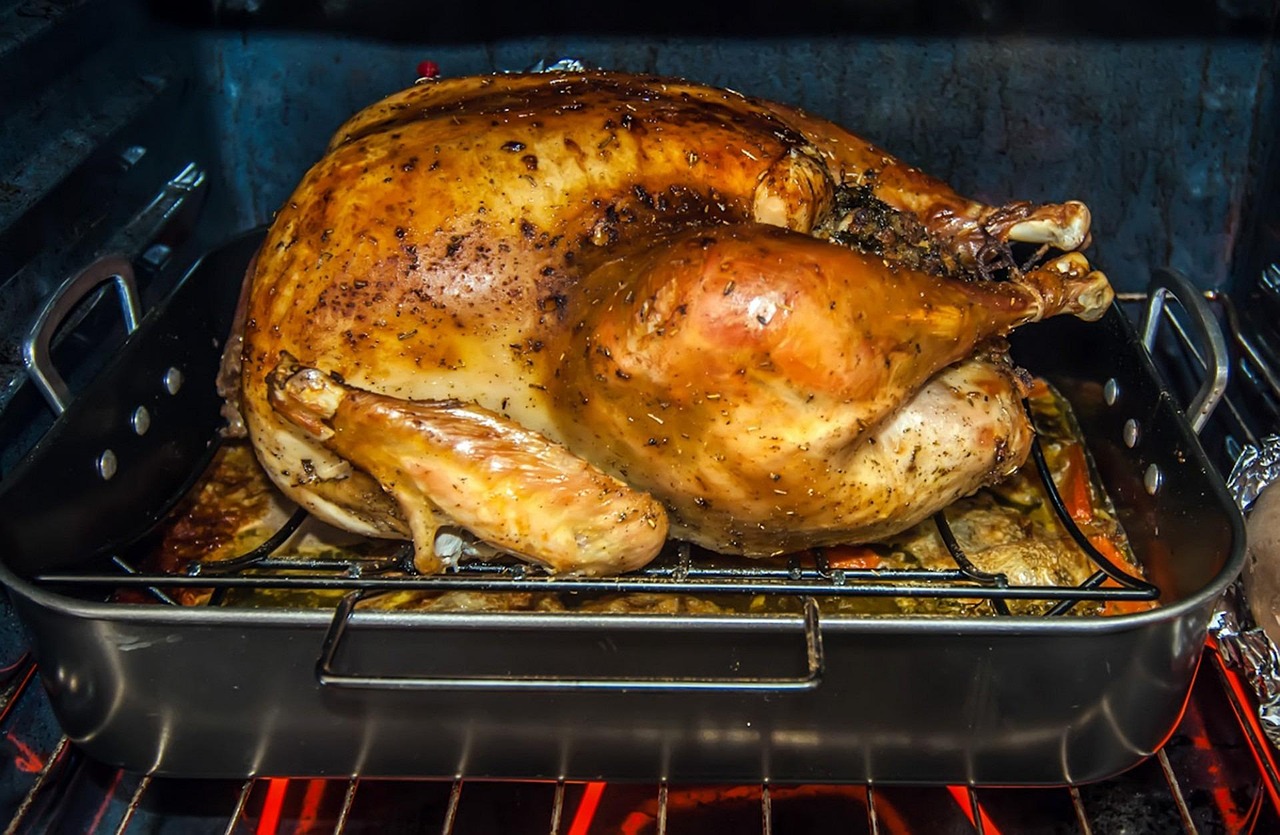
Keep the door shut. Every peek costs a small oven more heat than a big one, and it can take 10 to 15 minutes to recover. Turn on the oven light, rotate the pan once at the halfway point, and leave it alone.
If Your Oven Can’t Fit Both the Bird and Your Nerves
This is where the countertop roaster from my short list earns its spot in the hall closet. My aunt roasted every turkey of my childhood in one of these speckled countertop roasters, and I used to think it was cheating. It isn’t. It plugs in, holds a steady temperature, and gives you back your full-size oven for the entire afternoon. The skin browns a little less than it does in a real oven, so I give the bird a last 15 minutes under a hot oven if there’s a gap, or I just brush it with melted butter and let the gravy do the talking. A roaster pulls a lot of power, so give it an outlet of its own and keep the toaster and the kettle off that circuit.
Tuesday and Wednesday Are the Oven’s Days Off From the Turkey
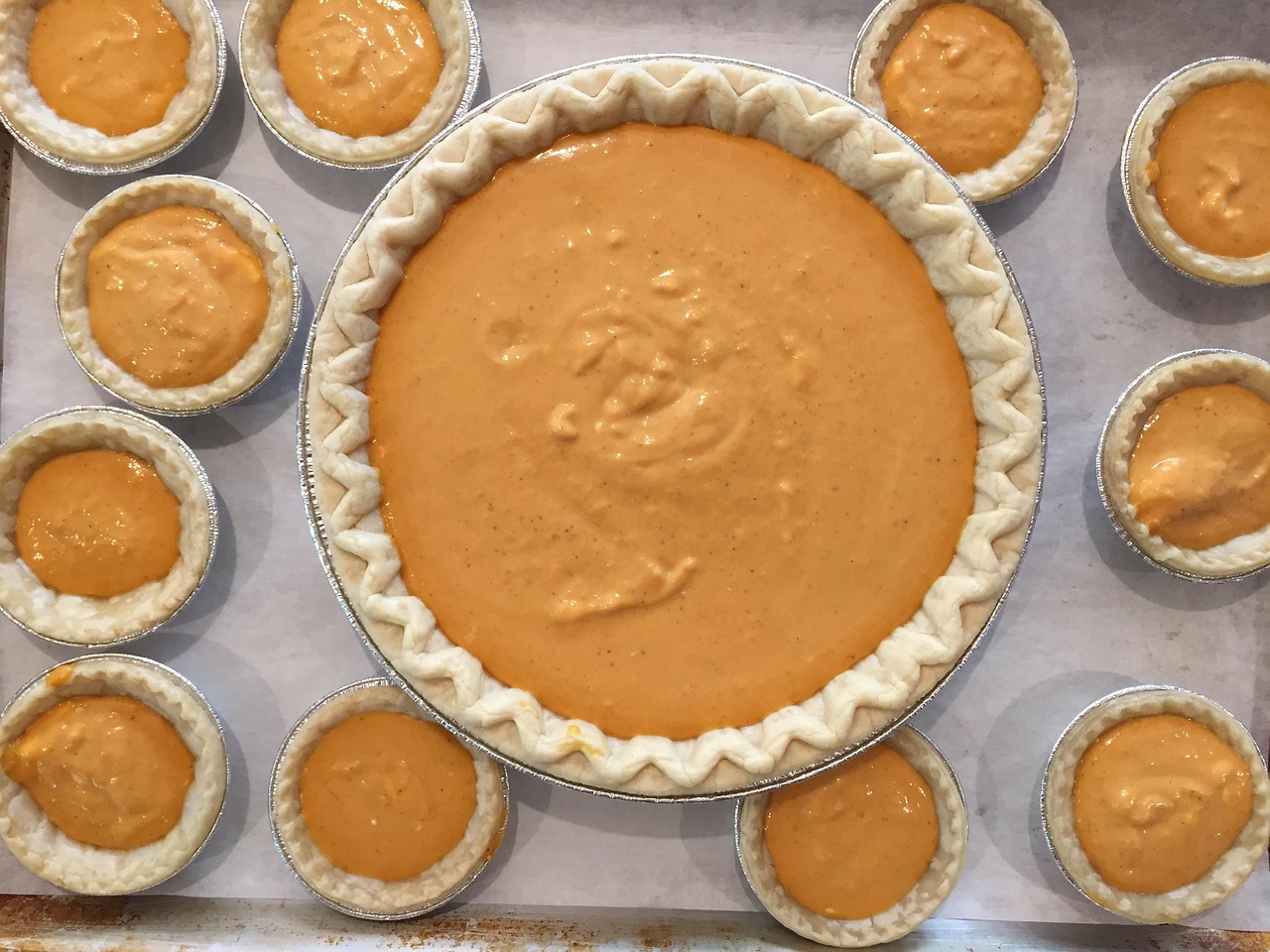
The single best move for a one-oven Thanksgiving is to bake before the big day. On Tuesday, while the oven is still yours, bake both pies. Pumpkin pie is actually better after a night in the fridge, and pecan pie holds well at room temperature, covered, for a day or two. That takes two dishes, and their two different baking temperatures, out of Thursday completely.
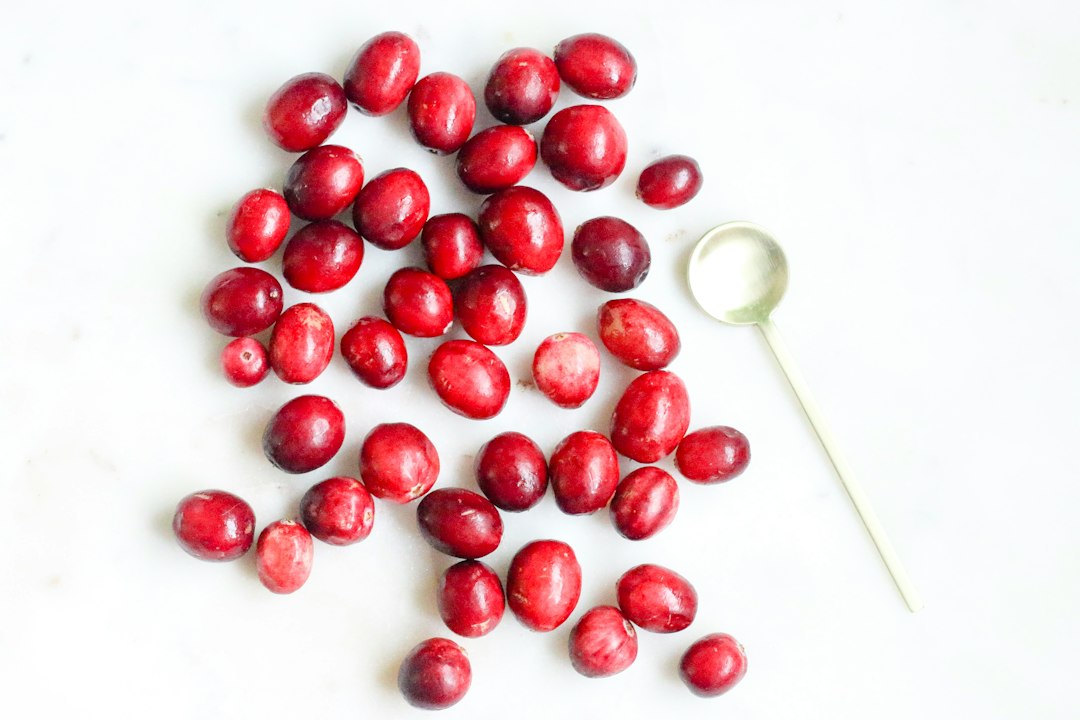
Tuesday is also cranberry sauce day. It takes 15 minutes on the stove, it needs to chill anyway, and it tastes better after a day or two in the fridge. If you make a cranberry relish or a cold salad instead, that’s another C on your list.
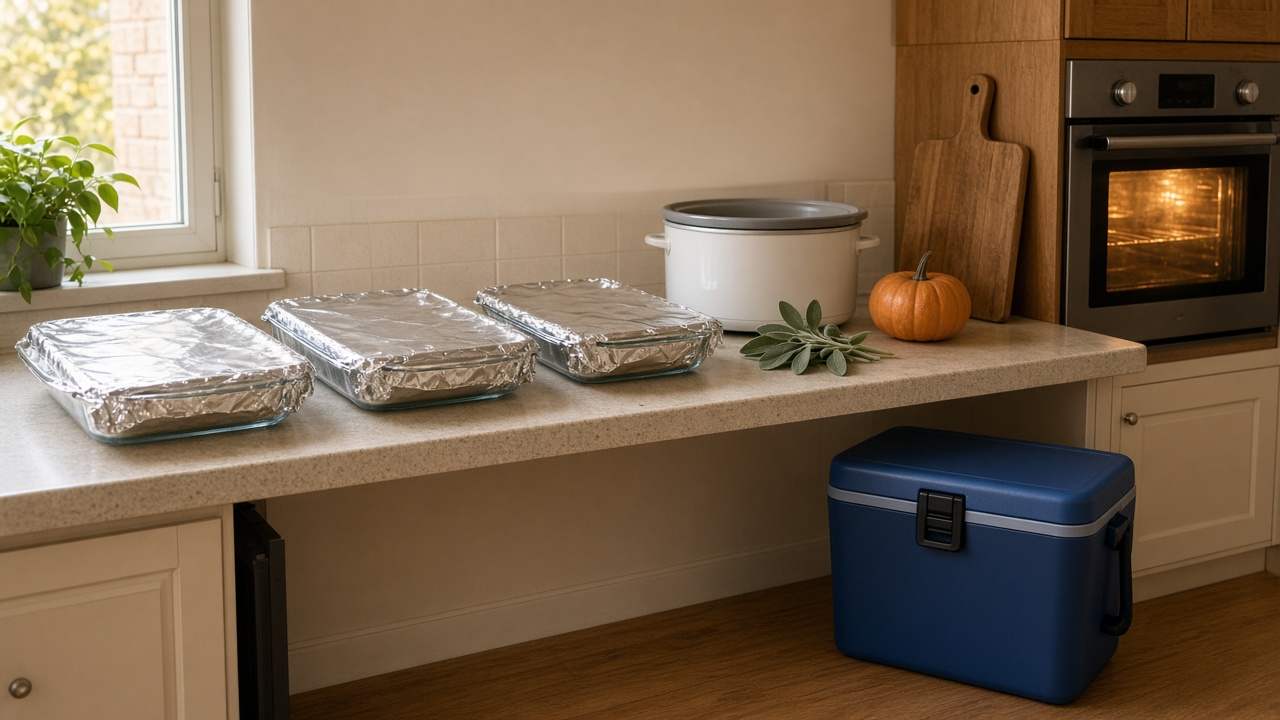
On Wednesday, assemble the casseroles but don’t bake them. Sweet potato casserole, green bean casserole and mac and cheese all go together the night before in dishes with snug lids, then go straight into the fridge. I keep a stack of the Pyrex 3-Quart Glass Baking Dish With Lid for exactly this reason. The lids stack, so three casseroles take up the shelf space of one and a half. Write the reheat temperature and time on a piece of tape on each lid. Wednesday night is also when you make the gravy base from roasted wings and stock. My make-ahead gravy means Thursday’s gravy is a five-minute whisk with the drippings, not a twenty-minute panic.
One warning: fridge space is your second bottleneck. Clear a full shelf on Sunday, use the vegetable drawers for bagged chopped onions and celery, and move drinks to a cooler on the porch or balcony if the weather is cold enough.
Burners, Helpers and the Countertop Lanes
Once the oven schedule is set, the stovetop becomes your second runway. Stuffing cooks beautifully in a big skillet with a lid, and you can finish it in the oven for 20 minutes during the reheat window if you want a crisp top. Green beans, if you skip the casserole, blister in one hot pan in about eight minutes. Keep two burners free for the last half hour, one for the gravy and one for whatever surprises you.
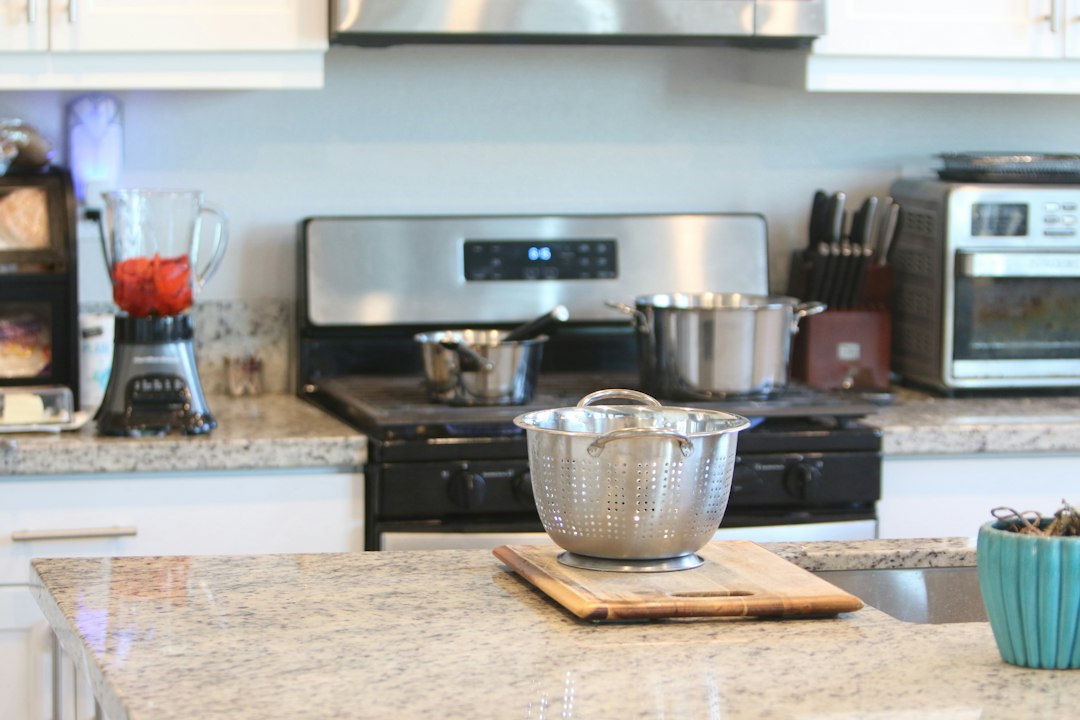
Mashed potatoes are the dish everyone thinks needs the stove at the last minute. They don’t. Boil and mash them around 1 p.m. while the turkey roasts, stir in extra warm milk and butter, and slide them into the Crock-Pot 7-Quart Manual Slow Cooker on the warm setting. Give them a stir every hour and add a splash of milk if they tighten. They’ll hold for three or four hours and taste like they were mashed five minutes ago. That frees a burner, a pot and your attention.
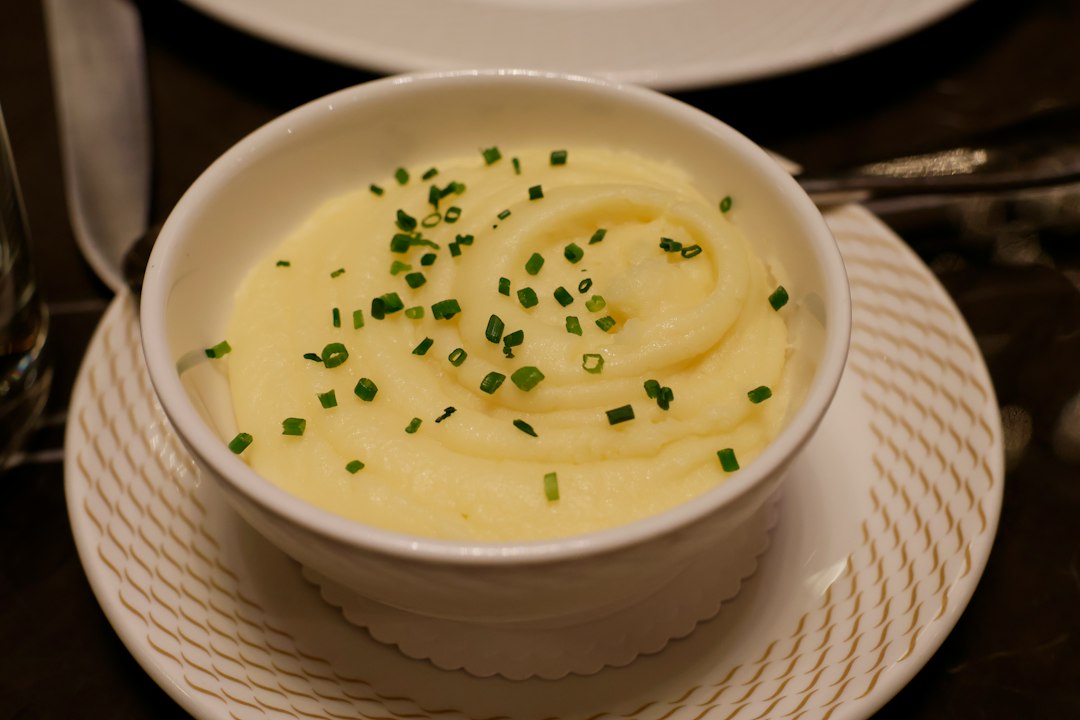
A good countertop oven is the other quiet hero. The Breville Smart Oven Air Fryer Pro fits a 9-by-13 dish, so the sweet potato casserole can reheat in there at 350°F while the main oven handles the stuffing and mac and cheese. It also crisps Brussels sprouts on air fry mode in about 15 minutes. If you have a basket air fryer instead, I wrote up the five Thanksgiving sides I hand off to the air fryer, with timings for every one.
The Cooler Trick Nobody Believes Until They Try It
An insulated cooler keeps hot food hot just as well as it keeps cold food cold. About half an hour before you need it, fill a clean cooler with hot tap water, close the lid, then drain it and dry it out. Line it with a couple of thick bath towels. As each dish comes out of the oven, cover it tightly with its lid or foil and nestle it in the towels. Close the lid and leave it shut. A full, preheated cooler holds casseroles above the 140°F food safety line for at least an hour. Check one with your thermometer before you serve.
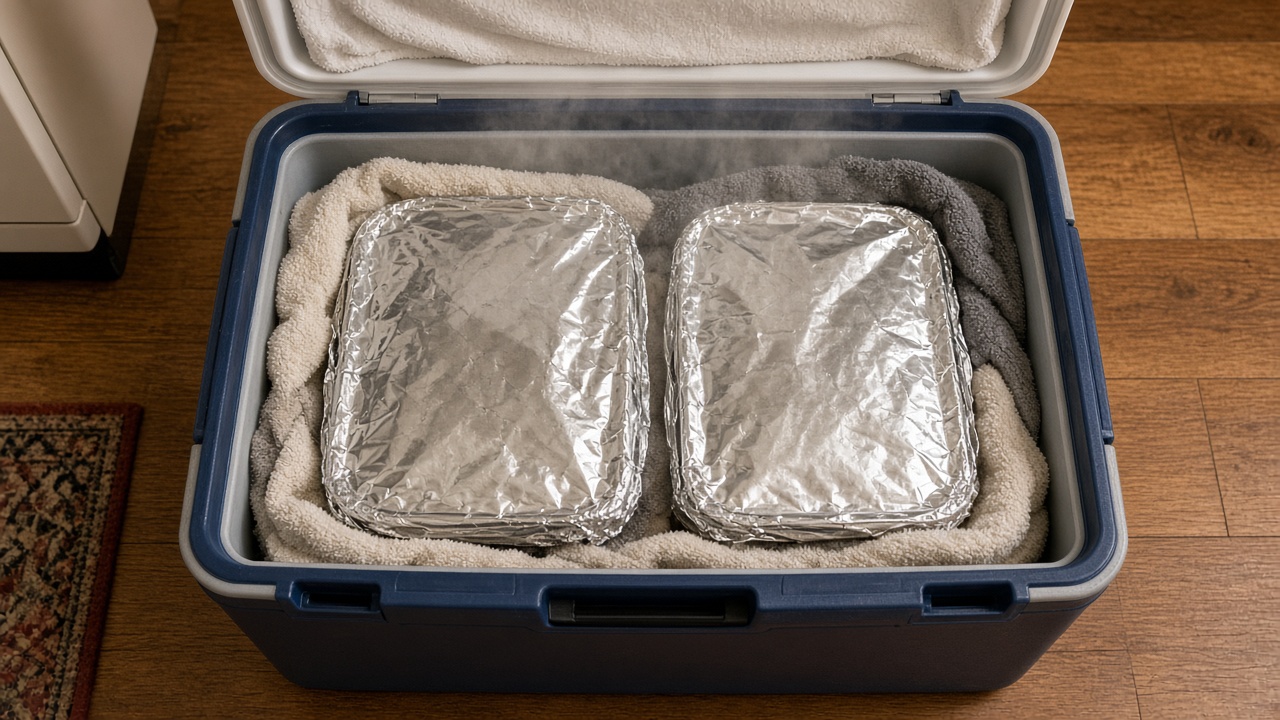
We use a Coleman 52-Quart Xtreme Cooler because it takes two 9-by-13 dishes side by side and holds heat for a long time. This is also where the turkey can rest if your counter is full. Wrap it in foil and a towel, and it’ll stay warm for well over an hour, which buys you time in the oven.
The Hour-by-Hour Plan for a 4 p.m. Dinner
Here is the exact schedule taped to my fridge this year. Adjust the start time to the size of your bird, and remember that the thermometer outranks the clock.
- 10:30 a.m. Turkey comes out of the fridge to lose its chill. Oven thermometer goes in, oven preheats to 325°F.
- 11:45 a.m. Turkey goes in, or into the roaster if you’re using one. Casseroles move from the fridge to the counter to warm up a little.
- 1:00 p.m. Boil and mash potatoes, then move them into the slow cooker on warm. Set the table and stage the serving dishes now, not later.
- 2:00 p.m. Start the stuffing on the stove. Prep the Brussels sprouts. Preheat the cooler with hot water.
- 2:45 p.m. First temperature check on the bird. Check again every 15 to 20 minutes.
- 3:15 p.m. Turkey out (165°F breast, 175°F thigh). Tent with foil and rest it on the carving board or in the cooler. Oven goes up to 375°F.
- 3:25 p.m. Stuffing and mac and cheese go in the main oven. Sweet potato casserole goes into the countertop oven at 350°F.
- 3:40 p.m. Finish the gravy on the stove with the drippings. Air fry the Brussels sprouts.
- 3:45 p.m. Rolls go into the main oven next to the casseroles, 10 to 12 minutes.
- 3:55 p.m. Everything comes out. Carve the turkey and set up the buffet line.
- 4:00 p.m. Dinner. Pies come out of hiding after everyone has had seconds.
The rest window is the secret engine of the whole schedule. A turkey wants 30 to 45 minutes to rest before carving anyway, and the oven is sitting empty during that time. That’s when every reheat happens. If you’ve never planned a carving setup, my notes on the twenty-minute gap between oven and table walk through the lifters, the board and the separator that make it smooth.
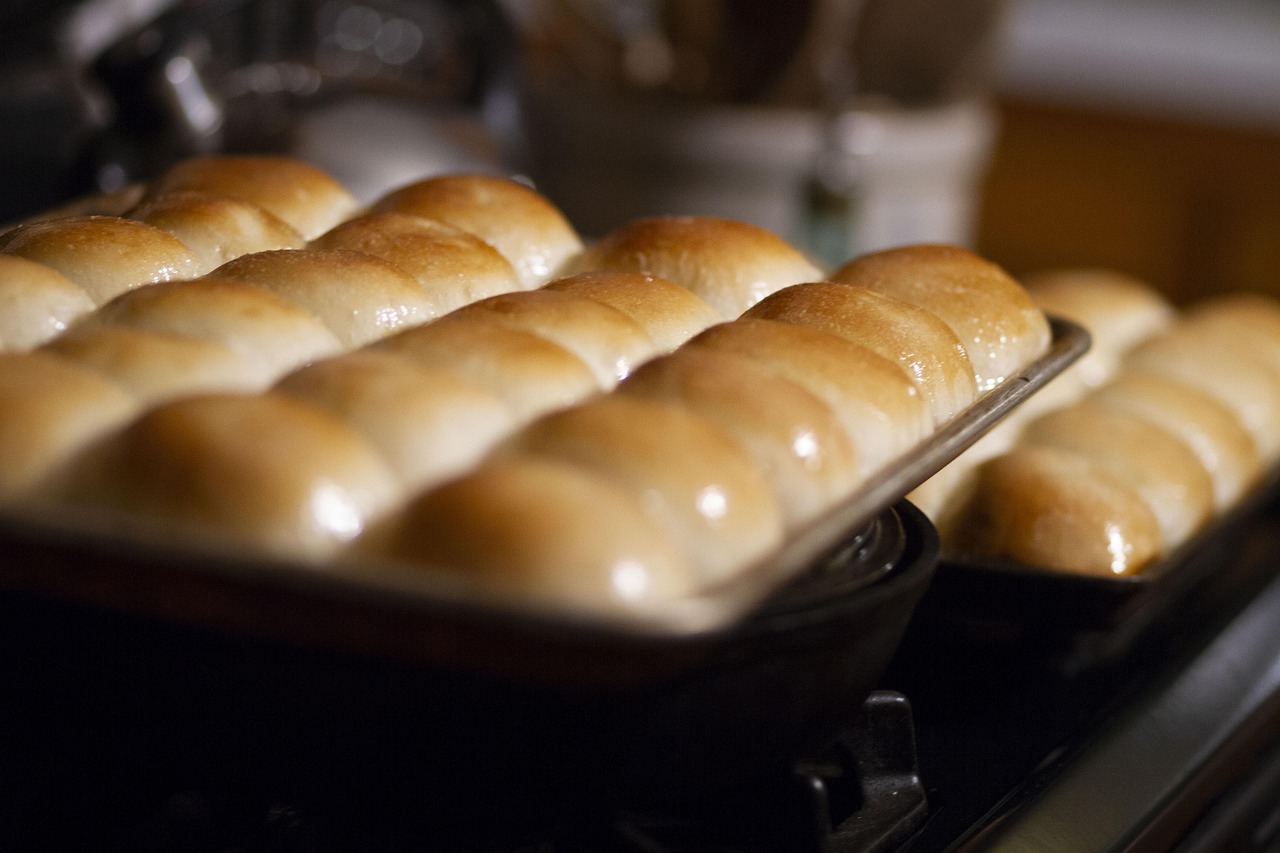
Rolls are where the extra sheet pans earn their keep. I bake them on a Nordic Ware Naturals Half Sheet Pans (2-Pack), which also doubles as a lid for a casserole and a landing pad for anything coming out of the oven. Store-bought brown-and-serve rolls are perfectly fine here. Nobody has ever complained about a warm roll.
Timers, a Buffet and a Clear Counter
In a small kitchen you’ll have three or four things cooking at once, and your phone will be covered in butter. A ThermoPro Dual Digital Kitchen Timer stuck to the range hood keeps two countdowns going with big buttons you can press with a knuckle. I give one channel to the main oven and one to whatever helper is running.
Then keep the food off the dining table entirely. Line the dishes along your clearest counter in eating order: plates first, then turkey, stuffing, potatoes, gravy, the casseroles, cranberry sauce and rolls last. Everyone walks the line once and sits down. If you have a sideboard or a card table in the next room, set up the warming tray there and let it keep three sides hot through seconds. Your table stays free for elbows, wine glasses and conversation, which is the whole point of the day.
Move the drinks and the appetizers out of the kitchen too. A bucket of ice and a cheese board in the living room keep guests (and their helpful hands) out of your one walking lane between the oven and the sink.
What I’d Tell My Twenty-Five-Year-Old Self
One oven is not a handicap. My grandmother fed twenty people out of a kitchen not much bigger than that first apartment of mine, and her secret wasn’t more equipment. She decided, days ahead, which dish got which hour. She baked pies on Tuesday, kept potatoes warm in a crock, and wrapped the turkey in towels while the rolls baked. She just never wrote any of it down, so I had to learn it the hard way.
So write it down. Give every dish a letter and every hour a job. Then plug in one or two helpers, load the cooler, and let the oven spend its afternoon on the turkey. You’ll eat at four, and you might even get to sit down with a glass of something before the doorbell rings. Happy almost-Thanksgiving from my small kitchen to yours.