Butterball’s 2026 Togetherness Report put numbers under a feeling I have carried for years: 85% of Thanksgiving hosts want guests to pitch in, only about a third actually ask, and nearly half say final cleanup is the help they need most. Sixty-five percent even said they would love cleanup “at the push of a button.” I laughed when I read that, then looked at my own fridge — which is where I finally taped the fix.
This year I am not waiting until the pie plates hit the counter and hoping someone magically appears with a sponge. I am setting the cleanup station before the bird goes in, writing a short jobs card for the people who keep saying “tell me what to do,” and treating the roasting pan like a timed project instead of a midnight punishment. My small team and I ran this plan through two Friendsgivings and one dress-rehearsal turkey breast so I could tell you what actually moves the needle and what just rearranges the mess.
If you already rinse as you cook — I wrote that habit out in Still Cooking, Already Clean — this is the next layer: how a host asks for help without turning dinner into a guilt trip, which jobs guests can finish without a briefing, and which tools make those hands useful instead of decorative.
Why Hosts Freeze at “Can I Help?”
The awkward part is not the dishes. It is the moment a guest stands in your doorway with empty hands and you are holding a thermometer, a gravy whisk, and a toddler’s sippy cup. Your brain cannot invent a safe task fast enough, so you say “I’ve got it” even when you do not.
Guests are not mind readers. They are also afraid of doing the wrong thing — scrubbing the good roasting pan with the wrong pad, loading the dishwasher incorrectly, throwing away a carcass you meant to simmer. When help has no script, both sides retreat. The host stays overwhelmed. The guest sits down with wine and a little guilt.
The jobs card solves the invention problem. It is not a chore chart for children. It is a one-page menu of tasks that are already safe, already timed to the meal, and already stocked with the right tools. Guests pick a job the way they pick a seat. You keep cooking. Nobody has to perform a negotiation in the steam of the kitchen.
Build the Station Before the Turkey Goes In
Cleanup help fails when the sink is already a trench of gravy boats and the only towel left is the one under the dog. The station has to exist before the bird hits the oven, while you still have counter space and a clear head.
I clear eighteen inches next to the sink — or the island end closest to the sink if my dishwasher is running a pre-dinner load. Into that strip go four things: a soak tub already filled with hot soapy water, a drying rack with an empty landing zone, a caddy of scrub tools, and a labeled trash-and-compost pair. That is the whole theater. Guests can walk up and know where work happens without asking me to narrate.
The soak tub is non-negotiable. A deep Plastic Dishpan Soak Tub keeps roasting racks, whisks, and measuring cups out of the main sink so you can still fill a stockpot. I start it hot with a squirt of dish soap and a spoonful of Arm & Hammer Baking Soda for the greasy early tools. When someone finishes using a spatula, it goes in the tub, not on a plate “for later.” Later is how you lose the evening.
Next to the tub sits a Two-Tier Stainless Steel Dish Drying Rack with room for platters on top and flatware below. I already field-tested racks for holiday volume in Towel Mountain Falls; the short version is that a single-level rack collapses under Thanksgiving and the towels become the overflow system. Give the rack a real footprint before dinner, not after.
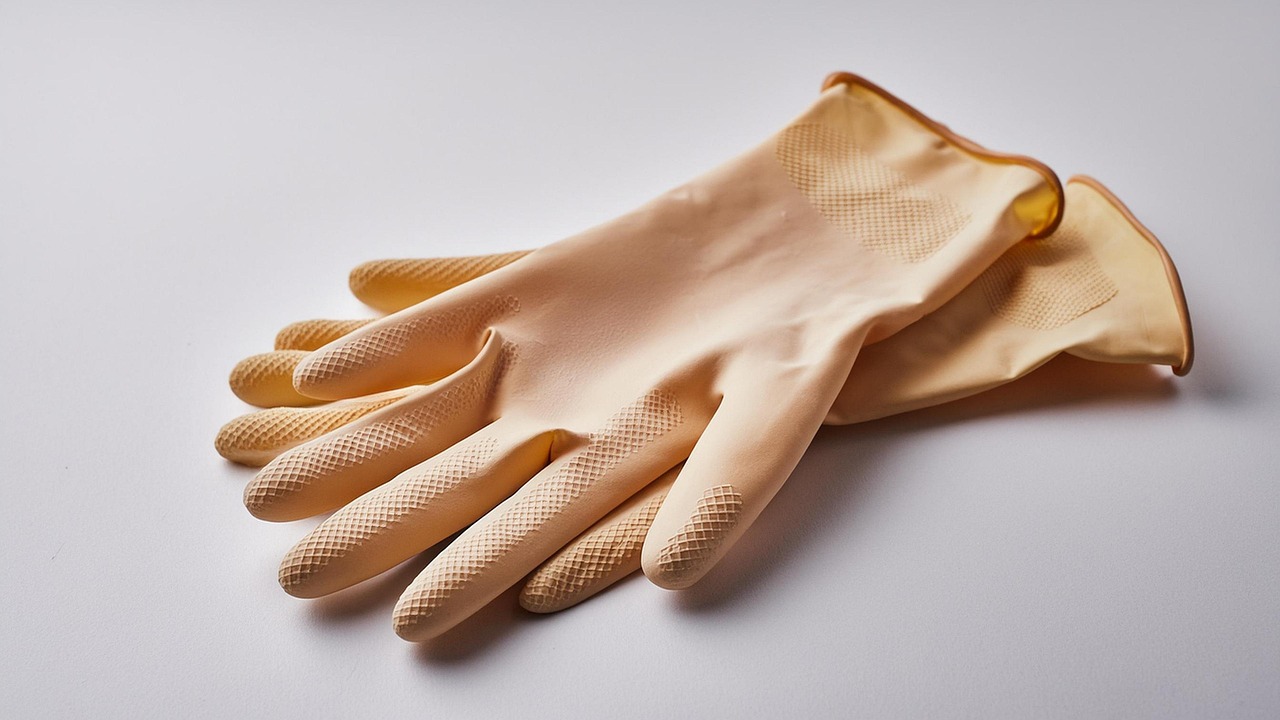
The tool caddy holds what guests actually need: a pair of Heavy-Duty Reusable Rubber Dish Gloves in two sizes, a soft Kitchen Dish Brush Set, a non-scratch scrub sponge, and a dedicated roasting-pan kit I will describe in a minute. I also hang two clean Cotton Flour Sack Kitchen Towels on a hook — not the pretty embroidered ones, the ones that can meet gravy and survive.
Trash and compost sit on the floor under the station, not across the room. Heavy-duty Hefty Ultra Strong Tall Kitchen Trash Bags matter when someone scrapes a pan of green bean casserole; thin bags split and then you have a second cleanup. If you roast a whole bird, leave a clear bowl or labeled bag for the carcass so it does not vanish into the trash before stock night. My leftover send-home system in Everybody Leaves With Something starts the second the table clears — the carcass is the first decision.
The Jobs Card I Tape to the Fridge
I print a half-sheet, slip it into a cheap plastic sleeve, and tape it at eye level on the fridge. Handwritten works too. The point is visibility, not graphic design. At the top it says: “If you offered to help — thank you. Pick one job. Tools are at the sink station.”
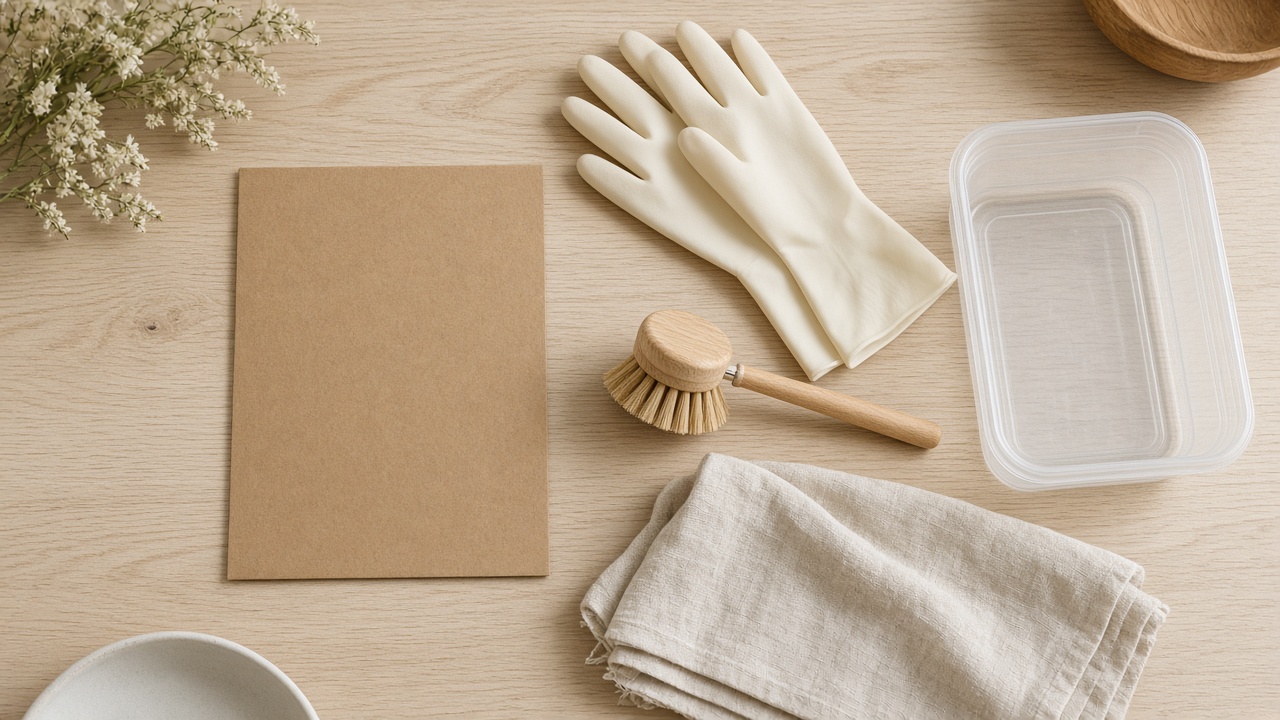
Here is the card I actually use. Steal it, shorten it, rename the jobs for your house:
- Clear and scrape: Bring used plates to the station. Scrape into trash/compost. Stack by size. Do not soak the good knives.
- Glass and stemware: Hand-wash wine glasses and the crystal you do not trust in the dishwasher. Dry with the flour-sack towels. Set on the upper rack zone.
- Load the dishwasher: Only the everyday plates, bowls, and flatware. Leave roasting pans, wood, cast iron, and anything labeled “hand wash” on the counter.
- Soak team: Keep the tub hot. Add a kettle of water when it cools. Fish out finished tools and rack them.
- Roasting pan detail: Follow the pan card taped inside the cupboard door (see next section). One person owns this job end-to-end.
- Wipe and reset: Counters, stove knobs, the sticky spot on the fridge handle. Empty the trash if it is past half.
- Leftover packer: Fill the glass containers I staged on the sideboard. Label with the masking tape roll. Ask before you combine mystery gravies.
Notice what is missing: “help me cook,” “carve the turkey,” “make the gravy.” Those jobs need the host’s brain. Cleanup jobs need hands and a clear map. When someone asks what to do, I point at the fridge. The conversation lasts four seconds. That is the whole magic trick.
I also keep a spare Adjustable Kitchen Apron on the hook for the person who always jumps in first. It sounds fussy until you watch someone’s nice sweater meet cranberry sauce. Hospitality includes protecting the helpers.
The Script That Makes Asking Feel Human
Even with a card on the fridge, someone has to break the ice. Hosts stall because they do not want to sound like a manager. Guests stall because they do not want to barge in. A short script removes the improvisation.
Before guests arrive, I text the three people I trust most: “I set up a cleanup station and a jobs card on the fridge. If you are willing, grab a job after dinner — no need to ask me in the moment.” That advance permission matters. People who hate performing helpfulness in front of a crowd will still work if the ask already happened privately.
At the table, after the toast and before dessert, I say one sentence out loud: “The cleanup station is ready whenever you are, and the jobs are on the fridge — I would love the help.” Then I sit back down. I do not assign by name unless someone looks lost. Naming one person in front of twelve can feel like a spotlight. The card lets volunteers self-select.
If nobody moves after ten minutes of coffee, I do not sulk. I start the soak tub refresh myself, which is usually enough social proof for two people to stand up. Momentum beats martyrs.
The Roasting Pan Sequence (Do Not Wing This)
This is where good intentions wreck good pans. A guest with energy and the wrong scrubber can take the seasoning off cast iron or scratch a stainless roasting pan into a permanent haze. So the roasting pan gets its own mini-card taped inside the cupboard above the station.
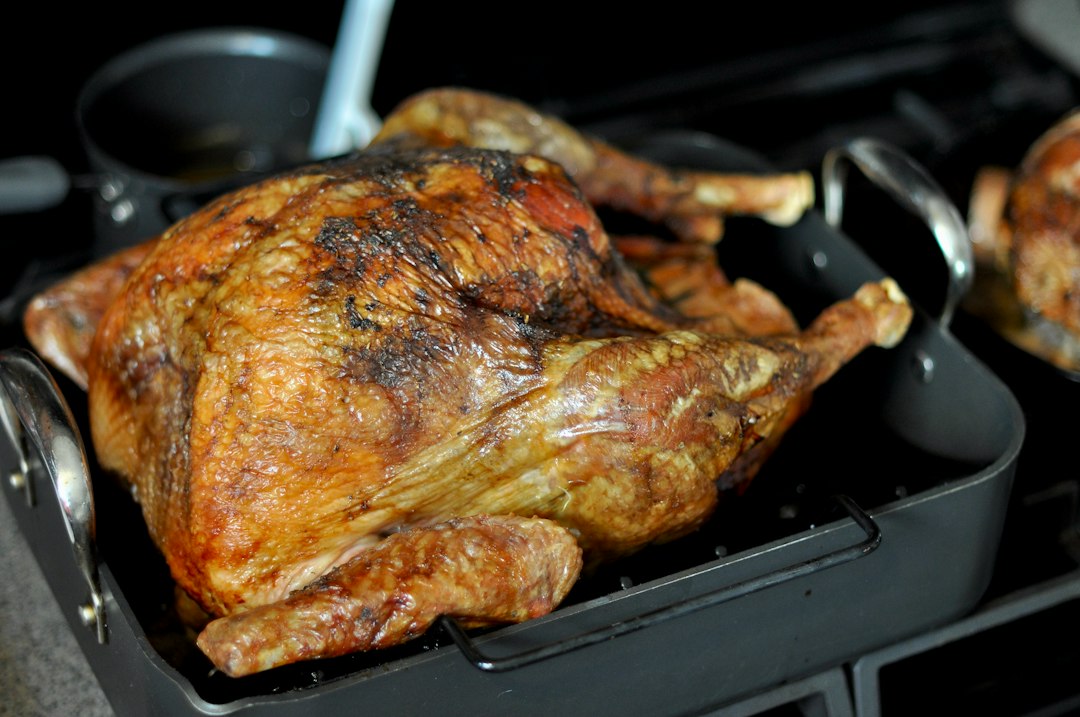
My sequence after a turkey or turkey breast:
- Pour off the fat. Strain drippings into a heatproof jar for gravy or roasting vegetables later. Do not pour grease down the sink.
- Hot water, not cold. Fill the pan with hot water and a drop of soap while it is still warm (not screaming hot — you should be able to touch the rim). Let it sit fifteen to twenty minutes while dessert happens.
- Scrape, do not sand. Use a Silicone Spatula Bowl Scraper or a wooden scraper on stuck bits. Save the metal for truly stubborn stainless, and never on nonstick or seasoned cast iron.
- The scrub that earns its keep. For stainless and enamel, a damp sponge with Bar Keepers Friend Cleanser lifts the brown fond without the drama. For cast-iron roasting pans or grates, a Chainmail Cast Iron Scrubber with hot water can lift stuck-on food. A little modern dish soap is fine on seasoned cast iron; it does not strip properly bonded seasoning. Avoid prolonged soaking because it promotes rust, then dry thoroughly. Lodge’s cleaning guidance makes that distinction.
- Rinse, dry, oil if needed. Towel dry completely. If it is cast iron, a thin wipe of oil. Rack it upright so it does not trap steam.
Whoever draws “roasting pan detail” on the jobs card owns steps one through five. I still glance over once — not because I distrust them, but because a roasting pan is the most expensive single tool most of us use only a few times a year, and I would rather coach than replace. If you downsized to a turkey breast this year, the same sequence still applies; the pan is just lighter and finishes faster.
Soak-as-You-Go Still Wins the First Half of the Day
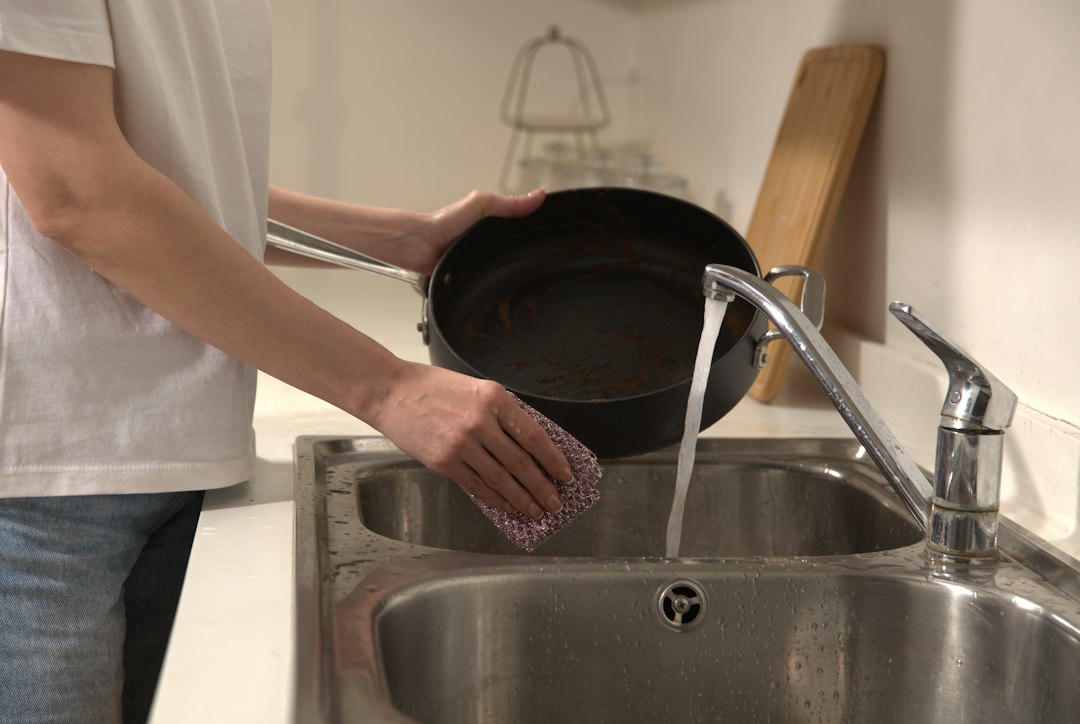
The jobs card handles the post-dinner flood. The quieter win is keeping the sink from filling while you cook. Every bowl that held raw turkey brine, every whisk that touched gravy, every sheet pan that roasted carrots — those go straight into the soak tub or the dishwasher the moment they are empty.
I learned this watching three generations of women in my family kitchen: dinner hit the table with an empty sink because the washing never stopped. The modern version is not constant scrubbing. It is a running soak and a dishwasher cycle started before guests sit down. When the oven owns the bird and the counters own the sides — the traffic plan I use in One Oven, Twelve Dishes — the sink has to stay a working surface, not a parking lot.
A practical rhythm for the cooking window:
- After mise en place, wash the cutting boards and knives before the raw poultry board contaminates the stack.
- Start dishwasher load one when the turkey goes in — usually the prep bowls and measuring gear.
- Keep one towel for hands and one for dishes; swap when either hits the floor or the turkey tray.
- Park dirty sheet pans on the soak-tub rim, not in the oven “to deal with later.”
By the time someone carves, you should be looking at a sink that can accept a wave of plates. That is the difference between a twenty-minute guest assist and a two-hour host solo.
What Guests Should Never Be Asked to Do
Boundaries keep the help helpful. I do not ask guests to:
- Hand-wash my carbon-steel or heirloom knives
- Decide what leftovers get frozen versus eaten tomorrow
- Clean the oven interior on Thanksgiving night
- Sort the recycling if my building rules are confusing
- Scrub the floor while people are still eating dessert in the next room
Those jobs either need host judgment or they kill the mood. Guests came for dinner and belonging, not a deep clean. The jobs card stays in the lane of clearing, washing, drying, packing, and wiping — the work that multiplies when ten people eat, not the work that can wait until Friday morning with coffee and a podcast.
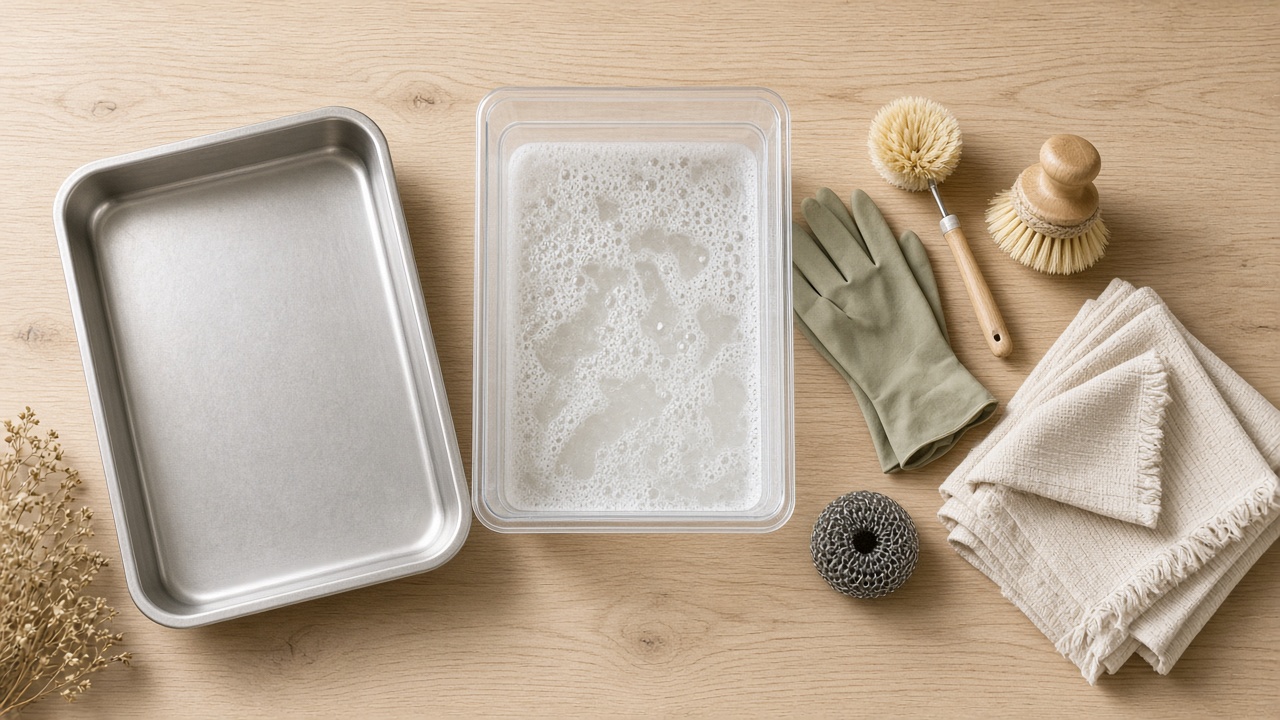
The Short List That Makes the Station Real
You do not need a new appliance. You need a kit that makes guest hands effective. This is what lives in my cleanup bin from the first Saturday of November through New Year’s:
- Soak and dry: Plastic Dishpan Soak Tub, Two-Tier Stainless Steel Dish Drying Rack
- Hands and scrub: Heavy-Duty Reusable Rubber Dish Gloves, Kitchen Dish Brush Set, Chainmail Cast Iron Scrubber
- Chemistry: Bar Keepers Friend Cleanser, Arm & Hammer Baking Soda
- Finish: Cotton Flour Sack Kitchen Towels, Silicone Spatula Bowl Scraper, Hefty Ultra Strong Tall Kitchen Trash Bags, Adjustable Kitchen Apron
Twelve products is the ceiling for a reason. Anything beyond that becomes a shopping list for a fantasy kitchen. This kit fits in one bin under the sink and comes out as a set the morning of.
Friday Morning Is Still Part of the Plan
Even with a perfect jobs card, Thanksgiving leaves a residue: the oven door film, the floor under the high chair, the slow cooker insert you hid behind the mixer. I schedule a twenty-minute Friday reset while coffee brews. Guests are gone. The pressure is gone. The station stays up until that reset is done, then the bin goes back under the sink.
That Friday pass is also when I check the roasting pan one more time, oil the cast iron if it needs it, and run the towels through a hot wash with an extra rinse. The emotional win of a clean kitchen Thursday night should not become a moldy towel drawer on Saturday.
If you host and attend in the same week — Friendsgiving Friday, family Thursday, cookie exchange the next Saturday — leave the station assembled. Re-tape the jobs card. Refill the glove pair. The setup cost is paid once; the holiday calendar will use it again.
What I Want You to Steal
You do not need Butterball’s turkey-shaped chore gadget to fix this, though I appreciate the joke of a button that assigns dishes. What you need is earlier permission, a visible menu of jobs, and a sink station that does not require a host narration. Ask before the bird goes in. Stock the tools. Let people pick their lane. Keep the roasting pan on a written sequence so enthusiasm does not become damage.
I used to wear martyrdom like a hostess badge. The clean kitchen at midnight felt like proof I had loved people well. It was mostly proof I had refused help. This year the fridge card stays up, the soak tub stays hot, and when someone asks what they can do, I already have an answer that is not “I’ve got it.”