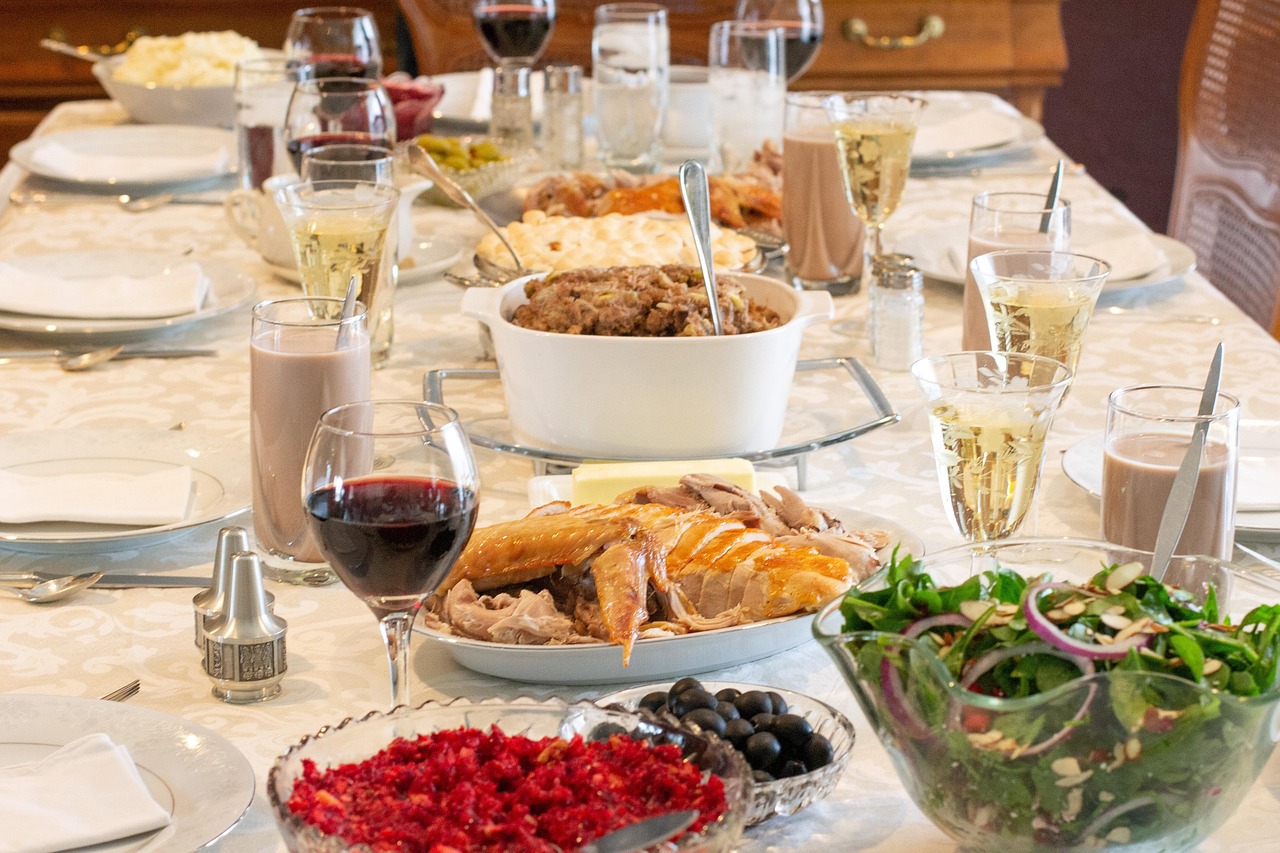
Every Thanksgiving there’s a moment around two-thirty when my kitchen runs out of oven. The turkey has the big box, the rack is pushed as low as it goes, and on the counter beside me sit a tray of rolls that still need twelve minutes, a sweet potato casserole that needs twenty, and a pie my sister-in-law brought “just to warm up.” For years I played oven Tetris with all of it, swapping pans in and out and letting the bird’s heat escape every time I opened the door. Then my team and I started treating the countertop oven as a real second oven, and the afternoon got quiet.
This year a lot of you are asking the same question in my inbox, and it’s a fair one with the early Black Friday prices already showing up: do I buy one of the new air-fryer toaster ovens, or is a plain toaster oven enough to catch the overflow? I’ve cooked holiday sides in both kinds for a lot of Novembers now, so let me walk you through how I’d decide, what to measure before you click anything, and the small kit that makes either one pull its weight on the big day.
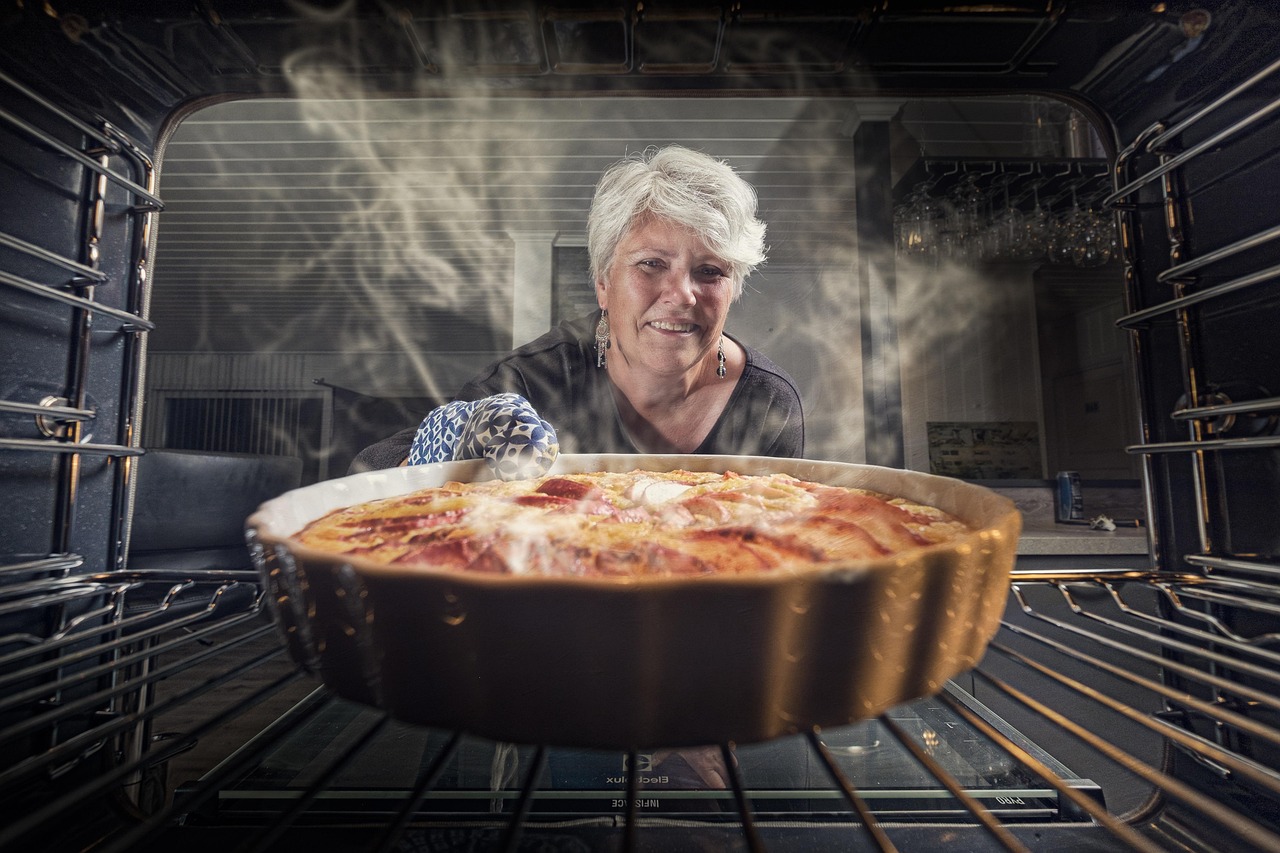
What a Second Oven Really Does on Thanksgiving Day
Let’s be honest about the job first, because it decides everything else. A countertop oven on Thanksgiving is not roasting the turkey. It’s the relief pitcher. It warms rolls, bakes one casserole at a time, re-crisps the stuffing top, toasts the pecans for the salad, and keeps a pie warm while the table clears. Almost every one of those jobs fits in an eight-inch square dish or a quarter sheet pan, and almost every one of them happens at 325 to 400 degrees.
That matters because it means you don’t need the biggest, fanciest machine on the shelf. You need a box that holds a steady temperature, fits the two or three dishes you actually make, and doesn’t trip a breaker when the coffee maker kicks on. The rest, the twelve cooking modes and the app and the dehydrate button, is nice, but it isn’t why you’re buying it in November.
When I sketched out my one-oven Thanksgiving plan last month, the countertop oven showed up in nearly every hour of the schedule. That’s when I realized I’d been underrating it for years.
The Honest Difference Between the Two Is Mostly the Fan
Here’s the thing the boxes don’t say plainly. An air-fryer toaster oven is a convection toaster oven with a stronger fan and a mesh basket. That’s most of it. A plain convection toaster oven has a fan too, but it spins slower, so it browns more gently and evenly and takes a few minutes longer to get things really crisp. A truly plain toaster oven, with no fan at all, cooks by radiant heat from the top and bottom elements, the way your grandmother’s did.
Test kitchens and reviewers say the same thing I’ve seen at my own counter: the faster fan is wonderful for anything you want crunchy, like roasted Brussels sprouts, crispy potatoes, or wings. It’s less wonderful for things that should rise gently, because a strong fan can dry out the top of a custard pie or brown a casserole before the center is hot. The best air-fryer models solve that by letting you turn the fan down or off. The cheaper ones often don’t, and that’s the single feature I’d check before I’d look at anything else on the spec sheet.
The other real difference is the basket. Food sits on mesh, so hot air hits the bottom as well as the top. If you only cook in dishes on the holidays, the basket barely matters. If you want the green beans or the sprouts to come out shatter-crisp while the turkey rests, it matters a lot.
When a Plain Toaster Oven Is All You Need
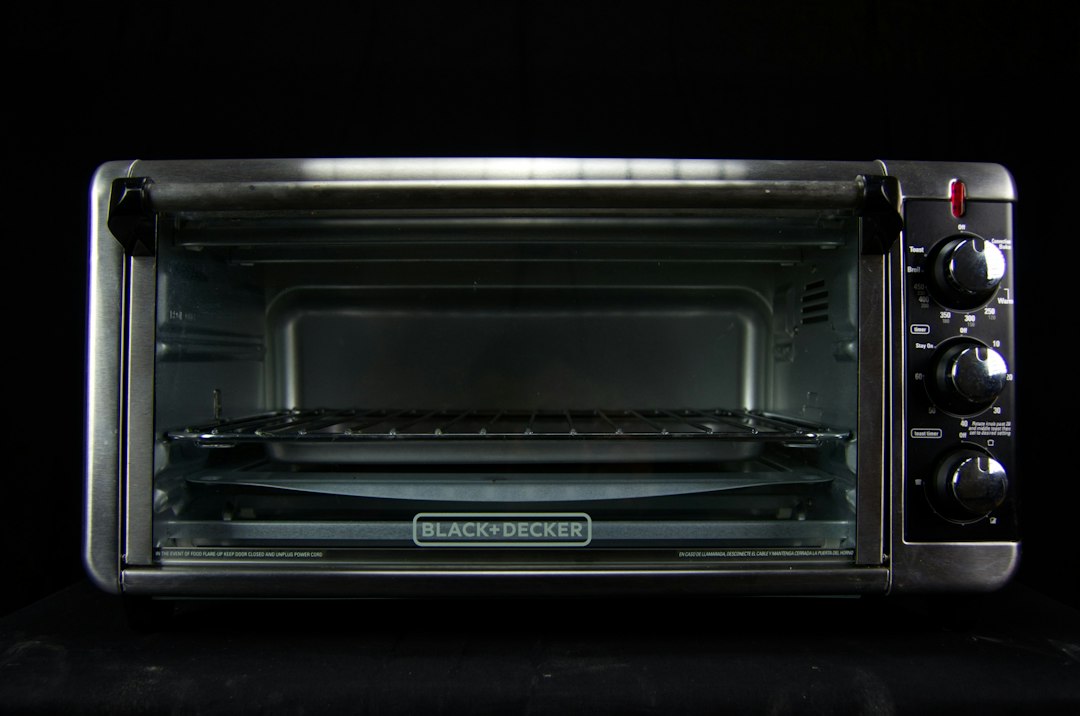
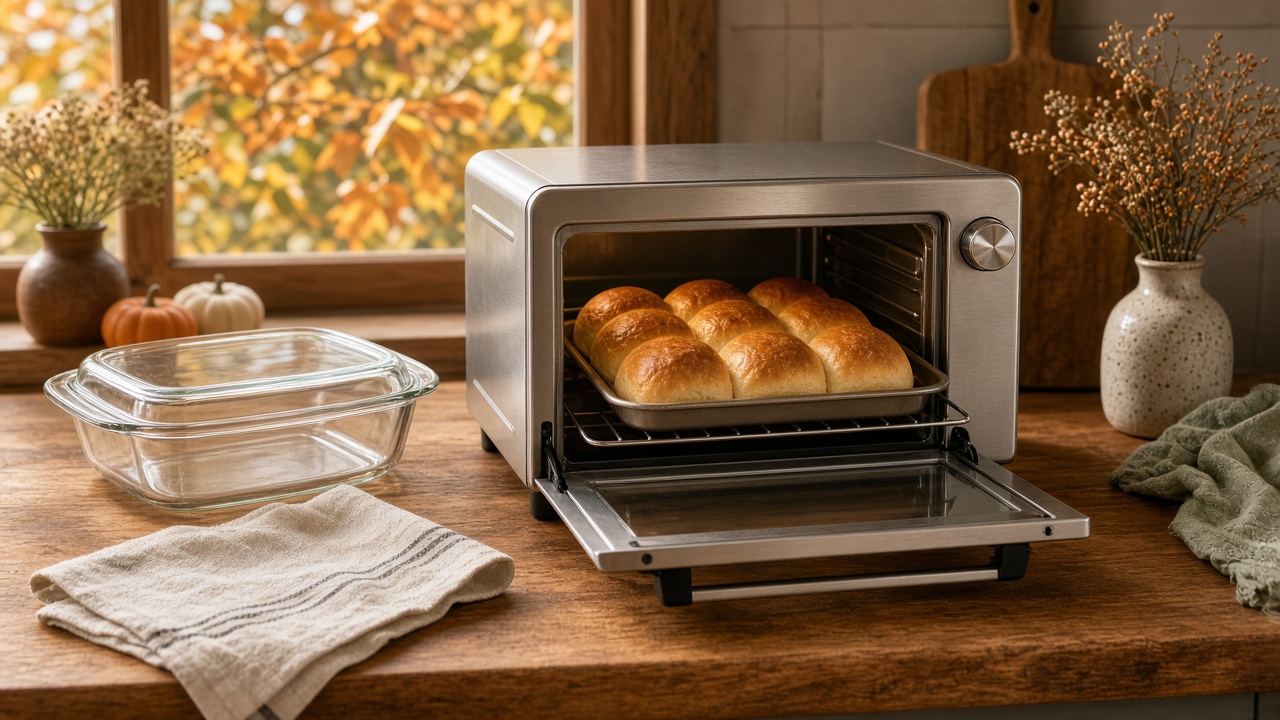
If your overflow list is rolls, one casserole, and warming the pie, a solid convection toaster oven will do it all, and you’ll save a hundred dollars or more. I kept a basic dial model on my counter for years, and it never once let me down on Thanksgiving. The BLACK+DECKER Extra-Wide Convection Toaster Oven is the kind I mean: simple knobs, a gentle fan, and an interior wide enough for a 9×13 pan in most models, which is rare at that price.
Dial models have one quiet advantage on a busy day. There’s no menu to scroll and no beeping when a guest wanders past and bumps a button. You turn it to 350, set the timer, and walk away. When my nephew was on roll duty last year, he needed exactly zero instructions, and that’s worth something when twelve people are talking at once.
The trade-off is accuracy. Inexpensive toaster ovens often run hot or cold by twenty-five degrees or more, and the dial markings are approximate at best. That’s an easy fix, and I’ll get to it in the kit section, but go in knowing it.
When the Air-Fryer Model Earns Its Bigger Price
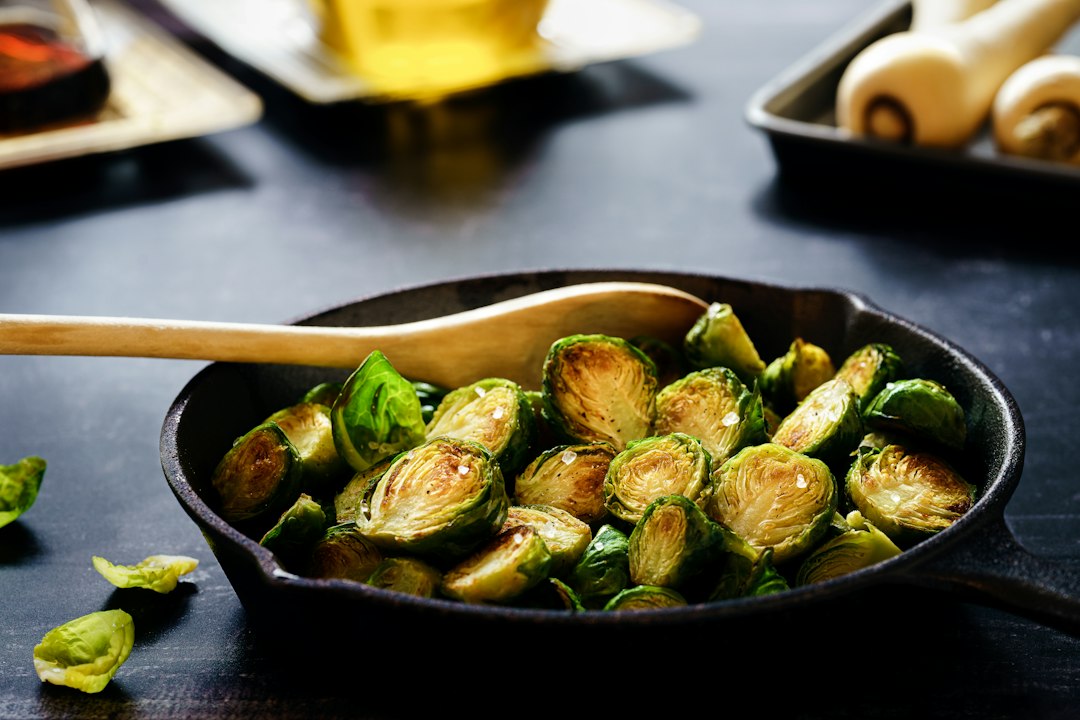
Here is where I’d spend more. If you love crispy sides, if you cook for more than eight, or if this oven is going to work hard the other 364 days of the year, an air-fryer toaster oven pays you back. The faster fan means a pan of halved sprouts comes out blistered in about fifteen minutes, and the larger models fit a lot more than people expect.
The one I’d recommend to most of my readers is the Breville Smart Oven Air Fryer Pro. It’s the rare machine that’s both a genuinely good toaster oven and a genuinely good air fryer, and the fan speed is adjustable, so I can turn it down for the sweet potato casserole and crank it up for the potatoes. It’s not cheap, and it’s big, but it’s the one I’d keep if I could only have one countertop oven.
If you want something with a little more horsepower for a crowd, the Ninja Prestige Smart XL Air Fryer & Countertop Oven has been showing up at sharp discounts this month, and its built-in thermometer is genuinely handy for a small roast or a turkey breast on the side. For a mid-priced pick, the Cuisinart TOA-70 Air Fryer Toaster Oven is the workhorse I see in more friends’ kitchens than any other. It’s a little loud on air fry, and the fan isn’t adjustable, but it’s simple, sturdy, and roomy.
If you’ve already got a pod-shaped air fryer, don’t feel you need both. I wrote about the five Thanksgiving sides I hand off to the air fryer, and a basket fryer plus a cheap toaster oven covers most of what one fancy combo does. The combo wins on counter space and on dishes, because a basket can’t hold an 8×8 casserole.
Measure Before You Buy: My Pan Test
This is the step almost nobody does, and it’s the reason half the countertop ovens I see get returned in December. Pull out the two dishes you’ll actually use on Thanksgiving and measure them, handles included. Then compare that number to the oven’s usable interior, not the outside dimensions on the box. A “fits a 12-inch pizza” oven can still refuse your grandmother’s oval casserole because the handles stick out.
My own rule: the oven has to take a quarter sheet pan and an 8×8 baking dish, one at a time, with the door closing cleanly. That’s it. A Nordic Ware Naturals Quarter Sheet Pan is the size I build around, because it holds two dozen rolls or a full batch of roasted vegetables and slides into almost every mid-size countertop oven. For casseroles, a Pyrex 8-Inch Square Glass Baking Dish with a lid lets me assemble on Wednesday, chill overnight, and slide it straight in on Thursday.
One note on glass: in a small oven the top element sits close, so leave at least two inches between the dish and the heating rod, and never put a fridge-cold glass dish into a fully preheated oven. Let it sit on the counter for twenty minutes first.
If counter space is the real problem, look at the flip-up designs. The Ninja Foodi SP101 Flip-Up Air Fry Countertop Oven stands on its end against the backsplash when you’re done, which takes up about half the footprint. It’s wide and shallow, so it’s brilliant for sheet-pan sides and rolls but too short for a deep casserole or a tall pie. Measure the height of your deepest dish before you fall in love with it.
The Small Kit That Makes a Countertop Oven Holiday-Ready
Whatever you buy, these few things turn it from a toast machine into a real second oven. None of them are glamorous, and all of them are cheap compared with the oven.
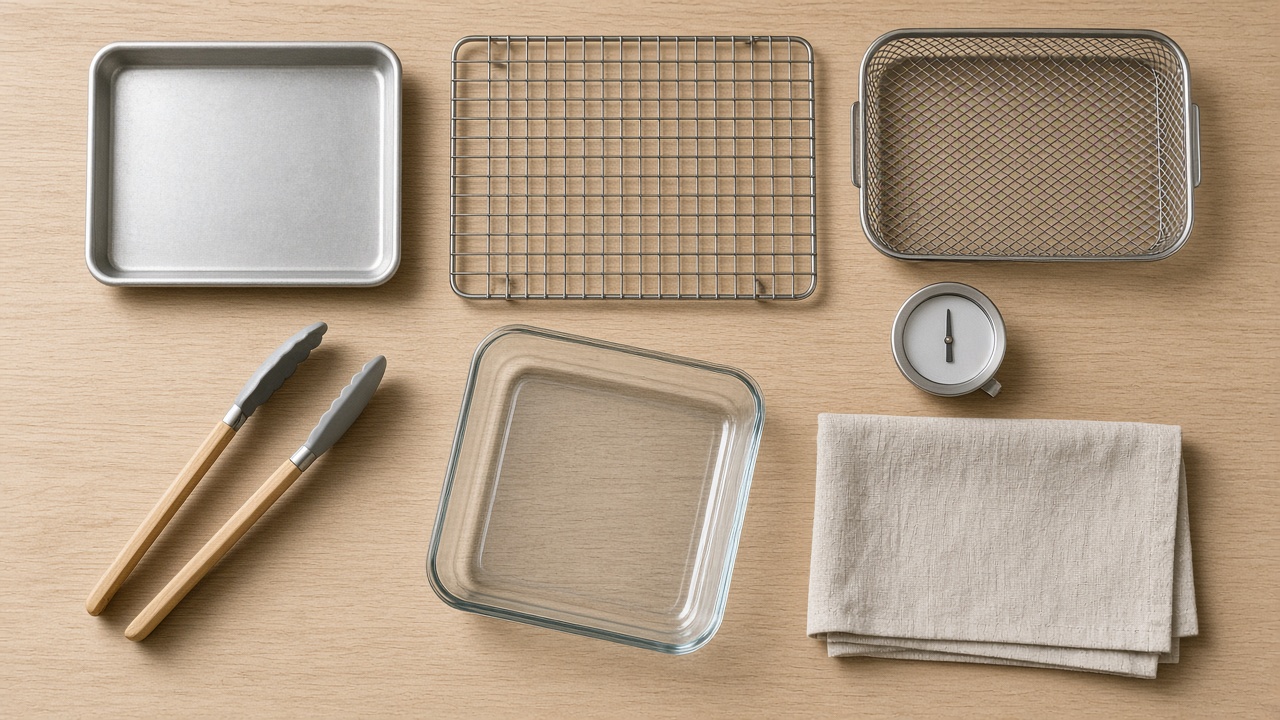
- An oven thermometer. This is the one I won’t skip. A Rubbermaid Commercial Oven Monitoring Thermometer hangs from the rack and tells you what the dial won’t. My old toaster oven ran thirty degrees hot, and once I knew that, my rolls stopped scorching on the bottom. If you want the full story on why I trust a thermometer over a timer, it’s in my thermometer guide.
- A rack that fits the pan. A Checkered Chef Quarter Sheet Cooling Rack set into a quarter sheet pan becomes a makeshift air-fry tray in a plain toaster oven. It’s not as fast as a real basket, but it gets the stuffing top crisp.
- Short tongs. Long tongs are clumsy in a small box. OXO Good Grips 9-Inch Silicone Tongs reach in without my knuckles getting near the top element.
- Somewhere hot to land. Countertop ovens put food at counter height, which means hot pans come out right next to the cutting board. A stack of Silicone Trivet Mats lives beside mine all November.
One more practical note my team insists I include every year. Most countertop ovens pull around 1,800 watts, which is close to the limit of a standard kitchen circuit on its own. Give it an outlet that isn’t shared with the electric kettle or the stand mixer, and never run it off a power strip or extension cord. If the lights flicker when it heats up, move it.
My Thanksgiving Overflow Schedule for the Small Oven
Here’s roughly how I run the countertop oven on the day itself, working back from a four o’clock dinner. Adjust to your own menu, but notice that it’s never doing two jobs at once.
- Noon: Toast pecans for the salad and walnuts for the green beans, 350 degrees, eight minutes. Then let it cool.
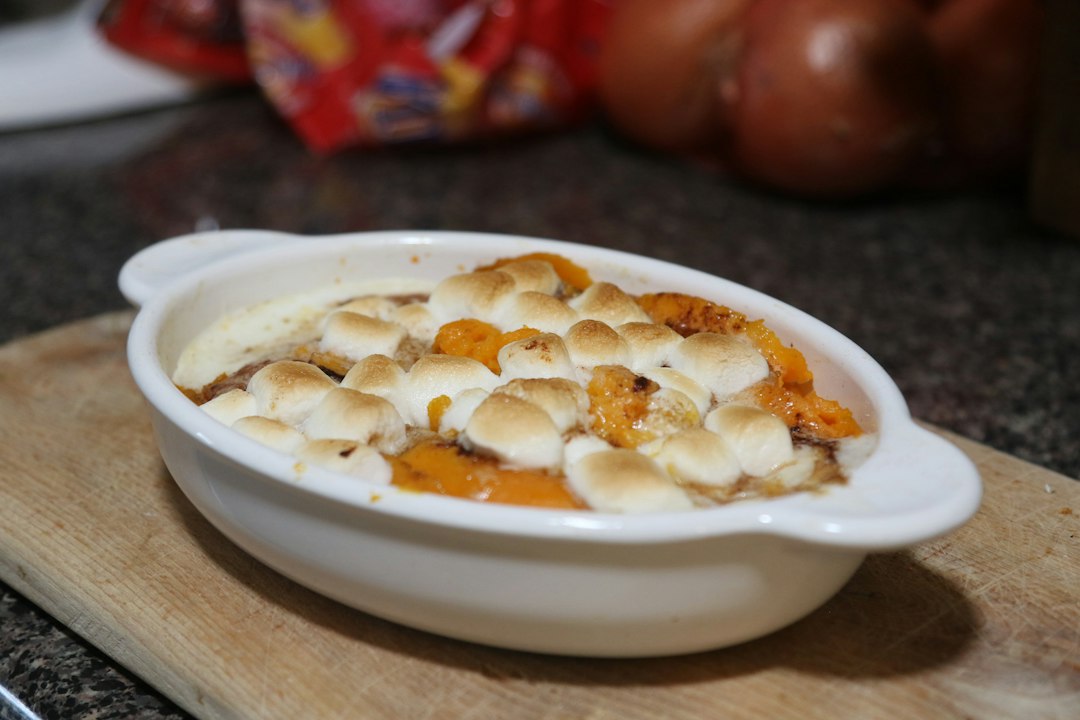
- 2:30: Sweet potato casserole goes in, covered, at 350. It’s assembled from Wednesday, so it only needs to heat through.
- 3:00: Uncover the casserole for the topping to brown. If you’re using marshmallows, this is when you stand there and watch, because a small oven browns them fast.
- 3:20: Casserole out, covered with foil and a towel. Stuffing in on the top-crisping job, or sprouts on air fry if you have the fan for it.
- 3:45: Rolls in for their final warm-up while the turkey is carved.
- After dinner: Pie in at 300 for ten minutes while the table clears.
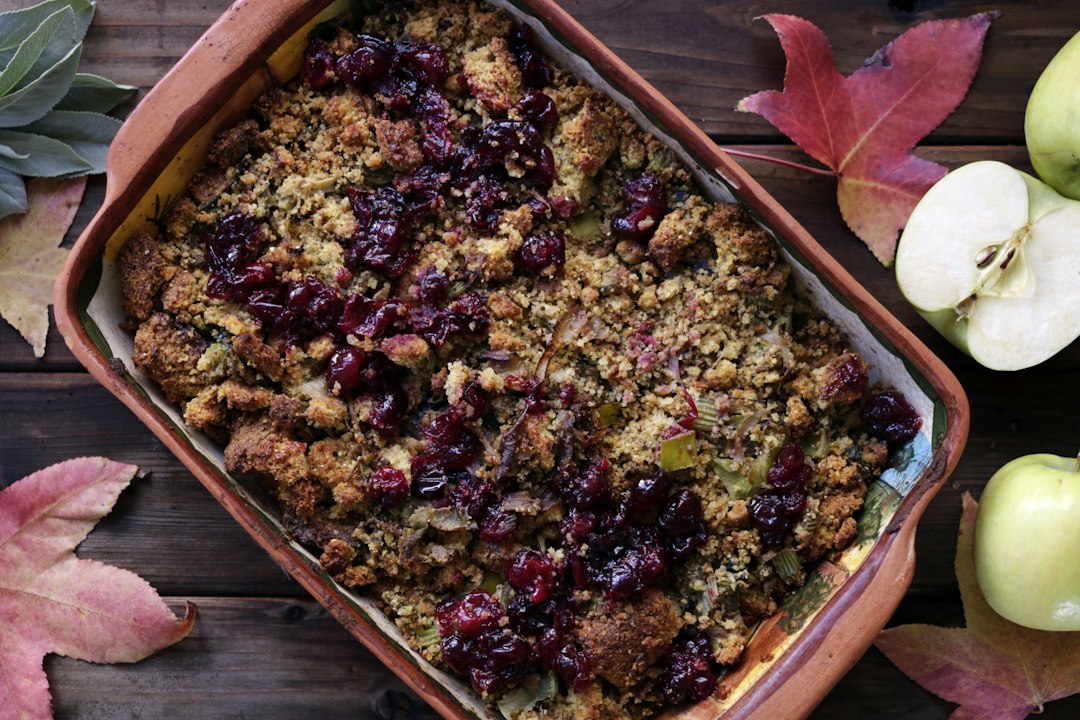
If you’re working with a smaller countertop oven, swap the stuffing for whatever needs it most, and let the big oven handle the rest once the turkey comes out to rest. That forty-minute rest is a gift, and the full-size oven is free during all of it.
I first worked out a version of this routine back in the summer, when my wall oven was tied up with a pork shoulder and I had to trust the toaster oven with real cooking. Thanksgiving just raised the stakes.
Reading the Sale Tags Without Getting Burned
Countertop ovens are some of the most heavily discounted kitchen appliances every November, and this year is no exception. In the past week I’ve seen the Ninja flip oven around $150, the Ninja Prestige near $250, and the Cuisinart combos anywhere from about $100 to $160 depending on the retailer and model. Prices move every day between now and Black Friday on November 27, so treat those numbers as a guide, not a promise.
Before I buy any appliance on sale, I check its price history, because a “40 percent off” banner is meaningless if the list price was inflated last month. My colleague over on the tech site wrote up the ten-minute price check he runs on every Black Friday deal, and it works just as well on a toaster oven as it does on a laptop.
And one more test I’d apply: if you’d still want it at full price, the sale is a bonus. If you only want it because it’s on sale, put it back. A countertop oven you don’t use takes up a lot of counter.
My Short List for This Thanksgiving
If you only skimmed to this part, I understand, and here’s where I’d land for most kitchens:
- Best overall air-fryer oven: Breville Smart Oven Air Fryer Pro, for the adjustable fan and even baking.
- Best for big crowds: Ninja Prestige Smart XL Air Fryer & Countertop Oven, for capacity and the built-in thermometer.
- Best mid-price combo: Cuisinart TOA-70 Air Fryer Toaster Oven, a dependable all-rounder.
- Best for small counters: Ninja Foodi SP101 Flip-Up Air Fry Countertop Oven, as long as your dishes are shallow.
- Best plain toaster oven: BLACK+DECKER Extra-Wide Convection Toaster Oven, for rolls, casseroles and pie with no fuss.
- Don’t skip: a Rubbermaid Commercial Oven Monitoring Thermometer and a Nordic Ware Naturals Quarter Sheet Pan, whichever oven you pick.
The best second oven is the one that fits your dishes, holds its temperature, and lets you stop juggling pans at two-thirty on Thanksgiving afternoon. Buy for the menu you actually cook, measure twice, put a thermometer inside, and you’ll wonder how you ever hosted without it. And when the last plate of pie goes out warm while the big oven is already cooling, you’ll know exactly what that little box was worth.