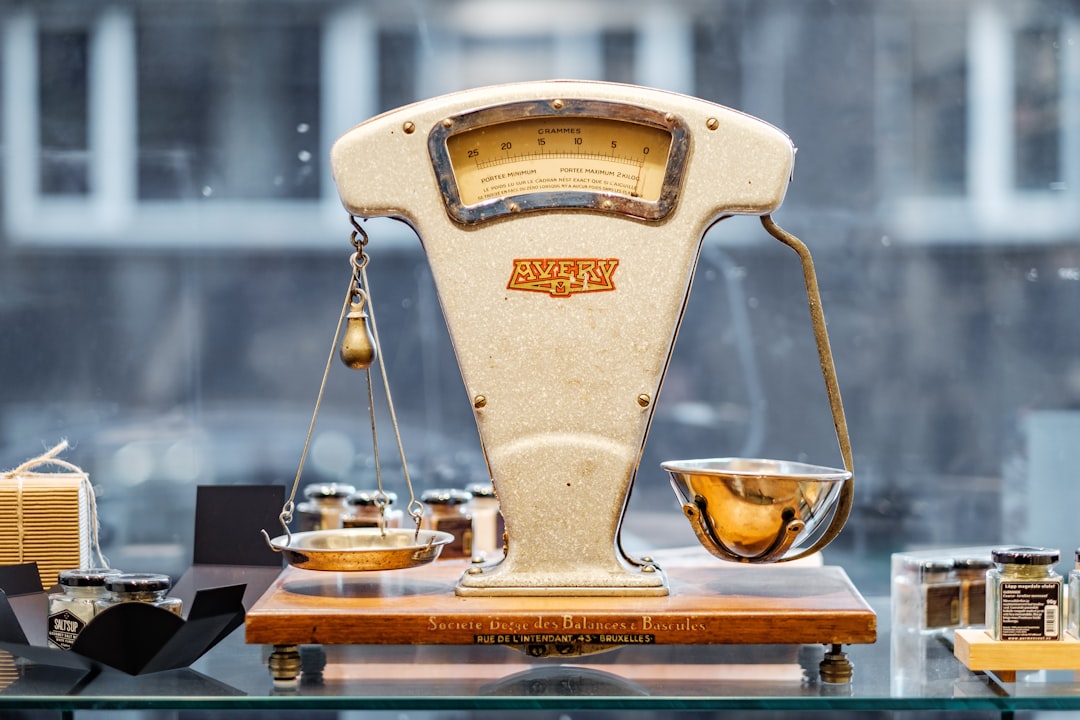
I need to confess something that would have horrified every woman in my family who taught me to cook: for the first fifteen years of my kitchen life, I measured everything by volume. Cups, spoons, the occasional “that looks about right” eyeball. My grandmother weighed her flour on an ancient balance scale — I watched her do it a thousand times — and somehow I still convinced myself that a measuring cup was good enough.
It wasn’t. And if you’re still scooping flour into a cup and leveling it off with a butter knife, I promise you’re making things harder than they need to be. A good digital kitchen scale is the single most transformative tool I’ve added to my kitchen in the last decade, and I’ve added a lot of tools. Here’s why — and which ones are actually worth your money.
Why Weighing Ingredients Changes Everything
Here’s the thing nobody tells you about measuring cups: they lie. Not intentionally, but the way you scoop flour can change the amount by as much as 20%. Dip and sweep? You’ve got a dense cup. Spoon and level? Lighter. Sift first? Totally different. When my sourdough bread was inconsistent for an entire summer — gorgeous one week, a sad brick the next — the culprit was my measuring cup, not my technique.
Once I started weighing ingredients in grams, my baking consistency went through the roof. Same bread, same recipe, same results — every single time. Pie crusts became flaky and predictable. My chocolate chip cookies stopped spreading into one giant puddle on some batches and staying puffy on others. A scale that measures in single-gram increments gives you control that no measuring cup can match.
But it’s not just baking. Portioning ground beef for burgers, dividing pizza dough into equal balls, measuring pasta so I stop cooking enough for a small army — the scale gets used every single day in my kitchen, often before the stove even goes on.
What to Look For in a Kitchen Scale (Beyond Just Accuracy)
After owning somewhere north of eight kitchen scales — some brilliant, some maddening — I’ve learned that accuracy is just the starting point. The real question is whether the scale fits into your daily rhythm without becoming annoying. Here’s what actually matters.
Capacity Meets Precision
Most home cooks think they need a scale that goes up to eleven pounds, and honestly, that’s a safe bet. But the real number to watch is the precision. A scale that reads in 1-gram increments is fine for most cooking, but if you’re into baking or coffee brewing, you’ll want one that goes to 0.1 grams for small measurements like yeast, salt, or espresso grounds. I keep two scales — a big workhorse for doughs and bulk ingredients, and a tiny precision scale for things like spices and levain.
The Display That Doesn’t Disappear Under Your Bowl
This sounds small until you’re trying to read the weight of a giant mixing bowl full of bread dough and the display is completely hidden. Pull-out displays — like the one on the OXO Good Grips scale — solve this brilliantly. The display slides out from under the platform so you can always see the numbers. It’s the kind of design choice that sounds unnecessary until you use it once and wonder how you lived without it.
Tare Function (And Why It’s Non-Negotiable)
The tare button resets the scale to zero with whatever container is on it, so you can weigh just the ingredient — not the bowl. Every scale has one, but not all tare buttons are created equal. The best ones respond instantly and let you tare multiple times in the same bowl. This is how I build recipes: place bowl, tare, add flour, tare, add water, tare, add salt. One bowl, one scale, zero mess. If you’re looking for a scale, make sure the tare function is responsive and easy to press.
The Scales I’ve Loved (And a Few I’ve Left Behind)
The Everyday Champion: OXO Good Grips 11-Pound Stainless Steel Scale
This is the one that lives on my counter permanently. The pull-out display I mentioned earlier? That’s OXO’s signature move, and it works. It measures in grams, kilograms, ounces, and pounds, switches between them with one button, and the stainless steel platform wipes clean in two seconds. The display is backlit with bright digits on a dark background, which means I can read it even in my dim kitchen at six in the morning when I’m mixing dough before coffee. At around fifty dollars, it’s not the cheapest option, but it’s the one I reach for every day without thinking. I’ve written before about multi-tasking tools that earn their counter space, and this scale is firmly in that category — it justifies every inch.
The Budget Hero: Ozeri Pronto Digital Multifunction Scale
If you told me I could only spend fifteen dollars on a kitchen scale, I’d buy the Ozeri Pronto without hesitation. It’s been a Wirecutter budget pick for years for good reason: it’s fast, accurate enough for everyday cooking, and the wide circular platform holds a surprising variety of containers. Is it as polished as the OXO? No. The display can be tough to read under large bowls, and the buttons feel a bit clicky. But for fifteen bucks, it’s an absurd amount of functionality. I keep one in my camper kitchen.
The Precision Pick: Greater Goods Nutrition Scale
When I started getting serious about bread baking and needed to measure things like 0.3 grams of instant yeast, the Greater Goods scale became my best friend. It reads down to 0.1 grams and has a compact platform that’s perfect for small bowls and portion cups. It also comes with a nutrition facts database built in, which I don’t use often but is a nice bonus if you track macros. The small footprint means it stores in a drawer easily, which matters more than you’d think when counter space is at a premium.
How I Actually Use My Scale (Recipes Included)
Let me walk you through a typical Saturday morning in my kitchen, because I think the scale’s real value shows up in the mundane, everyday stuff — not just fancy baking projects.
I start with coffee. I weigh my beans — 18 grams for a single pour-over — because eyeballing coffee is a crime against mornings. The scale with a built-in timer is ideal here, but any scale works.

Then comes pancake batter for my family. Instead of dirtying measuring cups, I place my mixing bowl on the scale, tare it, and pour ingredients directly: 240 grams of buttermilk, 1 large egg (cracked and weighed — about 50 grams), 130 grams of flour, 20 grams of sugar, 6 grams of baking powder, 3 grams of salt. One bowl. No measuring cups to wash. The batter is perfect every time, and I’m done cleaning up before the first pancake even flips.
For dinner, I portion out proteins. Four ounces of salmon per person, measured on a piece of parchment on the scale. No guesswork, no overeating, no waste. If you’ve ever tried to eyeball four ounces of chicken breast, you know it’s basically impossible — and that’s before you account for the fact that chicken breasts seem to come in roughly seventeen different sizes these days.
The Case for Two Scales (Hear Me Out)
I know what you’re thinking — Elena, you’ve lost it, nobody needs two scales. And maybe you’re right. But hear me out. A large-capacity scale (5–11 pounds) for everyday cooking and dough work, plus a small pocket-sized precision scale for spices, yeast, and coffee, gives you the best of both worlds. The big one stays on the counter. The small one lives in a drawer and comes out for detail work. Together, they cost less than one mediocre blender, and you’ll use them more. I talked about this same philosophy when I shared the kitchen frustrations I finally stopped tolerating — sometimes the solution is simpler (and cheaper) than you expect.
What About Smart Scales?
You’ve probably seen Bluetooth-connected kitchen scales that sync with apps to track nutrition, calculate recipes, and generally try to turn your kitchen into a tech demo. I’ve tested a few, and here’s my honest take: they’re fun for about a week. Then the app needs updating, the Bluetooth won’t connect, and you’re back to just reading the display like a normal person. If you love gadgets, go for it. But if you just want a reliable tool that works every time without a software update, stick with a straightforward digital scale with a clear display and responsive buttons.
My Top Tips for Scale Owners (New and Veteran)
First, always weigh in grams. Ounces are fine for portioning meat, but for any kind of baking or recipe development, grams are king. The math is cleaner, the precision is better, and every serious recipe on the planet uses metric weights.
Second, keep your scale flat. This sounds obvious, but I’ve watched people try to use scales on cutting boards, dish towels, and once — I wish I were making this up — a folded newspaper. The surface underneath affects accuracy more than you’d think.
Third, replace the batteries before they die completely. Most digital scales run on flat watch batteries or AAAs, and they get quirky — inaccurate readings, flickering displays — before they quit entirely. I swap mine every six months whether they need it or not.
Fourth, if you’re converting your favorite recipes from volume to weight, start with King Arthur Flour’s ingredient weight chart. It’s free, it’s comprehensive, and it’s what I used when I first made the switch. Life-changing.
And finally — this one’s personal — buy a silicone cover or protective sleeve if your scale didn’t come with one. Flour gets everywhere. Batter happens. A protected scale is a happy scale. After spending months fixing the dead zones in my kitchen, I’ve learned that protecting the tools you use most is just as important as organizing them well.
The Bottom Line
A kitchen scale costs less than a pizza delivery and will make you a better cook almost immediately. It removes the guesswork from baking, simplifies cleanup, helps with portion control, and — this is the part I love most — makes you feel confident. When you know your measurements are exact, you can focus on technique, flavor, and the joy of cooking instead of wondering whether that was really a cup of flour or a cup and a half.
My grandmother was right about the scale, as she was about most things in the kitchen. It took me fifteen years to listen, but now that I have, I can’t imagine cooking any other way. If there’s one small purchase that pays for itself in better meals and fewer kitchen failures, this is it.
One thought on “The $15 Tool That Made Me Stop Guessing in the Kitchen (And Why You Need a Digital Scale Yesterday)”