
My grandmother’s kitchen had exactly one electric appliance: a hand mixer with a frayed cord that she’d owned since the Nixon administration. She made everything with it — biscuits, pie dough, birthday cakes, even the whipped cream that crowned her legendary coconut layer cake. So when I brought home my first stand mixer at twenty-three, fresh out of culinary school and convinced I needed every gadget on the market, she gave me that look. The one that said, “And what exactly is wrong with your two arms?”
Twenty years later, I get it. I really do. But here’s what my grandmother never had the chance to discover: the right stand mixer doesn’t replace your hands — it frees them. It becomes the reliable sous chef that handles the heavy lifting while you focus on the art. And after testing more stand mixers than I care to count (my husband has started referring to our kitchen counter as “the dealership”), I have some strong opinions about which ones are actually worth your money.

The Question Nobody Asks Before Buying a Stand Mixer
Here’s the thing most buying guides skip entirely: before you spend a single dollar, you need to have an honest conversation with yourself about what you actually bake. Not what you plan to bake. Not what your Pinterest board suggests you’ll bake. What you actually pull out of your oven on a regular Tuesday.
If the answer is “the occasional birthday cake and holiday cookies,” your needs look very different from someone who makes sandwich bread every week or has a sourdough habit that borders on obsession. The stand mixer that makes your best friend swoon might leave you frustrated, and vice versa. I learned this the hard way when I recommended a certain beloved 5-quart tilt-head mixer to my sister, only to watch her struggle with double batches of her famous cinnamon roll dough every Christmas morning. The motor groaned. The head wobbled. I owed her an apology and a 7-quart bowl-lift model wrapped in a very large bow.
KitchenAid Artisan: The Gateway Mixer
Let’s start with the one everyone knows. The KitchenAid Artisan Series 5-Quart Tilt-Head Stand Mixer is the Honda Civic of stand mixers — reliable, widely available, endlessly customizable, and perfectly adequate for about 80% of home cooks. It comes in roughly seven thousand colors (I may be exaggerating, but only slightly), which means it can match any kitchen aesthetic from “minimalist Scandinavian” to “my grandmother’s turquoise fever dream.”
The tilt-head design is genuinely lovely for everyday use. You pop the head back, add ingredients, lock it down, and go. The 5-quart bowl handles a single batch of most standard recipes without breaking a sweat — cake batter, cookie dough, frosting, mashed potatoes. The ten speeds give you everything from a gentle stir to a vigorous whip, and the planetary mixing action (the attachment moves one way while the beater spins the other) ensures everything gets incorporated without you having to scrape down the bowl constantly.

Where the Artisan starts to show its limitations is with heavy, dense doughs. If you’re making multiple loaves of bread dough or tackling a triple batch of thick cookie dough, the 325-watt motor will let you know it’s working hard. You’ll feel the head wanting to lift, and after about eight minutes of kneading bread dough, the housing gets warm to the touch. Not dangerously hot — just persnickety, like a small dog that’s been asked to carry a grocery bag. For most people, though, this is more of a theoretical concern than a practical one.
When You Need More Muscle: The Bowl-Lift Contenders
If you’ve ever watched your tilt-head mixer vibrate across the counter while kneading a stiff bread dough, you’re ready for the bowl-lift conversation. Bowl-lift mixers keep the mixing head stationary and raise the bowl up to the beaters — a fundamentally more stable design that translates to less wobble, more power transfer, and significantly better performance with heavy doughs.
The KitchenAid 7-Quart Bowl-Lift Stand Mixer is the one I reach for when I know I’m in for a long baking day. With 1.3 horsepower (that’s significantly more than the Artisan’s wattage suggests), it powers through bread dough like it’s not even trying. The larger bowl capacity means I can double recipes without playing the “will it overflow?” game, and the bowl-lift mechanism keeps everything rock-solid stable even at the highest speeds.
But KitchenAid isn’t the only player in the heavy-duty arena anymore. The Bosch Universal Plus Stand Mixer has developed a fiercely loyal following, especially among bread bakers, and for good reason. Its open-bowl design means you can add ingredients while the mixer is running without tilting or removing anything — a small convenience that becomes surprisingly addictive. The Bosch uses a drive system that’s different from KitchenAid’s planetary action, and many bakers find it incorporates ingredients faster and more thoroughly, particularly for large batches of dough.
The trade-off? The Bosch doesn’t have the same visual appeal. It looks a bit like a small washing machine had a baby with a food processor. If you want your mixer to double as kitchen art (and there’s absolutely nothing wrong with that — colorful cookware and appliances have earned their decorative moment), the KitchenAid still wins that contest hands down.
The Budget Question: What About Affordable Options?
Not everyone needs — or can afford — a mixer that costs as much as a car payment. The Hamilton Beach 4-Quart Stand Mixer exists for exactly this reason. At a fraction of the price of a KitchenAid, it handles basic mixing tasks competently: cake batters, cookie doughs, whipped cream, and light bread doughs. The tilt-head design is easy to use, it comes with the standard three attachments (flat beater, dough hook, whisk), and it won’t make you wince when your teenager uses it to make brownies at midnight.
I’d be dishonest if I said it performs at the same level as the premium options. The motor is noticeably less powerful, the build uses more plastic, and the mixing action isn’t quite as thorough — expect to scrape the bowl more often. But for someone who bakes a few times a month and wants to step up from a hand mixer without committing to a major investment? It’s a perfectly reasonable starting point. You can always upgrade later, and honestly, learning to bake on a simpler machine teaches you to pay attention to texture and consistency in ways that a more powerful mixer might let you gloss over.
Another solid mid-range option is the Cuisinart 5.5-Quart Stand Mixer, which splits the difference between budget and premium. It offers 12 speeds (more than KitchenAid’s ten), a generous bowl size, and a surprisingly robust motor for the price point. The tilt-head mechanism feels sturdy, and the included accessories cover all the basics. Where it falls slightly short is in the long-term durability department — after several years of heavy use, the gear mechanism can develop a slight grinding sound that the all-metal KitchenAid transmission simply doesn’t have. Still, for the price, it’s a genuinely competitive option.
The Attachment Ecosystem: Where KitchenAid Pulls Ahead
This is the part of the conversation where KitchenAid’s decades of market dominance really shows. The attachment ecosystem for KitchenAid stand mixers is staggeringly vast. We’re talking meat grinders and pasta makers, food grinders, spiralizers, ice cream bowls, juicers, grain mills, and even a sifter and scale attachment that weighs ingredients directly into the bowl. It’s like the mixer is a power take-off on a tractor — the motor drives whatever you attach to it.
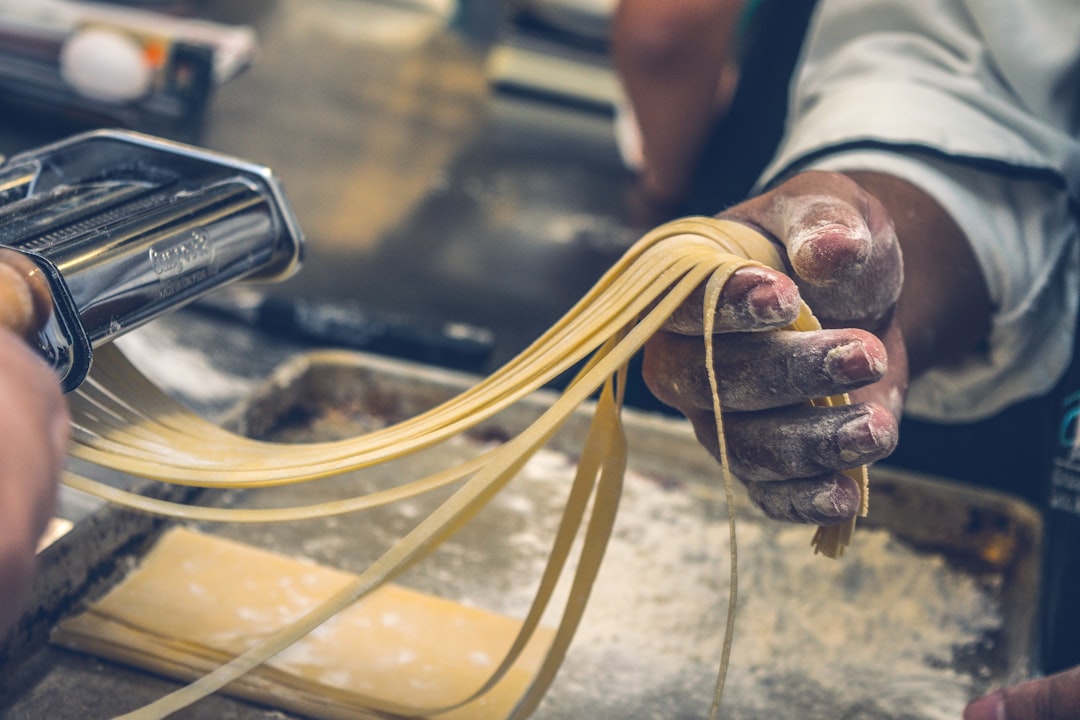
The pasta roller attachment alone has justified the purchase for several friends of mine who went from buying dried pasta to making fresh fettuccine on a weekly basis. There’s something deeply satisfying about feeding a sheet of dough through those chrome rollers and watching it emerge thin and silky, ready to be cut into ribbons. Yes, you can buy a dedicated pasta machine, but having it powered by your mixer’s motor means less cranking and more consistent results, especially when you’re working with stiff semolina dough.
If you already own other KitchenAid-compatible tools from your kitchen adventures — or if you’ve been building out your gear collection alongside other appliance investments, like the ones I wrote about in my countertop appliance guide — the attachment ecosystem makes KitchenAid the practical choice even if a competitor’s base mixer is marginally better at one specific task.
What I’ve Learned After Two Decades of Mixing
The most important thing I can tell you is this: a stand mixer is a relationship, not a transaction. The mixer you choose will be with you for years — possibly decades. My mother’s KitchenAid is older than me and still works perfectly. When you think about it that way, the price difference between models starts to look different. An extra hundred dollars spread over fifteen years of weekly baking works out to pennies per use.

That said, the most expensive mixer isn’t automatically the right one for you. If you’re primarily making cakes, cookies, and the occasional batch of whipped cream, the KitchenAid Artisan will serve you beautifully for a lifetime. If bread is your passion and you’re regularly tackling large batches, invest in the 7-quart bowl-lift or the Bosch Universal Plus. If you’re just dipping your toes into the world of stand mixers and want to see if you’ll actually use one, start with the Hamilton Beach or Cuisinart — you can always gift it to a niece or nephew when you’re ready to upgrade.

Whatever you choose, a few universal tips: always start on the lowest speed to avoid flour explosions (I still forget this sometimes, and my kitchen walls have the evidence to prove it). Don’t overfill the bowl — about two-thirds full is your sweet spot. And invest in a bowl scraper attachment or a good set of silicone spatulas to minimize the scraping you’ll inevitably need to do.
My grandmother might still roll her eyes at the whole concept. But I like to think she’d appreciate that I still use her coconut cake recipe — I just let the stand mixer handle the twenty minutes of beating she used to do by hand. Some traditions are worth keeping. The sore wrist isn’t one of them.


One thought on “Twenty Years of Stand Mixers: The Ones I Kept, the Ones I Evicted, and What Actually Matters”