There is a moment in every cook’s life when they realize they’ve been doing something the hard way for no good reason. For me, it was the summer I tried to transfer an entire pot of hot roasted tomato soup into a stand blender — in three batches, naturally — and ended up wearing about half of it on my shirt. My grandmother, who could reduce a bushel of peaches to perfectly smooth puree using nothing but a wire mesh strainer and patience I clearly didn’t inherit, would have laughed herself sick. That was the day I finally understood why immersion blenders exist, and I haven’t looked at my countertop blender the same way since.
An immersion blender — also called a hand blender or stick blender — is essentially a motor on a stick with blades at the end. You bring the tool to the food instead of the other way around. It sounds almost too simple to matter, but that one little inversion changes everything about how you cook. No transferring hot liquids in dangerous batches. No extra bowls to wash. No dragging a full-size blender out of the cabinet for a single cup of dressing. The Braun MultiQuick 7 is the one that lives in my kitchen drawer now, and I reach for it more days than I don’t.
Why an Immersion Blender Earns Its Drawer Space
I’ll be honest — I was skeptical for years. I already had a full-size blender that could crush ice into powder and a food processor that could knead bread dough. Why did I need another motorized thing taking up space? The answer came down to frequency. My countertop blender is fantastic for smoothies and margarita night, but for the small, daily tasks — emulsifying a vinaigrette, smoothing a lumpy gravy, whipping a single egg white — it was overkill. Huge, loud, annoying-to-clean overkill.
The immersion blender handles all those in-between jobs without the production number. Last week alone, I used mine to puree a pot of butternut squash soup directly on the stove, blend a morning smoothie in the cup I was going to drink it from, and whip cream for a peach cobbler. Each task took under a minute, and cleanup was a ten-second rinse under running water. Try that with your countertop blender.
The Vitamix 5-Speed Immersion Blender is the one I’d point you toward if budget isn’t a concern — that 625-watt motor means business — but there are excellent options at every price point, which I’ll walk you through.
The Five Jobs an Immersion Blender Does Better Than Anything Else

1. Blending Hot Soups Safely
This is the big one. If you’ve ever tried to blend hot soup in a standard blender, you know the terror. Steam builds pressure, lids pop, and you end up with a Jackson Pollock painting on your ceiling. An immersion blender lets you puree soup right in the pot, with no transferring, no mess, and no risk of explosion. Last summer, when I was swimming in tomatoes from the garden, my immersion blender got more use than any other tool in my kitchen — and I wrote all about that tomato canning marathon here.
The trick is to partially submerge the blender before turning it on, then use a gentle up-and-down motion. The KitchenAid Variable Speed Corded Hand Blender is particularly good here because it gives you precise control over how fast those blades spin — important when you’re dealing with a pot of something hot and precious.
2. Whipping Up Smoothies and Shakes
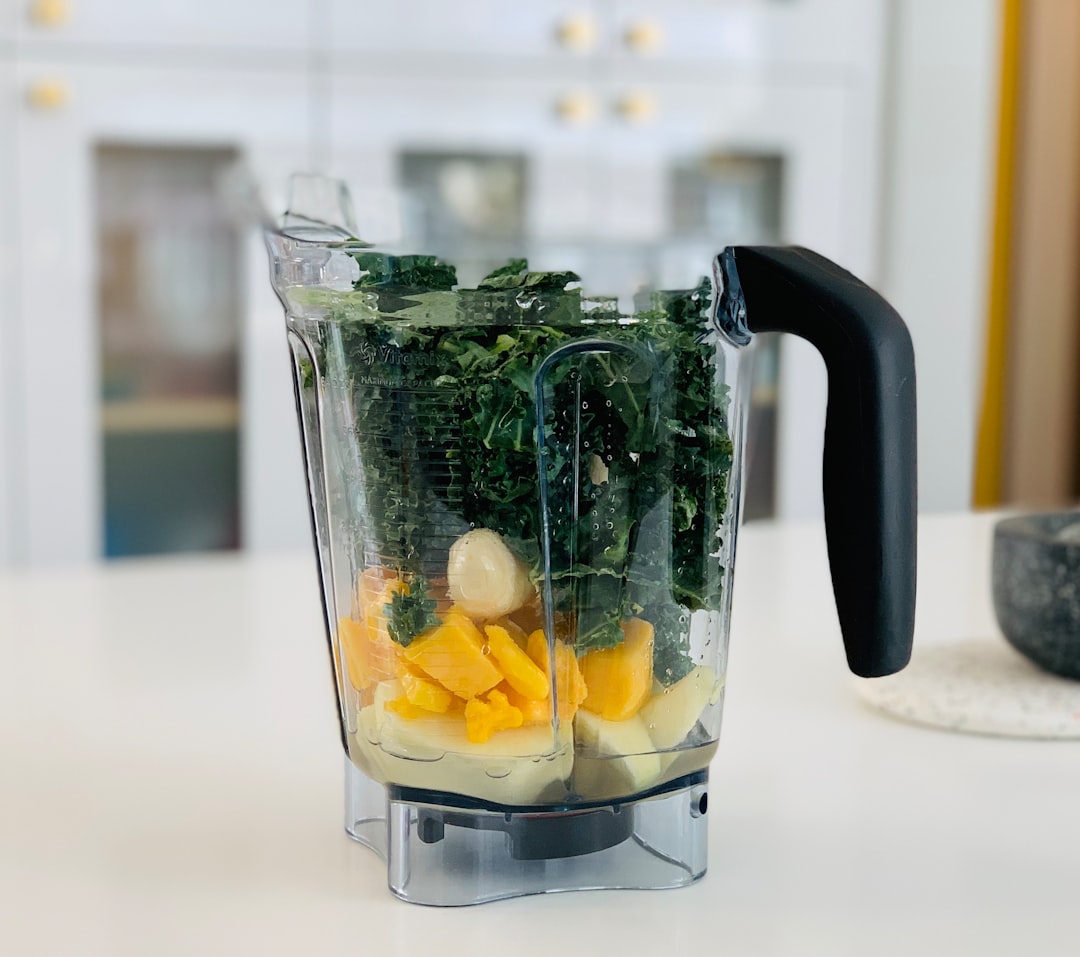
Most immersion blenders come with a tall blending cup that’s perfectly sized for a single smoothie. You throw in your fruit, yogurt, ice, and whatever else, blend for about thirty seconds, and you’re drinking straight from the cup. No need to dirty a full blender pitcher for one serving. I use this every single morning during the week when I’m too rushed to think about breakfast but too hungry to skip it.
If you’re shopping for a model specifically with smoothies in mind, motor power matters. The Turelar 5-in-1 Immersion Blender packs 1100 watts into a surprisingly compact body, which means it actually crushes ice instead of just tapping it politely.
3. Emulsifying Dressings and Sauces

This is where the immersion blender truly outperforms its bigger cousins. Making a proper vinaigrette or hollandaise by hand requires a steady stream of oil and a lot of whisking. With an immersion blender, you dump everything into a jar, hit the button, and you have a perfectly emulsified sauce in about ten seconds. Caesar dressing, mayo from scratch, warm butter sauce for fish — all of it becomes absurdly easy.
The Cuisinart Smart Stick Two-Speed is my recommendation for anyone who mostly wants a blender for sauces and dressings. It’s lightweight, affordable, and the two speeds are all you really need for most emulsifying tasks.
4. Whisking and Aerating

Many immersion blenders come with a whisk attachment, and if you’ve only ever used a hand mixer for whipping, you’re in for a pleasant surprise. The whisk attachment on a good immersion blender can whip cream, beat eggs, and fold batters — all with a footprint smaller than a coffee mug. I use mine most often for a quick batch of whipped cream to top summer berries, and it takes about forty-five seconds start to finish.
The Braun MultiQuick 5 comes with both a beaker and whisk attachment, making it a fantastic mid-range option if you want versatility without the premium price tag.
5. Making Baby Food and Small-Batch Purees

If there’s one population that benefits more than any other from immersion blenders, it’s new parents. The ability to turn whatever you’re having for dinner into baby-safe puree in seconds — without a separate appliance — is genuinely life-changing during those early months. Steam some carrots, blend them right in the pot, done. No jars of baby food to buy, no special machine, no complicated cleanup at 6 AM.
For this purpose, you don’t need the most powerful model on the market. The Bonsenkitchen Hand Blender is a solid, dependable choice that won’t break the bank and handles small pureeing tasks beautifully.
Corded vs. Cordless: Which Makes Sense for Your Kitchen?
This is the question I get asked most often, and the answer depends entirely on how you cook. Corded models are more powerful, always ready, and never need charging. They’re the workhorse choice if you blend hot soups regularly or want something that can power through tough ingredients. I’m a corded person myself — my outlet is right where I need it, and I never want to discover a dead battery mid-soup.
Cordless models, on the other hand, are perfect if your outlets are awkwardly placed, you like to cook outdoors or at the table, or you simply can’t stand one more cord in your life. The KitchenAid Go Cordless Hand Blender has genuinely impressive battery life — I used one for an entire week of cooking without needing to recharge. It uses the same rechargeable battery system as other KitchenAid Go tools, so if you already own one, you’re set.
What to Look For When You’re Shopping
After testing more immersion blenders than I care to admit, here’s what actually matters:
Motor power: Anything above 300 watts will handle most kitchen tasks. If you want to crush ice or blend thick frozen mixtures, look for 500 watts or more. The Vitamix 2-Speed Immersion Blender sits at 350 watts and is perfect for everyday use — soups, sauces, and smoothies — while their 5-speed model cranks up to 625 for serious work.
Variable speed: Two speeds will get you through most jobs, but variable speed (either a dial or a trigger-style control) gives you much more finesse. This matters most for things like hollandaise, where you want a gentle touch, versus smoothies where you want full power.
Attachments: A good whisk attachment doubles the tool’s usefulness. A chopper bowl turns it into a mini food processor. A beaker gives you a blending vessel that’s the right size for single servings. Don’t pay for attachments you won’t use, but don’t skip the whisk — it’s worth it.
Easy cleanup: The blending shaft should detach for washing. Most are dishwasher-safe on the top rack. If the shaft doesn’t detach, move on — there are too many good options that do.
The Models I’d Actually Buy With My Own Money
Here’s my honest, no-fluff ranking after a year of testing:
Best overall: The Braun MultiQuick 7 is the one I keep in my own kitchen. It hits the sweet spot of power, versatility, and price. The 21-speed control sounds excessive until you use it — being able to dial in the exact speed for a delicate sauce versus a thick soup is genuinely useful. It comes with a food processor attachment, whisk, and beaker, making it a true all-in-one tool.
Best premium: The Vitamix 5-Speed is the Ferrari of immersion blenders. If you already own a Vitamix countertop blender and love it, this is the natural companion. That 625-watt motor is in a different league — it purees things other immersion blenders can’t touch.
Best budget: The Cuisinart Smart Stick Variable Speed does 90% of what the premium models do at a third of the price. If you just want something for occasional soups and sauces, this is all the immersion blender you need.
Best cordless: The KitchenAid Go Cordless proves that battery-powered blenders have arrived. It’s powerful enough for daily use, the battery lasts surprisingly long, and it’s perfect for anyone who hates cords cluttering their counter.
How I Use Mine Every Single Week
To give you a real picture of how an immersion blender fits into daily cooking, here’s an actual week from my kitchen this month:
Monday started with a green smoothie — spinach, frozen banana, almond milk, and a spoonful of peanut butter, all blended in the beaker that came with my Braun. Tuesday was a big batch of roasted red pepper soup for dinner, pureed right in the pot. Wednesday, I made a quick Caesar dressing in a mason jar — garlic, anchovy paste, egg yolk, lemon, oil, blend for ten seconds, done. Thursday involved whipping up a quick batch of pancake batter using the whisk attachment. Friday was homemade mayonnaise, which I’d never attempted before because hand-whisking oil into egg yolk sounded like punishment.
Five days, five completely different tasks, one tool, minimal cleanup. That’s the promise of a good immersion blender, and it delivers.
The Bottom Line
If you’re on the fence about whether an immersion blender deserves space in your kitchen, I’ll make it easy for you: yes. It is the single most useful small appliance I own, and I say that as someone with a counter full of gadgets I’ve tested over fifteen years. It doesn’t replace a full-size blender for large batches or heavy-duty crushing, and it won’t knead dough like a food processor. But for the daily, unglamorous, get-dinner-on-the-table tasks, nothing else comes close.
Start with something in the middle of the price range — the Braun or KitchenAid models I mentioned are excellent starting points — and you’ll understand within a week why this unassuming wand has earned permanent real estate in kitchens around the world. Including mine, right next to that other appliance I finally stopped ignoring.
And if you’re still transferring hot soup to a blender in batches? Please stop. Your ceiling — and your shirts — will thank you.



2 thoughts on “The Kitchen Tool I Ridiculed, Then Bought Three Of: Your Complete Immersion Blender Guide”