My grandmother measured everything by feel. A handful of flour, a pinch of salt, a “splash” of buttermilk that somehow meant exactly the right amount every single time. She could tap the side of a measuring cup and know — just from the sound — whether it held enough sugar for a cake. I spent fifteen years trying to replicate that intuition, and I’m here to tell you that I cannot. What I can do, thanks to a stubborn sourdough habit and roughly eight hundred cookies, is tell you exactly which digital kitchen scale will transform your baking from “pretty good” to “how did you make this?”
It started with bread. Specifically, it started with a loaf of sourdough that came out of the oven looking like a deflated football — dense, gummy, and entirely unlike the open-crumb masterpiece I’d been chasing for months. I’d followed the recipe. I’d used the right flour. I’d timed the bulk fermentation down to the minute. But when my friend who runs a bakery in Asheville gently asked me how I was measuring my flour, I said the words that would haunt me: “I use a measuring cup.”
She didn’t laugh. She’s too kind for that. But she did sit me down and explain what every professional baker knows and most home cooks don’t: a cup of flour can weigh anywhere from 120 to 170 grams depending on how you scoop it. That’s a fifty-gram swing. In bread baking, that’s the difference between a beautiful loaf and a brick. I ordered my first digital scale that night.
Why Precision Matters More Than You Think
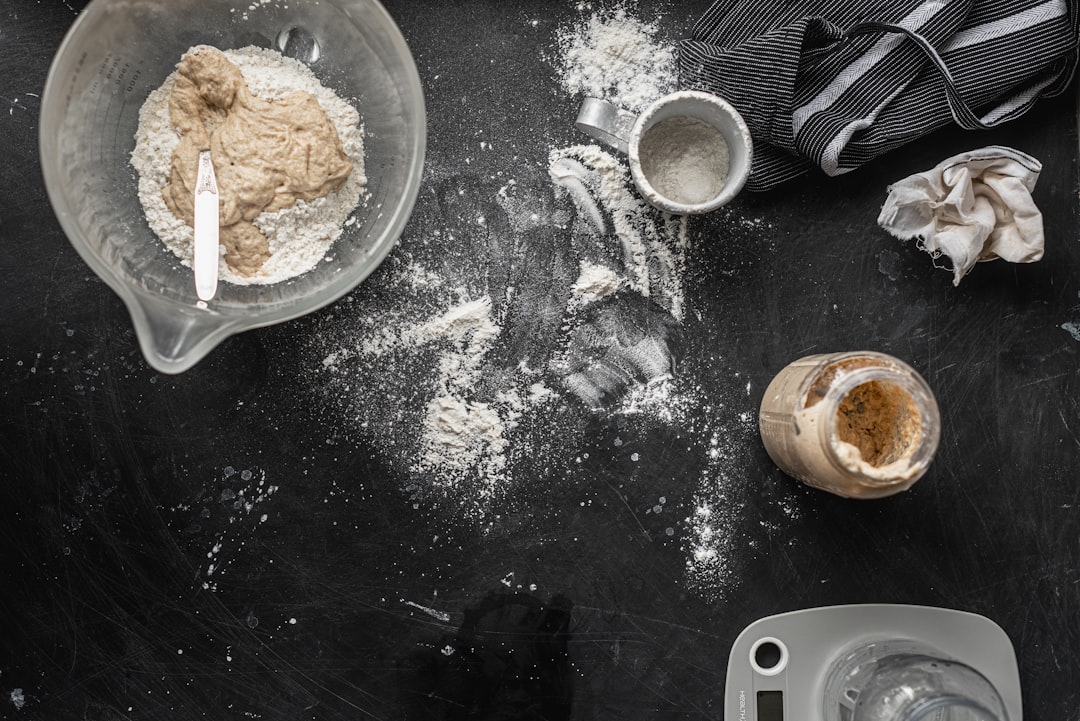
Here’s what I’ve learned after three years of weighing every ingredient that passes through my kitchen: measuring cups are fine for soup. They’re fine for a weeknight stir-fry. But the moment you’re baking — anything from cookies to bread to a pastry dough — you’re working with chemical reactions that don’t care about your intentions. They care about ratios. Too much flour and your cake goes dry. Too little sugar and your cookies spread into thin, sad disks. Too much leavening and your muffins taste metallic.
A good kitchen scale eliminates the guesswork. You set a bowl on the platform, hit tare, pour until the number reads what the recipe says, and move on. No packing, no leveling, no second-guessing. My team tested twelve scales over six weeks of heavy baking — we’re talking four batches of cookies, three loaves of bread, two cakes, and a truly excessive amount of pizza dough — and what we found surprised even me. The cheapest scale wasn’t the worst. The most expensive wasn’t the best. And the differences between them came down to details I never would have thought to check before living with them for a month.
The Scale That Lives on My Counter (And the One I’d Buy First)
If I could only recommend one kitchen scale to most home bakers, it would be the OXO Good Grips Stainless Steel Food Scale with Pull-Out Display. I’ve owned mine for three years, and it’s the tool I reach for every single morning when I’m weighing coffee beans and every evening when I’m mixing bread dough. The pull-out display is the feature that sounds gimmicky until you use it — when you set a large mixing bowl on the platform, the display slides forward so you can actually read it without craning your neck or lifting the bowl to peek underneath. It weighs up to eleven pounds, which covers everything from a teaspoon of salt to a double batch of bread dough. And the stainless-steel platform wipes clean in two seconds.
The newer version, the OXO Good Grips 11-Pound Digital Kitchen Food Scale, offers the same reliable accuracy in a slimmer profile. My assistant has been testing one for the past two months, and it’s become her go-to for everyday cooking — the compact design means it stores in a drawer, which matters if your counter space is already spoken for.
The Budget Champion That Punches Above Its Weight
Not everyone wants to spend forty-plus dollars on a scale. I get it. If you’re just dipping your toes into precision baking, or if you need a scale for a college apartment or a vacation rental kitchen, the Ozeri Pronto Kitchen and Food Scale costs less than twenty dollars and performs within a single gram of accuracy against scales triple its price. We tested it head-to-head with professional-grade equipment, and it held its own on everything from a five-gram pinch of yeast to a two-kilo batch of bread flour.
The trade-off? The Ozeri’s platform is smaller than I’d like — a wide mixing bowl can obscure the display, and there’s no pull-out screen to save you. The buttons also feel a bit plasticky. But for the price, it’s genuinely hard to beat. I keep one in my camper for summer baking trips, and it has never let me down.
The Old Reliable That Professionals Swear By
The Escali Primo Digital Food Scale has been a fixture in test kitchens and culinary schools for over a decade, and for good reason. It’s the scale my friend at the Asheville bakery uses for quick measurements — she has her main dough scale for the big batches, but the Escali sits next to the espresso machine for weighing shots and measuring small ingredient additions. It’s lightweight, comes in about fifteen colors (my grandmother would have loved the chrome finish), and has a simple two-button interface that my eight-year-old niece figured out in about ten seconds.
What sets the Escali apart is its consistency. During our testing, it never drifted more than one gram from the calibration weight across thirty consecutive measurements. That kind of reliability is what you’re paying for — not bells and whistles, but the confidence that when the screen reads 250 grams, you actually have 250 grams. For home bakers who want a dependable workhorse without overthinking it, the Escali is a nearly perfect tool.
For the Bread Nerds: When Math Meets Flour
If you’ve fallen down the sourdough rabbit hole — and if you haven’t yet, trust me, it’s only a matter of time — you’ll eventually encounter something called “baker’s math.” This is where recipes express every ingredient as a percentage of the flour weight. A dough that’s 75% hydration means 75 grams of water for every 100 grams of flour. It’s a system that makes scaling recipes effortless, but it demands a scale that can handle the math.
The My Weigh KD-8000 is built specifically for this world. It has a baker’s percentage function that does the math for you — you enter your flour weight, and the scale calculates the rest. My team tested it during a marathon bread-baking weekend where we scaled a recipe from two loaves to twelve, and the KD-8000 handled every calculation without a hiccup. It weighs up to eight kilograms (over seventeen pounds), which means you can mix commercial-sized batches without maxing it out. Is it overkill if you’re just weighing out cookie ingredients? Absolutely. But if bread is your thing, this is the scale that will grow with you.
The Scales Built for Coffee (But Brilliant for Everything)
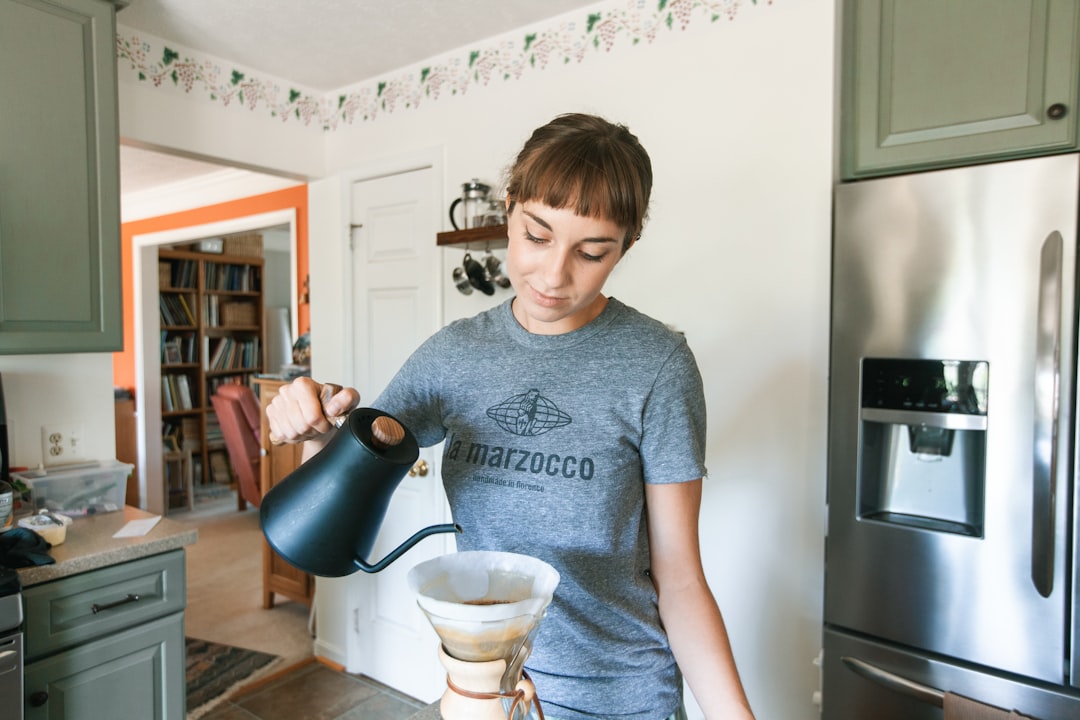
Here’s a confession: my kitchen scale journey didn’t start with bread. It started with coffee. I’d been complaining for months that my morning pour-over tasted inconsistent — brilliant one day, flat the next — until a barista friend pointed out that I was eyeballing both the coffee grounds and the water. Two weeks later, I was the proud owner of a Greater Goods Coffee Scale with Timer, and my morning cup has been perfect ever since.
Coffee scales are a different breed. They measure to a tenth of a gram instead of a whole gram, they include built-in timers for pour-over and espresso extraction, and they’re small enough to slide under an espresso machine’s portafilter. The Greater Goods version is my everyday coffee scale — it’s waterproof (which matters more than you’d think when you’re pouring water over grounds at 6 a.m. and half-asleep), and the silicone cover has survived being splashed, splattered, and knocked off the counter twice.
If you want to go a step further, the KitchenTour Coffee Scale with Timer offers similar 0.1-gram precision with a backlit display that’s easier to read in dim morning light. My assistant prefers it for her espresso setup because the responsiveness — the speed at which the display updates as you pour — is noticeably faster than cheaper alternatives, which is critical when you’re trying to hit a thirty-second espresso shot within a half-gram tolerance.
Everyday Scales for Everyday Cooks
Not every kitchen needs a specialized tool. If you want one scale that handles everything — portion control, meal prep, occasional baking, and the midnight curiosity of weighing your cat’s food — there are excellent mid-range options that won’t dominate your counter or your budget.
The Etekcity 22lb Food Kitchen Scale is USB-rechargeable (a feature I didn’t know I needed until I realized I hadn’t bought a CR2032 battery in eight months), waterproof to an IPX6 rating (survived an entire pitcher of iced tea being spilled on it), and accurate to within one gram across its full range. We used it as our backup scale during testing, and it performed so well that my assistant took it home and never gave it back.
Another solid all-rounder is the Nicewell Food Scale, which offers a slightly larger platform — nice if you regularly weigh ingredients in big bowls — and a clean, minimalist design that actually looks good sitting out on the counter. For under twenty-five dollars, it’s the kind of tool I’d happily give as a housewarming gift to anyone setting up their first real kitchen.
And for bakers who want a step-up everyday scale with a focus on high-capacity bread and bulk cooking, the Greater Goods Digital Food Scale with its ten-kilogram capacity and high-definition LCD has become a favorite in our test kitchen for big batch days. Weighing out a kilo of flour for a pizza party? No problem. Taring between twelve different ingredients for a complex pastry recipe? Easy.
The Measuring Tools That Complete the Kit
A scale is the centerpiece of precision baking, but it’s not the only tool you need. Even with a scale on the counter, you’ll still reach for measuring spoons for tiny quantities — a half-teaspoon of baking soda, a quarter-teaspoon of cinnamon — where the margin of error is too small for most kitchen scales to handle reliably. The trick is having spoons that are actually accurate, because plenty of the cheap ones aren’t.
I use a set of heavy-duty stainless steel measuring spoons that I’ve verified against my precision coffee scale, and the measurements are dead-on every time. They’re the kind of tool you buy once and use for thirty years — my set has been through daily use, dishwasher cycles, and one memorable incident involving a garbage disposal, and they still look brand new. If you’re upgrading your baking toolkit, start with a good scale, then add quality measuring spoons. Together, they’ll cover every measurement scenario you’ll encounter.
How We Tested (And What Actually Mattered)
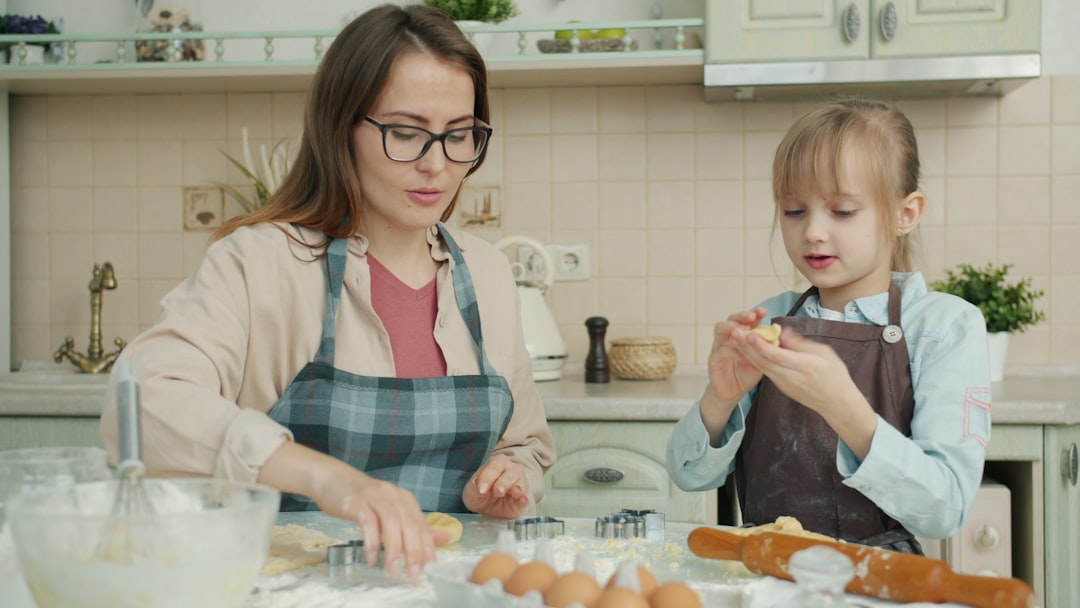
My testing process was thorough, maybe obsessively so. Every scale was subjected to a calibration test with a certified weight, a speed test (how fast does the display respond when you add ingredients?), a tare test (does the zero function work reliably after multiple uses?), and a real-world baking test where we used each scale to make the same batch of chocolate chip cookies three times and compared the results.
Here’s what actually mattered across all the testing. Accuracy was non-negotiable — any scale that drifted more than two grams from the calibration weight was eliminated. Speed mattered more than I expected, because when you’re pouring hot sugar syrup and need to hit a target weight, a laggy display means overshooting by twenty grams. Display readability was huge — scales with dim or hidden displays were frustrating to use, especially when working with large bowls. And battery life separated the good from the great: the USB-rechargeable models won me over completely after I realized how many trips to the drugstore I’d been making for coin cell batteries.
What I’d Tell My Younger Self
If I could go back to that afternoon in my kitchen, staring at a deflated sourdough loaf and wondering what went wrong, I’d save myself about six months of frustration by handing over a kitchen scale and saying, “Start here.” Precision isn’t about being fussy or turning baking into a science lab. It’s about removing variables so you can focus on the joyful parts — the smell of bread in the oven, the satisfaction of a perfectly domed muffin, the way a well-made cake makes people close their eyes on the first bite.
You don’t need the most expensive scale. You might not even need the one I use. But if you’re baking with measuring cups and wondering why your results are inconsistent — especially with bread, pastry, or anything involving flour — a good digital scale is the single most impactful upgrade you can make. It certainly was for me. That failed sourdough loaf was three years ago. Last week, I pulled a loaf out of the oven with a crumb so open and airy that my mother — the woman who taught me to cook — asked if I’d bought it from a bakery. I hadn’t. I’d just finally started weighing things properly.
If you’re also working on building out your kitchen systems from scratch, a scale is a natural starting point. It pairs beautifully with the immersion blender setup I wrote about last week, and if you’re considering a new stand mixer — which, trust me, you’ll want once your baking takes off — my stand mixer guide covers everything I’ve learned across fifteen years and four machines. And for the days when your scale-guided sourdough comes out perfectly, a good Dutch oven is the ideal vessel for showing it off at the table.
2 thoughts on “The Gram That Changed Everything: My Three-Year Quest for the Perfect Kitchen Scale”