There is a tool in my kitchen that I reach for more than my chef’s knife, more than my paring knife, and — honestly — more than the fancy gadgets I spent actual months researching. It costs less than dinner at a mid-range restaurant. It lives in the drawer closest to the stove because I cannot function without it within arm’s reach. I am talking about kitchen shears, and if you don’t own a good pair yet, this is the article that will change your prep life forever.
I spent fifteen years thinking scissors belonged in the office drawer, not the kitchen. My grandmother used hers to snip parsley and open the occasional bag of flour, but I never considered them a serious cooking tool. Then one Thanksgiving, I watched a caterer friend spatchcock a turkey in under ninety seconds using nothing but a pair of heavy-duty poultry shears. My jaw dropped. I bought my first pair the next morning, and I have not cooked the same way since.
The right kitchen shears can butterfly a chicken, quarter a squash, snip fresh herbs directly over a dish, trim pie dough, open stubborn packaging, cut parchment to size, section pizza, de-stem tomatoes, and even crack lobster claws if they have a built-in nutcracker hinge. My team and I have tested more than thirty pairs over the last two years — everything from budget three-packs to imported Japanese forged steel — and I want to walk you through exactly what matters, what does not, and which pairs earned a permanent spot in my kitchen.
Why Kitchen Shears Outperform a Knife for Half My Prep Work
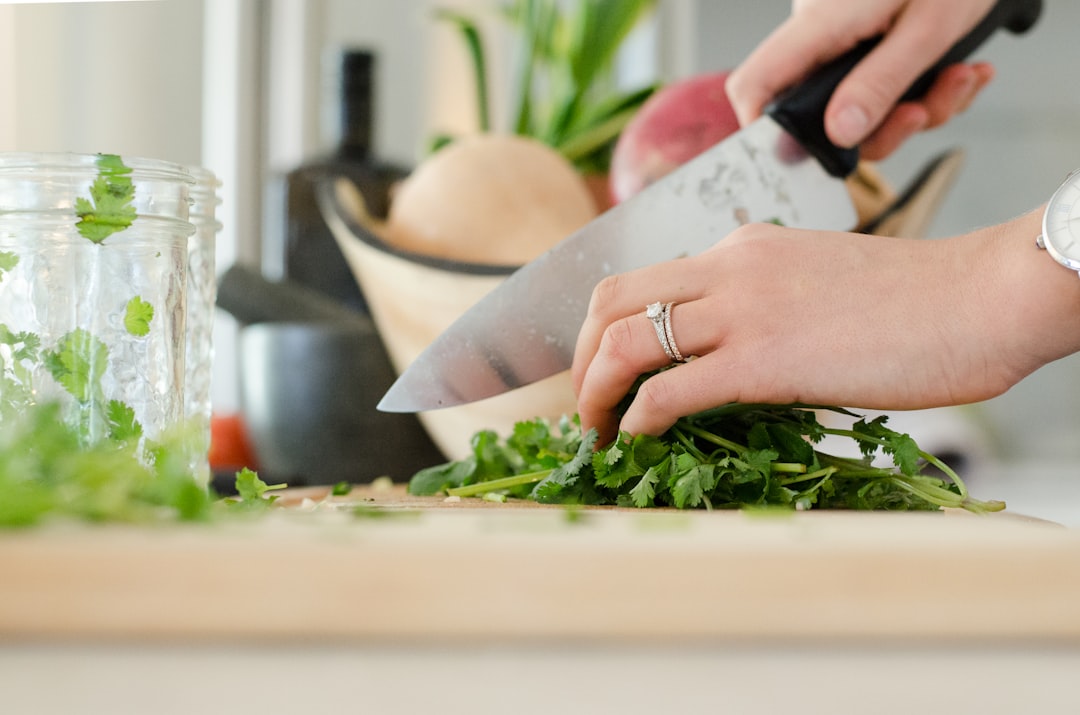
Here is the thing nobody tells you when you are building your first real kitchen: a knife requires a cutting board, two hands, and a flat surface. Shears need none of that. You can hold a bunch of chives over a simmering pot and snip directly into it. You can hold a piece of parchment in one hand and trim it to fit a round cake pan with the other. The workflow is faster, there is less to wash, and you lose almost none of the aromatic oils that get crushed into a board when you chop.
I did an experiment last March where I tracked how long my prep took for a week of family dinners using only a knife versus a knife-plus-shears combo. The shears week saved me an average of eleven minutes per day. Eleven minutes. That is the difference between sitting down to eat with my family and eating alone while they clear the table.
For anyone just setting up their kitchen from scratch — and I wrote about this in my guide to equipping a first kitchen that actually works — a solid pair of shears should be in your very first shopping trip, right after your primary knife and before you even think about a peeler.
The Anatomy of a Great Pair of Kitchen Shears
Not all scissors are created equal, and the differences matter more than you might think. After testing dozens of pairs, my team and I identified five things that separate a great pair from a disposable one.
Blade material is where it starts. You want high-carbon stainless steel — it holds an edge longer and resists the corrosion that comes from cutting acidic foods like tomatoes and citrus. Cheap shears use soft stainless that dulls within months and starts to pit if you do not dry them immediately. The blade thickness also matters; thicker blades flex less, which means cleaner cuts through dense items like raw chicken bones and thick-skinned squash.
Handle design is the second make-or-break factor. Look for large, ergonomic loops that accommodate a full grip even if you are wearing them on your dominant hand while holding food with the other. Silicone or textured grips prevent slipping when your hands are wet or oily — and in a kitchen, your hands are always wet or oily. The KitchenAid All Purpose Shears have been my loaner pair for visiting cooks because the soft-grip handle fits nearly every hand size and they come in colors that make them easy to spot in a crowded drawer. You can grab a pair right here.
Pivot tension is the third thing I check. Shears that are too loose at the pivot will fold food instead of cutting it. Too tight, and they tire your hand after a few minutes of herb work. The best pairs have a bolt pivot that can be adjusted and tightened over time, not a rivet that cannot be serviced.
Separability is fourth. The best kitchen shears come apart at the pivot for deep cleaning. This is not optional — food particles, especially from raw poultry, get trapped in the pivot joint and can become a genuine food safety issue. If your shears cannot separate for washing, you are taking a risk every time you use them on raw meat.
And fifth: a multifunction hinge. That little serrated area between the handles? It is a jar opener and a nutcracker. The flat section near the pivot on some models works as a bottle opener. These are not gimmicks — I use the jar-opener feature on my pair at least three times a week.
The Everyday Tasks Where Shears Simply Win
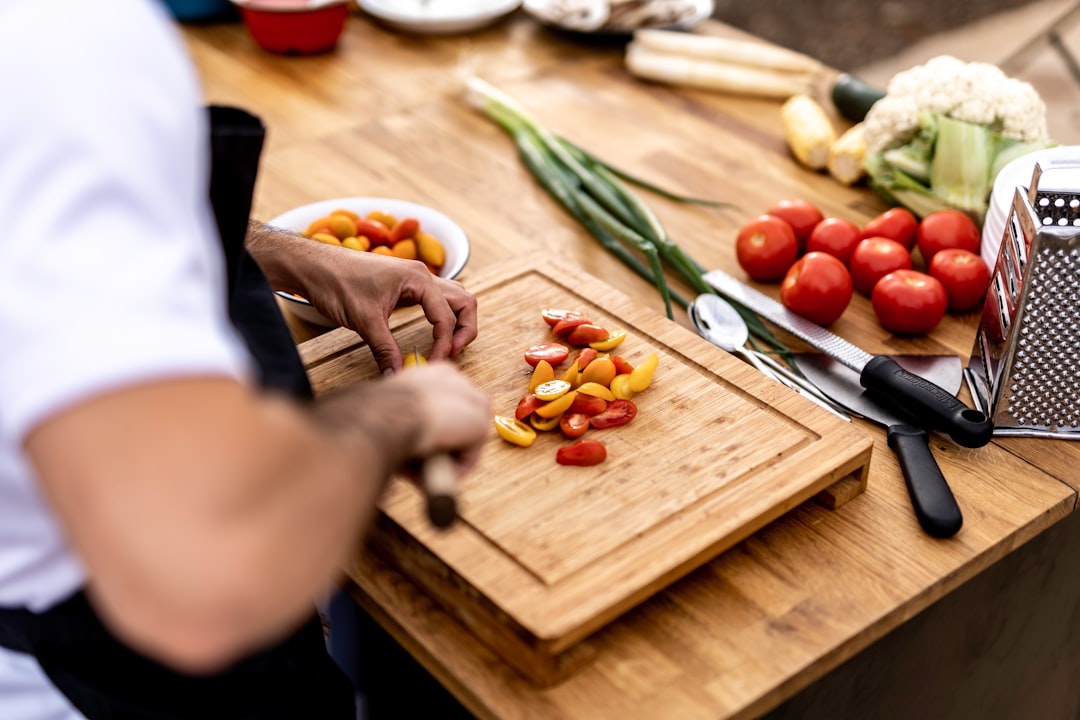
Let me walk you through a typical Tuesday in my kitchen, because I want you to understand how often these come into play. I start by trimming the root end off a bunch of scallions — one snip per scallion, directly over the pan. Then I cut a piece of parchment to line a baking sheet. Then I open a vacuum-sealed bag of salmon. Then I snip a few sprigs of dill over the finished dish. Four completely different tasks, one tool, zero cutting boards.

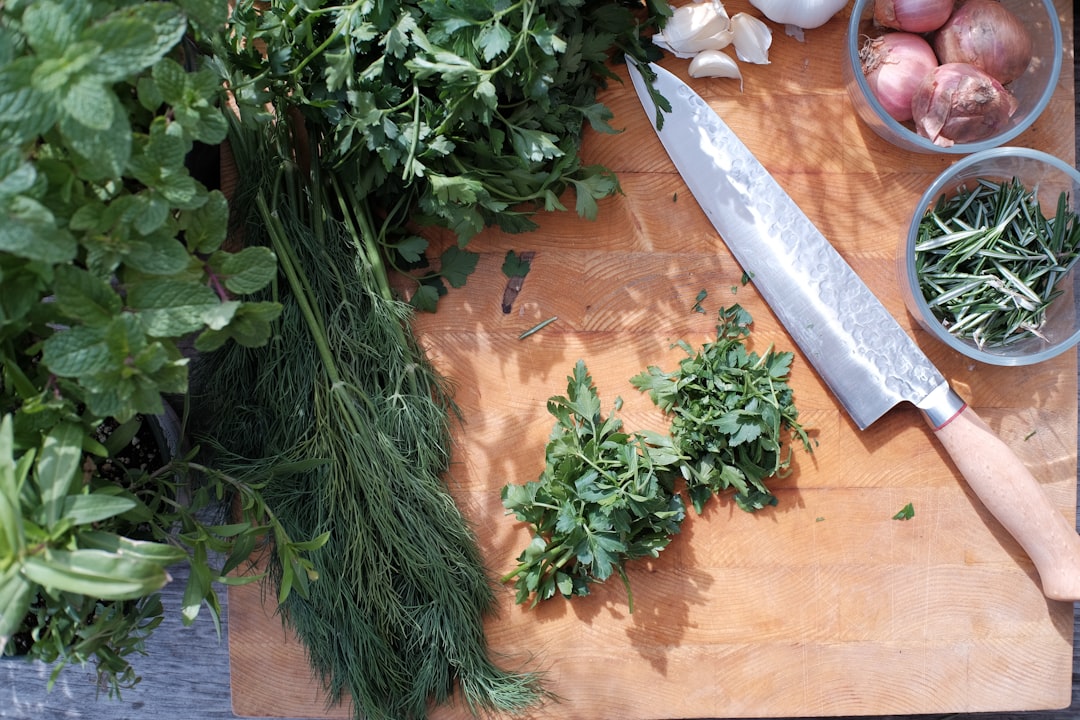
For herb work specifically, I keep a dedicated pair of five-blade herb scissors in the drawer next to the stove. These are a specialty tool, yes, but if you cook with fresh herbs as much as I do — and I grow eight different ones in my kitchen garden — they are transformative. One cut equals five snips, which means a handful of basil gets turned into a confetti of perfectly uniform ribbons in about four seconds. The Jenaluca 5-Blade Herb Scissors come with a cleaning comb and have held their edge for two seasons of heavy use. Here is where to find them.
Bacon is another one. If you have ever tried to slice raw bacon with a knife, you know it slides, it smears, and it never cuts where you want it to. Kitchen shears cut through raw bacon strips cleanly, in a single motion, directly into the pan. Same goes for sun-dried tomatoes, roasted red peppers, and any other oily, slippery ingredient that laughs at your chef’s knife.
Poultry Shears: The Heavy Artillery

Standard kitchen shears handle most tasks beautifully, but when you need to cut through bone — specifically when you are breaking down a chicken, spatchcocking a turkey, or sectioning ribs — you need dedicated poultry shears. These are built differently: thicker blades, spring-loaded handles to reduce hand fatigue, and often a safety lock so they stay closed in the drawer.
I have a whole chapter in my skillet and cookware guide about how the right tool makes Southern cooking approachable, and poultry shears are a perfect example. My grandmother broke down chickens with a cleaver on a thick wooden block. I do it with shears in a fraction of the time, with far less mess and zero risk of the knife glancing off bone.
The OXO Good Grips Spring-Loaded Poultry Shears remain my top recommendation for most home cooks. The spring mechanism does the work of opening the blades for you, which means your hand only squeezes — it never has to pull apart. That is a huge fatigue savings when you are breaking down three or four birds for a meal prep session. They also lock closed for safe storage. You can find them here.
For those who process a lot of poultry — and I mean whole birds, not just the occasional chicken — the MAD SHARK Heavy Duty Poultry Shears are worth a look. They have a slightly longer blade and a more aggressive serration that powers through joint bones with less force. Check the current price here.
If you want the premium option and you cook seriously enough to justify it, the All-Clad Stainless Steel Kitchen Shears are the finest pair I have ever put in my hand. They are heavy-gauge, perfectly balanced, and the edge retention is remarkable. All-Clad makes cookware that lasts a lifetime, and these shears are built to the same standard. Here is the link.
Building a Shears Collection That Actually Makes Sense
You do not need seven pairs of scissors in your kitchen. You need two, maybe three. Here is how I think about it after two years of testing.
Your primary pair lives in the most accessible drawer and handles eighty percent of the work: opening packages, snipping herbs, trimming dough, cutting parchment, sectioning pizza. This pair should be all-purpose, comfortable, and easy to clean. My daily driver is the iBayam All-Purpose Heavy Duty Shears — they come with a protective sheath, a built-in bottle opener, and a nutcracker hinge, and they separate fully for cleaning. At their price point, I own three: one for savory prep, one for pastry, and one that lives in the utility drawer for non-food tasks so my food shears never leave the kitchen. Grab a pair here.
Your poultry pair only comes out when you are breaking down birds or cutting through bone. This pair needs to be heavier, spring-loaded, and ideally dishwasher-safe because it is going to get messy. We already covered my top picks above.
Your herb pair is the specialty tool. If you cook with fresh herbs several times a week — and if you do not, I highly recommend starting, as I mentioned in my piece about the tools I would replace first — the five-blade design is worth the drawer space.
One strategy I love for families: the Astercook 3-Pack gives you three identical pairs at a price that works out to less than a single premium pair. I keep a set at my mom’s house for holiday cooking marathons, and they have held up beautifully through two Thanksgiving seasons. Color-coded handles mean everyone knows which pair was used for raw chicken. Here is the three-pack.
For anyone who wants a step up in build quality for their daily pair, the Huusk Stainless Steel Kitchen Scissors have a gorgeous forged feel and a slightly curved blade tip that makes detail work — like de-stemming cherry tomatoes or trimming the silver skin off a tenderloin — noticeably easier. Take a look at those here.
What About the Budget Picks?
Not everyone wants to spend premium money on scissors, and honestly, you do not have to. A great pair of kitchen shears can be had for under fifteen dollars. The key is knowing which budget pairs actually perform and which ones will loosen at the pivot after a month of dishwasher cycles.
The Gidli Kitchen Shears and Seafood Scissors Set is my favorite budget find because you get two different tools designed for two different tasks — one heavier pair for poultry and meat, one slimmer pair for seafood and herbs. They come with a lifetime replacement warranty, which tells you the manufacturer stands behind the build. Here is where to find the set.
The LIVINGO Forged Stainless Steel Shears are another pair I have recommended to friends setting up first apartments. They are forged rather than stamped, which means the steel is denser and holds an edge longer than you would expect at this price. Check those out here.
And if you cook a lot of whole birds — whether that is Sunday roast chicken, holiday turkey, or the occasional duck — the Dragon Riot Heavy Duty Poultry Shears are purpose-built with an anti-slip handle and a safety lock. They are the pair I reach for when I am spatchcocking a bird for the grill. Find them here.
How I Care for My Shears (And Why It Matters)
A good pair of kitchen shears will last a decade if you treat them right. Mine get hand-washed — I know the listing says dishwasher-safe, and technically they are, but the high heat and caustic detergent in dishwashers will dull any edge faster than hand washing. I take mine apart at the pivot, wash both halves with hot soapy water, dry them immediately with a towel, and reassemble.
Every few months, I run a sharpening rod through the blades the same way I would touch up a knife. If your shears have a bolt pivot, check the tension periodically and tighten if needed. A pair that has started to fold food instead of cutting it probably just needs the pivot snugged up a quarter turn.
Store them safely. I keep mine in a drawer divider with the blades closed and locked. If your pair came with a sheath, use it — not just for safety, but because it protects the edge from knocking against other metal tools.
The Bottom Line
If there is one tool I wish I had taken seriously earlier in my cooking life, it is kitchen shears. They are the quiet workhorse that makes everything from weeknight dinner prep to holiday turkey processing faster, cleaner, and more enjoyable. You do not need the most expensive pair. You need the right pair for how you cook.
Start with a solid all-purpose pair. Add poultry shears if you break down whole birds. Add herb scissors if your garden is overflowing. That is it. Three tools, probably under sixty dollars total, and your kitchen will run noticeably smoother for the next decade.
My grandmother would have called the spring-loaded poultry shears cheating. She also would have used them every single Sunday once she saw how fast they work. Some traditions are worth keeping exactly as they are. Others are worth upgrading — and the women who taught me everything about cooking would have been the first ones to recognize that.