It started, as these things usually do, with a pizza cutter. Eight minutes before friends were due on a recent Saturday, I stood in front of an open drawer shaking it like a piggy bank while a pot of sauce bubbled behind me. Somewhere under the melon baller, the avocado slicer I have used exactly once, and a whisk with a bent head, there was a pizza cutter. I knew it. The drawer disagreed.
When the last guest left that night, I made a pot of tea, called my sister-in-law who has reorganized more kitchens than I have cooked in, and we agreed on a plan: the following weekend, every drawer in my kitchen gets emptied, questioned, and rebuilt. Not a decluttering spree — a systems overhaul. Cookie season is coming, Thanksgiving is coming, and I refuse to spend another holiday excavation hunting for the zester while pie filling waits.
What we learned over those two days changed how my whole kitchen behaves. And the biggest surprise? The fixes were almost embarrassingly cheap and small. A drawer is just a box until you give it rules.
The Great Emptying
Saturday morning, nine a.m., we pulled every drawer completely empty and lined the contents up on the counter like evidence. All of it. My assistant logged the inventory in a notebook while I narrated, and I will be honest with you: the numbers were humiliating. Twenty-three spatulas and turners across three drawers. Four garlic presses, which is especially funny because my garlic article two years ago convinced my family I only needed one. A meat thermometer I have not seen since the Bush administration. A fistful of birthday candles, three takeout soy sauce fish, and a screwdriver that technically belongs in the garage.
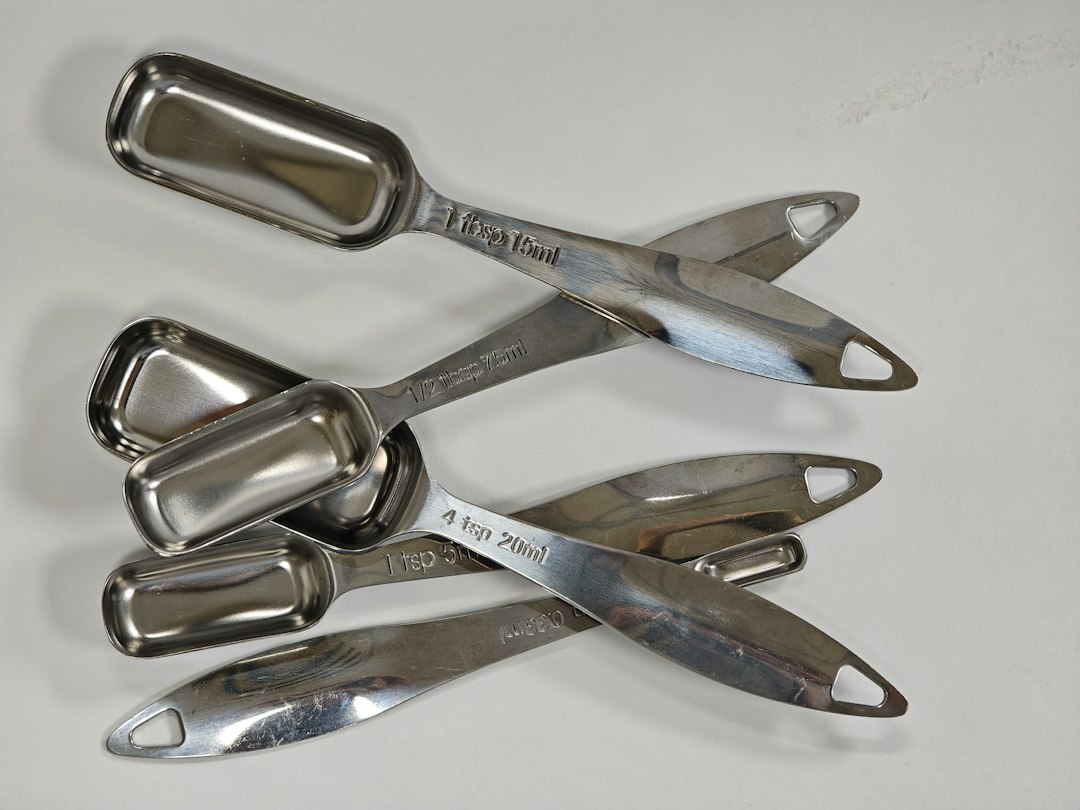
Here is the thing the great emptying taught me, and it is worth the whole weekend by itself: you cannot organize what you have not counted. My measuring cups and measuring spoons — the workhorses of baking season — were scattered across four different drawers, none of them near the baking zone. No wonder every Sunday project starts with a scavenger hunt.
We sorted everything into four piles: keep, relocate, donate, and “why do I own this.” The donate pile filled two boxes. The why pile sparked genuine debate — I lost the argument about the avocado slicer and I am still salty about it.
Before anything went back in, we vacuumed crumbs that predated the current administration of my household and wiped every drawer bottom. Two minutes per drawer. It matters more than you think — a clean base makes you reluctant to let chaos creep back.
The Utensil Drawer Learns Its Lines
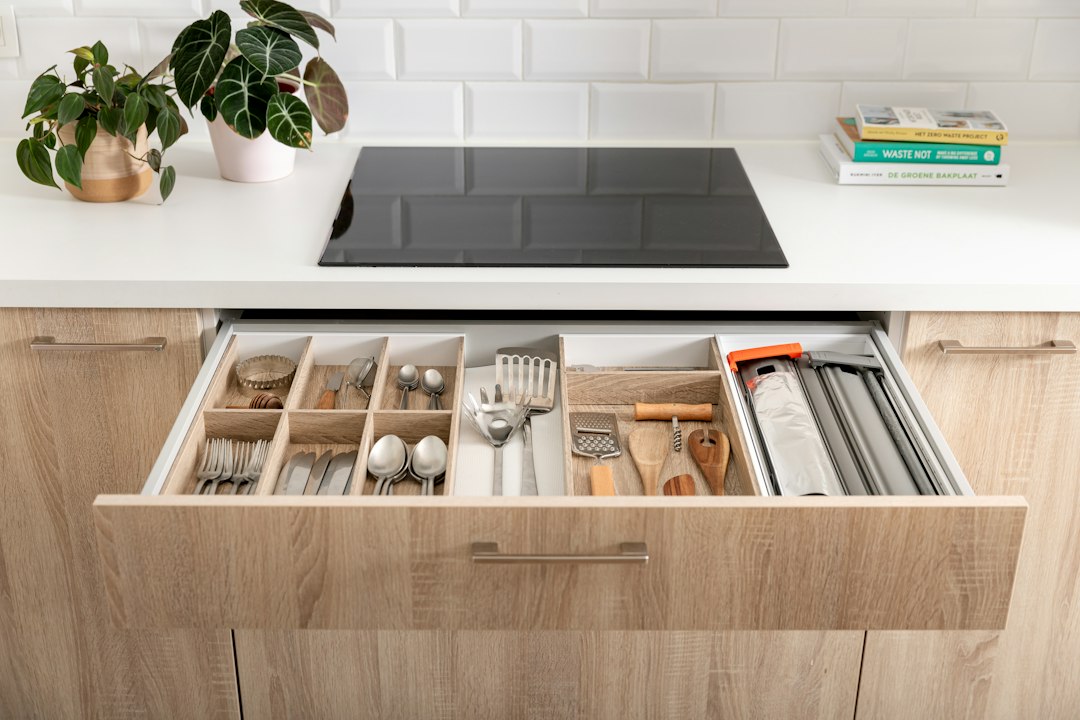
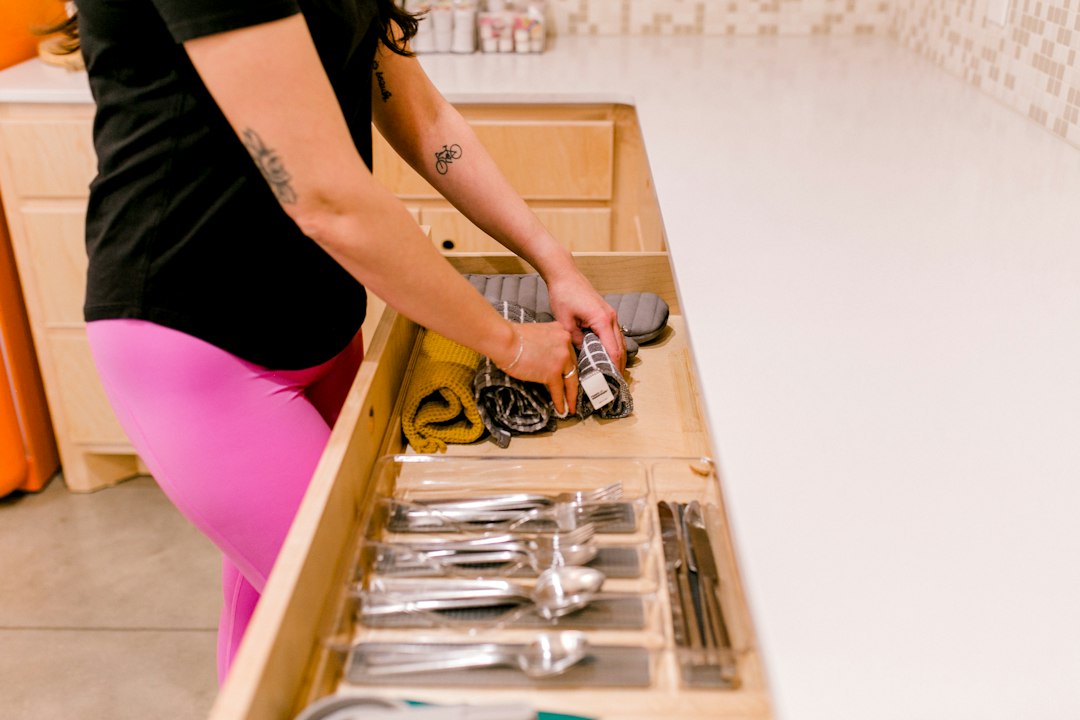
The main utensil drawer got the first rebuild because it takes the most daily traffic. The old plastic tray had five slots and zero flexibility, which meant the slotted spoon lived in a loose pile on top of the forks of the world, and everything jammed when the drawer slid shut. We replaced it with an expandable bamboo utensil organizer that grows from five compartments to eight with a simple pull — the extra wings filled the dead space at the sides of the drawer that the old tray never touched.
Bamboo earned its spot over plastic for three reasons my team beat me over the head with. It is rigid, so a heavy whisk does not rock the whole tray. It wipes clean, which matters when the honey spoon misses its slot. And it has enough grip that the tray does not surf toward the back of the drawer every time you open it. If your flatware needs the same medicine, an expandable cutlery tray does for forks what the utensil version does for spatulas, with narrower slots that keep the salad forks from eloping with the soup spoons.
Then came the layout rule that changed my daily rhythm: frequency trumps category. The tools I touch daily — spatulas, tongs, wooden spoons, the bench scraper — went in the compartments closest to the handle I grab. Unitaskers and once-a-month tools moved to the back rows. One of my testers runs the Pipishell-style bamboo organizer in her galley kitchen and swears the same frequency-first rule cut her dinner-prep reaching in half. I believe her, because mine did the same thing.
Knives Get a Home That Is Not a Jumble
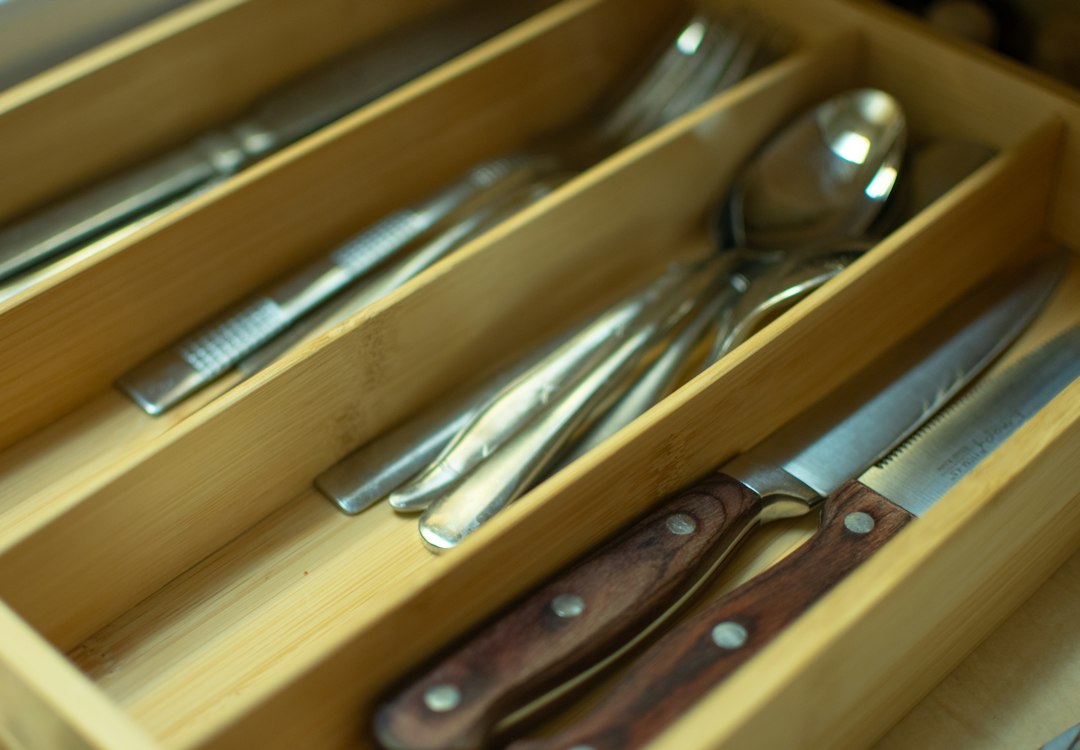
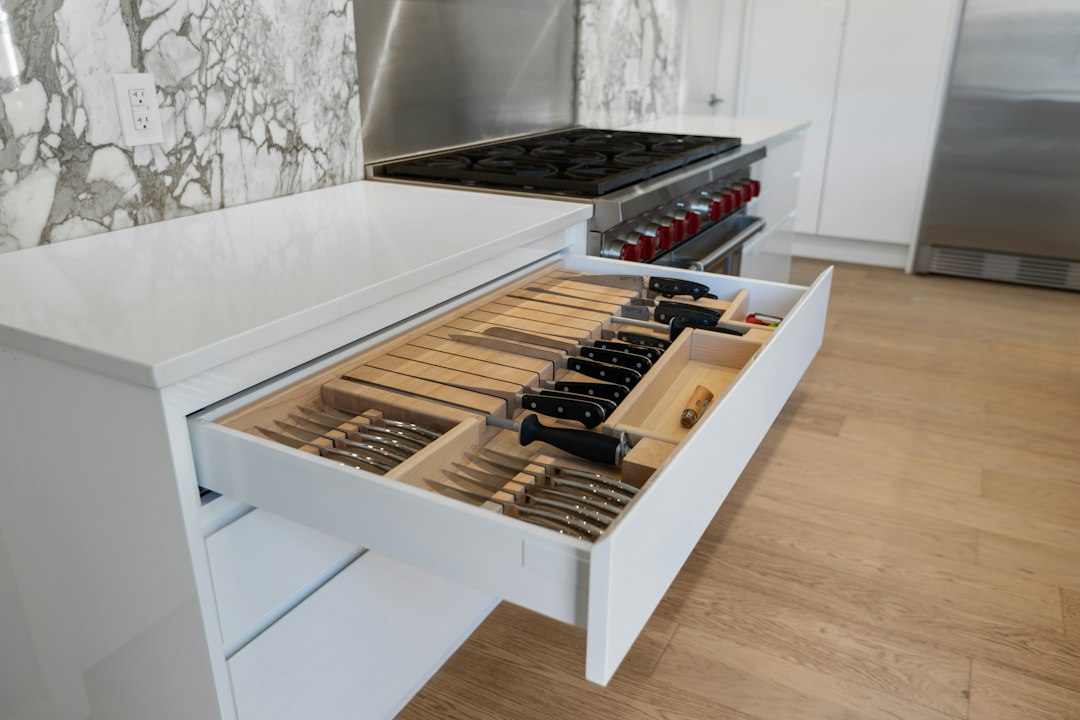
Next door, the knife situation had been quietly embarrassing me for a year. The block on the counter took up prime real estate, and the drawer version of knife storage was, shall we say, improvisational — blades point-up in a utensil slot like a dare. My sister-in-law refused to reach into that drawer on principle. She was right to.
The fix was an in-drawer knife organizer, the kind with angled slots that lay each blade flat in its own lane. Edges stop clanking against each other, which keeps them sharper longer, and your fingers stop playing roulette every time you fetch a paring knife. Measure your drawer depth before you buy — the dock needs the drawer to be tall enough to close over the handles, and about an inch of clearance keeps everything snug.
If you are rethinking your whole knife-and-board station the way I did, my cutting board deep-dive from August pairs with this project perfectly, because what lives under your knife deserves the same scrutiny as the blade itself. Boards on end, knives flat, and the whole workstation suddenly behaves like it was designed by someone who cooks.
Heavy Things Belong Down Low
Now, the drawer that started a small family feud: the deep one under the cooktop. For years it held a strata of nesting pots that required two hands and a warning shout to excavate. My crew staged a mutiny and rebuilt it around a simple principle — deep drawers are for heavy things you use often, which means dishes and daily cookware, not the roasting pan you touch twice a year.
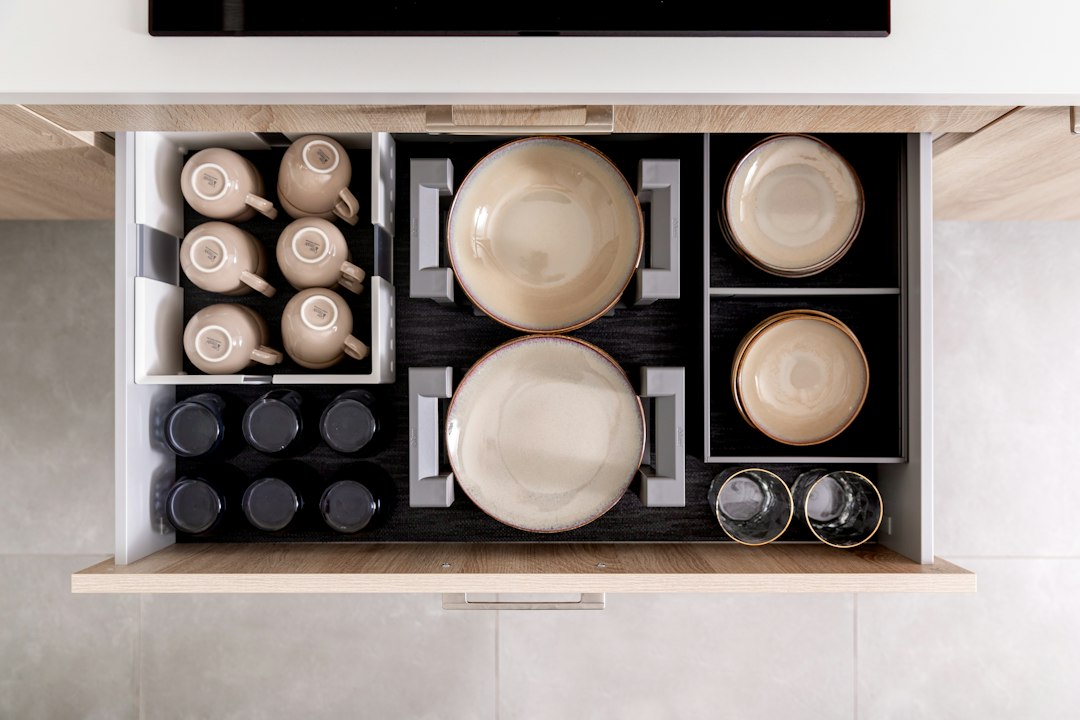
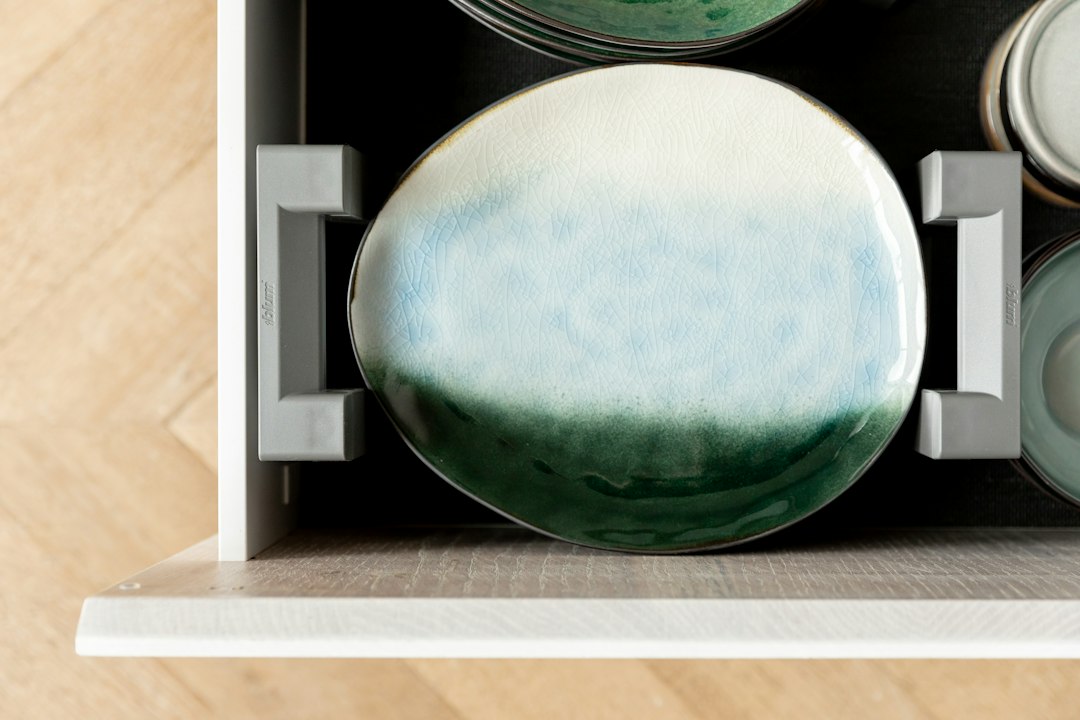
The dish drawers were the revelation of the whole weekend. We moved everyday plates and bowls into a deep drawer fitted with a peg system — those little adjustable dowels that lock stacks of plates in place so they cannot shimmy, even when a certain teenager slams the drawer like it owes him money. Dishes at drawer height means no more unstacking the tower to reach the salad plates at the bottom. Even my mother, a cabinet loyalist for six decades, went quiet in a way I recognized as surrender.
For the pots that stayed in drawers, a few spring-loaded bamboo dividers created lanes — saucepans in one, skillets in another, lids standing on edge like records in a crate instead of avalanching every time the drawer opens. My summer fling with cookware that clicks apart already had me nesting smarter; the dividers finished the job. If you want the full bamboo treatment for a deep drawer, a deep drawer organizer with taller walls keeps the big tools upright and honest.
Confessions of a Junk Drawer Apologist
I will defend the junk drawer’s right to exist until my dying day. Every working kitchen needs one drawer of useful mysteries. What it does not need is to be a landfill, and mine had drifted from “charming miscellany” to “where screws go to disappear.” The batteries had leaked. Twice.
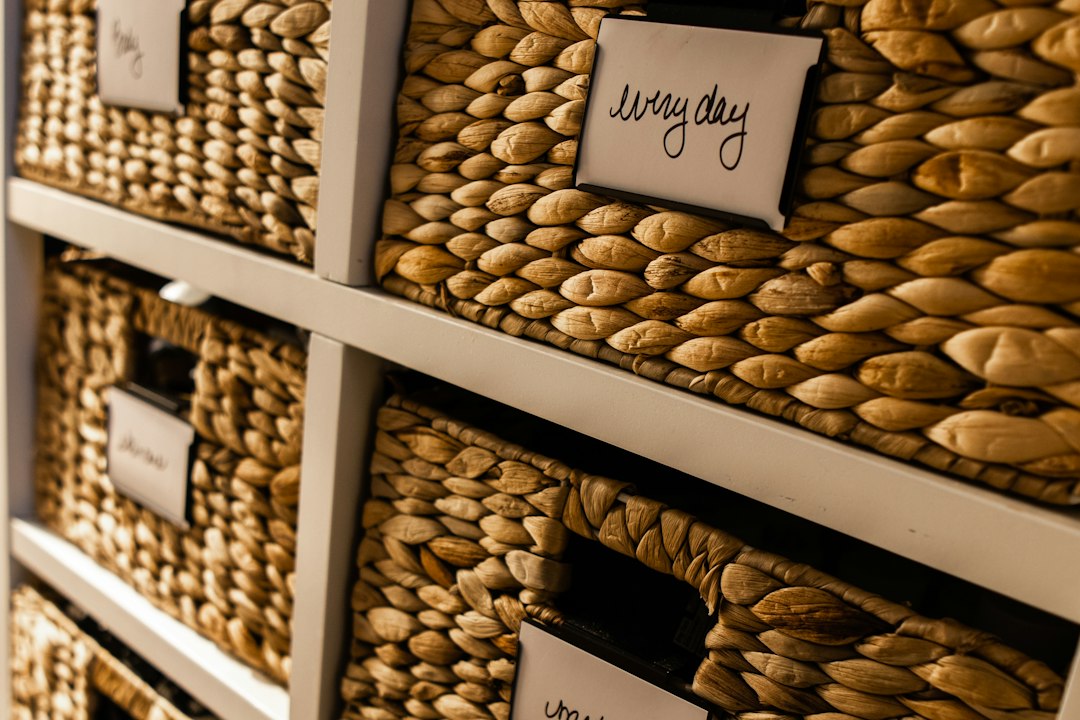
So we gave the junk drawer the same dignity as the rest. A shallow junk drawer organizer tray with a handful of small compartments turned chaos into categories: batteries, tape and adhesives, takeout menus and matchbooks, tools-that-are-not-screwdrivers, and the honest junk bin. I learned this trick from the coffee pod reckoning — one fifteen-dollar organizer can retire a box of chaos entirely, and the junk drawer deserved the same mercy.
The rules we wrote, taped inside the drawer on a card my grandmother would approve of: nothing enters without a category, nothing duplicates, and the drawer gets a five-minute audit every season change. My stackable drawer bins have since migrated to the junk drawer’s cousins — the tea drawer, the candle drawer, the drawer of cords that charge things I no longer own.
The Small Boring Things That Make It Hold
Here is the part nobody pins: the fifteen-dollar details that decide whether this whole system survives to see spring. First, non-slip drawer liner under every tray. It is the difference between an organizer that stays put for years and one that migrates two inches a week until you are reseating it in a bad mood every Sunday.
Second, museum putty. A pea-sized ball under each corner of a tray anchors it against the slam of daily life without gluing anything down permanently. My crew flagged this trick after reading what long-term testers of these trays report — the expandable side stops can work loose after months of hard use, and a little putty at the corners fixes it for good.
Third, and this is the rule I am enforcing with actual family consequences: one in, one out. A new spatula means an old spatula leaves. The drawer is full when it is full. No exceptions, not even for the gorgeous olive wood one I bought in September and refuse to discuss further.
What the Drawers Say Now
Two weekends later, I can tell you what changed, and it is not just that I found the pizza cutter. It is that my kitchen got quieter. Doors stop being slammed in frustration. Cooking starts with cooking instead of with archaeology. My daughter can now find the measuring spoons without asking me, which might be the greatest household miracle of the decade.
And the timing could not be better. Baking season is a freight train, and last year I spent the first cold Saturday resetting the baking cabinet in a panic. This year the drawers are already honest, the counters are clear, and the cookie plans can just be cookie plans.
A drawer is the smallest room in your house, but you visit it more than any other. Give it rules, give it a real tray, and it will quietly give you back five minutes and a fraction of your sanity every single day. Start with the worst one. I promise the pizza cutter is in there somewhere.