Every October, around the time the first soup pot comes down from the high shelf, a small mountain range forms on the counter beside my sink. It is made entirely of dish towels. Damp ones, mostly, draped over cutting boards and leaning against the soap bottle like they paid rent there. I lived with that mountain range for years before I finally admitted the truth: the problem was never the towels. The problem was that I never gave my dishes a proper place to land.
A dish drying rack is the most unglamorous thing I will ever ask you to think about, and I make my living thinking about kitchen tools. Nobody dreams about a dish rack. But somewhere between the third batch of holiday cookies and the roasting pan that refuses to fit in the dishwasher, the rack you chose in March either saves the kitchen or quietly drowns it. This year, before the season hits, my test kitchen crew and I decided to take the drying zone seriously. What follows is everything we learned.
Why October Is When the Drying Zone Finally Breaks
Summer is forgiving. A few salad bowls, a water glass or seven, the occasional cutting board — everything dries before dinner and the counter resets itself. October is different. The moment the calendar turns, the hand-wash pile grows tusks: the enameled Dutch oven that can’t survive the dishwasher’s heat, the cast iron skillet that must never touch it, the food processor lid with its little nook that traps water like a canteen, the crystal punch bowl that only sees daylight in November and December. My team tracked it for two weeks last fall, because that is the kind of people we are now. Our daily hand-wash load nearly tripled from mid-September to mid-October.
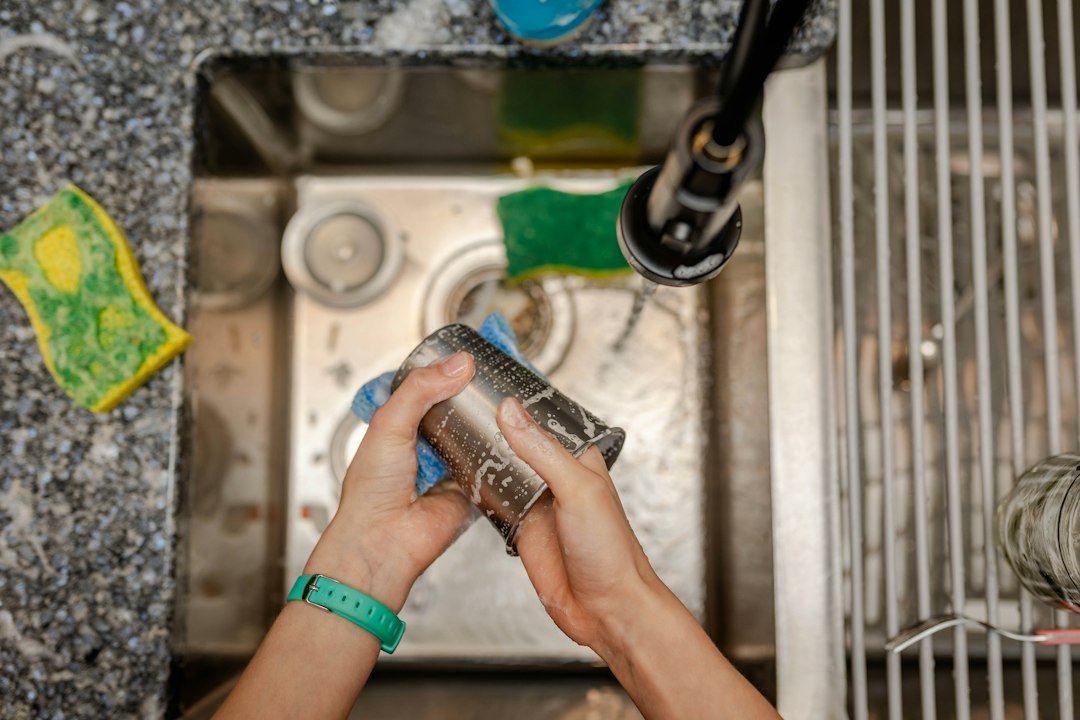
And here is the part nobody says out loud: almost none of that pile is dishes you can towel-dry and put away in one pass. Wooden spoons need air. Wine glasses shatter if you look at them wrong with a terrycloth towel. A sanitizer-hot sheet pan will steam a folded towel into a sad little swamp. When air drying is the only safe move, the rack stops being an accessory and becomes infrastructure. If it is too small, too flimsy, or drains water nowhere useful, you get the mountain. I got the mountain for three consecutive Octobers before I wised up.
What a Month of Real Cooking Taught Us About Racks
We ran nine racks through a full month of aggressive autumn cooking, and I want to be honest about the criteria, because they are probably not the ones a box in a big-box store will advertise. Capacity mattered, obviously, but only alongside what we started calling the dinner test: could the rack hold a complete meal’s worth of hand-wash — plates, glasses, silverware, one pan, two prep bowls — without anything touching in a way that traps water? Drainage came next. A rack that pools a shallow lake under the glasses is just a smaller, tidier swamp. Then stability, because a rack that wobbles when you pull a knife from the utensil cup is an accident with a delayed timer. And finally, cleanability, the great irony of dish rack shopping: the thing that holds your clean dishes gets filthy, and it must be willing to be scrubbed.
The other lesson cost us one wine glass and a small piece of my dignity. Cheap coated-steel racks tend to chip at the exact points where plates rest, and once that coating cracks, rust follows within weeks and the whole rack looks like it survived a shipwreck. If a rack’s wire gauge feels like a coat hanger in the store, it will feel worse in your kitchen. Spend the extra fifteen dollars. In this category, the floor of the market is genuinely bad in a way that, say, spatulas never are.
The Two-Tier Workhorse for Full Holiday Loads
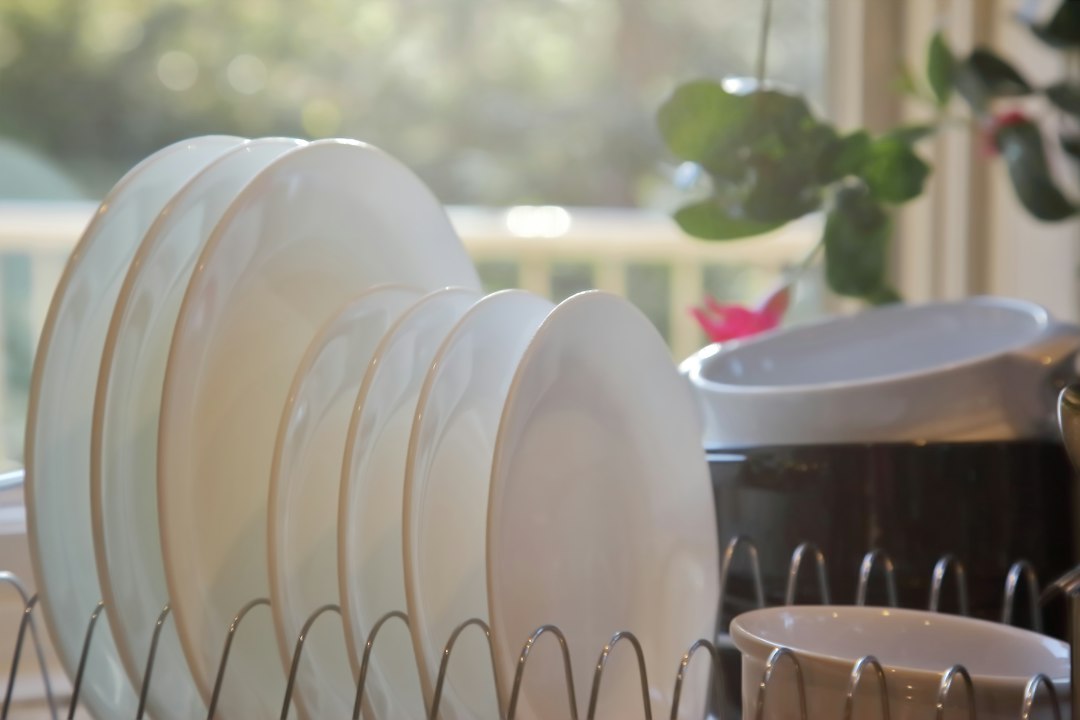
If you cook for a crowd between now and New Year’s, start with a two-tier stainless steel dish rack and thank me in November. The vertical design is the whole trick: the top shelf handles plates and bowls at a proper angle so water sheets off instead of pooling, while the lower level catches glassware, mugs, and pans. My favorite test unit swallowed a twelve-person dinner party’s worth of hand-wash — I counted, because apparently I am that person now — without a single thing stacked on another thing.
Two details separate the good ones from the merely tall ones. Look for a removable drainboard or spout that actually aims the runoff toward the sink instead of a decorative channel that fills and stagnates; if your counter layout fights the fixed spout direction, a separate drainboard tray you can position yourself solves it. And check the utensil cup situation. A divided cup keeps knives from clumping into a silverware bouquet that never dries where the blades meet. The one I ended up keeping has a cup that lifts out entirely, which sounds trivial until the day you have to wash the cup itself and it simply… leaves.
Over-the-Sink and Roll-Up Racks for Tight Counters
My first apartment kitchen had eleven inches of free counter, and I loved that kitchen anyway. If that is your situation, an over-the-sink rack borrows airspace you already own: it straddles the basin, drains straight down into it, and leaves the counter untouched. The trade-off is that you live with a steel structure over your sink, which some kitchens wear better than others. Measure your basin width and faucet height before ordering — the rack needs clearance for the faucet arc and room for your hands to work underneath.
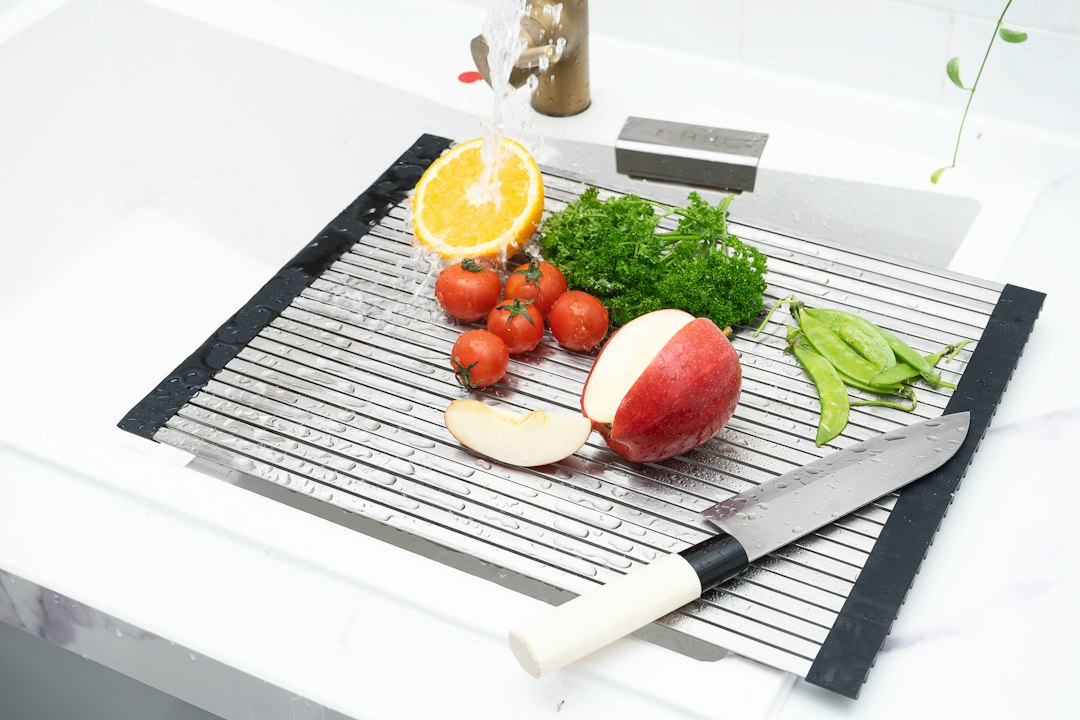
The option I have grown genuinely fond of is the humble roll-up drying rack, a silicone-wrapped steel mat that stretches across the sink like a bridge. It holds rinsed produce while you prep, doubles as a cooling surface for pans straight off the stove, and then rolls up into a drawer-sized cylinder when it is not needed. For a guest-room cottage kitchen or a rental, it is nearly the whole drying strategy in one object. In my main kitchen it serves as overflow seating for dishes when the big rack is full, which, during pie week, is every day. And if even a compact footprint is too much for a studio setup, the small counter models have improved enough lately that they can carry a weeknight cook’s worth of dishes without complaint.
The Quiet Upgrades: Mats, Brushes, and Caddies
The rack gets the glory, but three supporting actors decide whether the zone actually functions. The first is a microfiber drying mat, which belongs under or beside whatever rack you choose. It catches the drip line, protects the counter from water marks, and — this is the part I appreciate — goes into the washing machine, unlike the counter itself. A mat that can be laundered on a Thursday is worth three towels that cannot.
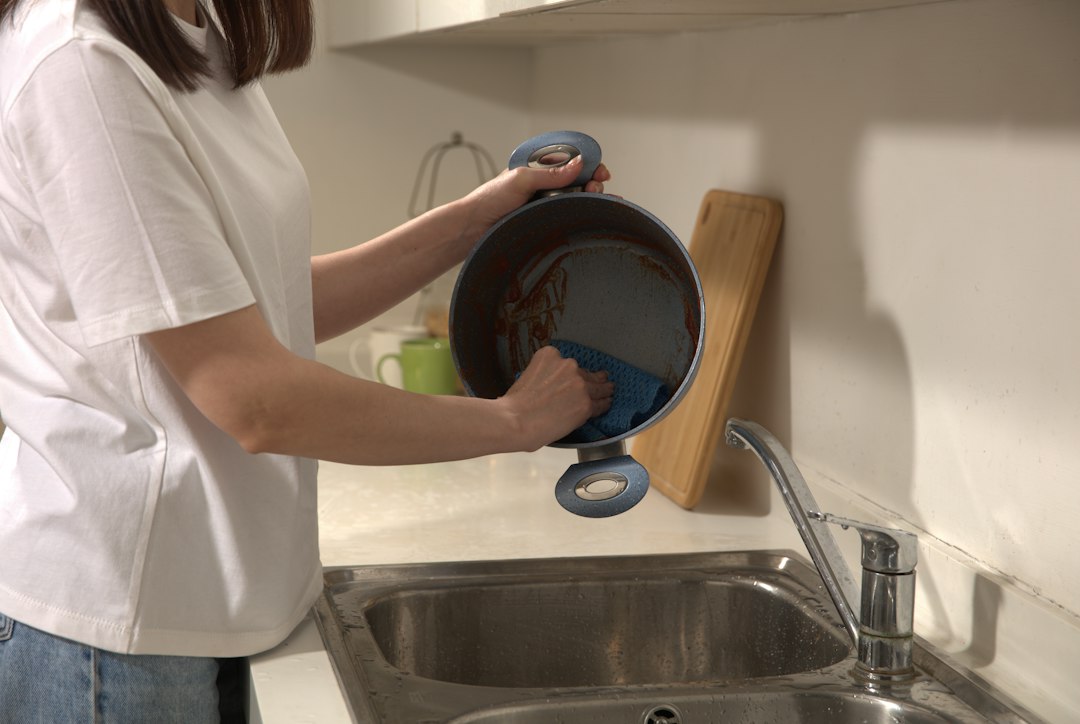
The second is a dish brush with its own stand, and I will defend this with my whole chest. A brush standing bristles-up dries fast, scrubs baked-on pans more effectively than a sponge ever will, and keeps your hands out of the dishwater, which matters more each October as the wash water gets grosser and the sessions get longer. The third is containment for the small stuff: a sink caddy that corrals the sponge, scraper, and brush so they are not camping in a puddle at the basin’s corner. A wet sponge sitting in its own soup is the least appetizing object in a kitchen, and it lives exactly where guests can see it. Housekeeping is hospitality’s quiet half.
When the Dishwasher Stops Being the Answer
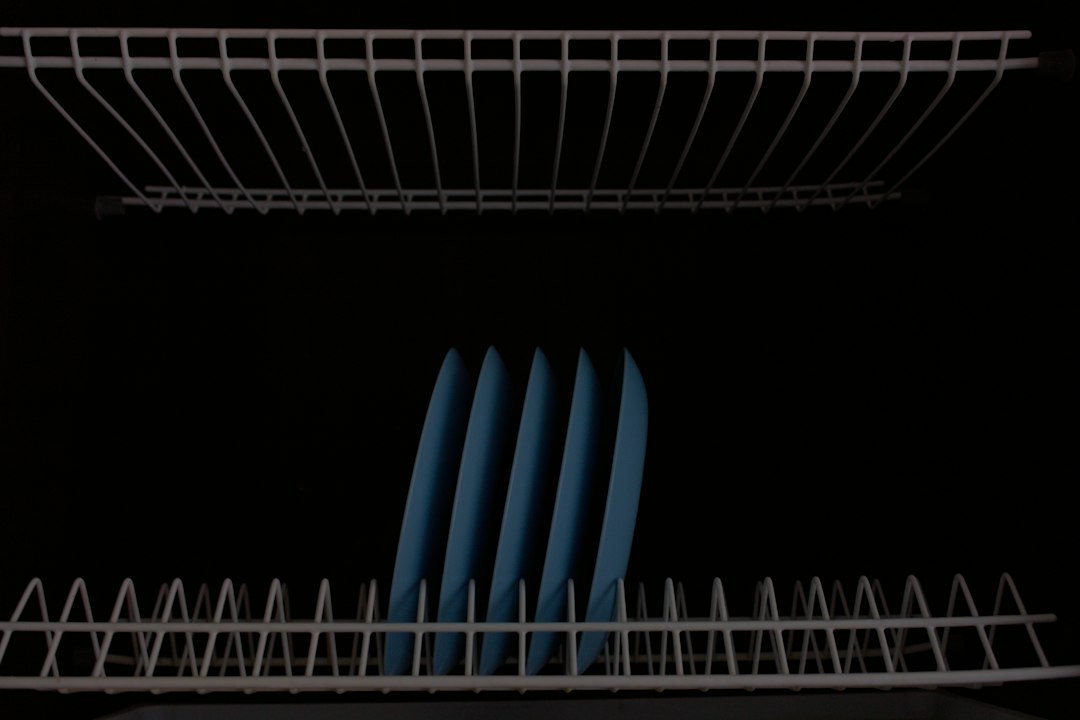
Here is the October math nobody warns you about: the dishwasher does not get more capable during the holidays — the dishes just get less compatible with it. Between the hand-wash-only serveware, the timing crunch, and the machine running back-to-back loads while the roasting pan waits its turn in the sink, the drying zone becomes the bottleneck of the entire operation. If your kitchen truly cannot spare the counter for a full rack, a countertop dishwasher can absorb some of the volume; I wrote a whole guide to countertop dishwashers for small kitchens after testing them last month. The larger point stands either way: whatever combination of machine and rack you run, the system needs a place where wet things become dry things without you standing there wringing towels.
One habit holds the whole thing together, and it costs nothing. Wash as you go — genuinely as you go, not at the commercial break. I wrote about the clean-sink habit that changed my weeknights back in September, and it doubles in force during the holidays. A good rack plus that habit means you sit down to dinner with an empty sink. A bad rack means you sit down to a view of the mountain range, and dessert tastes slightly worse for it.
Keeping the Good Plates Whole
There is one more reason to take the rack seriously, and it has nothing to do with water. Cheap racks crowd plates together at a shallow angle, and crowded plates clink — and clinking plates chip, always along the rim, always on the piece you love most. Last week I pulled my grandmother’s turkey platter down from its high shelf for its annual appearance, and I noticed the tiny rim chips from decades of casual stacking. After we published the holiday dinnerware stress test, several readers wrote in about the same thing: the heirloom dishes survive the meal and get wounded in the aftermath.
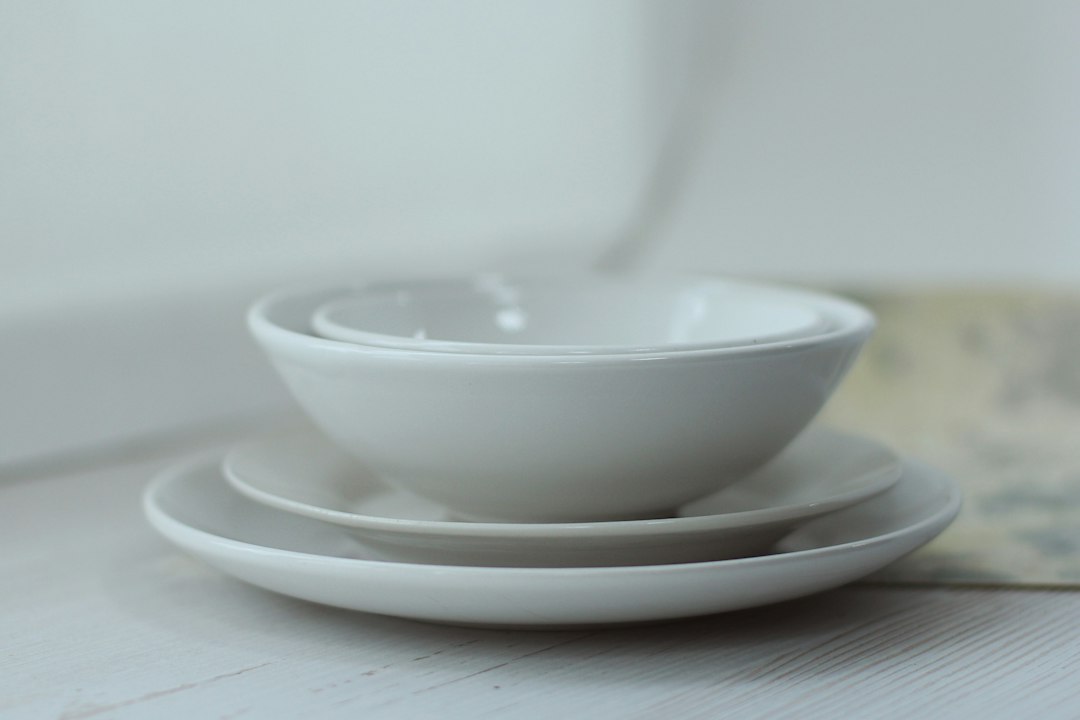
The fix is spacing. A well-made bamboo rack holds plates at a wider, gentler angle than most wire racks, looks warm enough to leave out in a visible corner, and treats rimmed porcelain the way it deserves. If your holiday style runs more modern than farmhouse, the simplehuman route costs more and pays it back in engineering: tensioned wire gauges, a fingerprint-finish frame, and the kind of thoughtful drain routing that makes the price feel inevitable rather than indulgent. Either way, the goal is the same — nothing touches, nothing chips, and the platter goes back up the shelf with exactly as many scars as it came down with.
A Sink Zone Ready Before the First Guest Arrives
So here is the whole plan, distilled from a month of testing and too many Octobers of towel mountains. Pick the rack style that matches your real counter space, not your aspirational one: two-tier steel for full holiday loads, over-the-sink or roll-up when counter inches are scarce. Give it a washable mat underneath, a brush with a stand, and a caddy so the small stuff stays civilized. Set it up this week, before the calendar fills, and run it through a few ordinary dinners so you learn its drainage habits on a night when nothing is at stake.
Do that, and something quietly wonderful happens to the whole kitchen. The towels go back to being towels. The counter becomes a counter again. And on the big cooking days ahead, while the oven runs hot and the house fills up, the least glamorous tool you own will be back there doing unglamorous, indispensable work — holding the pieces steady while they dry, asking for nothing, and keeping the mountain off your counter for good.