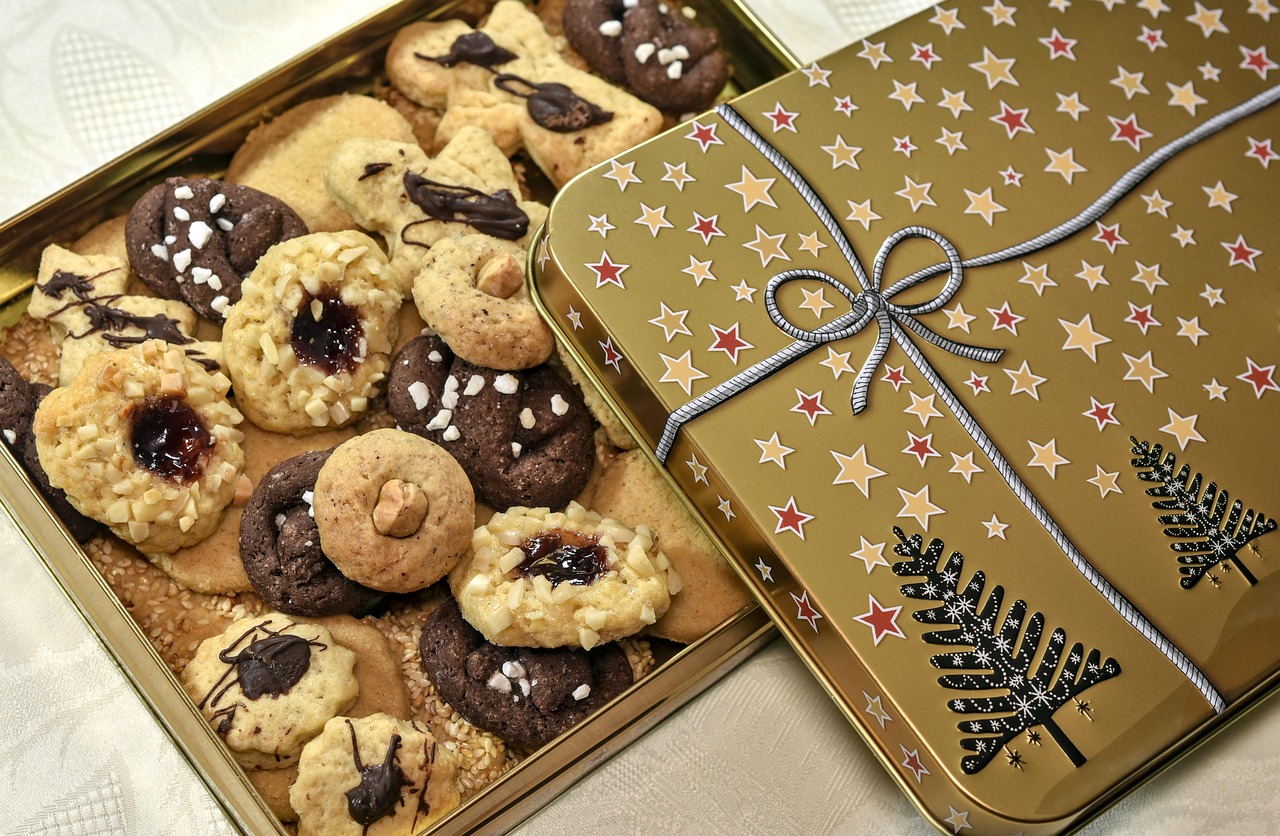
Every December for about fifteen years, a tin of my molasses crinkles has made its way from my kitchen to my aunt’s house four states away. For most of those years, what arrived was what she politely called “cookie gravel.” She’d send me a photo of the open tin, and there they’d be: a layer of brown crumbs, a few brave survivors in the corners, and one sad paper doily holding the whole mess together. She ate them anyway, with a spoon, standing at her counter. That’s love. It’s also a packing problem.
The year I finally fixed it, I didn’t fix it by buying a fancier tin. I fixed it by shipping one box early, as a test, and asking for an honest report card before the real boxes went out. These days that test box leaves my house on the Friday after Thanksgiving, while everyone else is out chasing doorbuster deals. Thanksgiving is Thursday, November 26 this year, Black Friday is November 27, and the leftover pie makes very good fuel for an afternoon of baking and taping boxes.
If you’ve ever opened a care package to a pile of crumbs, or you’re mailing cookies for the first time this year to a college kid, a grandparent or a friend who moved away, this is the system I use. It covers which cookies are worth mailing, how to pack the inside so nothing moves, the box around the box, the dates that matter, and the small kit of supplies I keep in one bin so December doesn’t turn into a scavenger hunt.
Why the Test Box Goes Out on Black Friday
There are two reasons, and neither one is about deals. The first is time. If the test box shows up broken, I still have three full weeks to change something before the real boxes ship. The second is honesty. People are kind about cookies. Ask your mother how the box arrived in the middle of the Christmas rush and she’ll tell you it was perfect. Ask her in late November, when it’s a test and you’ve told her you need the truth, and she’ll tell you the bottom row cracked.
Here are the dates I plan around this year. The Postal Service’s recommended send-by dates for delivery before December 25 inside the lower 48 states are Thursday, December 17 for USPS Ground Advantage and First-Class Mail, Friday, December 18 for Priority Mail, and Saturday, December 19 for Priority Mail Express. International boxes, including Canada and Mexico, should go by Wednesday, December 9 for the regular international services. Alaska, Hawaii and the territories can take ten days or more by ground, so those boxes go first in my house.
Hanukkah starts early this year, at sundown on Friday, December 4, so if your cookies are headed to a Hanukkah table, the test box is really your only box. Bake on Thanksgiving weekend, ship the Monday after, and you’ll have room to spare.
If you do want to buy your supplies during the sales, that’s a fine use of Black Friday, as long as you check that the “deal” is real. My friend over at the tech site wrote up the ten-minute price check he runs on every Black Friday deal, and it works just as well on a pack of shipping boxes as it does on a laptop.
Cookies That Travel, and Cookies That Stay Home
The single biggest change I made had nothing to do with packing. I stopped mailing cookies that were never built for the trip. A cookie that’s going to spend three days bouncing around in a truck needs to be sturdy, not too moist and not too fragile at the edges. Here’s how my list shakes out after a lot of trial and error.
Ships beautifully:
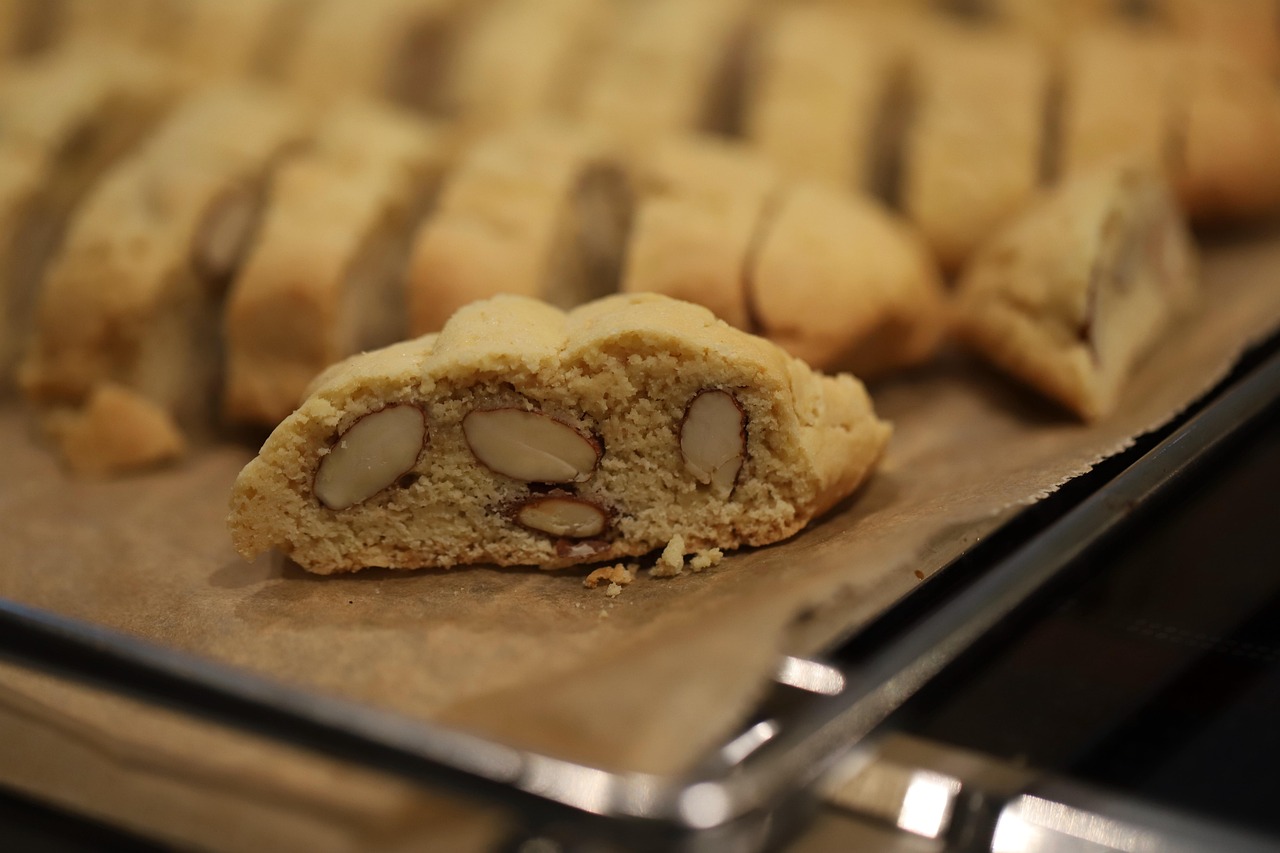
- Biscotti. Twice-baked, dry and practically indestructible. This is the cookie I’d mail to someone across the ocean.
- Shortbread. Dense and buttery, especially pressed into a thick round and cut into wedges or fingers. Keep it on the thicker side.
- Molasses crinkles and gingersnaps. Firm, a little chewy, and the spices actually taste better on day three.
- Bar cookies and brownies. Leave them uncut in a block, or cut them and wrap each one, and they arrive looking like they left your kitchen.
- Snickerdoodles and drop sugar cookies. Sturdy enough if they’re baked through and not underdone in the middle.
Stays home for the cookie plate:
- Meringues, lace cookies, tuiles and anything thin enough to see light through.
- Cookies with cream cheese frosting, buttercream or custard fillings. They need refrigeration and they smear.
- Jam thumbprints with soft centers. The jam glues everything around it together.
- Very soft, underbaked-style cookies. They’re wonderful warm, but they bend and tear in transit.
- Anything coated in powdered sugar, like snowballs. They arrive looking like they’ve been through a blizzard and the sugar ends up on every other cookie in the box.
Decorated cut-out sugar cookies can travel, but only with icing that dries rock hard. Soft glaze stays tacky and smudges. I make royal icing with Wilton Meringue Powder instead of raw egg whites, flood the cookies, and then leave them out uncovered for a full twenty-four hours before they go anywhere near a tin. If you can press a fingertip lightly on the thickest part of the icing without leaving a dent, they’re ready. If you’re rolling a lot of cut-outs this year, my notes on choosing a rolling pin will help you get them an even thickness, which matters more than you’d think for shipping. Thin spots are where cookies snap.

Bake, Cool, Then Wait a Little Longer
Here’s the mistake I made for years. I’d bake in the morning, pack in the afternoon and ship that evening, feeling very efficient. The cookies felt cool to the touch, but they weren’t cool all the way through. Sealed in a tin, that last bit of warmth turned to moisture, the crisp cookies went soft and the soft ones went soggy.
Now I let cookies cool completely on the rack and then sit out for another hour or two before they get packed. Bar cookies get chilled in the pan overnight so they cut cleanly. Then I ship within a day of baking, two at the most. The goal is the freshest cookie possible on arrival, and every day on the counter is a day the recipient doesn’t get.
The other rule is to never mix textures. Crisp cookies and soft cookies trade moisture when they share a tin. Pack your biscotti in a box with your soft molasses cookies and you’ll get chewy biscotti and dry molasses cookies. Same goes for strongly flavored cookies. Peppermint bark and a tin of plain shortbread will share flavors whether you want them to or not. Each type gets its own tin, or at least its own sealed bag inside a shared tin.
This is also a good weekend to take stock of your sprinkles, extracts and baking soda before the real December push. I wrote about resetting the baking cabinet before cookie season, and the test-box weekend is a natural moment to do it, since you’re baking anyway.
Inside the Tin: Pairs, Cups and No Air
The inside of the tin is where cookies are won or lost, and the whole secret is this: nothing should be able to move. Cookies don’t break because a box gets dropped. They break because they slide into each other a thousand times on the way.
I use Round Christmas Cookie Tins With Lids because metal doesn’t crush the way a paper gift box can, and the lids seal well enough to keep cookies fresh for a week or so. I line the bottom with a round of Reynolds Kitchens Parchment Paper, crumple a little more into a soft cushion, and then start filling. If you made a big batch for a swap this year, the tin and bag ideas in my cookie exchange guide work for local delivery, but a box going through the mail needs the extra steps below.
Here’s how I fill a tin:
- Wrap in pairs, back to back. Two cookies, flat sides together, wrapped snugly in Glad Press’n Seal Wrap. The pair protects each other’s tops and the wrap keeps crumbs contained if one does crack.
- Stand them on edge. I pack pairs upright in rows, like books on a shelf, instead of stacking them flat. A flat stack puts all the weight on the bottom cookie. On edge, the weight spreads out.
- Heaviest on the bottom. Bars and brownies go in first, sturdy drop cookies next, and the prettiest decorated cookies on top.
- Fill every gap. Small cookies and bites go into Wilton Mini Paper Baking Cups, which turn loose bits into neat little modules you can tuck into corners. Any remaining space gets crumpled parchment.
- Close it full. The last layer should sit just a hair above the rim so the lid presses down gently. If you can hear anything rattle when you tilt the tin, it’s not done.
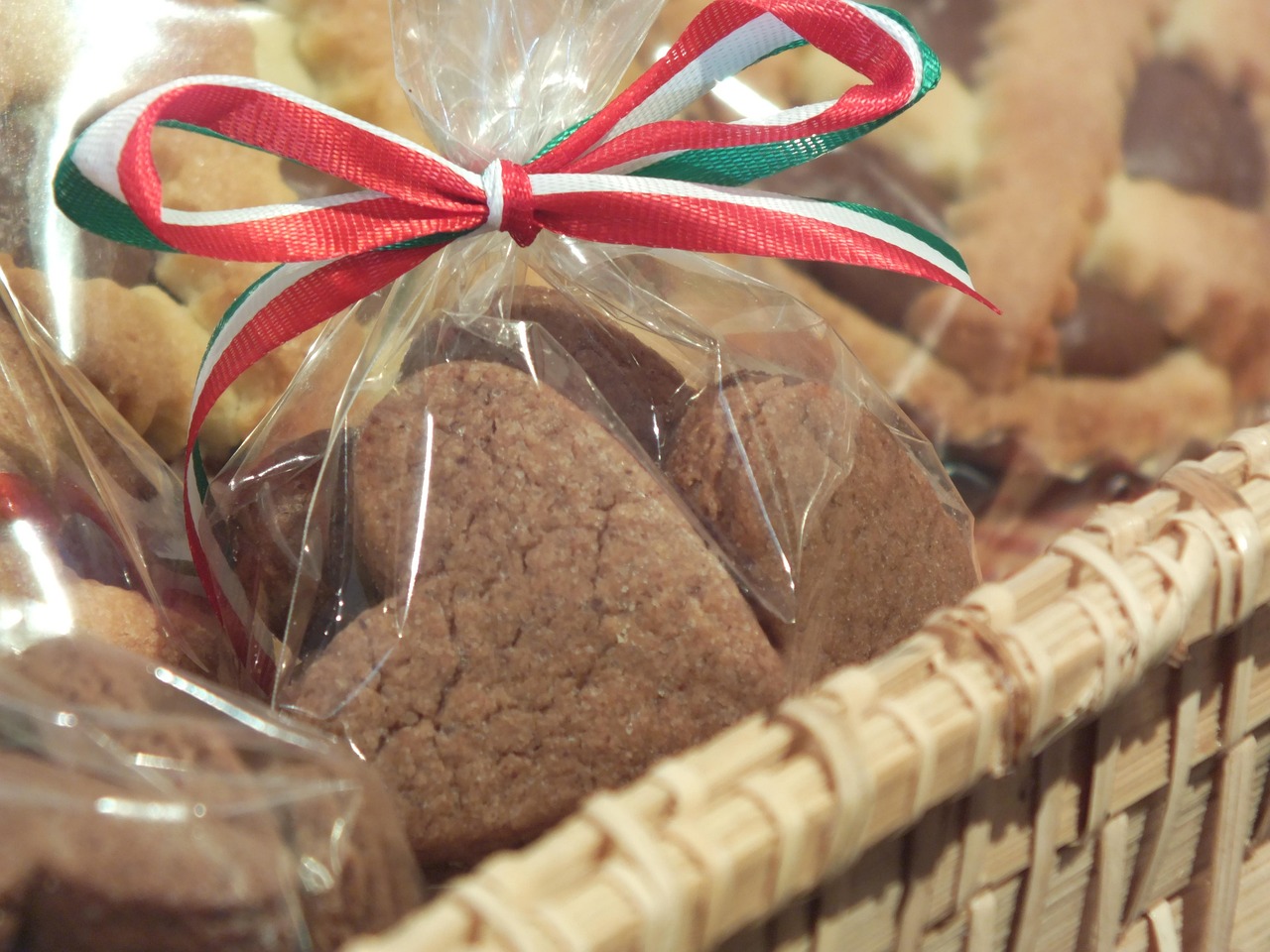
For decorated cut-outs, I skip the pairs and seal each cookie in its own Clear Cellophane Treat Bags With Twist Ties once the icing has fully set. They look like they came from a bakery, and a single broken cookie stays in its own bag instead of ruining the neighbors.
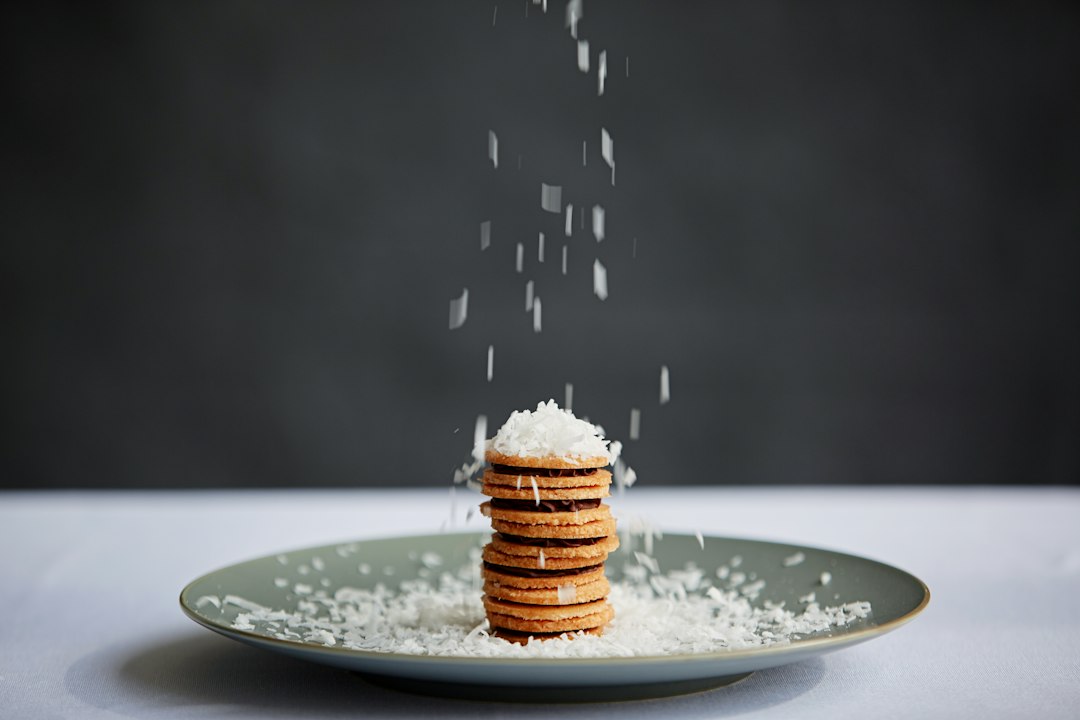
And yes, the old trick works. Round, flat cookies of the same size stack perfectly in an empty, washed-out Pringles Original Crisps can. Eat the chips (that’s the fun part), wash and dry the can thoroughly, line it with a strip of parchment, slide in a stack of shortbread rounds, and fill any top gap with crumpled paper before the lid goes on. A tube like that is strong, light and fits nicely along the side of a shipping box.
The Box Around the Box
A tin by itself, dropped into a mailer, is still a tin rolling around a truck. What actually saved my aunt’s molasses crinkles was the box-in-a-box method, which professional bakers have used for decades.
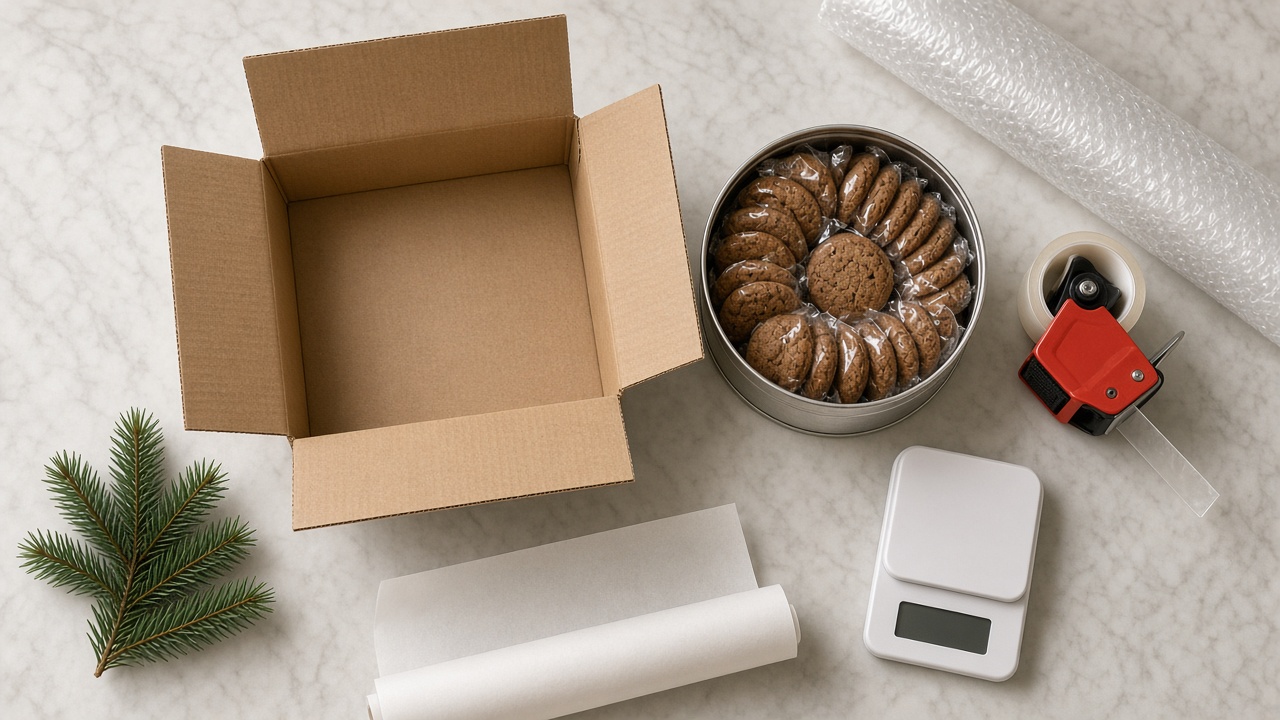
The tin goes into a sturdy outer box that leaves about two inches of space on every side, top and bottom included. I keep a stack of 12x12x8 Corrugated Shipping Boxes (25-Pack) in the garage from November through January because a standard round tin, or two small ones, fits inside with room for padding. Reusing an old box from the attic is fine if it’s stiff and dry, but a box that’s already been through the mail twice has lost a lot of its crush strength.
Here’s the order of operations:
- Lay down two inches of padding in the bottom of the outer box. I use a few loose layers of Duck Brand Bubble Wrap Roll.
- Wrap the tin itself in one layer of bubble wrap and set it in the center.
- Fill the space around the sides with Kraft Crinkle-Cut Paper Shred Filler or crumpled paper, packing it in firmly with your hand.
- Add another two inches on top, then close the box.

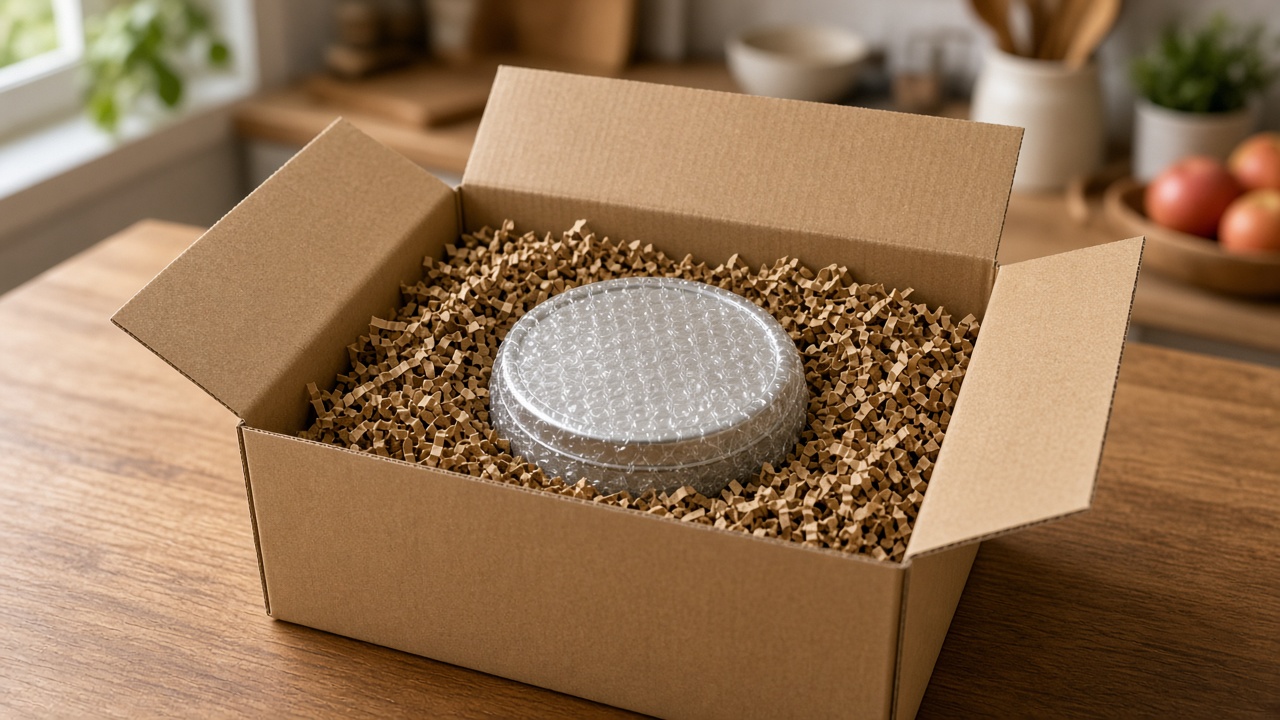
Then comes the part I never skip: the shake test. Close the flaps, hold the box with both hands and give it a firm shake side to side and up and down. If you feel anything shift or hear a thunk, open it up and add more filler. A properly packed box feels like a solid brick.
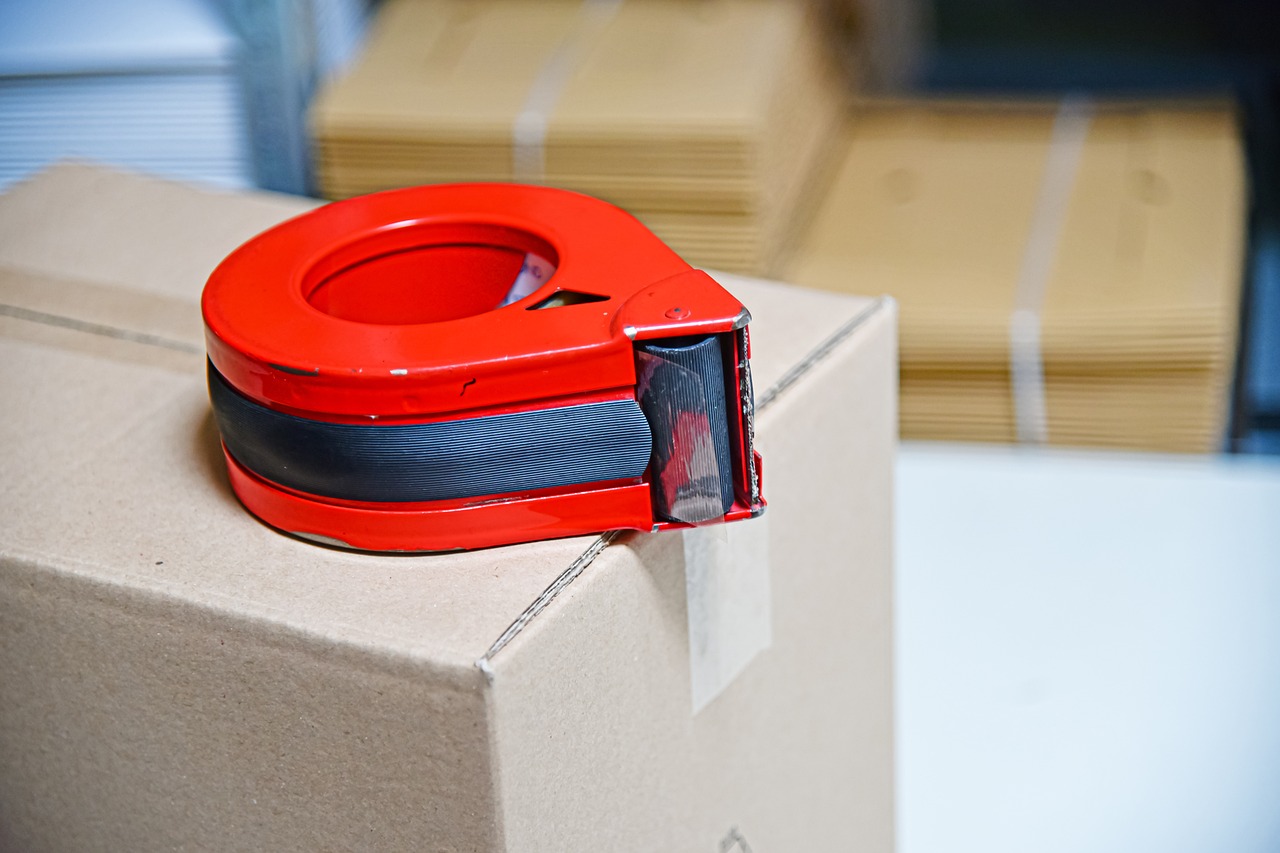
Seal every seam with real packing tape, not the clear office tape from your desk drawer. A Scotch Heavy Duty Shipping Tape With Dispenser lets you run tape across the center seam and both edge seams in an H pattern, top and bottom, in about ten seconds. Write “Perishable, Open Promptly” and “Fragile” right on the box if you like. It won’t make the box get handled like glass, but it does remind the person on the other end not to leave it on the porch for three days.
Weigh It at the Counter, Not at the Post Office
I used to walk into the post office with a box, no idea what it weighed and no idea what it would cost, and stand in a holiday line that wrapped around the lobby. Now I weigh every box at home on my Escali Primo Digital Kitchen Scale. It handles up to about eleven pounds, which covers almost every cookie box I send, and once you know the weight and dimensions you can compare rates, buy postage and print a label online. On busy December days, you drop the box on the counter and walk out.
Knowing the weight also helps you pick the right service. A light box of cookies often costs less by Ground Advantage, but the trip can stretch toward five days to the other side of the country. Priority Mail is usually one to three days, and the flat-rate boxes from the post office are free to pick up and charge by size, not weight, which can be a bargain for a heavy box of brownies. My rule of thumb is simple: anything going more than a few states away goes Priority. A cookie that’s two days old is a gift. A cookie that’s six days old is a compromise.
Timing within the week matters as much as the service. I ship on Monday, Tuesday or Wednesday so the box doesn’t sit in a warehouse over a weekend. I bake on Sunday, pack Monday morning and drop it off before lunch. Friday shipping is the classic mistake, and it’s exactly why the Black Friday test box is a good test. If a Friday box arrives fine, a Monday box will arrive better.
Warm Addresses and Chocolate
If your box is headed to Florida, Arizona, Southern California or anywhere else that’s still in shorts in December, think twice about chocolate. Chocolate-dipped cookies, chocolate drizzle and peppermint bark can soften and bloom in a hot truck, and a melted chocolate cookie smears over everything it touches.
For warm addresses, I either skip the chocolate entirely and send spice cookies, biscotti and shortbread, or I line the outer box with Insulated Thermal Box Liners and ship Priority so the box spends less time on the road. I don’t add ice packs. Cookies don’t need cold, they need steady, and a sweating ice pack is the fastest way to turn a perfect box into a soggy one.
Going the other way, cold doesn’t hurt cookies at all. A box that sits on a snowy porch in Minnesota is perfectly happy. Just let it come up to room temperature before the tin gets opened, or condensation will form on the cookies.
The Report Card From the Test Box
When the test box arrives, I ask the person on the other end for three things, and I tell them ahead of time so they don’t feel like a critic:
- A photo of the box before it’s opened. Crushed corners or a dented side tell me whether I need a sturdier outer box or more padding.
- A photo of the open tin. This shows whether anything shifted, which layer broke and whether my gaps were really filled.
- One honest sentence about taste and texture. Did the soft cookies stay soft? Did the crisp ones go limp? Did anything taste like the peppermint next door?
Then I fix exactly what the report says. Broken bottom layer: more padding underneath and heavier cookies on the bottom. Soft biscotti: separate tins. Crumbs everywhere but whole cookies: tighter packing at the top. Dented box: new boxes instead of the ones from the attic. It’s usually one small change, and it’s much easier to make on November 30 than on December 16.
The first year I did this, my aunt’s test box came back with a photo of a single cracked crinkle and a note that said, “Who are you and what have you done with my niece?” That’s the best review I’ve ever gotten.
My Cookie Shipping Calendar for 2026
Here’s the calendar I’m working from this year. Adjust it to your own list, but keep the order.
- Friday, November 27 (Black Friday): Bake one batch of your sturdiest cookie and pack the test box. Weigh it and buy postage.
- Monday, November 30: Ship the test box. If you’re sending Hanukkah cookies, this is also your real shipping day.
- First week of December: Read the report card and fix what it tells you. Restock boxes, tape and filler.
- Monday, December 7 to Wednesday, December 9: International, military and Alaska or Hawaii boxes go out. December 9 is the recommended international send-by date.
- Monday, December 14 to Wednesday, December 16: Ship everything going inside the lower 48. This leaves a cushion before the official December 17 and 18 deadlines.
- Thursday, December 17 and Friday, December 18: Emergency boxes only, by Priority Mail. Don’t plan on these days. Plan to be done.
The Box That Says “I Thought of You”
I keep everything for cookie shipping in one plastic bin on the garage shelf: the tins, the parchment, the paper cups, a roll of bubble wrap, a bag of crinkle paper, tape, a marker and a pad of shipping labels. When it’s time to pack, I carry the bin in, set it on the counter, and the whole job takes about twenty minutes a box.
That bin is a small thing, but it’s the difference between mailing cookies being a chore I dread and a ritual I look forward to. Somewhere out there this December, somebody you love is going to open a box, peel back the paper and find a tin full of whole cookies that taste like your kitchen. Ship the test box this Friday, and make sure that’s exactly what they find.