Sunday gravy does not care about your knuckles. It wants a snowfall at the end, the kind of pecorino that disappears into the sauce instead of sitting on the noodles like gravel. For years I did that job with the box grater my mother kept in the second drawer, the one with the bent corner and a scar on my index finger to prove we were serious people. Then a crank showed up beside the pot. Someone on the Sunday crew set it down, wiped their hands, and said the only useful sentence in gadget culture: try the pound.
A rotary cheese grater is a drum, a hopper, and a handle. If those three things turn a hard wedge into light shreds without blood, it earns a hook. If they gum up, walk across the counter, or produce dust, it goes back in the box.
We ran that test on purpose. A pound of aged cheese. A pot that had already fogged the window. A table that was not interested in our opinions.
The wedge before the crank
Start with the cheese, or the tool will lie to you. Rotary drums are built for hard, dry, aged pieces: Parmigiano-Reggiano, pecorino Romano, Grana Padano, an aged Gouda that fights back. They shear. They do not mash. Feed them a cold, firm wedge cut into chunks that fit the hopper, and the pile comes out fluffy. Feed them a sweating block of young cheddar and you will spend the evening picking paste out of the teeth with a toothpick and a bad attitude.
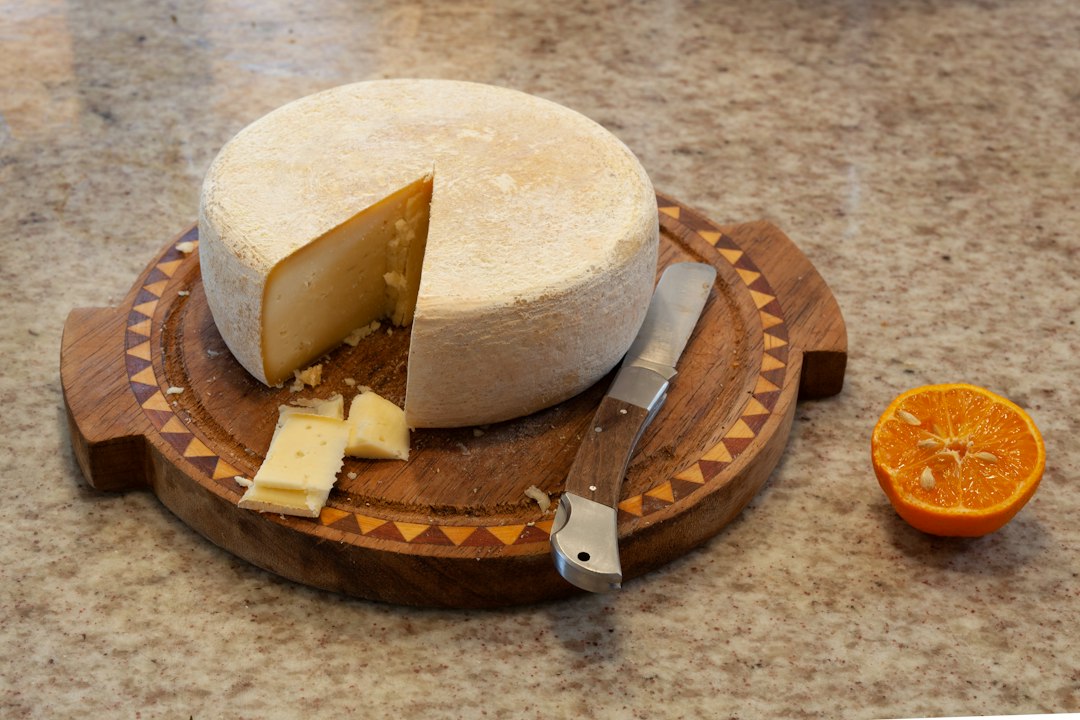
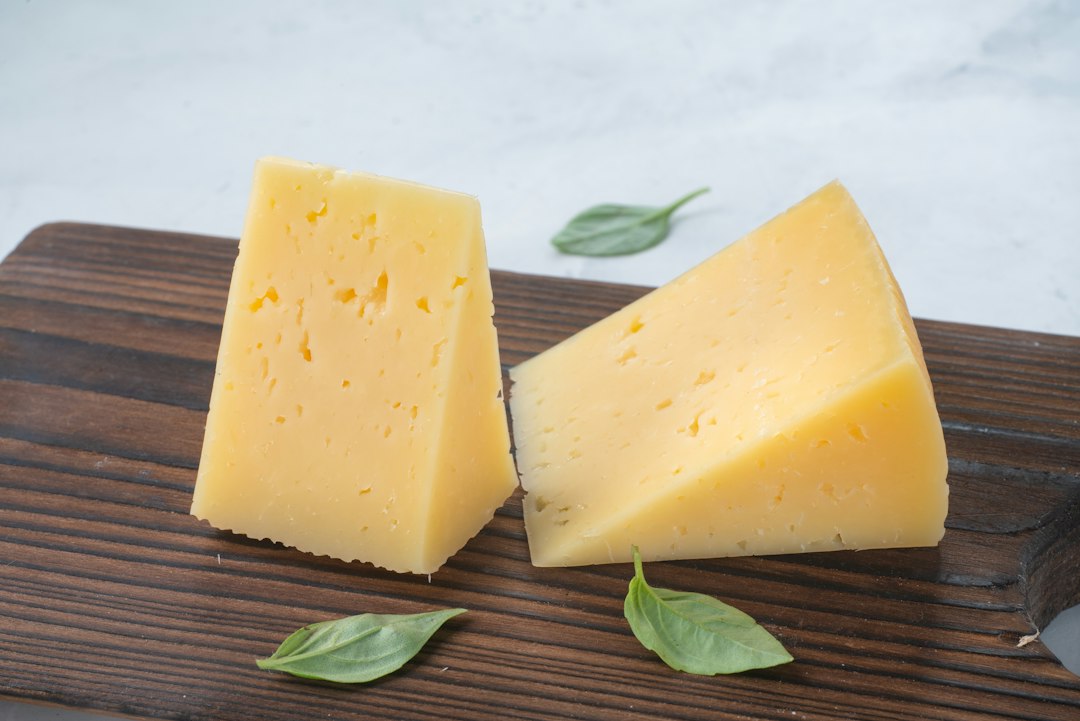
I keep two wedges in the house for this exact reason, and I am fussy about which one hits the drum. A true Parmigiano-Reggiano wedge is the finishing cheese, the one you want in pale, feathery shreds over a cream sauce or a bowl of broth. Pecorino is saltier, sharper, and the one Sunday gravy actually asks for. A pecorino Romano wedge costs less than people fear if you buy a piece instead of a pre-grated tub, and it lasts. Wrap the cut face. Keep it cold. Grate it at the last minute. Pre-grated cheese in a tub has already given up the thing you paid for, which is aroma.
Cut the rind off before it goes in the hopper. Rind is delicious in a simmering pot — I drop a piece into beans without apology — but it is a terrible thing to force through a drum. It jams. It smells like a job. Save it for the braise.
What the box still does better
I am not retiring my mother’s grater, and you should not either if yours still has bite. A box grater is four tools pretending to be one tall object. Coarse shreds for a casserole. A finer face for hard cheese when you are only doing a tablespoon. A slicing side for cold butter. Sometimes a zester panel that is merely fine, not magical. The problem was never the idea. The problem was knuckles, storage, and the way a tall box tips when you get ambitious with a heavy wedge.
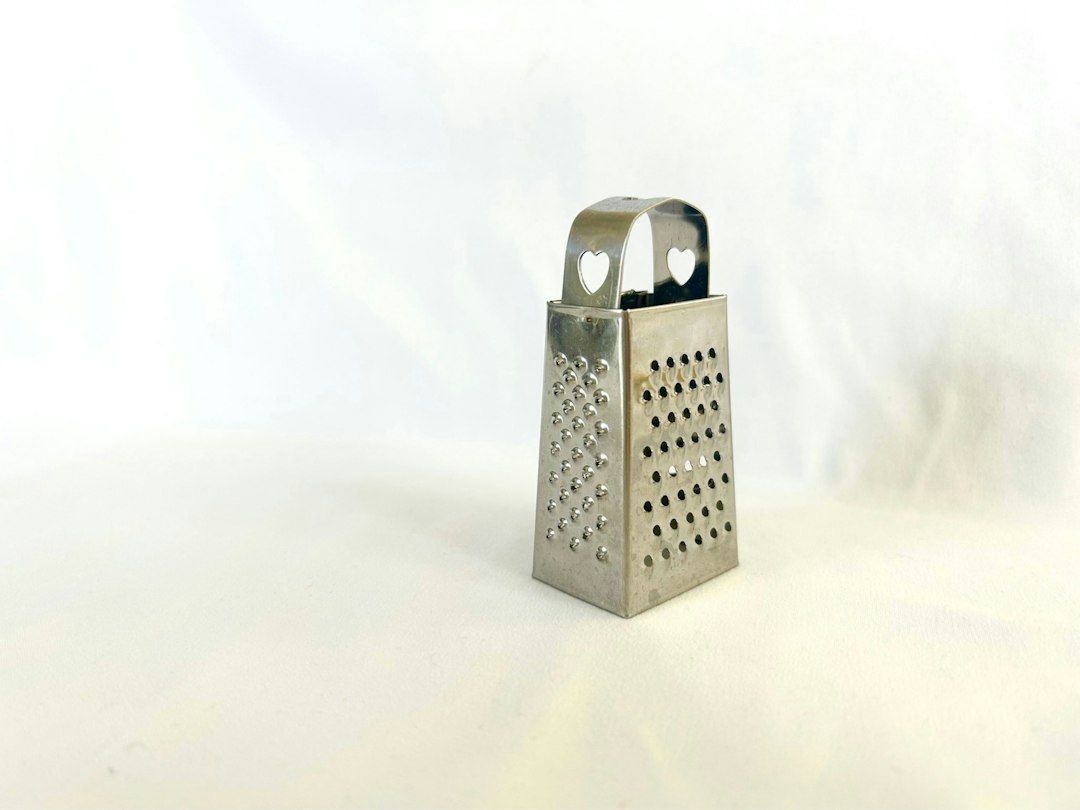
If the box in your drawer is dull, that is a different conversation from “I saw a crank on the internet.” Etched holes, the kind punched by chemistry instead of a stamp, shear instead of tear. That is why a good modern box still beats a sad inherited one on speed, even before you bring a rotary into the room. The OXO Good Grips box grater is the one I point people toward when they want a measuring container under the shreds and a handle that does not bite. The Cuisipro box grater is the sharper, fussier cousin — excellent fine face, a little more awkward to store, the one I reach for when I am grating a small amount of hard cheese and I want it almost powdery.
Here is the honest split. The box wins when the job is mixed: a little cheese, a carrot, a cold potato, a knob of butter, all in one afternoon. The crank wins when the job is volume of hard cheese and you would like to keep your skin. I still use both in the same Sunday. The box does the odd jobs. The crank does the pound.
Snow, not dust
Texture is the whole point, and it is where cheap drums embarrass themselves. You want shreds that look like weather, light enough to melt on contact with hot pasta. Dust means the drum is tearing, or the cheese was warm, or you are using a blade meant for zest on a wedge the size of your fist. America’s Test Kitchen has timed a decent rotary at roughly half a minute an ounce on hard cheese. I am not going to pretend my kitchen is a lab, but I will tell you what a pound feels like: with a sharp three-drum crank and a suction cup that actually holds, the crew and I are done before the gravy needs another stir. With a dull box and a tired wrist, that same pound becomes a standing job and a pile of cheese snow on the floor.
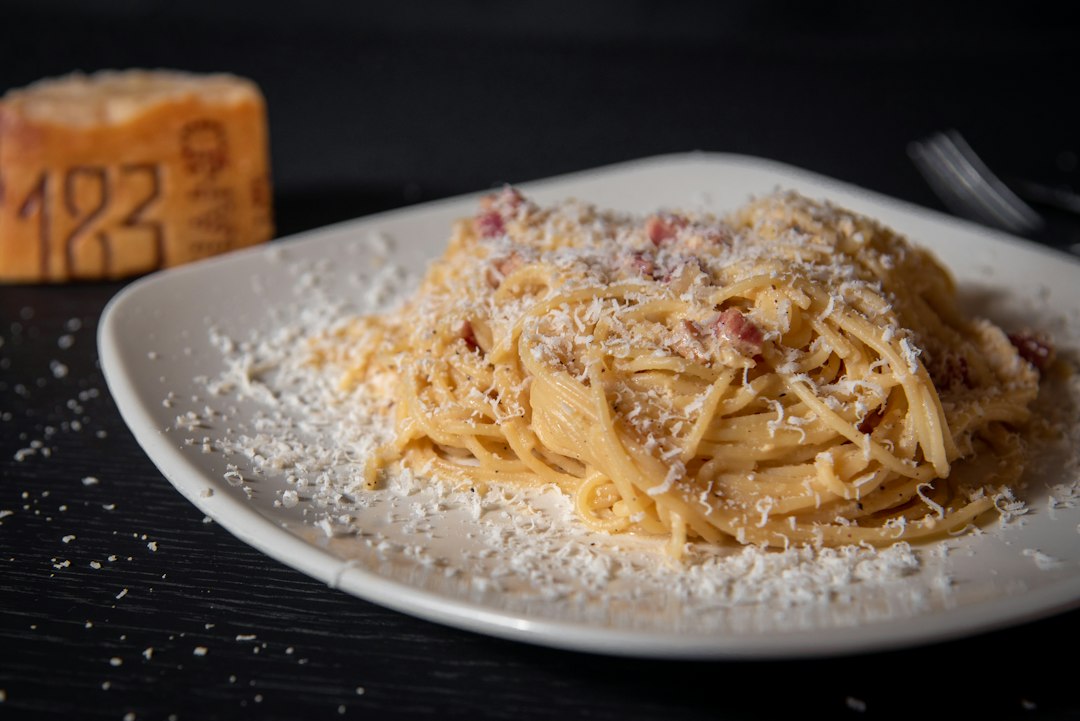
Warm cheese is the silent saboteur. If the wedge has been sitting next to the stove while the sauce reduced, put it back in the fridge for twenty minutes. Cold cheese shatters into shreds. Warm cheese smears. This is not a brand problem. It is physics, and it will make a forty-dollar drum look identical to a twelve-dollar one.
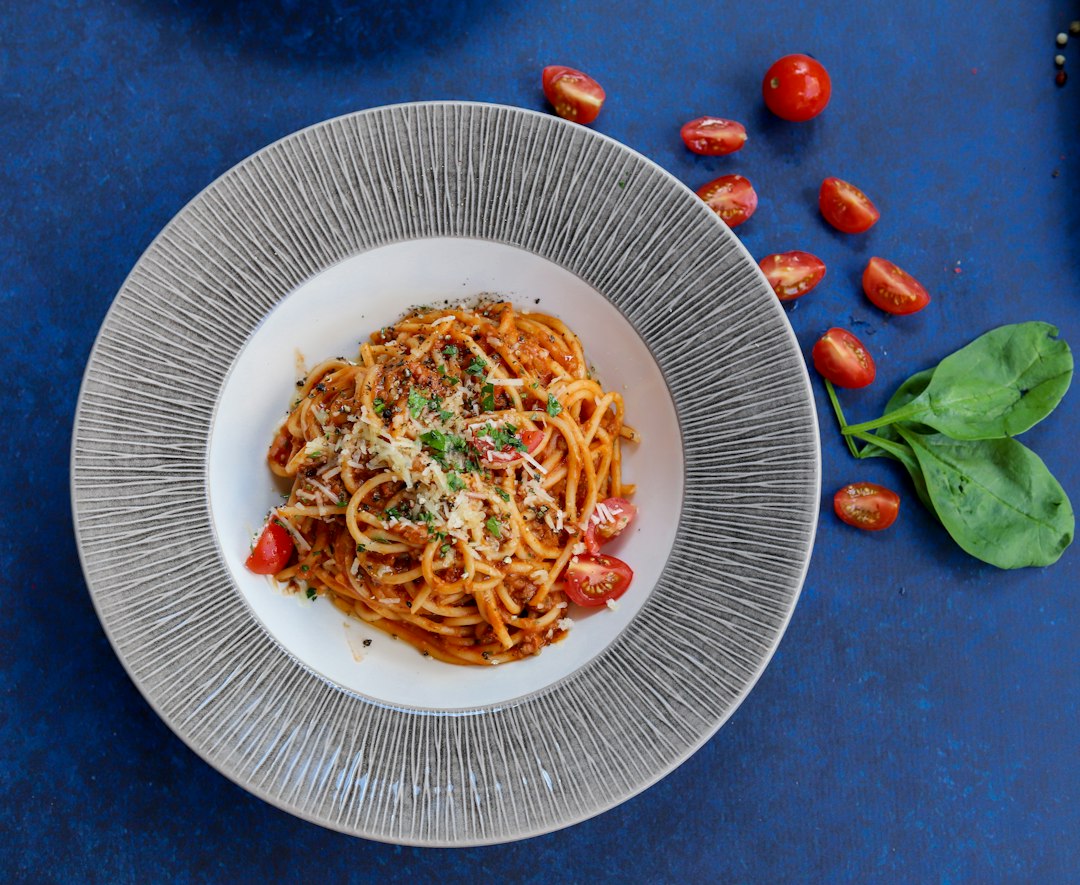
The other half of snow is the plate. Grate over the bowl, not over a cutting board you then have to scrape. Hard cheese sticks to boards and to your pride. A wide bowl under the hopper, then a spoon, then the pasta. If you have been stingy with salt in the pot, this is also the moment to remember that pasta water is a seasoning, not a rinse. Cheese cannot fix a bland noodle. It can only sit on top and look expensive.
Four cranks, one drawer
I do not need four rotary graters. I kept them on the counter long enough to learn which arguments are real.
The one most people mean when they say “that crank from the video” is the Cambom rotary cheese grater. Three drums, a suction base, a hopper that a grown-up can load without a tutorial. Taste of Home has been running one for years and still calls it the speed pick, which matches what happened at our table: fine drum for pecorino snow, coarser drum for the cheddar that goes into a baked pasta on Monday, and a third drum I use less than I thought I would. The suction cup is the feature that matters and the feature that fails. On a smooth counter it locks. On a textured stone it walks. Wet the cup. Press the center, not the rim. If your counter is a relic of 1998 laminate with a raised pattern, skip suction and look for a model you can brace with your free hand, or set the whole thing inside a heavy bowl.
If you want more textures than you will use, the Zulay five-drum rotary grater is the maximalist. In a real drawer that means two drums you love, one you meet at Thanksgiving, and two that live in the lid until you move. Buy it only if you will actually wash the extras.
The budget end is the Geedel rotary grater. It does the hard-cheese job. The plastic feels like plastic, and the suction is less confident. It is an honest trial if you are not sure a crank belongs in your life. If you already grate a wedge a week, spend the extra on a base that does not travel.
The one I respect and rarely recommend to a casual cook is the Zyliss rotary cheese grater. It is the fast, sturdy, restaurant-counter version of this idea — less “five drums and a color,” more “this will still turn in three years.” If you cook for a crowd, or you are replacing a crank that died because the handle stripped, start here. If you grate cheese twice a month, you will not feel the difference you paid for.
The Susteas rotary grater sits in the same suction-base neighborhood. I would buy it as a gift when the first choice is out of stock. I would not buy it as a second crank. Two suction graters is how drawers become archaeology.
Whichever drum you choose, wash it before the cheese dries. That is the entire care manual. A rinse under hot water while the shreds are still soft takes ten seconds. A dried drum takes a brush, a grudge, and sometimes a retirement. Most of these housings are not the thing I trust in the dishwasher. The drum, maybe, on the top rack, if the maker says so. The crank body, no. Cheese fat plus a heated dry cycle is how plastic handles become oval.
The soft cheese problem
This is where the videos get quiet. Mozzarella, young cheddar, pepper jack, anything that stretches or smears — a rotary drum is the wrong animal. You will get paste, then a jam, then a crank that smells like a closed fridge. Pizza cheese is a box-grater job, or a food processor if you are covering a sheet pan for a crowd. I learned this the expensive way, which is to say I learned it once and then I stopped arguing with dairy.

The other tool that still wins a job the crank cannot touch is a rasp. A Microplane gourmet grater is not a replacement for a rotary, and I have already written about what a rasp does to garlic. For cheese, it is the finishing wand: a veil over a finished plate, lemon zest into a dressing, a teaspoon of hard cheese into eggs. It will not do a pound. Your wrist will file a complaint. Keep it. Do not ask it to be a hopper.
If you already own a stand mixer and you resent hand tools on principle, the KitchenAid Fresh Prep grater attachment will shred a block while you do something else with your hands. It will not make the fine snow Sunday gravy wants. It also refuses to be useful in a kitchen that does not already have the mixer. Buying a mixer to grate cheese is how people end up with a second mortgage and a dusty paddle. I have strong feelings about mixers. This is not the article where I indulge them.
The job a child can actually hold
The kindest thing about a crank is the job it creates. A box grater is a bad first kitchen task. The holes are a lesson in blood. A hopper and a handle, with a grown-up’s hand on the cup and the cheese already cut into boring chunks, is a job a child can finish. We put the youngest on the crank for the last cup of pecorino. He is supervised. The blades are inside the housing. The only thing he reliably hurts is the suction cup, by lifting instead of turning.

That is the gift angle, if you are already thinking about December. A crank in the twenty-to-forty-dollar pocket is a present for the cook who has a Dutch oven and does not want another candle. Pair it with a wedge, not with a gadget catalog. The person who receives a three-drum crank and a piece of pecorino will use both on the same night. The person who receives a fifth drum they did not ask for will smile and find a drawer.
Holiday tables make this louder. The twenty minutes between oven and plates are already spoken for — I wrote about that gap when we built a carving station — and nobody in that window wants to be the person bleeding into the gravy boat. A crank on a board at the end of the table lets guests finish their own bowls. It also keeps you from pre-grating a mountain that dries out before the second helpings. Cheese snow is a last-minute substance. Treat it that way.
What I would buy first
If your kitchen grates a hard wedge more than twice a week, buy the Cambom or the Zyliss and stop reading. Cambom if you want three drums and you have a smooth counter. Zyliss if you want the thing that feels like it will outlast the drawer organizer. Skip the five-drum set unless you have already lost a drum and missed it.
If you grate hard cheese a few times a month and your box still has teeth, keep the box. Add a Microplane if you finish plates and zest citrus. Do not add a crank to solve a problem you do not have. A crank that solves imaginary volume is just another object that has to be washed.
If your box is dull, bent, or stored in a way that means you never use it, replace the box before you add a crank. A sharp box plus a rasp covers more jobs than a rotary alone. The rotary is a specialist. Specialists are wonderful when the menu matches. They are clutter when it does not.
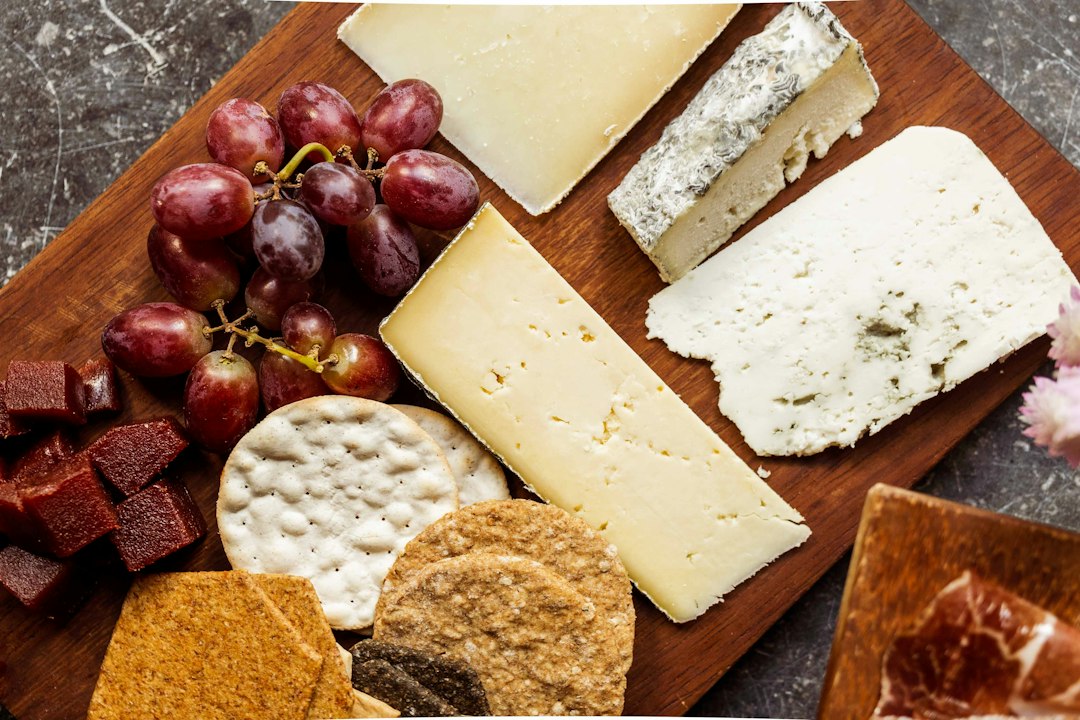
And if the cheese on your board is soft, bloomy, or meant to be cut with a knife and eaten with a cracker, leave it alone. Not every cheese is a project. Some of it is just dinner before dinner. The crank has nothing to say to a wedge of blue or a slab of Brie, and the Brie prefers it that way.
The drawer verdict
The box stayed. That surprised the part of me that likes a clean narrative. The crank joined it, on a hook, drums nested in the lid so they dry. The Microplane stayed in the drawer with the garlic tools, because a rasp that lives next to the press gets used, and a rasp in a gadget grave does not. The five-drum set did not survive the week. Too many parts for the amount of joy.
Sunday gravy was better. Not because a crank is magic. We grated more cheese, colder, later, and nobody was nursing a knuckle while the pot waited. The snow melted. If your gravy has been asking for that and your box has been answering with blood, the crank is the correction. If your gravy is fine and your knuckles are fine, leave the drawer alone and go stir the pot.
If you are building the sauce from scratch this month, the grater is the last tool, not the first. Garlic still runs the beginning of that pot — the press, the rocker, and the tube if your cloves are fighting you — and a pasta roller will ruin your Sunday in a completely different, wonderful way if you let it. The crank is the ten-minute ending. Buy it for the ending. Do not let it become the plot.