The first prime rib I ever cooked for Christmas came out gray from edge to edge, and I knew it the second the knife went in. My aunt patted my shoulder and said, “It’s beef, honey, everybody will eat it.” Everybody did. But I spent the rest of that dinner doing math in my head, trying to figure out where it went wrong, and the answer turned out to be almost embarrassingly simple. I hadn’t planned the roast. I had planned the menu, the table, the cookies and the wrapping paper, and the most expensive thing in my kitchen got whatever time and attention was left over on the afternoon of the twenty-fifth.
So now the prime rib gets its own calendar, and it starts in November. That sounds fussy until you call a butcher in mid-December and hear “we’re full on rib roasts.” My team and I have run this plan for years, and here it is in full: when to order, what to ask for, how to salt it, the low-oven method that keeps it pink edge to edge, my pull temperatures and the small kit that keeps the afternoon calm. Christmas falls on a Friday this year, which makes the timing friendly.
The Short Version, If You Only Read One Section
- Mid-November to December 1: call your butcher or meat counter and place the order. Ask for the size, the cut and the pickup day in writing.
- Tuesday, December 22, or Wednesday, December 23: pick up the roast.
- Wednesday, December 23: salt it and set it uncovered on a rack in the fridge.
- Christmas morning: roast low at 225°F, pull at 120 to 125°F for medium-rare.
- Thirty to sixty minutes before dinner: rest, then a short blast at 500°F for the crust, then carve.
Why the Roast Has to Be Ordered Before the Tree Goes Up
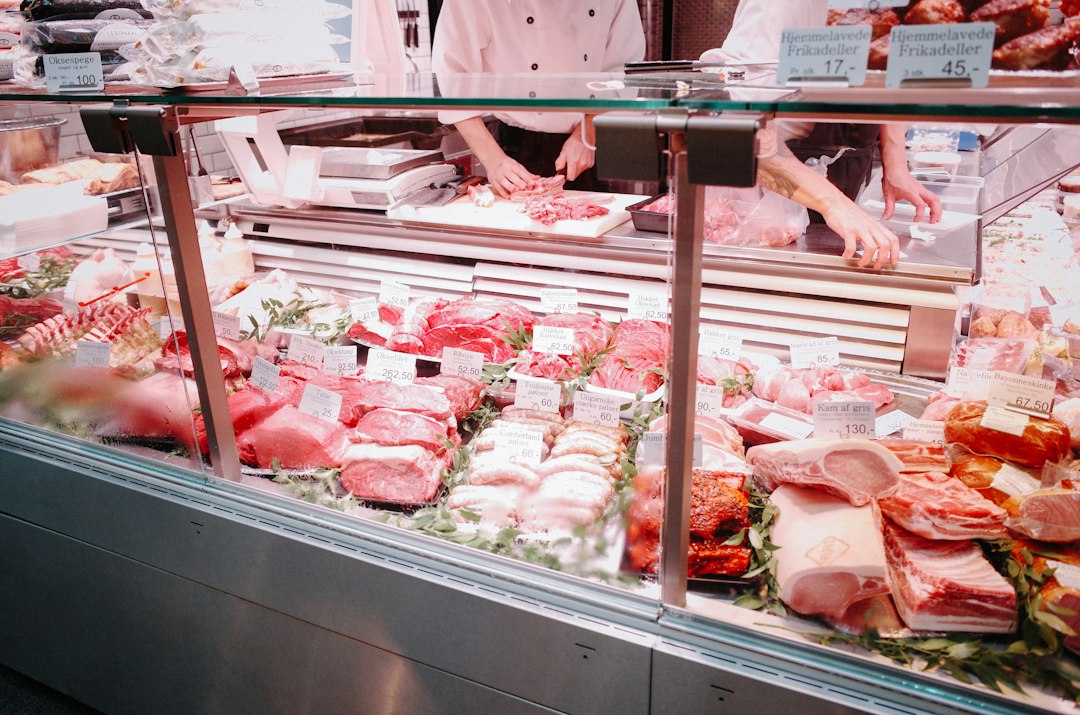
Standing rib roasts are one of those cuts that most grocery stores don’t keep in quantity until the week of the holiday, and the good ones, the well-marbled, properly trimmed, Prime or high-Choice roasts, are spoken for long before that. Independent butchers often start taking Christmas orders right after Thanksgiving and stop when their supply is committed. Even supermarket meat counters will set one aside if you ask early, and they’re far happier to trim and tie it in early December than on December 23 with a line out the door.
Calling early also forces the decisions now, while you’re calm. How many people? Bone-in or boneless? Which end? Easy questions on a quiet Tuesday in November, stressful ones at a refrigerated case on December 23.
What to Say When You Call the Butcher
Here is my actual script, word for word, because I used to freeze up and say “a prime rib, please,” which tells them almost nothing.
- “I’d like a bone-in standing rib roast, ___ ribs, for ___ people.” My rule of thumb is one rib for every two guests, which works out to roughly a pound of bone-in roast per person. If your table loves sides, three-quarters of a pound is plenty.
- “From the small end, please, the first cut.” The small end, near the loin, has a bigger, leaner eye of meat. The large end, closer to the shoulder, carries more fat and the beloved cap. Both are delicious. The small end is the more forgiving one for a first roast.
- “Could you cut the bones off and tie them back on?” This is the single best request you can make. You still roast on the bones for flavor and insulation, but at carving time you snip the strings, lift the meat off in one piece and slice it like a loaf. No sawing around ribs at the table.
- “What grade is it, and is it dry-aged?” Prime has the most marbling and the highest price. A good high-Choice roast cooked carefully is wonderful. Dry-aging adds a deeper, nutty flavor and costs more again. Know which you’re paying for.
- “Can I pick it up on the twenty-second or twenty-third?” Two or three days before Christmas gives you time to salt it properly without the roast sitting in your fridge for a week.
Write the answers down. My team tapes an order slip inside the pantry door with the shop, weight, price per pound and pickup time.
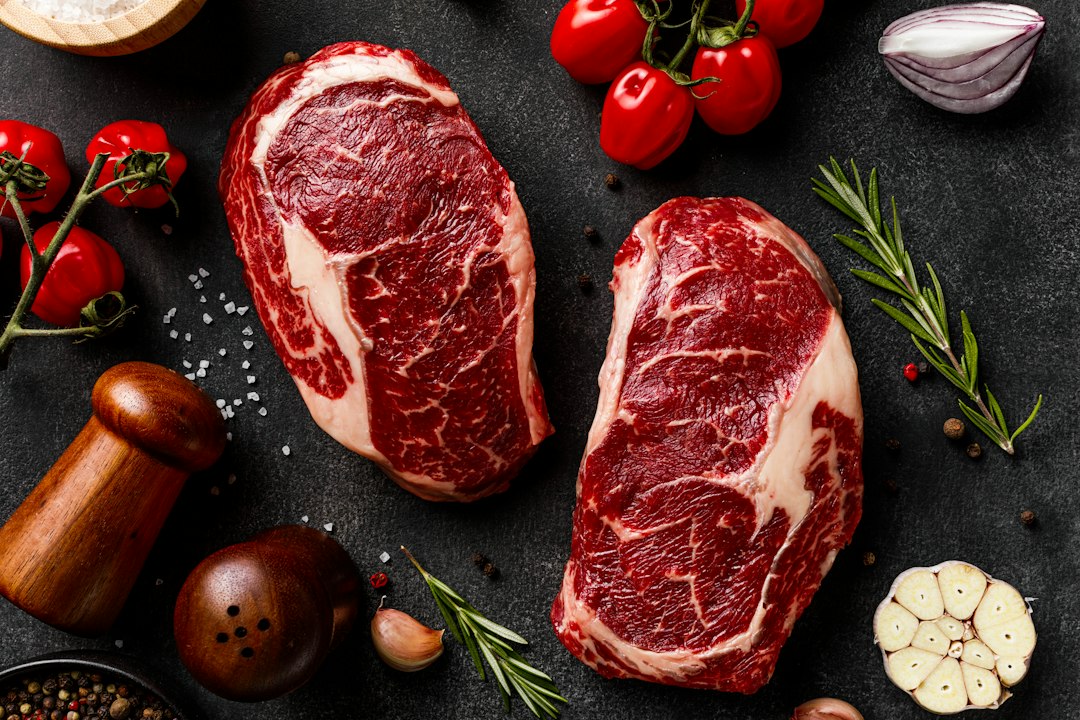
If you’ve ever bought ribeye steaks, you’ve already met this cut. A rib roast is simply that same muscle left whole, before anyone slices it into steaks. Look for fine white flecks of fat running through the red.
Two Days of Salt and Cold Air
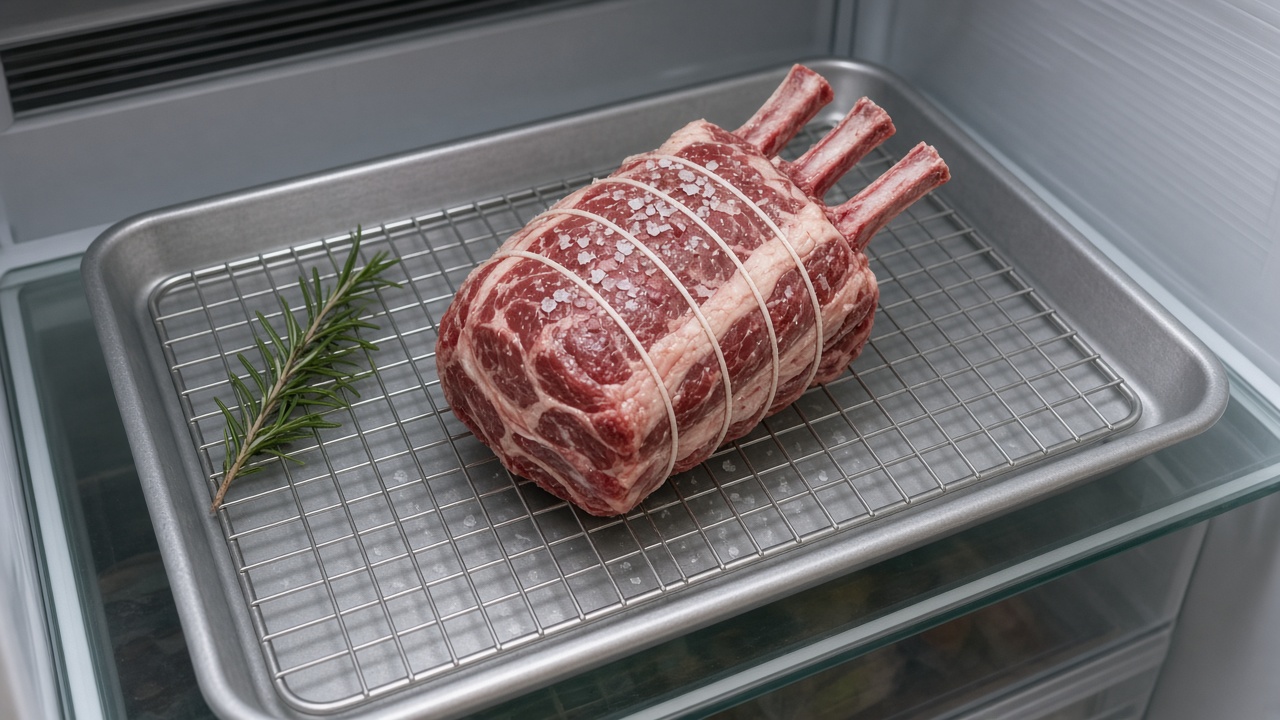
On Wednesday the twenty-third, the roast comes home and goes straight to work. I unwrap it, pat it dry and salt it all over, including the cut ends, with about one teaspoon of Diamond Crystal Kosher Salt per pound of meat. If you use a denser salt like Morton kosher, cut that roughly in half. Then it sits uncovered on a wire rack set in a rimmed sheet pan on the bottom shelf of the fridge until Christmas morning.
The salt draws moisture out, dissolves into it and works its way back in, seasoning far deeper than a last-minute sprinkle. Meanwhile the cold fridge air dries the surface, and a dry surface browns instead of steaming. I went into the timing of all this in my piece on why salt has a schedule, and a rib roast is the place where that schedule pays off most.
The rack matters more than people think. Set a roast flat on a plate and the bottom sits in its own juices for two days. A sturdy Nordic Ware Half Sheet Pan With Oven-Safe Rack lets air reach every side in the fridge, and it’s the same setup I roast on, so the meat only gets handled once. If you’d rather use a proper roaster, I covered when one is worth owning in my roasting pan guide, but for a bones-off, tied-back rib roast, the sheet pan and rack honestly do the job beautifully.
If your butcher didn’t tie the bones back on, do it yourself now with a few loops of Regency Natural Cotton Butcher’s Twine, one string between each pair of bones. Ties also hold the roast in a neat, even cylinder, which helps it cook evenly from end to end.
Low Oven, Then a Hot Finish: The Method That Changed My Christmas
For years I blasted the roast at high heat, then turned the oven down. It works, but it leaves a thick gray band under the crust. The reverse sear flips that order, and it’s why my prime rib is now rosy from just under the crust to the middle.
The oven goes to 225°F. The roast goes in on its rack, straight from the fridge, with a leave-in probe in the very center of the thickest part. It roasts slowly, sometimes for four or five hours for a three- or four-rib roast, until the center reaches the pull temperature you want. Then it comes out and rests while the oven heats as high as it will go, 500°F in most home kitchens. Just before dinner it goes back in for eight to twelve minutes, just long enough to crackle and brown the outside, and then you carve.
Low heat is slow to overshoot, so you get a wide window to catch the roast, but only if you’re watching. That’s why the leave-in probe is the most important tool in this article. I keep a ThermoWorks ChefAlarm on the counter beside the oven with its cable through the door, and I set the alarm five degrees below my pull temperature, so it calls me back to the kitchen before the roast is done instead of after.
Your oven dial also tells fibs, especially at the low end. Before Christmas Day, hang an inexpensive Rubbermaid Stainless Steel Oven Thermometer in the middle of the rack and see what 225°F really means in your oven. Mine runs fifteen degrees hot, which adds up over four hours.
The Temperatures I Pull At
These are the center temperatures at which the roast comes out of the low oven. With this gentle method, the temperature only rises a few degrees while it rests, much less than with the old high-heat approach.
- Rare: pull at 115 to 118°F. Deep red, very soft.
- Medium-rare: pull at 120 to 125°F. Rosy pink, juicy, the classic prime rib look. This is where I land.
- Medium: pull at 130°F. Pink and firmer, good for a mixed crowd.
- Medium-well and beyond: pull at 140°F or higher. For guests who like it well done, I slice the end pieces for them, since they always cook a little further.
One honest note: the USDA’s guidance for whole beef roasts is 145°F with a three-minute rest, which is medium-well. Most prime rib recipes go lower, and that’s a choice each household makes for itself. If you have anyone at the table who’s pregnant, elderly or immune-compromised, serve them from the more cooked ends or give their slices a quick sear.
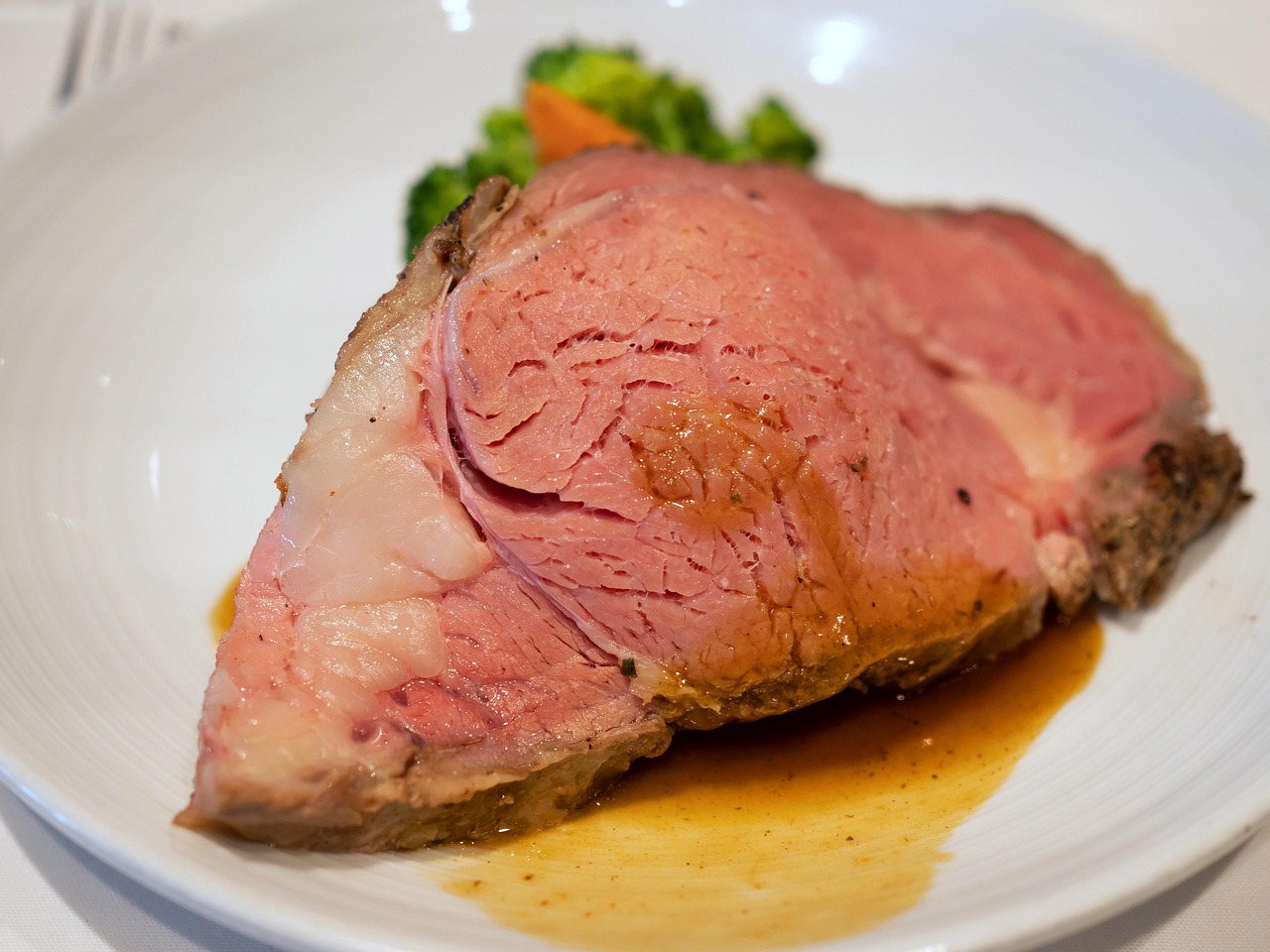
Before you slice, check the center in a couple of spots with a fast instant-read. The leave-in probe tells you about one spot. A quick ThermoWorks Thermapen ONE reading at each end and in the middle tells you about the whole roast, in about a second each. I wrote a lot more on choosing between probe styles in my thermometer guide for roast season.
Christmas Day, Hour by Hour
This is the schedule for a four-rib roast, roughly eight pounds, aimed at a 6:00 PM dinner. Shift everything earlier or later with your own dinner time, and remember that the probe decides when the roast is done, not the clock. A slow oven is so forgiving that I’d much rather start early and hold than start late and rush.
- 11:00 AM: oven to 225°F. Check the oven thermometer once it settles.
- 11:30 AM: roast goes in on its rack and sheet pan, probe in the center, alarm set five degrees under your pull temperature.
- Early afternoon: ignore it. Make the sides, set the table, take a walk. The roast doesn’t need basting.
- Around 3:30 to 4:30 PM: the alarm goes off. Confirm with the instant-read, pull the roast and tent it loosely with foil.
- Resting, up to about 90 minutes: this is the gift of the method. The roast holds happily while the oven is free for Yorkshire puddings, potatoes or anything else.
- 5:30 PM: oven to 500°F, or as hot as it goes.
- 5:45 PM: roast back in for eight to twelve minutes until the crust is deep brown and sizzling.
- 5:55 PM: out, snip the strings, lift off the bones and carve. No second rest needed.
If you’re feeding a big group, it helps to weigh the roast at home when you pick it up, so you’re not guessing from the label. I keep a kitchen scale out all December for exactly this reason, and our sister health site makes a good case for keeping one on the counter all year in its piece on running a kitchen-scale week.
What the Resting Hour Is Really For
That rest isn’t dead time. It’s the most useful hour of Christmas dinner. The big oven is suddenly free, and it’s hot, which is exactly what Yorkshire puddings want. I pour a few spoonfuls of the fat from the sheet pan into each cup of a Chicago Metallic 6-Cup Popover Pan, heat it until the fat shimmers, pour in the batter and get the tallest, crispest puddings of the year. A popover pan’s deep, narrow cups climb higher than a muffin tin ever manages.
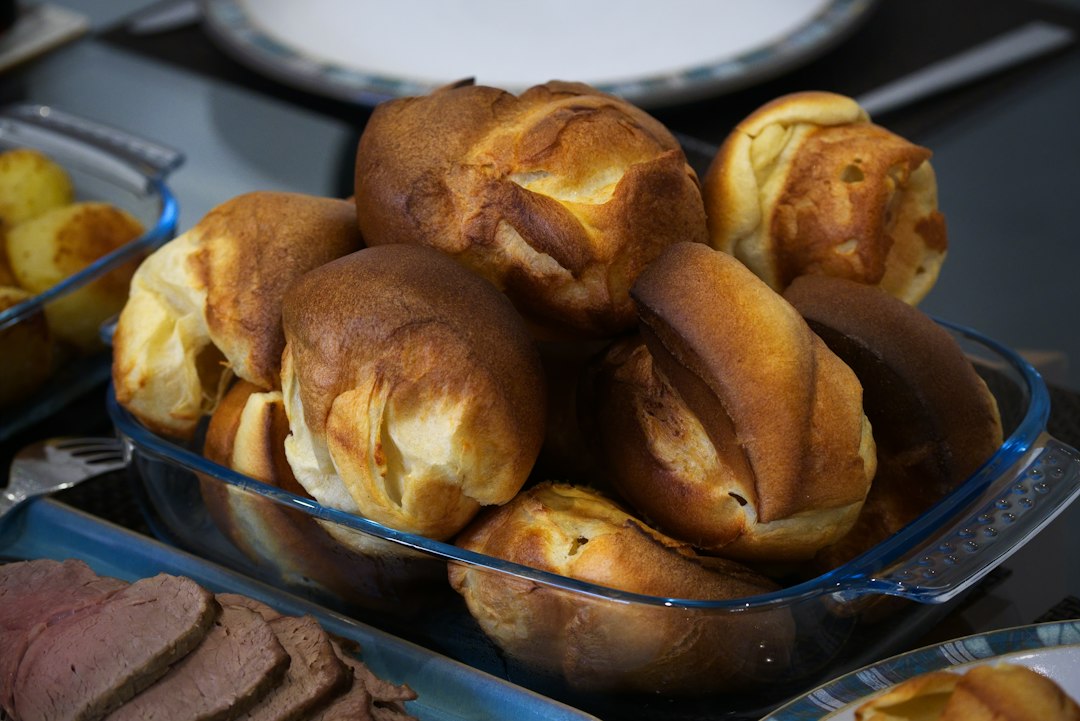
The drippings left in the pan are also your jus. Scrape everything into a saucepan, add a splash of red wine and a cup or two of good beef stock, and simmer it while the roast rests. Before it goes to the table, pour it through an OXO Good Grips 4-Cup Fat Separator, which pours the rich juice from the bottom and leaves the fat behind. Horseradish cream takes five minutes: sour cream, prepared horseradish, a little lemon and salt, stirred together and left in the fridge since morning.
Carving Without the Wrestling Match
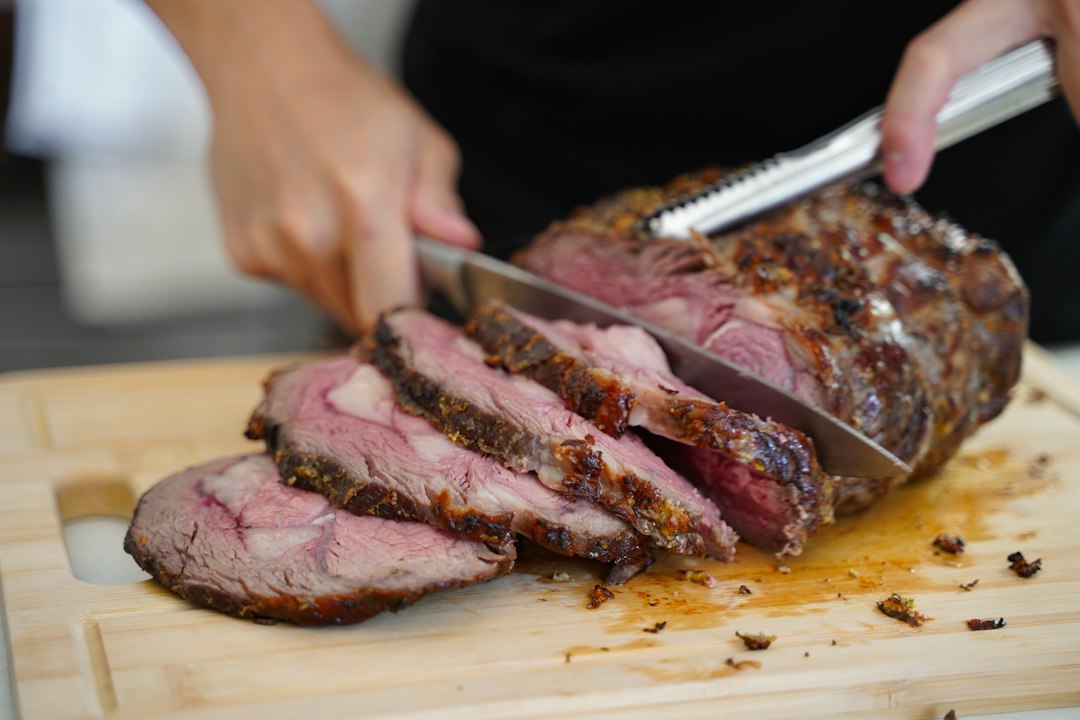
Because the bones were tied back on, carving takes two minutes. Snip the strings, lift the meat off the bones in one piece (save the bones for whoever likes to gnaw; there’s always someone) and slice across the grain about half an inch thick.
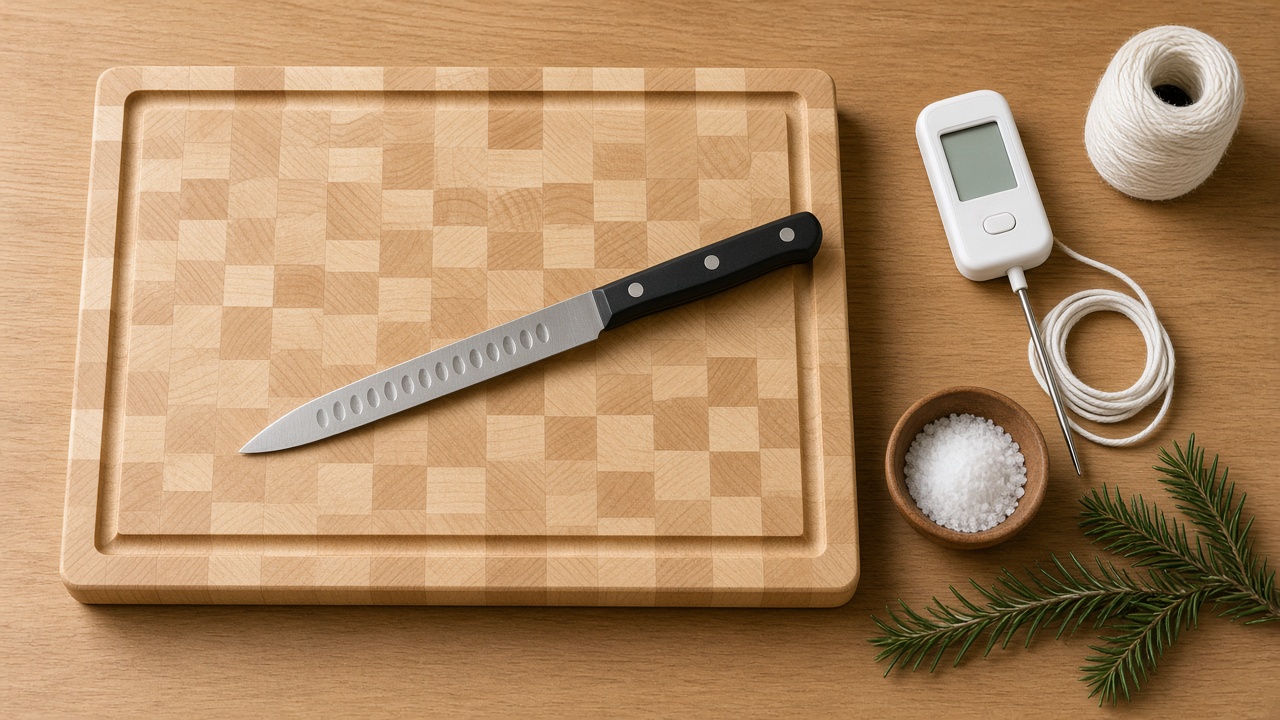
A long, thin slicing knife makes clean slices in a single stroke instead of the sawing a chef’s knife needs. I’ve used a Victorinox Fibrox Pro 12-Inch Granton Slicing Knife for years, and its dimpled blade keeps slices from sticking. Underneath, use a big board with a deep groove around the edge, like the John Boos Reversible Maple Carving Board With Juice Groove, because a good roast leaks more juice than you’d expect, and you want it in the groove for the jus, not running off the counter.
If You Only Buy Two Things This Year
The salt, rack and twine are probably already in your kitchen, and the pan and board can be borrowed. These are the two I’d actually spend money on before Christmas, because they’re the difference between a guess and a plan:
- A leave-in probe with an alarm: the ThermoWorks ChefAlarm, so the roast tells you when it’s ready instead of you guessing from the clock.
- A real slicing knife: the Victorinox Fibrox Pro 12-Inch Granton Slicing Knife, so those beautiful pink slices make it to the plate in one piece.
Early holiday sales already cover both, but buy before December 20 so you can practice on a weeknight chicken first.
The Mistakes I Made So You Can Skip Them
I’ve made every one of these at least once:
Trusting minutes per pound. Roasts differ in shape and ovens run hot or cold. The thermometer is the only honest clock.
Salting at the last minute. A quick sprinkle seasons the crust and nothing else. Even one night of salt is a big improvement. Two nights is better.
Carving straight off the high-heat sear. With the reverse sear you can slice right away, but with the traditional high-heat method you need a full 20 to 30 minutes of rest, or the board floods with juice. Know which method you’re using.
Ordering a roast too small “because it’s so expensive.” Prime rib leftovers are the best sandwiches of the year. Buy for your crowd plus a rib, and plan on sandwiches on the twenty-sixth.
One Phone Call This Week
If you take one thing from all this, make it the phone call. The roast you order in November is better, better trimmed and less stressful than the one you hunt for on December 23. Everything else, the salt, the low oven, the alarm, the hot finish, follows from having the right piece of beef in your fridge on the right day.
My order slip is already taped inside the pantry door, four ribs from the small end, bones off and tied back on, pickup Wednesday the twenty-third. The tree isn’t up yet. That’s exactly the point. Make the call, write down the answers, and save your energy for the part of Christmas that happens around the table.