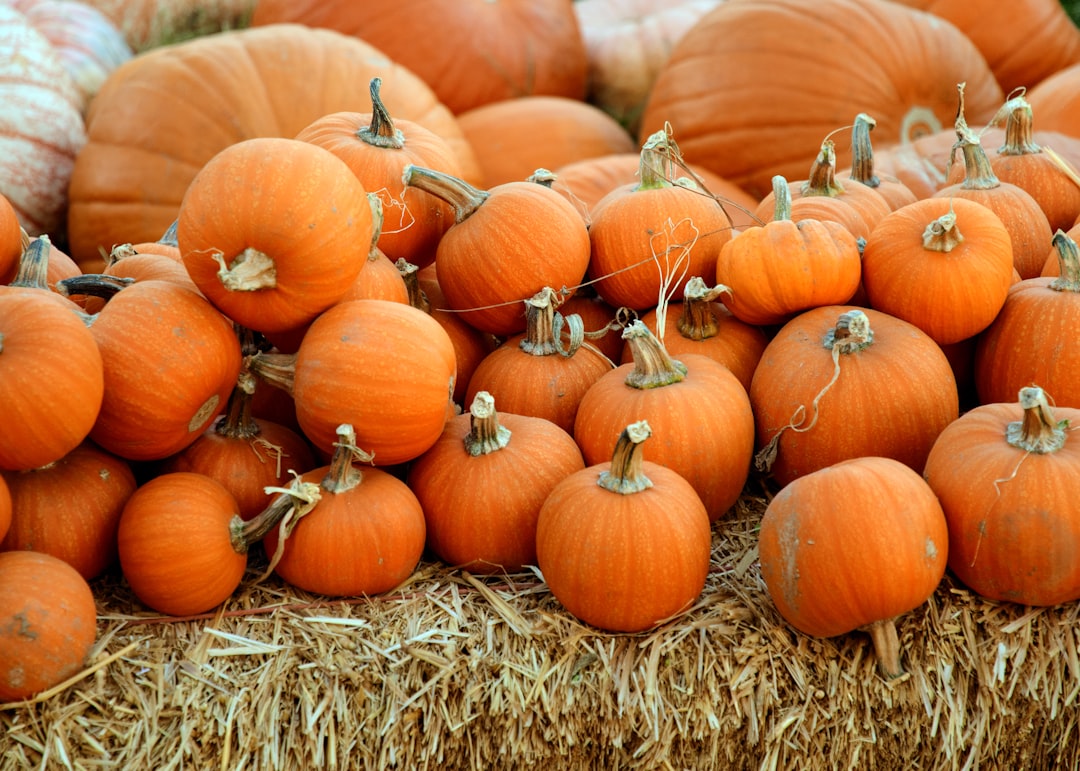
Every year, somewhere around the second week of September, a small ceramic bowl of miniature pumpkins appears on my kitchen windowsill, and my family knows the rules have changed. Nobody comments on it. Nobody has to. The kitchen has officially crossed over into pumpkin season, and from that moment until Thanksgiving, every pot, pan, and shelf in this house is expected to keep up.
This year the crossing happened on a Tuesday. My produce guy — the same one who sets aside bruised Romas for me in August — handed me two sugar pumpkins with the solemnity of a man passing along state secrets. “First of the season,” he said. He was not wrong to treat them that way. The first pie pumpkin of September is a big deal in my kitchen, and my team and I spent the rest of the week getting ready for what comes next: eight weeks of puree, bundts, soup, seeds, spice, and one legendary carving night on the porch.
So let me walk you through how a kitchen actually gets ready for pumpkin season — not the Pinterest version, but the real one, with the burns, the shortcuts, and the gear that earns its shelf space.
Roast Your Own Puree? Here’s My Honest Math
The canned-versus-homemade pumpkin puree debate gets people surprisingly heated, so let me give you the answer I’ve landed on after twenty years of testing both. Canned pumpkin is consistently good, always the same moisture level, and there is zero shame in it — my grandmother used it and her pies could make grown men cry. But if you’ve never roasted a sugar pumpkin on a Sunday afternoon, you’re missing one of the great low-effort, high-payoff rituals of the season. The house smells incredible, the color of fresh puree is almost fluorescent, and the flavor is sweeter and rounder than anything from a can.

The method is almost embarrassingly simple. Split the pumpkin in half, scoop the seeds, lay the halves cut-side down on a heavy sheet pan, and roast at 400°F for about 45 minutes until a paring knife slides through like butter. I do this on well-seasoned half-sheet pans — the same commercial-weight aluminum ones I wrote about in my big sheet pan audit — because thin pans warp under the heat and wobble when you’re sliding them out. If you need a proper one, the Nordic Ware Naturals half sheet is the exact pan my kitchen runs on.
Then comes the puree decision. A food processor gives you the smoothest texture, but for pumpkin I actually reach for my stainless food mill more often than you’d expect — it catches the fibrous bits that a blender happily pulverizes into your pie. Either way, the goal is puree so smooth it holds a spoon upside down. If your arm gets tired of the mill, a solid immersion blender straight in the pot is a perfectly respectable shortcut. My assistant tested all three methods side by side last week and the pie results were nearly identical, which tells you the tool matters less than the draining. Yes, drain it — spread the puree in a sieve for an hour unless you love soupy pie filling.
One sugar pumpkin gives you roughly two cups of puree, and a good roasting session gives you enough for a pie tonight and a stash for later. I freeze mine flat in quart bags — the stackable kind, pressed thin so they thaw in a sink of warm water in twenty minutes — and label them with the date. Frozen pumpkin puree holds beautifully for three months, which in my kitchen means the last bag usually goes into a February loaf cake, a little ray of October in the grayest month of the year. My crew logs every batch now: pumpkin variety, roast time, drained weight. It sounds like homework, but that little notebook is why this year’s pies will be better than last year’s.
Shaped Bakeware, Judged Honestly
Now for the fun part, and the part where I lose all objectivity: pumpkin-shaped bakeware. I want to be clear that I know a cakelet pan shaped like tiny pumpkins is not, strictly speaking, necessary. I also need you to know that when I set a plate of little spiced pumpkin cakes on the counter — each one a perfect miniature gourd — my neighbors behave like I’ve performed magic. Festive shapes do something to people. My Halloween cookie table demands started the same way, and now the whole street expects it every October.
The Nordic Ware Lil’ Pumpkins cakelet pan is the one I’d buy first. Cast aluminum, deeply detailed, and the cakes release cleanly if you grease every crevice like you mean it. For a bigger statement, the Pumpkin Patch Bundt makes a full-size cake that looks like a small pumpkin field — one cake, zero decorating skill required, endless applause. My rule after years of shaped-pan triumphs and disasters: the more detailed the mold, the more generous the greasing, and never, ever a cold pan meeting a hot oven door slam.
The Serving Pieces That Quietly Run October
Every fall kitchen has one object that does the seasonal heavy lifting, and in mine it’s a pumpkin-shaped Dutch oven. There is a version of me that resists a pot shaped like a vegetable on principle. That version of me lost the argument years ago, because a pumpkin cocotte set on the table filled with soup is table decoration, serving vessel, and conversation starter in one — and it keeps the soup hot through a long, slow dinner.
The Staub cast iron pumpkin Dutch oven is the splurge and the icon: French-made, oven safe to heights you’ll never need, and honestly gorgeous enough to live on the stovetop year-round. But my team’s sleeper pick is the smaller Staub petite pumpkin cocotte — individual-size ceramic pots that turn a scoop of soup or a personal pot pie into an event. I keep four on a high shelf and bring them down the week the first pumpkin lands on the counter. If you’re building a Dutch oven collection and pumpkin isn’t your vibe, I wrote a whole guide to the Dutch ovens worth your counter earlier this summer that covers the classics.

And while we’re in serving territory: a good set of heat-proof silicone spatulas earns its keep this time of year. Pumpkin puree is sticky, thick, and expensive to waste, and a spatula that scrapes a pot clean to the last tablespoon pays for itself by the third pie.
What goes inside the pumpkin pot matters as much as the pot itself. Roasted pumpkin soup with a splash of cream, a curry-scented version with coconut milk, or the smoky version my brother-in-law requests — a spoonful of chipotle stirred in at the end. Soup is also the season’s great weeknight rescue: one Sunday roast of pumpkins becomes a big pot of soup that improves all week, which is exactly the kind of arithmetic that keeps a fall kitchen sane. When the calendar turns and the soup nights stack up, I always think of the bushel math I do on apple season every year — same principle, different gourd. Buy the whole vegetable, use the whole vegetable, and let nothing rot on the counter while you weren’t looking.
Spices: The One Place Not to Improvise
Here is my confession: I spent years blending my own pumpkin spice from six little jars, feeling very smug about it, until the great spice cabinet census revealed that I had duplicates of everything and fresh nothing. The lesson stuck. Pumpkin season runs through your spice drawer harder than any other time of year, and stale cinnamon is the reason so many October desserts taste like disappointment.
Buy fresh, buy once, and buy enough. The big 9-ounce jar of McCormick pumpkin pie spice carries me through pies, cakes, lattes, and the batch of spiced nuts my sister demands every year. If you want to go deeper, a holiday baking spice set with ginger, cloves, and cardamom alongside the blend opens up the whole fall baking repertoire — gingerbread, spiced cider, chai-adjacent everything. My one non-negotiable: date the jars when they open. Pumpkin deserves better than a cinnamon that’s been riding the carousel since 2023.

Carving Night Without the Drawer of Sad Tools
Every house has one: the drawer containing a single rusted serrated knife and three plastic tools from a kit that cost less than a coffee. Every October, that drawer ruins somebody’s carving night. My family’s carving tradition is nearly two decades old now, and the single best upgrade we ever made was retiring the sad drawer and getting a real pumpkin carving kit with proper stainless tools — the scoop, the detail saws, the loop scraper that thins the wall so candlelight actually glows through. The difference in what my nieces and nephews can carve is night and day.

And do not — I’m begging — throw away the seeds. While the carved pumpkins air out, rinse the seeds, boil them in salty water for five minutes, toss with oil, and roast at 325°F until they crackle. Twenty minutes of almost no effort and you get the actual best snack of the entire season. I set them out in the same battered wooden bowl every year, and they never survive the evening. My crew has turned seed-roasting into a competitive sport, with categories nobody can quite define.

A Realistic Order of Operations
If you’re starting from zero, don’t buy everything at once — that’s how kitchens end up with two pumpkin pans and no sheet pan to roast on. My order, tested across many autumns: a proper half sheet pan and fresh spices first, because puree and pie depend on them. The shaped bakeware second, because it’s pure joy and joy needs a weekend to land properly. The cocotte third, as the splurge that you’ll still be using in October 2046. The carving kit last, ideally before the third week of October, because carving night has a way of sneaking up on everybody.
And whatever you do, roast at least one pumpkin from scratch this year. Not because canned isn’t fine — it is — but because there’s a specific kind of October satisfaction that comes from pulling a tray of caramelized pumpkin halves out of the oven while the light goes gold outside your window. That’s the moment my kitchen starts speaking fluent pumpkin. It can be yours too, and honestly, the season waits for no one.