Every year, somewhere between the last Halloween candy wrapper and the first Christmas commercial, someone texts me a photo of a rock-hard turkey sitting on their counter. The message is always some version of the same thing: “It’s Wednesday night. Is this going to work?” And every year I wish I could reach back through the phone about six days and tape a calendar to their refrigerator door.
So this year I’m doing that early. Nearly half of Thanksgiving hosts plan to cook a frozen bird this year, and with turkey prices nudging up again, nobody wants to watch twenty dollars’ worth of poultry go sideways because the math was off by a day. Thanksgiving lands on Thursday, November 26, 2026. That gives you a little less than a month to plan the least glamorous and most important step of the whole holiday: getting that bird from frozen solid to safely thawed, on schedule, without hijacking your entire refrigerator.
My crew and I spent the last couple of weeks running thaw tests on birds of different sizes in two different refrigerators (one new, one old enough to remember the nineties), checking temperatures morning and night. What follows is the calendar I tape inside my own cabinet door, the gear that keeps the process clean, and the backup plans for when life gets in the way.
The Short Answer: What You Actually Need
If you only read one section, read this one. A safe thaw comes down to a cold refrigerator, a tray that catches drips, a container for the emergency water bath, and a thermometer that tells you the truth on Thursday.
- To confirm your fridge is cold enough: Rubbermaid Commercial Refrigerator/Freezer Thermometer, because the dial on the back wall is a suggestion, not a measurement.
- To catch the drips: Nordic Ware Naturals Half Sheet Pan, rimmed, sturdy, and big enough for a sixteen-pound bird.
- For the cold-water backup: Cambro 22-Quart Square Food Storage Container, which holds a whole turkey underwater without taking over your sink.
- For the moment of truth: ThermoWorks ThermoPop 2 Instant-Read Thermometer, fast enough to check the thigh, the breast, and the wing in under a minute.

The Rule My Grandmother Never Wrote Down (But Always Followed)
My grandmother never owned a cookbook that told her how long to thaw a turkey. She just knew that the bird “went down to the icebox on the weekend.” It took me years to realize she was following the same math the USDA publishes today: in a refrigerator holding 40°F or below, plan on roughly 24 hours of thawing for every 4 to 5 pounds of turkey.
I always use the 4-pound side of that range. Refrigerators run warmer and colder in different spots, birds come packed tighter or looser, and an extra day of cushion costs nothing. A bird that finishes thawing early simply waits in the fridge. A bird that is still frozen at the core on Thursday morning sends you scrambling.
The other half of the rule matters just as much: once thawed, a turkey keeps safely in the refrigerator for about one to two more days before it needs to be cooked. That is your buffer window, and it’s also where dry brining lives, which I’ll get to in a minute.
Your 2026 Thaw Calendar, Counted Back From Thursday
Here is the chart I’m taping up this year. These dates assume you’re cooking on Thanksgiving Day, November 26, and moving the bird from freezer to fridge in the morning. Each one includes a built-in cushion day.
- 8 to 12 pounds: 2 to 3 days to thaw. Move it to the fridge by Sunday, November 22.
- 12 to 16 pounds: 3 to 4 days to thaw. Move it by Saturday, November 21.
- 16 to 20 pounds: 4 to 5 days to thaw. Move it by Friday, November 20.
- 20 to 24 pounds: 5 to 6 days to thaw. Move it by Thursday, November 19, a full week ahead.
Planning to dry brine? Slide your start date one day earlier. A salted bird needs 24 to 48 hours uncovered in the fridge, and that time has to come after the bird is fully thawed. I explain the timing in detail in my guide to why salt has a schedule, but the short version is simple: thaw first, salt second, roast third, and never compress the first step to make room for the second.
One more thing I learned the hard way. Put a reminder in your phone for the move date, and set a second one for the morning before. The year I relied on memory alone, I remembered on Saturday night that I’d meant to move the bird on Friday. A twenty-pound turkey does not care about your good intentions.
Making Room: The Refrigerator Shelf Audit
The calendar is only half the plan. The other half is physical space, because a turkey in its tray takes up a full shelf for nearly a week, during the same stretch when you’re also buying butter, cream, celery, and three kinds of cheese.

The weekend before your move date, do what my team calls the shelf audit. Pull everything off the bottom shelf, toss the condiments that have been quietly expiring since summer, and consolidate the survivors into a bin or two on a higher shelf. The bottom shelf is the turkey’s home for one reason: if anything drips, it drips onto nothing else. Raw poultry should never sit above produce, leftovers, or anything you’ll eat without cooking.
While you’re in there, check the actual temperature. Set a Rubbermaid Commercial Refrigerator/Freezer Thermometer on the bottom shelf, close the door, and read it the next morning. My older test fridge read 43°F on its bottom shelf even though the dial was set to “4,” which is exactly the kind of quiet problem that turns a safe thaw into a risky one. Turning the dial one notch colder fixed it within a day. You want 40°F or lower, and 37°F to 38°F is my sweet spot.
If your fridge is truly packed (hosting a crowd, small apartment fridge, second refrigerator long gone), a good cooler becomes overflow storage for drinks and sturdy vegetables, which frees real shelf space for the bird. An Igloo 48-Quart Cooler on the back porch in late November, packed with ice and stocked with sparkling cider and bags of carrots, has saved more of my Thanksgivings than I’d like to admit.
The Tray Setup That Keeps Your Fridge Clean
A frozen turkey looks perfectly sealed in its plastic. It is not. As it thaws, condensation and juices find every pinhole, and by day three you’ll have a puddle. The fix is a rimmed half sheet pan with a rack set inside, so the bird sits up out of its own drips and cold air circulates underneath.
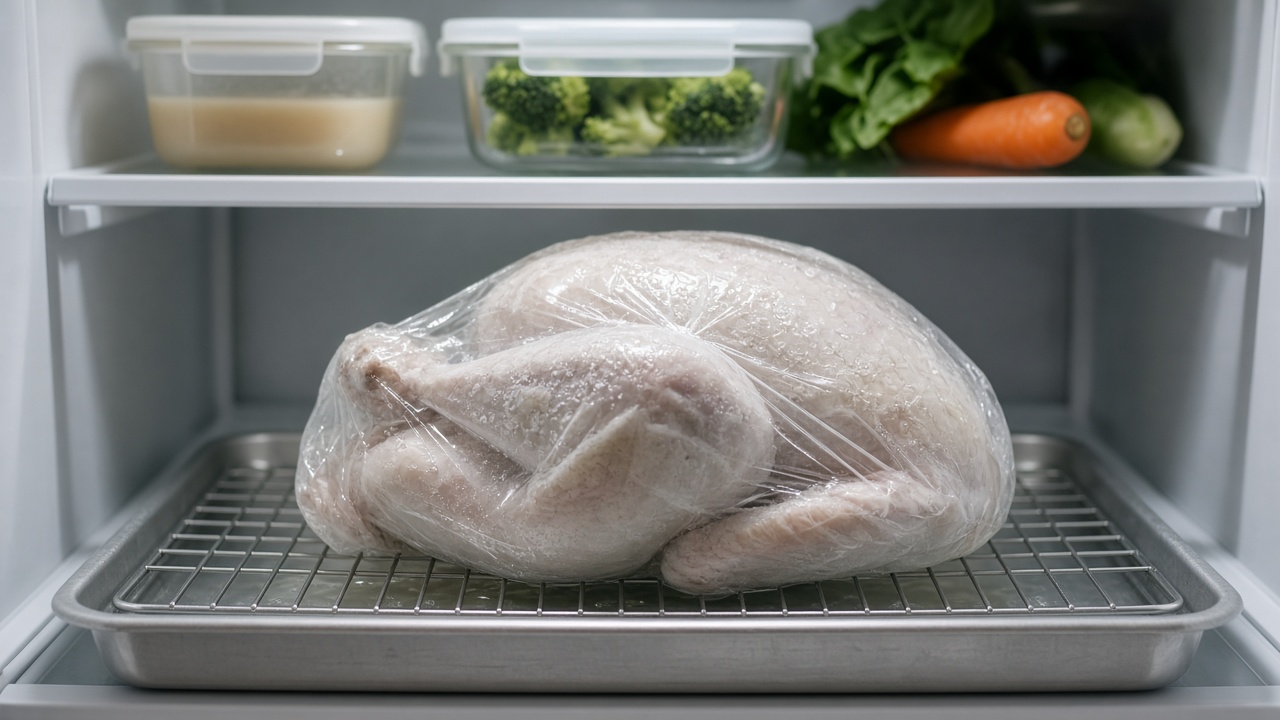
I use the same half sheet pan from my quick-picks list for this, with a Checkered Chef Stainless Steel Cooling Rack nested inside. The rack matters more than people expect: a bird sitting flat in its own liquid thaws unevenly, with a wet, warmer underside and a frozen top. Lifted up, it thaws more evenly from every side.
Leave the turkey in its original wrapping, breast side up, and resist the urge to open it early to “check.” The wrapping keeps the surface protected while the center catches up. Empty the drip pan once halfway through if it fills, and wipe the shelf with hot soapy water when the bird finally leaves.
Plan B: The Cold-Water Bath for When You’re Behind
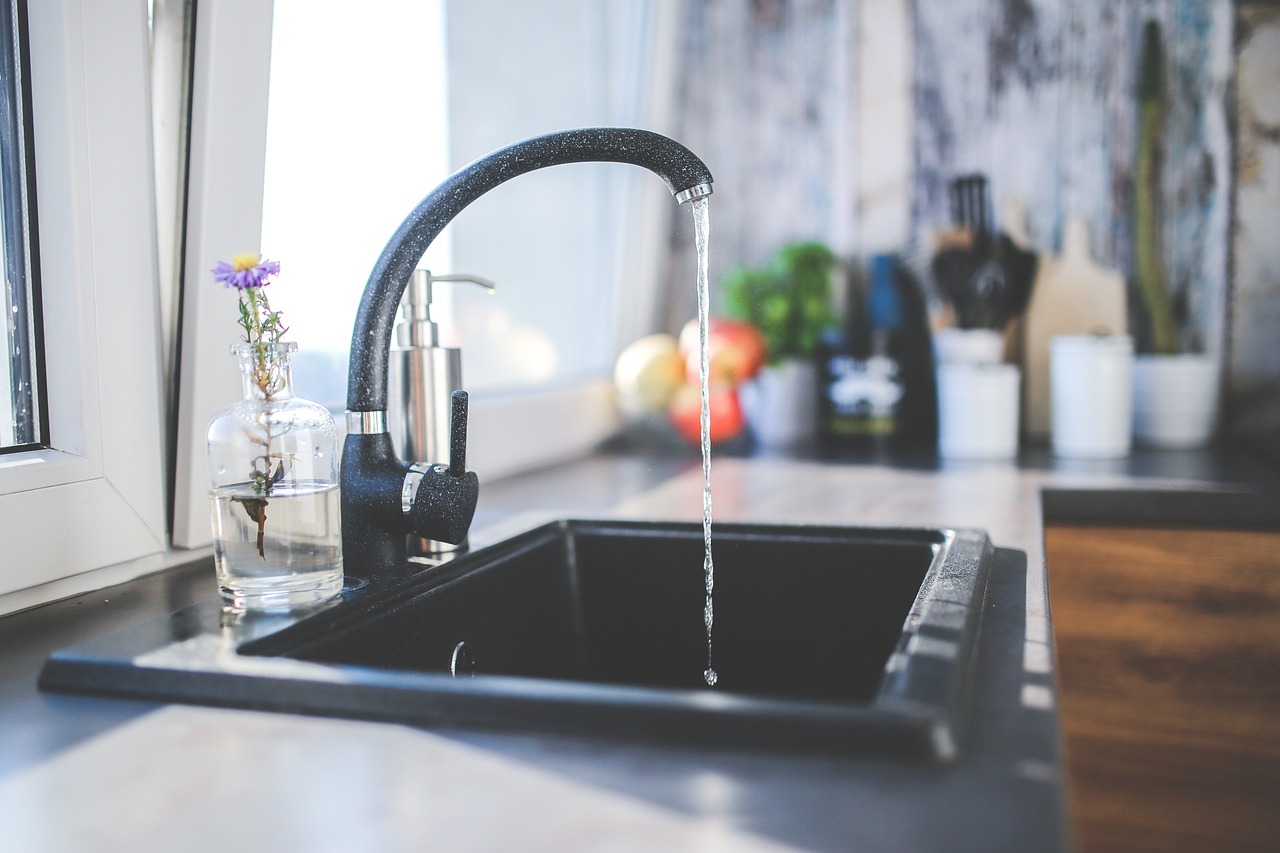
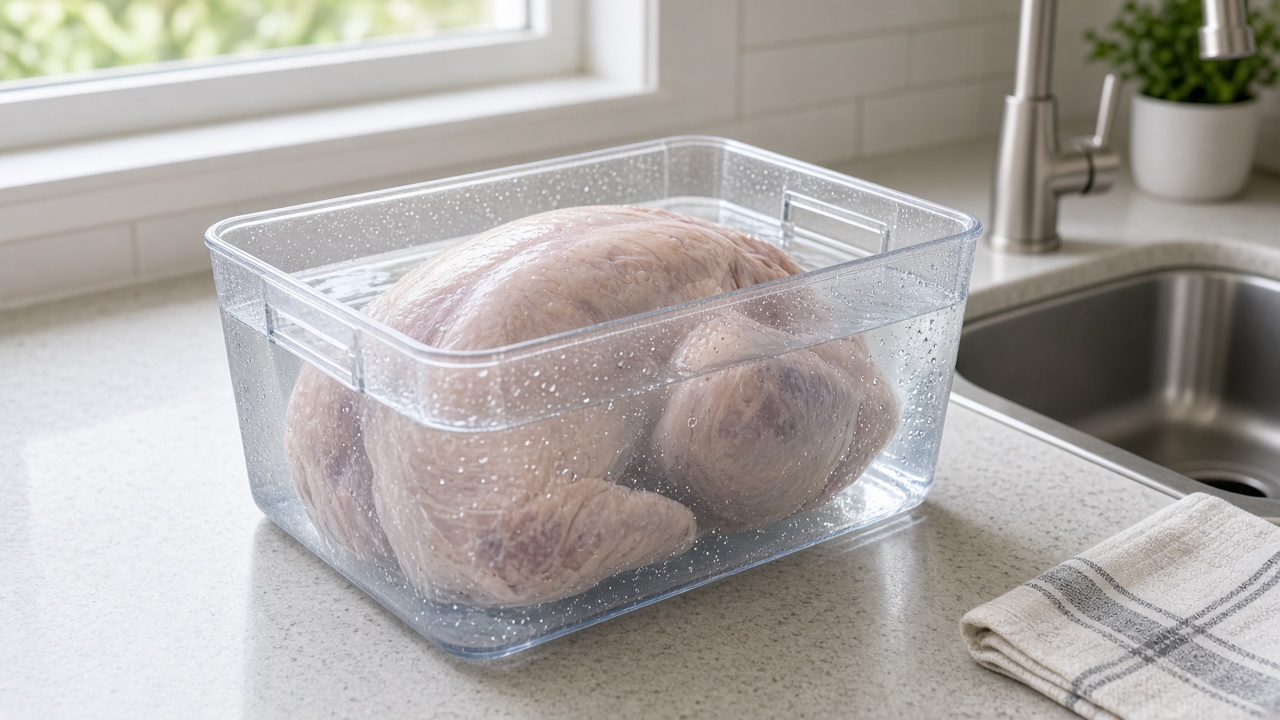
Life happens. Maybe you bought the bird late, maybe the fridge was full, maybe you simply forgot. Whatever the reason, if you’re behind schedule, the cold-water method is your rescue, and it’s faster than most people think: about 30 minutes per pound. A 14-pound turkey thaws in roughly seven hours this way.
The rules are strict, and every one of them is there for a reason:
- Keep the turkey in its leak-proof wrapping. If the original wrap is torn, seal the bird inside a Heavy-Duty Turkey Brining Bag first so water can’t get in and juices can’t get out.
- Submerge it completely, breast side down. Any part above the waterline thaws more slowly and sits at a warmer temperature.
- Use cold tap water only. Never warm, never hot.
- Change the water every 30 minutes. Set a timer. That fresh cold water is what keeps the surface of the bird out of the danger zone while the center thaws.
- Cook the bird as soon as it’s thawed. A cold-water-thawed turkey does not go back into the fridge to wait.
Here’s where most kitchens run into trouble: a standard sink is rarely deep enough to submerge a big bird, and it ties up your only sink for most of a day. That is why I keep a Cambro container in the pantry. The 22-quart square model holds a mid-size turkey fully underwater (measure a big bird against it before you need it), it sits on the counter or the floor beside the sink, and you can tip it into the drain to swap the water without lifting the bird. It doubles as a wet-brining bucket, which makes it one of the few big containers I own that earns its shelf space all year.
Wear a pair of Food-Safe Nitrile Gloves for the water changes if your hands get cold easily. Thirty minutes is less time than you think, and after the fourth swap your fingers will thank you. Afterward, scrub and sanitize the sink and the container, because whatever leaked out of that wrapping is now in the water.
Thawing Methods I Will Never Use (And You Shouldn’t Either)
I’ve heard all of them over the years, usually from very confident uncles. Leaving the bird on the counter overnight. Setting it in the garage “because it’s cold out there.” Running it under hot water. Putting it in a dishwasher. Every one of these lets the outer layer of the turkey sit in the 40°F to 140°F range for hours while the center stays frozen, which is exactly the setup bacteria love.
A November garage might be 38°F at midnight and 58°F by two in the afternoon when the sun hits the door. You have no way of knowing. The refrigerator and the cold-water bath are the only two methods I trust, with the microwave as a distant third for very small birds, and only if you cook immediately after.
The Emergency Option Nobody Mentions: Cook It Frozen
If it’s Thanksgiving morning and the bird is still a brick, take a breath. You can safely roast a turkey straight from frozen. It takes roughly 50 percent longer than a thawed bird, so a 12-pound turkey that would normally need about three hours will need closer to four and a half.
Roast it at 325°F in a sturdy pan like the Cuisinart Chef’s Classic 16-Inch Roaster with Rack, which holds a heavy bird without flexing. Partway through, once the cavity has softened enough, use tongs and a pair of OXO Good Grips Poultry Shears to free the giblet packet and neck, which are usually frozen in place. Then season the skin and keep going. It won’t be your prettiest bird ever, but it will be safe, and nobody at the table needs to know.
How to Tell It’s Really Thawed
On cooking day (or the night before, if you’re dry brining), reach into the main cavity. If you feel ice crystals or a solid core, the bird isn’t finished. Pull the giblet bag and neck. If they come out easily and the thighs move freely at the joints, you’re there.
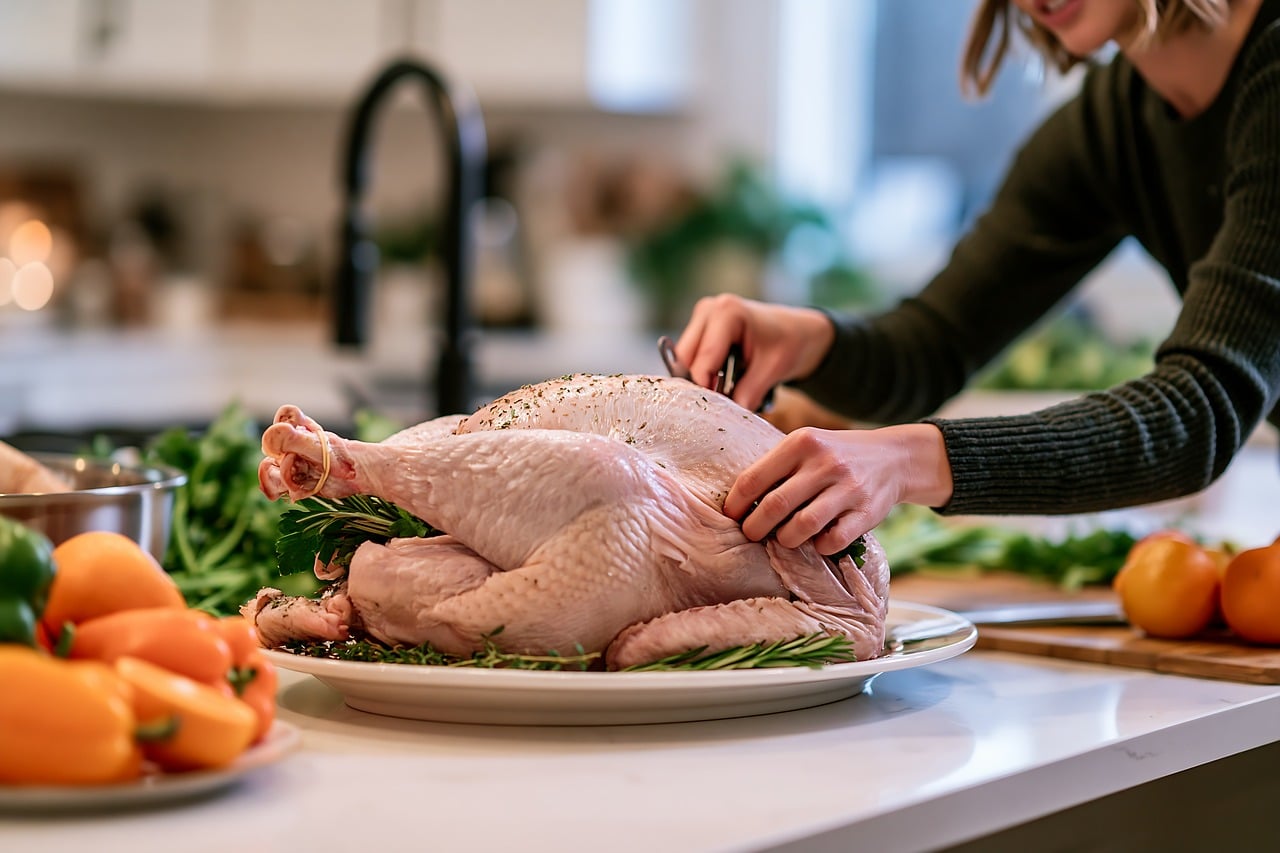
Partially frozen with a few hours to spare? Finish it in the cold-water bath. That’s the beauty of having both methods ready: the fridge does the slow, hands-off work all week, and the water bath closes the last gap if you need it.
Once it’s thawed, pat the skin thoroughly dry with paper towels. A dry surface is the secret to crisp, deeply browned skin, and a turkey fresh from its wrapping is wetter than you’d guess. This is also the moment to start your dry brine if you’re doing one.
Thursday: Trust the Thermometer, Not the Pop-Up
All that careful planning ends at one number: 165°F in the thickest part of the breast, the innermost part of the thigh, and the thickest part of the wing. Check all three. A bird that started from a cold-water bath or was still partly frozen in the center can cook unevenly, and the thigh is usually the last to finish.
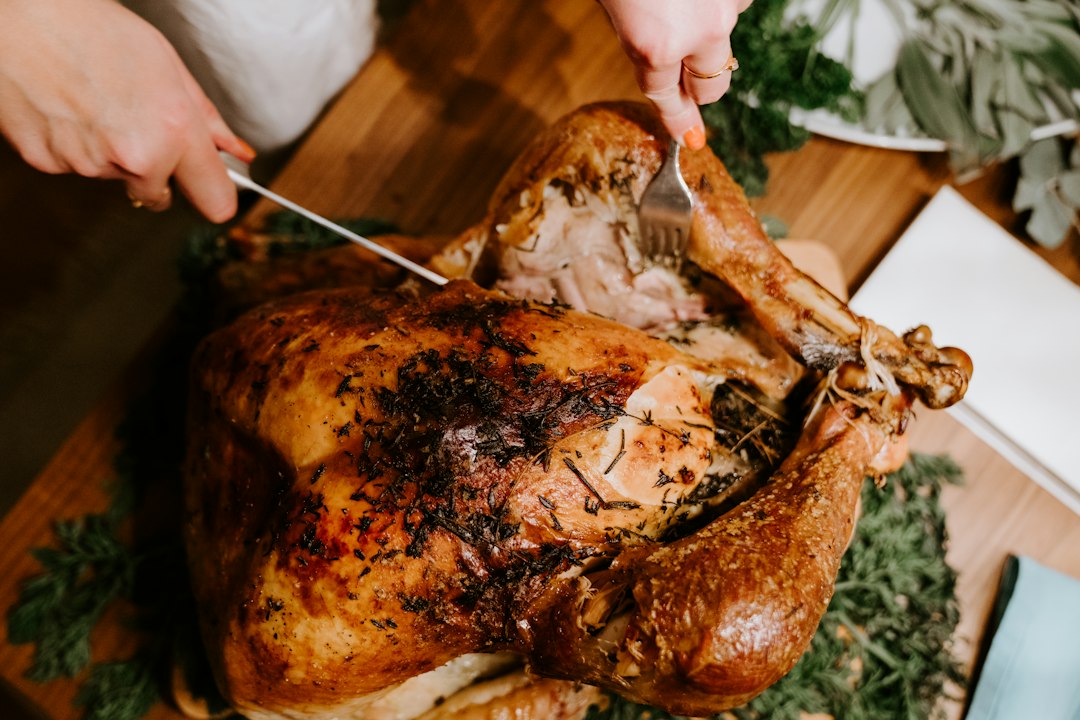
That little plastic pop-up timer that came in your bird is calibrated for a dry, overcooked breast, if it pops at all. My ThermoPop gives a reading in a couple of seconds, which means the oven door is open for less time and the temperature stays steady. If you want to go deeper on probe placement and why “the juices run clear” is a myth, my thermometer guide for roast season covers it all.
Let the turkey rest 30 to 40 minutes before carving. It will stay hot, the juices will settle back into the meat, and you’ll have a window to finish the gravy and warm the rolls.
The Cabinet-Door Version
Here’s the whole plan in one place, the version I actually tape up:
- November 14 to 15: Buy the bird (if frozen) and check that it fits in your freezer and on your bottom shelf.
- The weekend before your move date: Shelf audit, fridge thermometer check, set up the tray and rack.
- Move date (from the chart above): Turkey to the bottom shelf, breast up, in its wrapping, on the rack.
- Midweek: Empty the drip pan. Don’t open the wrap.
- Tuesday or Wednesday: Check for thaw. Start the dry brine if using one.
- Thursday morning: Final check. Cold-water bath if needed. Pat dry, season, roast.
- Thursday afternoon: 165°F in breast, thigh, and wing. Rest. Carve. Breathe.
Planning to run a Turkey Trot that morning before the bird goes in? My colleague over on the health side wrote a terrific six-week Turkey Trot briefing, and the good news is that a properly thawed bird can sit happily in the fridge while you run. Just don’t count on the oven preheating itself.
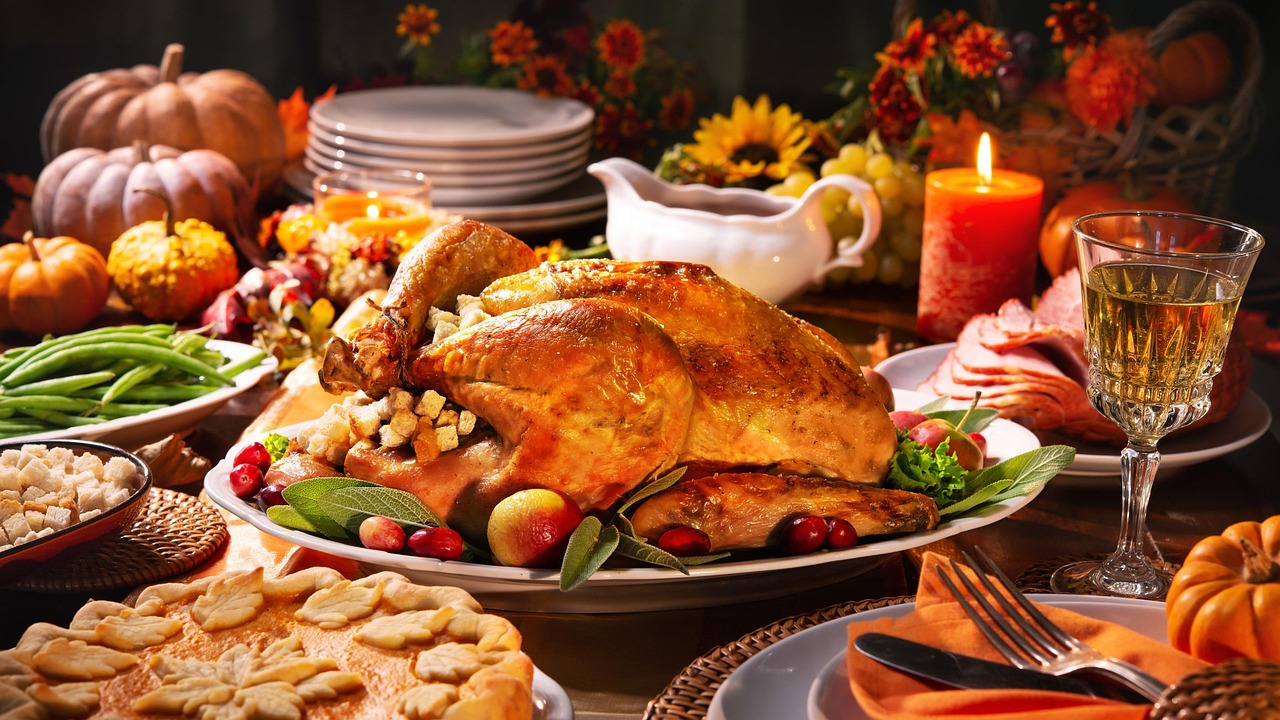
And when the meal is over and the table is a happy disaster, I’ve got you covered there too. My leftover system for the week after Thanksgiving picks up exactly where this calendar leaves off.
The turkey is the one dish on the table you can’t rush, can’t fake, and can’t start on Wednesday night. But with a calendar on the cabinet door, a cold bottom shelf, and a backup bath waiting in the pantry, it becomes the easiest part of the whole holiday. Move the bird down on time, and everything else can wait its turn.