Hanukkah starts on the evening of December 4 this year, which means the potato question lands earlier than Thanksgiving leftovers. Every year someone in my kitchen asks whether we still have to stand over a pan of oil for an hour, and every year I give the same honest answer: the skillet latke is still the one that makes the room smell like a holiday, but the air fryer has earned a real seat at the table.
My small team and I ran both methods side by side for a week of testing — same potatoes, same squeeze, same salt — so I could tell you what actually changes and what is just nostalgia talking. The short version is that you do not have to pick a side. You can fry the first platter the traditional way while the air fryer quietly turns out the second batch for the kids who wander through, the relative who does not want the house smelling like a fry shop, or the night you are hosting and also trying to keep your sanity.
This is the playbook I will use for Hanukkah 2026: how I grate and squeeze, which pan earns the oil, how hot that oil needs to be, what the air fryer does well and where it falls short, and how I hold batches so nobody eats a lukewarm latke while the next ones are still pale.
Start With the Potatoes, Not the Pan
Latkes fail before they ever see heat. If the shreds are wet, you get steamed potato cakes that never crisp. If the shreds are too fine, they turn gummy. If you skip the onion or the binder, they fall apart the second you flip them.
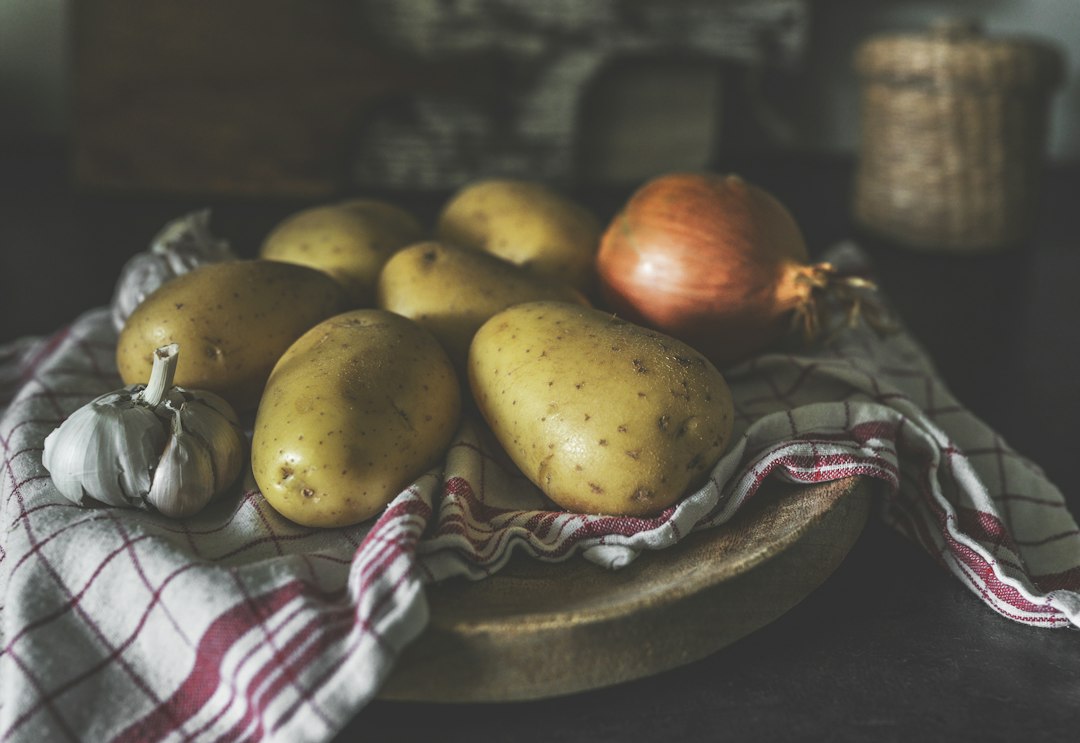
I use starchy russets. They brown better and hold less water than waxy potatoes once you wring them out. Peel if you want a cleaner look; leave the skins on if you like a little rustic edge and you scrubbed well. For a crowd of eight with leftovers, I start with about four pounds of potatoes and one large yellow onion.
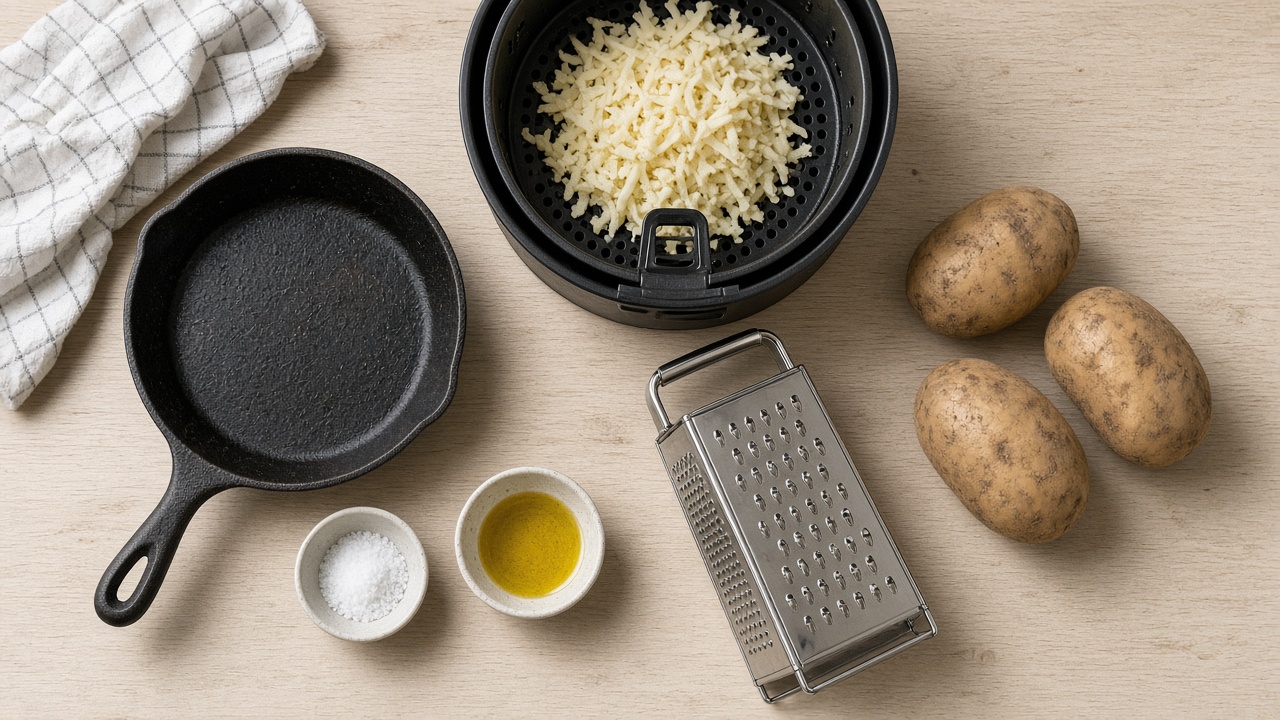
The grater matters more than people admit. A sturdy OXO Good Grips Box Grater with a coarse face gives you long shreds that fry into lacy edges. If your wrists complain after the first potato, switch to a Cuisinart Food Processor with Shredding Disc and pulse the onion separately so it does not turn to water. I still finish a few potatoes by hand when I want the irregular shreds that make a skillet latke look homemade instead of stamped.
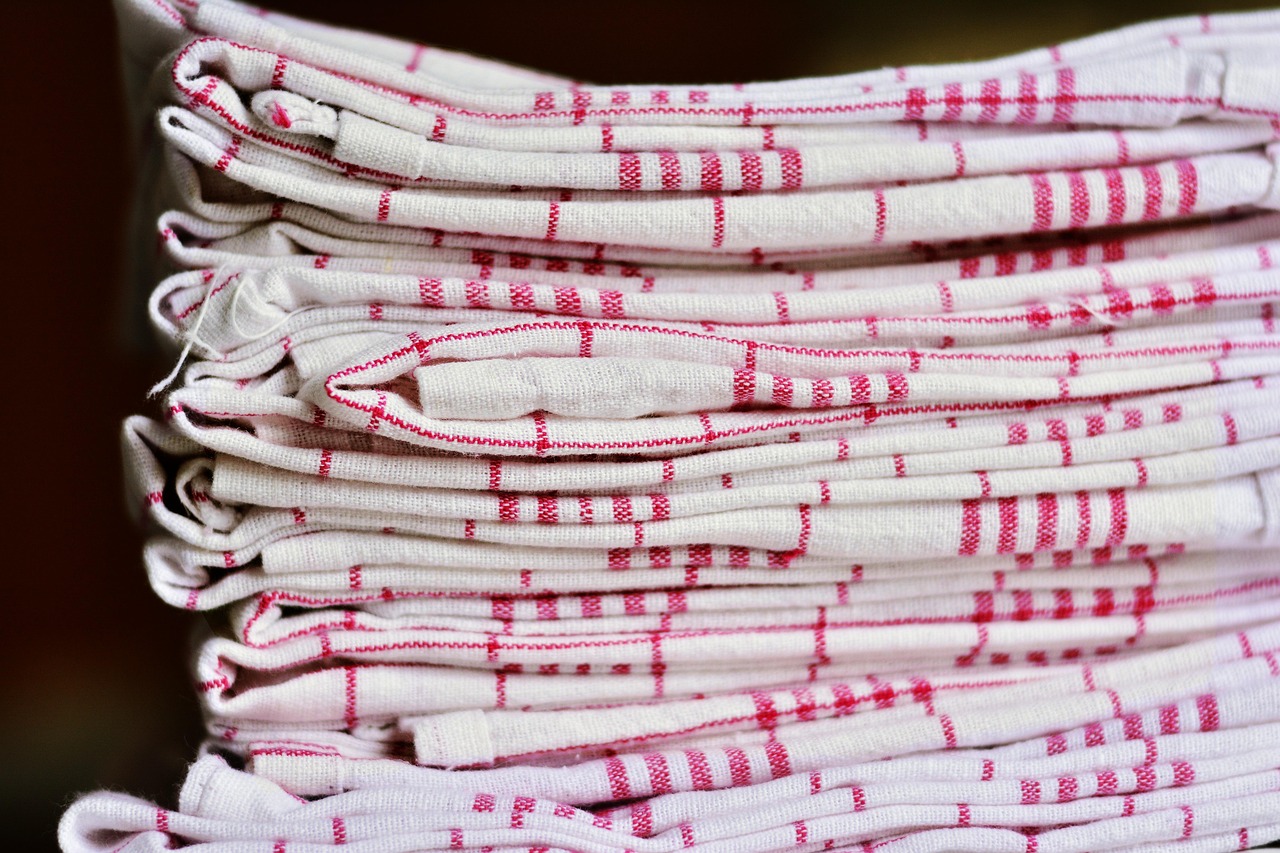
Then comes the step everyone rushes: squeeze. I pile the grated potato and onion into a clean Cotton Flour Sack Kitchen Towels towel, twist hard over the sink, and keep twisting until the drip slows to a sticky starch. That cloudy liquid is not waste. Let it sit five minutes, pour off the water, and scrape the white starch at the bottom back into the bowl. It is free binder, and it helps the latkes hold without dumping in a cup of flour.
Into the squeezed potatoes go salt, a little black pepper, one egg per pound of potato (sometimes two if the mix looks dry), and just enough matzo meal or flour to look cohesive, not pasty. I mix with my hands. The batter should feel damp and clingy, never soupy. If a spoonful weeps liquid onto the counter, squeeze again. No appliance fixes a wet batter.
I also salt the grated mix lightly before the final squeeze when I have time. Ten minutes of resting draws more water into the towel and seasons the shreds from the inside. It is a small pause that pays off when the edges go lacy instead of pale. If you are cooking with kids, this is the moment to hand them the twisting job — they love the drama of the drip — while you set out the oil, the thermometer, and the rack.
The Skillet Still Owns the Holiday Smell
When I want latkes that crackle at the edges and stay tender inside, I reach for a wide, heavy pan. A Lodge 12-Inch Cast Iron Skillet is my default because it holds heat when you add cold batter and because the sides are low enough that steam escapes. A well-seasoned Matfer Bourgeat Carbon Steel Skillet does the same job with a lighter lift, which I wrote about at length when I finally fell for carbon steel in The Pan That Made Me Earn It.
Oil depth is shallow, not a deep-fry vat. I pour about a quarter inch of a high-smoke-point oil — avocado, peanut, or a neutral vegetable oil — and heat until a shred of potato sizzles on contact. An ThermoWorks Thermapen ONE Instant-Read Thermometer takes the guesswork out: aim for roughly 350 to 365°F. Too cool and the latkes drink oil. Too hot and the outside darkens before the center cooks.
I have strong feelings about oil management from a season of wing frying, and most of that still applies here even though we are shallow-frying. If you want the longer oil story, I logged it in The Oil Remembers. For latkes, the practical rules are simpler: do not crowd the pan, skim loose shreds before they burn, and add a splash of fresh oil between batches when the level drops.
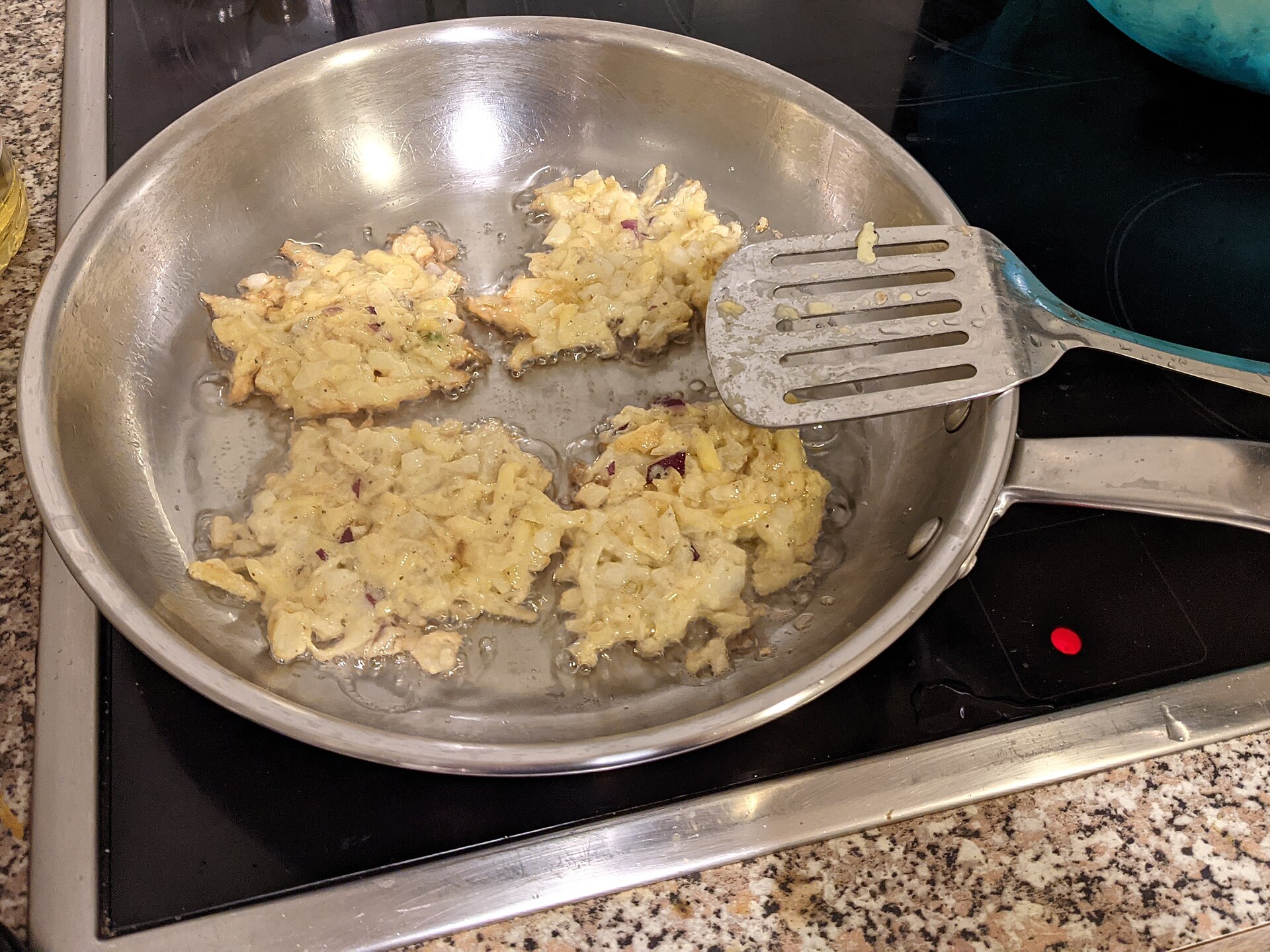
Drop loose handfuls, not tight hockey pucks. Press lightly with a spatula so they are thin enough to crisp. Three to four minutes per side is typical. Flip once. A thin Stainless Steel Fish Spatula slides under fragile latkes without tearing them the way a thick turner does. Lift finished ones onto a Wire Cooling Rack with Rimmed Baking Sheet set over a sheet pan, never into a paper-towel pile that steams the bottoms soft.
Hold the finished skillet batch in a 200°F oven on that rack setup. Air circulates, the crust stays audible, and you can keep frying without serving the first plate cold. This is the part that turns latke night from a short-order scramble into a real dinner service.
What the Air Fryer Actually Delivers
I will not pretend an air-fryer latke tastes identical to one that swam in oil. It does not. What it does deliver is a crisp exterior with far less mess, almost no lingering fry smell, and the ability to run a second batch while you talk to guests instead of babysitting a shimmering pan.
I use a basket-style COSORI Pro LE Air Fryer for this because the drawer is wide enough for a single layer and the temperature control is steady. Preheat to 375°F. Brush or mist both sides of each formed latke with oil — a Avocado Oil Cooking Spray is enough — and set them in a single layer on a perforated Perforated Air Fryer Parchment Liner or directly in the basket if your model releases cleanly. Crowding is the enemy here the same way it is in the skillet.
Air-fry eight to twelve minutes, flipping halfway, until the edges are deep gold. They will not lace the way skillet latkes do. The faces stay a little more even, a little more like a good hash-brown patty. For many people at the table, that is a feature. For the traditionalists, it is the second platter, not the first.
Where the air fryer shines for Hanukkah hosting is parallel cooking. I already rely on it for Thanksgiving sides when the oven belongs to the bird — I mapped that handoff in The Oven Belongs to the Bird — and the same logic applies here. Skillet on the front burner for the ceremonial first plate. Air fryer on the counter for the quiet refill. Nobody waits twenty minutes for the next round while the applesauce sits lonely.
Two caveats from testing. First, air-fryer latkes need that oil mist. Oil-free versions taste like baked potato cakes, and not in a charming way. Second, hold them on the same wire rack in the low oven. Stacking them in the basket after cooking softens everything you just earned.
Forming the latkes for the air fryer is slightly different from the skillet drop. I press them a little flatter and a little more even so they cook through without a raw center. A two-tablespoon scoop gives consistent size. If a shred hangs off the edge, tuck it in; flying bits burn in the basket and set off smoke alarms mid-blessing. I learned that the hard way on a weeknight test when the kitchen smelled more like toast than potatoes.
Reheating is kinder in the air fryer than in the microwave. Leftover latkes go back in at 350°F for three to four minutes and come out respectable. Microwave leftovers turn into sadness. If you are packing a menorah-night care package for a neighbor, cool completely on the rack, then layer with parchment in a tin. They travel better than most fried foods, especially the air-fried batch.
Who Should Fry, Who Should Air-Fry
I do not publish a fake scorecard that pretends one method wins every night. Here is how I actually decide when the menorah is lit and the kitchen is full.
- Fry in the skillet when: you want the classic crackle and lace, you have time to stand at the stove, and the holiday smell is part of the point.
- Use the air fryer when: you are cooking for a mixed crowd that includes someone avoiding heavy oil, you need hands-free minutes, or you are already frying and need a second heat source.
- Do both when: it is the first night, guests arrive in waves, or you want the traditional platter on the table while refills keep coming without a second deep pan of oil.
Apartment cooks with weak ventilation often air-fry the whole night and never look back. Hosts with a powerful hood and a cast-iron collection still fry. Both are legitimate Hanukkah kitchens. The mistake is apologizing for either choice.
One more hosting note: put the method on the invite if you are sharing the cooking. “Bring a skillet and oil if you want to fry with me; otherwise I have the air fryer for a quieter batch” turns helpers into partners instead of spectators. Guests who grew up on deep oil get the ceremonial first plate. Guests who want less grease still eat something crisp and hot. That is the hospitality I care about more than proving a single technique is pure.
The Toppings Bar Is Not Optional
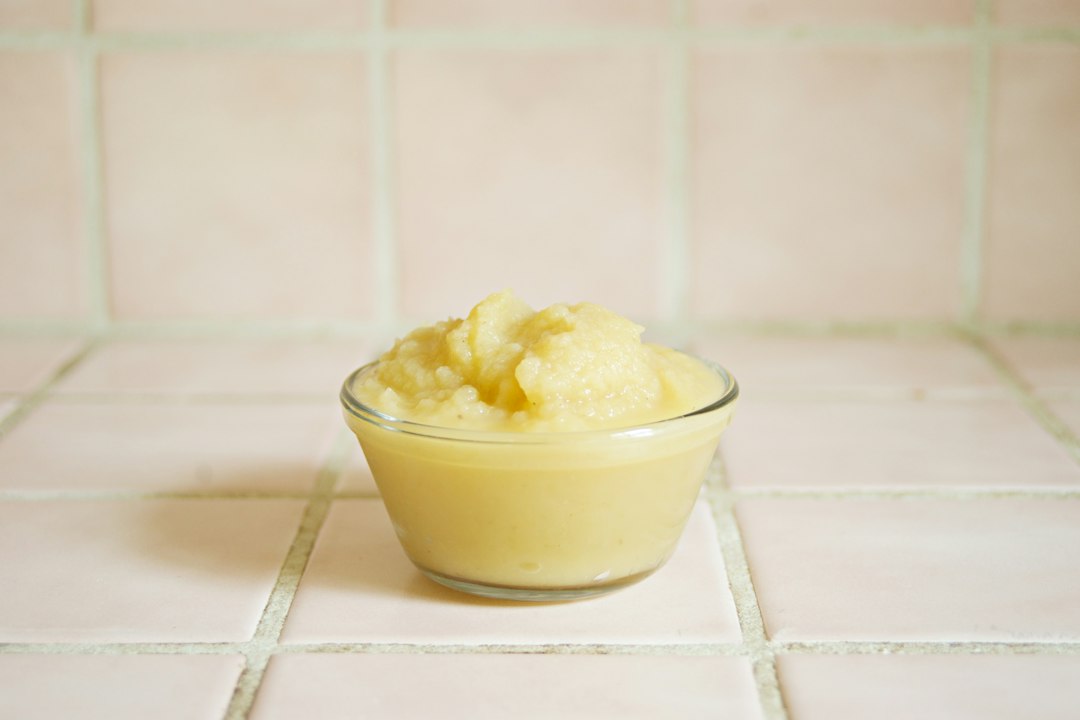
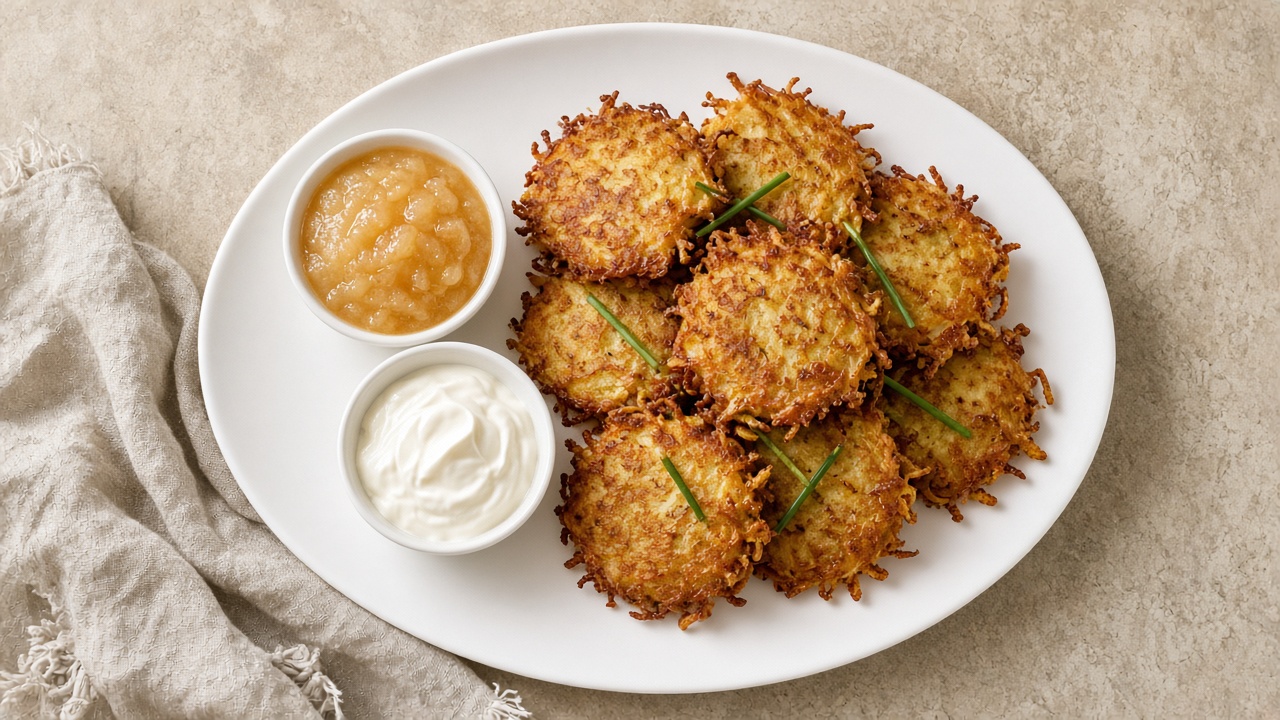
Latkes without a toppings plan are just fried potatoes with ambition. I set out a small bowl of Unsweetened Applesauce — chunky if I made it, smooth if I bought it — and a bowl of full-fat sour cream. Chives are optional. A little smoked salmon is a party move, not a requirement.
Keep toppings cold and latkes hot. Warm sour cream on a lukewarm latke is a sad combination. I plate in small waves: six or eight on a platter, toppings on the side, then back to the stove or the drawer. Guests who want to compose their own bites will, and the food stays at its best.
I keep a small pitcher of cold sparkling water or apple cider near the toppings so the fry oil does not own the whole sensory story. Sweet and sharp next to salty and crisp is the whole point. If someone at the table is skipping dairy, set out a dairy-free sour cream alternative beside the real thing without a speech. The platter does the welcoming.
Cleanup That Does Not Steal the Evening
Oil night can wreck a kitchen if you wait until everyone leaves. I keep a metal can or heat-safe jar near the stove for cooled oil, wipe the cast iron while it is still warm, and park dirty tools in a soak basin so they do not crust. The clean-as-you-go habit I wrote about in Still Cooking, Already Clean matters even more when starch water and oil are involved.
Air-fryer cleanup is the quieter cousin: liner out, basket washed, crumb tray emptied. That alone is why some hosts never heat the skillet again after the first night. I still heat it. I just refuse to leave a sticky pan for morning.
The Short Answer Before You Shop
If you are building or refreshing a latke kit before December 4, this is what I would put in the cart and why.
- Best skillet: Lodge 12-Inch Cast Iron Skillet for heat and shallow sides.
- Lighter skillet alternative: Matfer Bourgeat Carbon Steel Skillet if cast iron feels heavy.
- Grater: OXO Good Grips Box Grater for control; Cuisinart Food Processor with Shredding Disc for volume.
- Squeeze gear: Cotton Flour Sack Kitchen Towels — twist hard, save the starch.
- Oil temperature: ThermoWorks Thermapen ONE Instant-Read Thermometer so you stay near 350–365°F.
- Flip and lift: Stainless Steel Fish Spatula plus a Wire Cooling Rack with Rimmed Baking Sheet for holding.
- Quiet batch: COSORI Pro LE Air Fryer with Perforated Air Fryer Parchment Liners and a light Avocado Oil Cooking Spray.
That is eleven tools, not a gadget parade. Most of them already live in a serious home kitchen. The Hanukkah-specific move is deciding which heat source gets the first platter and which one keeps the table fed.
What I Want the Table to Feel Like
Latkes are not a test of kitchen purity. They are a fried potato pancake with a long memory, served to people you love while candles burn down. Some years the skillet does all the work. This year I am splitting the night on purpose: oil for the tradition, air for the pace, rack in the oven for the hold, and a toppings bar that lets every guest build the bite they came for.
If you only change one thing before December 4, change the squeeze. Dry potatoes forgive almost every other choice. Wet potatoes forgive nothing. After that, pick the pan that matches the night you are actually having — noisy and golden, quiet and steady, or both at once — and let the house smell like a holiday either way.
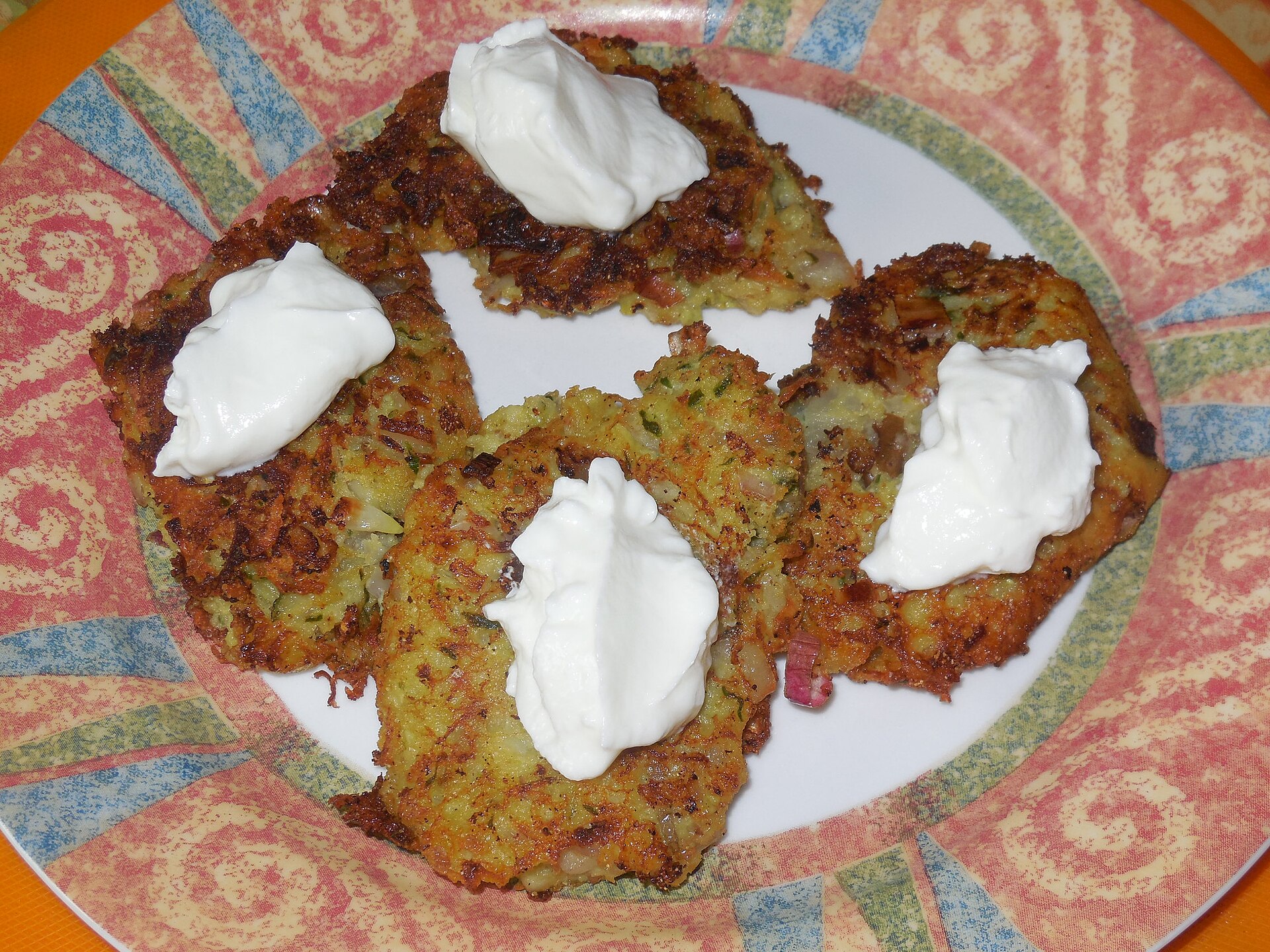
Featured image Photo: HeatherMarieKosur / Wikimedia Commons, CC BY-SA 4.0